
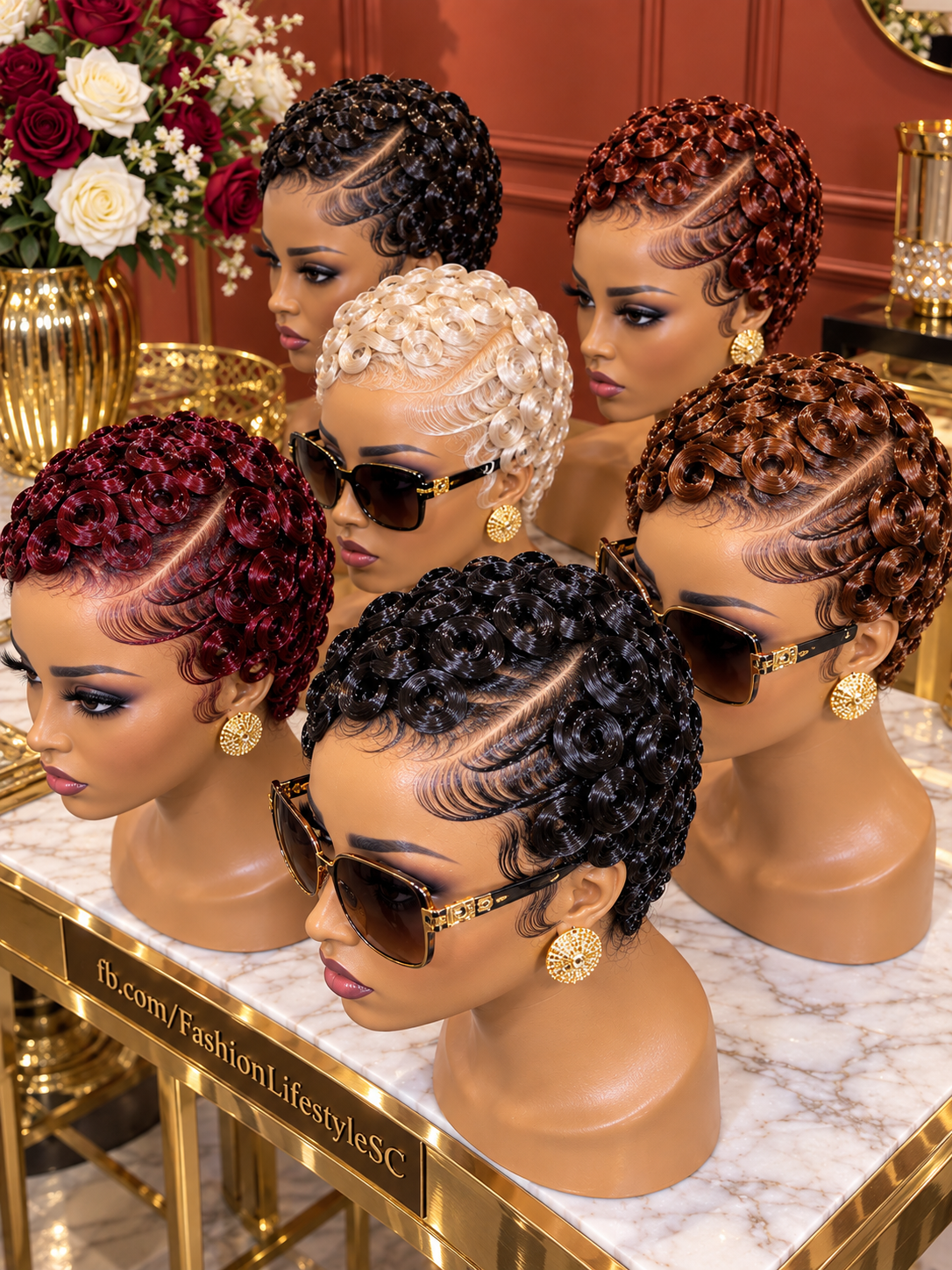
This six-piece wig collection centers on one highly recognizable construction: compact glossy ring curls across the crown, a deep diagonal part, and long sculpted finger-wave sections sweeping toward the temple. The wigs appear in jet black, deep burgundy, pearl blonde, copper auburn and rich chocolate-brown variations, giving the same curl architecture noticeably different visual effects.
The strongest characteristic is not simply the color. It is the contrast between the small circular curls covering most of the crown and the flatter, elongated waves beside the part. That combination gives the style its distinctive shape and makes it more specialized than an ordinary curly pixie wig. Anyone trying to order or commission something similar should pay close attention to curl diameter, part placement, front-wave direction, crown density and color depth.
Why the Circular Crown Looks So Full
The crown is constructed from numerous small ring-shaped curls placed very close together. Instead of large loose spirals, the hair forms compact loops with visible openings in their centers. These rings overlap slightly while still remaining individually recognizable.
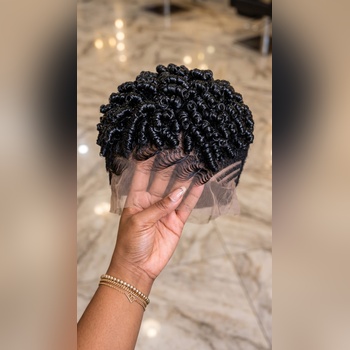
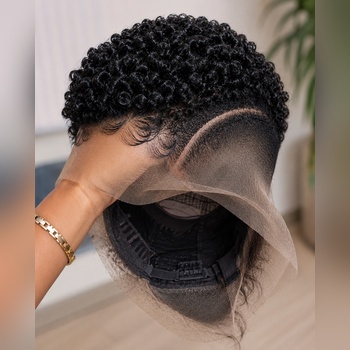
This arrangement creates substantial visual density without requiring long hair. The curls rise just enough from the base to produce dimension, but they remain compact enough to preserve the pixie silhouette. From the front and three-quarter angles, the viewer sees dozens of glossy circular surfaces reflecting light independently.
When requesting this construction from a stylist, specify that you want small polished ring curls rather than loose curls or fluffy coils. That distinction matters because changing the curl size can completely alter the appearance of the crown.
The Deep Side Part Separates Two Styling Techniques
Each wig uses a pronounced diagonal part running from the front toward the crown. This line is important because it visually separates the dense ring curls from the elongated side waves.
Along one side of the part, circular curls begin almost immediately. On the opposite side, strands are combed into long parallel sections that curve downward before turning toward the temple. The visible part creates breathing room between these two areas and makes the styling easier to read.
For a custom unit, send the stylist a clear three-quarter reference image and indicate which side you want the part placed on. A mirrored part can change how the wig frames the face even when every other detail remains identical.
Deep Burgundy Creates a Rich Wine-Colored Crown
The burgundy version combines dark wine shadows with brighter red reflections along the raised surfaces of each curl. Because the rings contain both illuminated outer edges and darker centers, the color develops more depth than a flat single-tone red.
The sculpted side waves are particularly noticeable in this shade. Their longer parallel strands produce uninterrupted burgundy highlights, while the crown breaks those highlights into dozens of smaller circles.
For a similar custom color, descriptions such as deep burgundy, wine red or dark cherry red may help, but photographs should always accompany the color request. Wig suppliers can use the same color name for substantially different shades.
Copper Auburn Gives the Style a Warmer Direction
The upper-right wig uses a warm copper-auburn family of tones. Compared with burgundy, it contains more orange-brown warmth and less wine-red depth. The color works especially well with the highly reflective curl surface because the highlights become brighter while the spaces between curls remain considerably darker.
Its side-wave section also shows why color placement matters. Broad curved strands reveal the copper tone more continuously than the small rings, creating a subtle difference between the crown and temple even though they belong to the same wig.
A buyer seeking this appearance can ask for an auburn copper or rich copper-brown pixie base and provide the image as the primary shade reference.
Jet Black Emphasizes Shine and Curl Geometry
Jet black gives the ring-curl construction its strongest contrast. The interior portions of the curls remain extremely dark, while direct light produces narrow reflective bands across the outer curves.
This makes the circular formation easy to recognize without relying on multiple colors. The diagonal part also appears more prominent against the dark hair, helping define the separation between the crown and the sculpted front section.
For customers who want the hairstyle itself to remain the main focus, black is one of the most straightforward choices. It highlights the curl pattern, parting and finger-wave work without introducing additional color transitions.
Pearl Blonde Exposes the Finest Strand Details
The central blonde wig changes the visual character considerably. Its pale pearl-to-champagne tone reflects much more light, allowing individual strands within the rings to remain visible.
The side waves appear softer because there is less contrast between the hair and the lighter areas around the part. At the same time, the actual ridges formed by the parallel strands are easy to see.
Light shades require especially careful curl placement. Uneven sections can become more noticeable because shadows cannot disguise irregularities as effectively as they can on black or dark brown hair.
Chocolate Brown Offers Depth Without Going Fully Black
The brown variation combines a dark foundation with warm chocolate and subtle copper reflections. It maintains enough depth to make the rings look substantial while producing warmer highlights whenever light reaches the curved surfaces.
This option sits visually between the dramatic darkness of jet black and the brighter appearance of copper. The result keeps the intricate curl work prominent without making color the only focal point.
For custom ordering, terms such as deep chocolate brown, espresso brown with warm highlights or dark cocoa brown can help narrow the shade, but a visual reference remains more reliable than a written color name.
The Front Waves Require Precision Styling
The elongated front sections are an important part of this design. Fine strands are arranged closely together and shaped into broad curved waves that follow the forehead and temple. Smaller curled ends then connect these waves visually with the circular crown.
This type of work requires more control than simply curling a pixie wig with a small iron. A stylist must create consistent strand direction, maintain the part and shape each wave so it lies close to the base.
When searching for someone to recreate the style, look for portfolios showing finger waves, sculpted pixie styling, precision wig work and compact curl sets. A general wig installer may not necessarily specialize in this kind of detailed surface styling.
Choosing the Right Base Wig for Customization
A suitable starting unit needs enough density through the crown to create numerous ring curls while retaining enough workable hair around the front and temple for the longer waves. A base that is too sparse can leave visible gaps between the curls.
Hair length also matters. Excessively long hair creates unnecessary work and bulk, while a base cut too closely may not provide enough length to form complete rings. A stylist experienced with pixie units can select or cut the base according to the intended curl diameter.
Human hair generally offers greater freedom for repeated heat styling and color customization. Heat-friendly synthetic fiber can also work for pre-shaped styles, particularly when the goal is to preserve the curl arrangement for longer periods with minimal restyling.
Where to Have a Similar Wig Made
Search for local wig professionals using terms such as custom pixie wig stylist, finger-wave wig specialist, custom curly wig maker or precision pixie wig salon. Examine their previous work before booking rather than relying only on service descriptions.
Send several reference photographs if possible. A front view helps establish the wave direction, while a side or three-quarter photograph communicates the part placement and crown height more accurately.
Before confirming an appointment, ask whether the stylist can create the small circular curl size shown in the reference. This is one of the most important details and should be discussed before the wig is purchased or cut.
How to Order the Style From a Wig Maker
Begin by selecting your preferred color family: jet black, burgundy, pearl blonde, copper auburn or chocolate brown. Then send the reference photograph and identify the specific wig whose color you want copied.
Explain that you want a compact pixie silhouette with a dense ring-curl crown, diagonal side part and sculpted finger waves. Ask the seller to confirm the hair material, cap size, density and customization method before payment.
For a made-to-order unit, request photographs or a brief video of the finished wig before shipping when the seller offers that service. This provides an opportunity to check the color, curl scale and part placement before the unit leaves the studio.
Buying a Similar Ready-Made Wig Online
Ready-made options may be found through specialist wig stores, independent wig makers and marketplaces featuring custom hair sellers. Search using combinations of the visible characteristics instead of relying on a broad phrase such as “pixie wig.”
For example, combining the desired color with terms describing ring curls, finger waves and a side part can produce more relevant results. Always compare actual customer photographs when available because heavily sculpted wigs can differ significantly from listing photographs.
Check whether the wig arrives pre-styled. Some sellers use photographs to demonstrate what can be achieved after professional customization, while the product itself may arrive in a less elaborate state.
Booking a Fitting After the Wig Arrives
Even a fully styled unit can benefit from a professional fitting. Search for a wig salon or stylist offering wig fitting, customization or perimeter adjustment services and explain that the crown styling needs to remain intact.
Bring the reference image to the appointment. The stylist can use it to determine how the diagonal part should sit and how the temple waves should frame the face.
Avoid requesting unnecessary cutting through the curled crown. Most fit-related adjustments should focus on positioning, cap security and the perimeter so the ring pattern remains undisturbed.
Price Guide for Detailed Ring Curl Pixie Units
| Wig Category | Typical Range | Expected Level of Work |
|---|---|---|
| Premium Custom | $450–$900+ | Higher-grade hair, custom sizing, detailed coloring, individually arranged ring curls and precision wave work |
| Standard Custom | $250–$500 | Custom color selection, shaped pixie base, sculpted crown and personalized part placement |
| Basic Human Hair | $130–$320 | Human-hair pixie base suitable for additional professional curling and shaping |
| Premium Synthetic | $80–$200 | Higher-quality fiber with pre-set curls and stronger shape retention |
| Basic Synthetic | $35–$100 | Entry-level fiber with simpler pre-styling and fewer customization options |
Actual prices depend on the seller, hair material, cap construction, coloring process and amount of hand styling required. Highly detailed curl placement generally requires more labor than a standard pre-curled pixie unit.
Maintaining the High-Gloss Ring Formation
The individual rings should be disturbed as little as possible between wears. Store the wig upright on an appropriate stand and avoid pressing the crown against clothing, packaging or other wigs.
A conventional brush can separate the circular formations, so maintenance should focus on individual sections rather than brushing through the entire crown. Follow the wig maker’s product recommendations, particularly with synthetic fibers that may have strict heat limitations.
Human-hair versions may eventually need the curls reset. When that happens, returning to a stylist who understands the original ring size and placement is preferable to completely restyling the unit into a different curl pattern.
Picking a Color Without Losing the Character of the Style
Each shade changes what the eye notices first. Jet black emphasizes shine and sculptural curl shape. Burgundy draws attention to red reflections. Copper auburn introduces stronger warmth, while chocolate brown keeps the appearance rich and subdued. Pearl blonde makes individual strands and wave ridges particularly visible.
Whichever color is chosen, preserving the small circular crown, diagonal part and sweeping temple waves is what keeps the overall identity consistent. These structural details are therefore the most important points to communicate when booking a stylist or placing a custom order.
Search Terms
Burgundy Ring Curl Pixie · Copper Auburn Circular Curls · Jet Black Glossy Ring Curls · Pearl Blonde Pixie Rings · Chocolate Brown Curl Crown · Deep Diagonal Side Part · Sculpted Temple Finger Waves · Compact Circular Crown Curls