
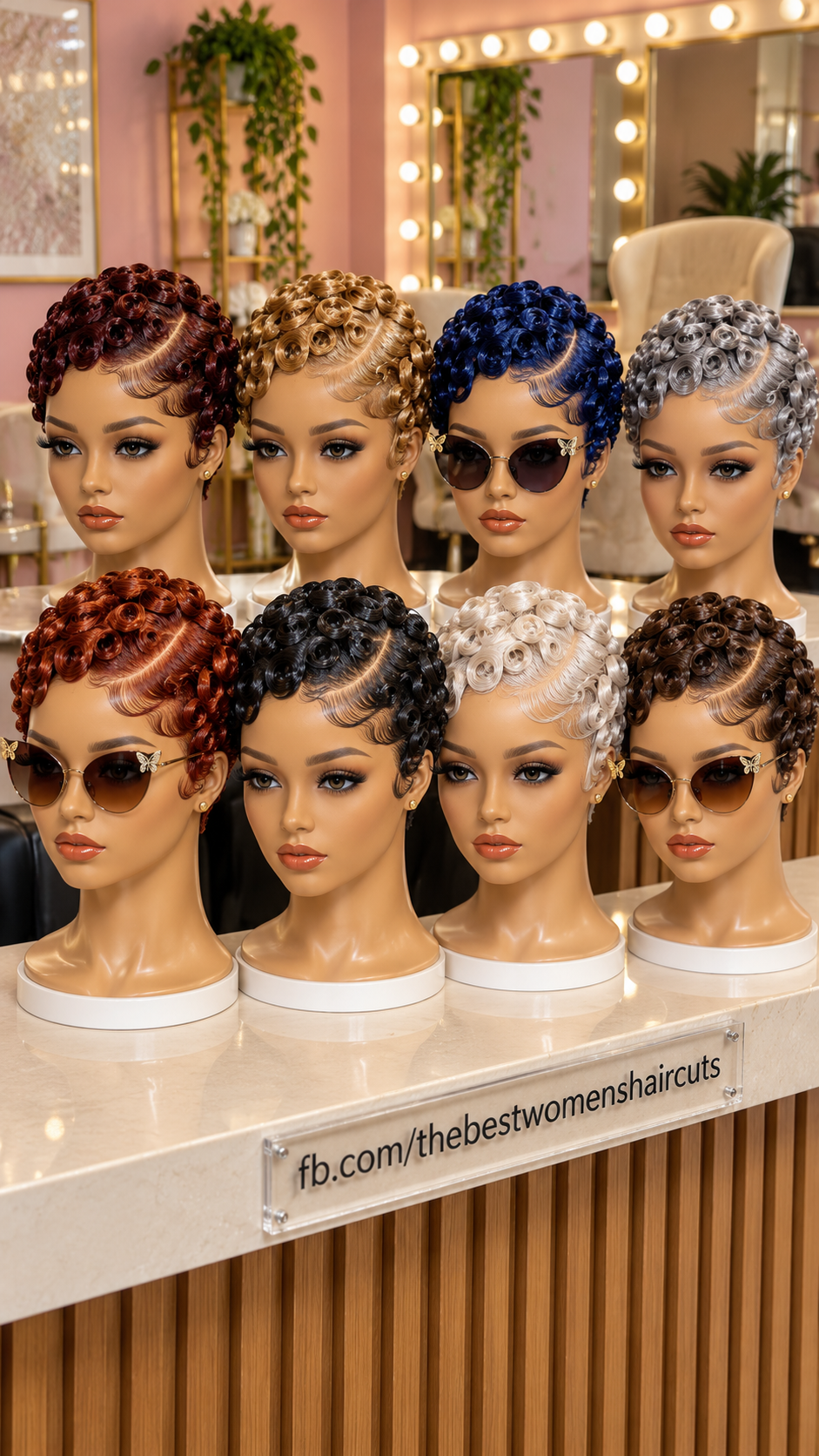
Choosing a pixie wig becomes much more exciting when eight different colors are displayed side by side, especially when each hairstyle combines tightly arranged spiral curls with elegant finger waves. This salon-inspired collection brings together eight mannequin heads wearing compact curly pixie wigs in burgundy, golden blonde, royal blue, silver gray, copper, black, pearl white, and chocolate brown. Although the wigs share a recognizable styling concept, their colors, curl placement, and front hairline arrangements create noticeably different personalities.
The display offers an opportunity to compare how color changes the appearance of sculpted curls without dramatically altering the overall hairstyle. Some versions emphasize rich, dark reflections, while others draw attention to the circular ringlets through lighter strands. Several have especially pronounced sweeping waves along the forehead, and the diagonal parting areas create a recognizable division between the raised curls and the closely arranged front sections.
For customers searching for finger wave pixie wigs, this collection is more useful than a single product photograph. It allows buyers to compare several possible color choices, identify the styling details they prefer, and decide which questions to ask before placing an order. However, the wigs are displayed on mannequin heads, so the photograph does not establish their fiber type, cap construction, lace specifications, or available installation methods.


Eight Colors With One Recognizable Styling Concept
The mannequins are arranged in two rows of four on a light-colored salon counter. The rear row contains burgundy, golden blonde, royal blue, and silver gray wigs. The front row presents copper, black, pearl white, and chocolate brown alternatives.
Each hairstyle has a compact silhouette with raised circular curls concentrated around the upper head. A diagonal parting line separates part of the curl arrangement from the sweeping finger waves along the forehead. The lower sides remain relatively close to the head, maintaining a neat outline beneath the decorative curls.
The wigs are similar enough to demonstrate a coordinated collection, but they should not be described as absolutely identical. The size and placement of individual ringlets vary slightly, and the visible finger waves follow somewhat different directions. These distinctions become particularly noticeable when comparing the silver, pearl white, and darker versions.
The mannequin heads have carefully styled facial makeup, and several wear decorative sunglasses. Those accessories contribute to the presentation but are not part of the hairstyles themselves. Customers should therefore concentrate on the wigs rather than assuming the complete mannequin display represents a wearable product package.
How the Diagonal Parting Changes Each Pixie
One of the strongest visual similarities across the collection is the diagonal parting near the upper front. Rather than dividing the hairstyle into two equal halves, the parting creates an angled boundary between the raised curls and the closely directed hair beneath them.
On several wigs, this line runs from the upper side toward the front forehead area, where the surrounding strands curve into decorative finger waves. The parting remains visible because the hair on either side follows different directions.
This arrangement introduces structure without requiring a long hairstyle. Even though the wigs are compact, the diagonal division gives the front a sense of movement and creates a recognizable styling pattern.
Buyers should pay attention to which direction the parting travels. A reversed parting may still produce an attractive wig, but it will not necessarily match the particular mannequin selected from the display.
When commissioning a similar hairstyle, customers should specify whether they want the parting positioned on the left or right from the wearer’s perspective. This avoids confusion caused by photographs, which may be mirrored or viewed from different angles.
Burgundy Finger Coils for a Rich Wine-Colored Appearance
The rear-left mannequin wears a deep burgundy pixie wig with compact circular curls arranged across the upper head. The color appears predominantly wine red, with darker maroon areas between the ringlets and brighter reddish reflections on their curved surfaces.
The curls are closely grouped, particularly around the upper front. Several circular openings remain visible, giving the hairstyle a decorative appearance without creating excessive height.
A diagonal parting runs through the front styling area, separating the upper coils from the finger waves that follow the forehead. These waves appear darker in some sections because of the lighting and the direction of the strands.
This version offers an alternative to traditional black curly pixie wigs for customers who want a noticeable color while keeping the overall silhouette compact.
When discussing this color with a seller, describe it as deep burgundy or wine red rather than bright cherry red. A lighter scarlet version would create a different result, especially under daylight.
Ask whether the actual wig has darker roots or whether the variation seen in the photograph comes primarily from reflections and shadow. The image does not establish the exact coloring process.
Golden Blonde Curls With a Warm Champagne Appearance
The second mannequin in the rear row wears a golden blonde pixie. Its color contains warm honey and champagne-gold reflections, with lighter strands visible across the raised curls.
Compared with the darker wigs, the individual ringlets appear more prominent because light passes visually across their golden surfaces. Some curls form small circular openings, while others gather into slightly larger clusters.
The front section is arranged into pale finger waves that follow a curved direction toward the temple. The diagonal parting remains noticeable, although its contrast is softer than on the black or royal blue versions.
This color may appeal to customers who prefer a warm blonde rather than an icy platinum shade. It offers brightness while retaining a golden influence that distinguishes it from the pearl white wig in the front row.
A supplier should confirm whether the shade is honey blonde, golden champagne, or a lighter caramel blonde. These names can represent different colors depending on the seller.
Customers should also request photographs under natural daylight before ordering. Warm indoor lighting may intensify yellow and golden reflections, making a shade appear different from its everyday appearance.
Royal Blue Pixie Curls With Darker Depth
The third mannequin in the rear row introduces the most unusual color in the collection: a vivid royal blue with darker navy areas.
The raised curls have a deep blue surface, while the recessed portions appear considerably darker. This creates a strong contrast between the outer edges of the ringlets and the spaces within them.
The diagonal parting is particularly noticeable because it separates the circular upper curls from the closely arranged blue front section. Along the forehead, several fine strands form decorative sweeping waves.
The mannequin also wears dark sunglasses with ornamental details, but the accessory should not be confused with a component of the wig.
This version is suited to customers seeking a bold fashion color rather than a natural-looking dark shade. The compact pixie silhouette helps concentrate the color around the face without requiring long blue hair.
Before ordering, ask whether the intended blue is royal blue, navy, or a brighter electric blue. The photograph appears closest to a deep royal blue with darker shadows, but actual color should be confirmed from the seller’s product images.
If purchasing a synthetic unit, confirm the manufacturer’s care instructions before attempting any color modification. If purchasing human hair, ask about the coloring history and whether professional color maintenance may be necessary.
Silver Gray Ringlets With a Metallic-Looking Shine
The rear-right mannequin wears a silver-gray curly pixie with compact spiral loops across the upper section. The color appears cool and reflective, with lighter silver strands and darker gray areas creating depth within the curl arrangement.
The raised ringlets are especially easy to distinguish because their pale surfaces contrast with the darker openings. Some curls appear nearly circular, while others bend into slightly elongated shapes.
The finger waves along the forehead maintain a pale silver appearance and follow a sweeping direction beneath the diagonal parting.
Compared with the pearl white version, this wig has a more noticeable gray influence. It does not appear uniformly white, and the darker silver reflections contribute to its metallic-looking finish.
For customers, the important distinction is between silver gray, ash gray, and platinum blonde. These colors may appear similar in promotional photographs but can produce different results under natural lighting.
Ask the seller for a daylight photograph and confirmation of the actual shade. Avoid assuming that the wig is made from naturally gray human hair, since the photograph cannot establish its origin or fiber composition.
Copper Spiral Curls for a Warmer Pixie Statement
The front-left mannequin wears a rich copper-colored pixie with reddish-orange and warm brown reflections. Its shade is noticeably deeper than a pale ginger blonde and warmer than the burgundy version behind it.
The upper curls form numerous compact circular loops. Some are positioned close to the diagonal parting, while others gather toward the side and upper rear.
At the forehead, the copper strands form several carefully arranged waves that travel toward the temple. The combination of warm color and directional styling creates a decorative appearance without increasing the hair’s length.
The color looks particularly rich where the curls overlap. Darker auburn areas appear inside the loops, while brighter copper highlights follow the outer surfaces.
Customers requesting this version should specify whether they prefer copper brown, auburn copper, or a brighter orange-copper shade. The photographed wig appears to contain a noticeable brown influence.
For a custom order, ask whether the front finger waves will carry the same color as the upper curls. An unintended darker or lighter front section could alter the overall appearance.
Black Finger Wave Pixie for an Understated Color Choice
The second mannequin in the front row wears a glossy black pixie with tightly arranged circular curls and a clear diagonal parting.
The black shade emphasizes the hairstyle’s shape rather than introducing additional color contrast. Under the salon lighting, the ringlets display cool reflections that help separate individual curls.
The front hairline contains several sweeping finger waves. These strands sit relatively close to the forehead and create a decorative transition beneath the upper coils.
This version may appeal to customers who prefer a dark hairstyle that can be paired with a wide variety of clothing colors and makeup choices.
However, black wigs are not always identical in tone. Some are natural black with subtle brown reflections, while others are very deep jet black.
Ask the seller to confirm the actual color and provide photographs under ordinary lighting. Reflections should not automatically be interpreted as separate highlights.
The black version also offers a useful comparison when evaluating the craftsmanship of the curls. Without a bright color drawing attention away from the styling, the circular openings and front wave arrangement become especially important.
Pearl White Pixie With Bright Spiral Details
The third mannequin in the front row wears a pale pearl white wig with compact ringlets across the upper section. The color is much lighter than the silver-gray version behind it, with creamy white reflections and only subtle variations in tone.
The light strands make the circular curl arrangement highly visible. Several ringlets near the front form open loops, while smaller curls fill the surrounding areas.
The diagonal parting appears as a slightly darker channel between the raised curls and the sweeping front waves. This creates a recognizable styling boundary even though the hair itself is very pale.
The finger-wave section travels across the forehead in layered curves, giving the hairstyle a delicate appearance.
For customers choosing between white and platinum blonde, the precise shade matters. Pearl white often suggests a softer, creamy finish, while icy platinum may contain cooler gray or violet influences.
The photograph does not establish whether this wig has been chemically lightened or manufactured using precolored fibers. Buyers should confirm the material and care requirements before purchase.
If the unit is made from processed human hair, its coloring history may affect the recommended maintenance routine. Synthetic versions should be cared for according to the manufacturer’s instructions.
Chocolate Brown Curls With a Rich Coffee-Colored Finish
The final mannequin, positioned at the front right, wears a deep chocolate-brown pixie with glossy circular curls and a diagonal front parting.
The color appears warmer than the black version but darker than the copper wig. Several strands show rich coffee-brown reflections, particularly around the raised curl openings.
The finger waves along the forehead remain closely arranged, forming a decorative sweep beneath the upper ringlets.
This version provides an alternative for customers who find black too dark but do not want the brighter appearance of copper or golden blonde.
When ordering, distinguish between dark chocolate, medium brown, and chestnut. The reference leans toward a rich, deep brown with warm reflections rather than a light caramel shade.
A daylight photograph can help determine whether the brown color is uniform or contains subtle highlighted strands.
The chocolate version completes the collection by demonstrating how the same general styling concept can appear softer and warmer through a change in color.
Comparing the Eight Wigs Before Making a Purchase
The most practical way to evaluate this collection is to compare both color and visible styling. Customers should not assume that every wig has identical curls or finger-wave placement simply because the mannequins are arranged as a coordinated group.
| Display Position | Visible Hair Color | Primary Visual Appeal |
|---|---|---|
| Rear Left | Wine Burgundy | Rich red circular coils with sweeping forehead styling |
| Rear Center Left | Golden Blonde | Warm golden curls with softly contrasting finger waves |
| Rear Center Right | Royal Blue | Deep blue spiral curls with darker navy depth |
| Rear Right | Silver Gray | Cool metallic-looking ringlets and pale front waves |
| Front Left | Copper | Warm reddish-brown coils with decorative temple styling |
| Front Center Left | Black | Glossy dark ringlets emphasizing the curl arrangement |
| Front Center Right | Pearl White | Bright circular curls and a light sweeping hairline |
| Front Right | Chocolate Brown | Deep coffee-colored curls with warm reflections |
The display provides a helpful color reference, but it does not establish that all eight wigs have identical construction or come from the same manufacturing process.
Find Out Where To Buy This Style
Customers looking for these wigs can begin with local wig boutiques, professional salons specializing in pixie styling, online wig retailers, and custom wig makers experienced in finger coils and finger waves.
The most useful approach is to identify the exact color and hairstyle from the collection before contacting a seller. For example, a buyer interested in the pearl white version should send a cropped image of that mannequin instead of asking for an unspecified white curly wig.
Similarly, someone interested in the copper version should explain that they want compact spiral curls with a diagonal front parting and sweeping hairline waves.
Useful search phrases include finger wave pixie wig, spiral curl pixie unit, sculpted finger coil wig, and side-part curly pixie hairstyle.
The image contains a page address on the front of the display counter. However, that visible address should not be treated as verified evidence of a seller, product listing, physical shop location, price, or available inventory.
No current purchase price, direct supplier, or confirmed booking location can be established from this photograph alone.
Questions to Ask Before Ordering
First, ask whether the selected color is available as a ready-made wig or requires custom production. Then confirm the actual fiber type, cap construction, size options, and recommended installation method.
Request clear photographs of the actual product, including the front hairline, both sides, rear, and complete underside.
The underside photograph should reveal any lace area, cap perimeter, adjustment hardware, and securing attachments included with the unit.
Ask whether the seller can reproduce the finger-wave arrangement visible on the selected mannequin. A wig with similar circular curls but ordinary front styling may not deliver the intended result.
Finally, confirm whether installation, styling, shipping, and any required customization are included in the quoted amount.
Ready-Made Pixie Wigs Versus Custom Finger-Wave Units
A ready-made wig can be convenient for customers who want an established hairstyle without waiting for individual production. However, the arrangement of circular coils and finger waves may vary between products.
Custom work offers greater control over color, parting direction, curl size, and front styling. This can be useful when a customer wants a close reproduction of a particular mannequin in the display.
The correct choice depends on the required level of accuracy. Someone who likes the general idea of a burgundy curly pixie may be satisfied with a ready-made alternative. A buyer who wants the same diagonal parting and carefully arranged forehead waves may benefit from a custom consultation.
Before modifying an existing wig, ask whether its fiber and construction are suitable for the proposed styling. Not every synthetic wig can be safely reshaped using heat, and not every cap provides enough flexibility for major hairline alterations.
Estimated Prices for Finger Wave Pixie Wig Styles
The following USD amounts are illustrative planning estimates rather than verified live product prices. Actual costs depend on the hair material, cap construction, color preparation, styling labor, and seller.
| Wig Category | Illustrative USD Range | Possible Purchase Scope |
|---|---|---|
| Premium Custom | $270–$680+ | Individual cap measurements, professionally arranged spiral curls, customized finger waves, and selected color preparation. |
| Standard Custom | $145–$330 | Custom compact pixie styling, diagonal parting placement, and carefully arranged front waves. |
| Basic Human Hair | $90–$225 | A human-hair pixie base that may require separate curl setting, styling, and installation. |
| Premium Synthetic | $55–$160 | Higher-priced synthetic pixie options with prearranged curls or decorative front styling, depending on specifications. |
| Basic Synthetic | $20–$85 | Budget curly pixie alternatives that may offer a similar silhouette without matching every spiral or finger wave. |
Some color choices may require additional preparation. Pale white, silver, blue, and bright copper options may involve different production processes depending on the selected material.
The styling labor can also influence the final cost. Creating multiple circular coils and arranging detailed forehead waves may require more work than preparing an ordinary curly pixie.
Installation, lace preparation, shipping, and future restyling may be charged separately.
The photograph does not establish whether any of the eight displayed wigs is made from human hair, synthetic fibers, or a blend. The categories above describe possible purchasing options rather than confirmed product characteristics.
Booking a Stylist for the Finger-Wave Hairline
The front styling deserves special attention because the waves sit close to the forehead and follow carefully arranged paths.
When booking a wig appointment, explain that the desired look includes compact circular curls, a diagonal parting, and decorative finger waves rather than an ordinary curly hairline.
The stylist should evaluate the wig’s construction and fit before attempting any alterations.
If the unit includes lace, trimming should take place only after the cap has been positioned correctly. Cutting too close to the styled hairline may remove useful material or interfere with the wave arrangement.
The correct securing method should depend on the actual cap and wearer’s needs. A mannequin photograph cannot demonstrate whether a wig is appropriate for adhesive-free installation.
After fitting, any corrections to the curls or waves should use techniques compatible with the confirmed hair material.
Maintaining Eight Different Colors Without Damaging the Coils
Although the color choices vary widely, the circular curl arrangement creates a shared maintenance challenge. The individual ringlets should remain recognizable rather than being separated through aggressive brushing.
Before washing or restyling, confirm whether the wig contains human hair, synthetic fibers, or a blend. The appropriate products, heat limitations, and setting methods depend on that information.
For human-hair units, repeated washing may affect the finger-wave arrangement and require professional resetting. Chemically processed light shades may need additional caution based on their coloring history.
For synthetic units, heat compatibility should always be confirmed before using heated tools. Some fibers can become permanently distorted when exposed to unsuitable temperatures.
Excessive oils and styling products may collect inside the circular curls, reducing strand separation and making the hairstyle appear heavier.
The forehead waves should also be protected from rubbing and uncontrolled combing. Their appearance depends on strands following consistent curves.
During storage, place each wig on a suitable stand rather than compressing the curls against other objects. If several wigs are stored together, allow enough space so the ringlets do not become crushed.
Which Color Offers the Best Balance for Your Personal Style?
The burgundy version provides a rich wine-colored alternative to black. Golden blonde emphasizes warmth and brightness, while royal blue creates the boldest fashion statement in the collection.
Silver gray offers a cooler appearance, whereas copper introduces reddish warmth. Black emphasizes the hairstyle’s craftsmanship without adding a contrasting color. Pearl white makes the curl openings particularly noticeable, and chocolate brown offers a rich coffee-colored alternative.
No single color is automatically the best choice for every wearer. The decision should account for preferred appearance, maintenance expectations, and how closely the available product matches the selected mannequin.
For customers ordering online, choosing the exact display position and obtaining photographs of the actual wig can prevent confusion between similar-looking products.
The most important purchasing principle is to evaluate the complete hairstyle. Color may attract attention first, but curl size, parting direction, front-wave placement, cap fit, and styling quality determine whether the final wig resembles the reference.
This eight-wig collection demonstrates how sculpted finger coils and sweeping forehead waves can create a variety of appearances while retaining a compact pixie silhouette. Whether the preference is deep burgundy, luminous blonde, rich chocolate, or pearl white, a carefully selected and properly fitted wig can preserve the decorative character that makes these hairstyles so appealing.
Search Terms
Eight color finger wave pixie wigs · Burgundy spiral coil pixie hairstyle · Golden blonde side part finger wave wig · Royal blue sculpted ringlet pixie · Silver gray circular curl wig · Copper finger wave curly pixie · Pearl white spiral coil hairstyle · Chocolate brown side part pixie wig