
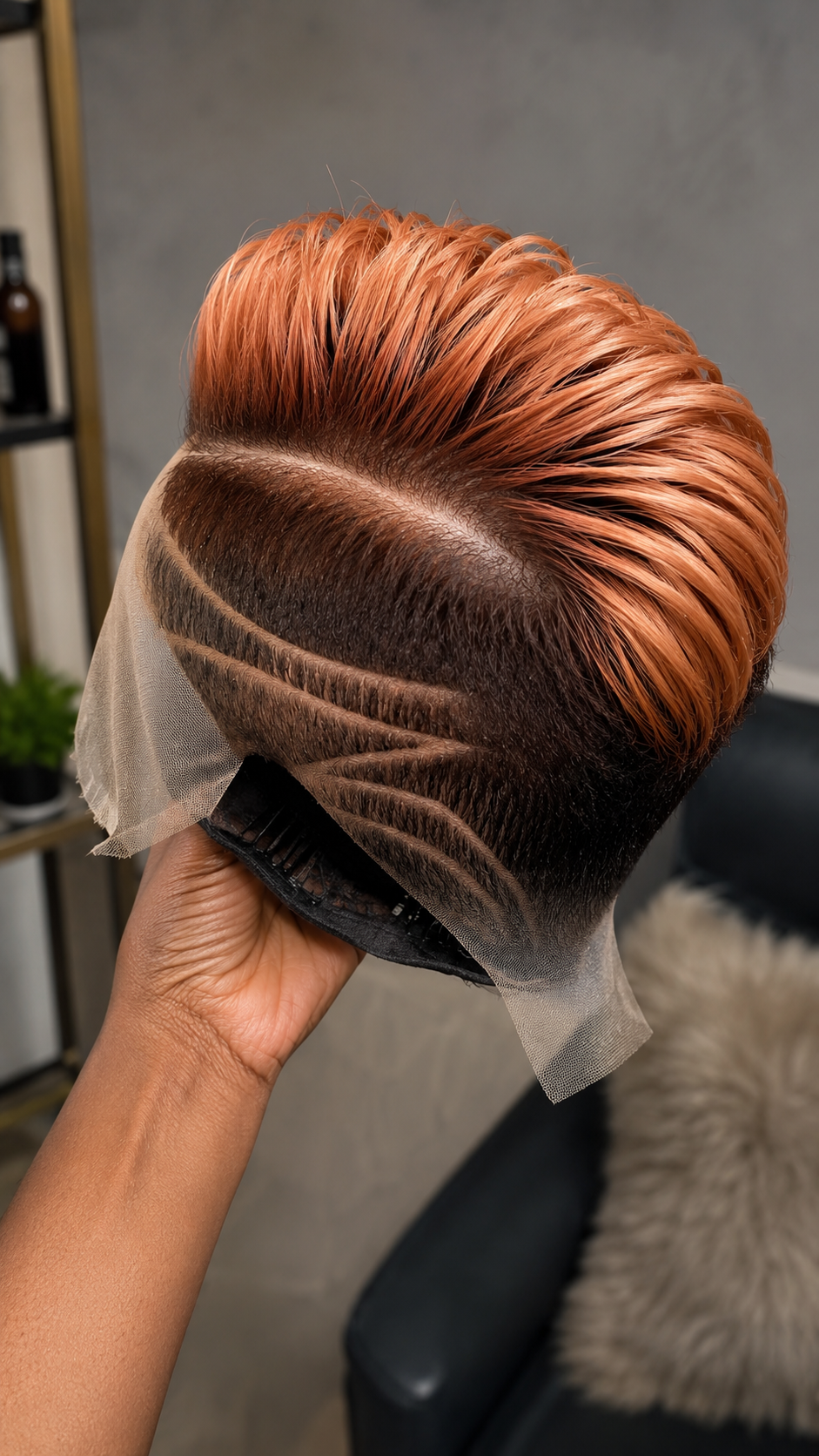
A pastel is not a colour that covers the hair; it is one you see straight through to whatever is underneath. That is the thing to understand about a soft peach rose-gold like this one. A vivid shade or a natural brown is opaque, so it sits on top of the hair and hides the base. A pastel is the opposite: it is a sheer wash of delicate colour, semi-transparent by nature, so whatever the hair looks like beneath it shows straight through. That means a pastel only looks clean and soft if the hair under it was first lifted to an even, pale, near-white base. Any warmth, patchiness, or unevenness left in that base shows through the sheer tint and muddies it, turning a pretty rose-gold dull or orange in the uneven spots.
This is why a pastel is really a lift, dressed in a whisper of colour. The base does most of the work, and the tint just colours it. Get the lift perfect and even, and the pastel reads soft and clean; get it patchy or under-lifted, and no amount of lovely colour saves it, because you see the flawed base right through the tint. And because the tint is so pale and holds so little pigment, it fades fast, and when it goes you are not left with less colour, you are left looking at the raw lifted base itself, pale yellow or brassy, fully exposed. A pastel does not fade to nothing; it fades to reveal what was always underneath.
So buying a pastel means buying the quality of the lift beneath it more than the colour on top. It needs a flawless, even base to read true, it shows every imperfection in that base, and it fades to expose it. Keeping it soft means re-depositing the tint before it thins to bare base. Judge the lift, because with a pastel, the base is the colour’s whole fate.
Where To Buy A Pastel Pixie Wig With A Clean Base
Custom makers who lift and tone in-house can get the even, pale base a pastel needs, so ask how the hair was lifted and whether the base is clean and uniform under the tint. A maker who understands pastels will talk about the base as much as the colour; one who does not may deposit a pretty tint over an uneven lift that shows through.
Instagram and TikTok sellers show pastels freshly toned and at their softest, so ask what the shade looks like a few washes in, when the tint thins and the base starts to show. A pastel pixie wig is at its cleanest the day it is done, and you want to see how it fades and what base it fades to.
Etsy works with makers honest about pastel upkeep and base quality, with reviews mentioning fading and patchiness. The risk is a flawless fresh photo over a base that shows through within washes. Read reviews for anyone describing the colour going patchy or brassy.
Marketplaces like Amazon, AliExpress, and Temu are where synthetic pastels can be the smarter buy, because a synthetic pastel has no lifted base fighting through it and no fade to bare base; the soft colour is in the fibre and holds. For a delicate shade with far less upkeep, a good synthetic here often wins. Judge the softness of the tone.
Local beauty supply shops and salons let you see the base and the tint in daylight and judge how even the lift is. You pay a premium in-store, but pastels show their flaws in real light, so seeing it helps.
Vendors and wholesalers direct vary in lift quality, and an uneven base ruins a pastel. For a clean pastel, a maker who lifts evenly beats cheap bulk colour.
Regionally, clean pastel work comes strongly out of Lagos, Accra, Atlanta, London, and across South Africa, where colourists who lift evenly for delicate tones are easy to find on video.
Vet the seller on the base: check the account age, look for real buyer photos, time a plain question for a genuine reply, and ask whether the base under the pastel is even and pale, and how the colour fades. A seller who talks about the base understands pastels; one who only shows the tint may be hiding an uneven lift.
Red flags: a pastel shown only freshly toned, patchiness visible in close photos, no mention of the base or upkeep, and a human unit priced high for a delicate shade a synthetic would hold better.
When you order, send your measurements and ask about the base under the tint and how the pastel fades, and say you know a pastel is only as clean as its lift. That tells the maker you will judge the base, not just the colour.
On payment, thirty to fifty percent down with the balance before shipping is standard for custom coloured work. Use a method you can dispute, and ask to see the even base before releasing the last part.
How Much It Costs
A pastel pixie wig is one of the more expensive colours to reach, because it needs a full, even lift to a pale base plus a precisely diluted tint, and it is one of the fastest to fade, so upkeep is real.
Human hair, lifted to an even pale base and pastel-tinted, full build, glueless with bleached knots and a fine lace: roughly $250 to $520, since a clean pale lift plus a delicate tint is exacting work. Human hair, mid build in a pastel: about $200 to $400. Human hair, basic cap: around $130 to $290. Good synthetic in a soft pastel: $70 to $150, and often the smarter buy for a delicate shade. Basic synthetic: $30 to $65.
The honest point is that most of the cost and quality of a human pastel is in the lift you cannot see, not the tint you can. A perfect even base is expensive and is what makes the pastel read clean; a cheap uneven lift shows through and no tint fixes it. And since the tint fades fast to reveal that base, a human pastel needs frequent re-depositing. A synthetic pastel skips all of it, holding its soft tone with no base fighting through. Pastels join grey, silver, ash, and fantasy shades as colours where synthetic can beat human for low upkeep.
Shipping and any customs charge sit outside the price and change with where you live, so plan a realistic band and confirm your own country’s import rate rather than trusting a single quoted figure.
Then the ongoing costs, which pastels drive hard. A colour-depositing conditioner in the pastel tone to keep it soft, colour-safe cool washing, and deep moisture because the pale base is heavily lifted and dry. First-year math, honestly: a human pastel unit plus shipping plus any customs plus frequent re-depositing tends to land well above a natural unit’s year, because the delicate tint must be renewed often. A synthetic pastel lands far lower and steadier.
Per wear, a synthetic pastel is dramatically cheaper to keep soft than a human one that fades to base, which for delicate shades flips the usual advice. With pastels, the upkeep, and the hidden lift, are the real costs.
Deposits follow the custom pattern: thirty to fifty percent to start, balance before shipping, and confirmation of an even base before the last payment clears.
Shipping, Delivery, And What To Expect After Ordering
A pastel unit can arrive soft and clean and start thinning toward its base within a few washes, so plan to re-deposit to keep it soft rather than expecting it to hold. Ask that it ship so the style is protected, choose a tracked service for custom coloured work, and confirm your country’s import charge before it lands. When it arrives, check the base in daylight for evenness under the tint, and use a colour-depositing conditioner to keep the pastel from thinning to bare base. The lifted hair will also want moisture. What you unbox is the tint at its freshest over the base you paid for, and how even that base is decides how the pastel wears.
A Pastel Shows Whatever Is Underneath
Because a pastel is sheer, the base is never hidden; it is seen through the colour. An even, pale base reads as a clean soft pastel, while a patchy or warm base shows as dull, orange, or uneven patches straight through the tint. This is the opposite of an opaque colour that covers flaws. So with a pastel, the base is not a hidden foundation, it is part of the visible colour, and its evenness is exactly what you are judging when you judge the shade.
It Fades To Its Base, Not To Nothing
The trickiest thing about a pastel is what it fades to. A pale tint holds little pigment, so it washes out fast, and when it goes you do not get a soft faded version, you get the raw lifted base, pale yellow or brassy, uncovered. So a neglected pastel does not gently soften, it strips back to a colour you never chose. Re-depositing before it thins keeps the pastel present rather than letting the base take over.
The Dark Root Grounds The Softness
The dark root melting into this soft rose-gold does useful work: it grounds a delicate colour so it reads intentional, it keeps the most heavily lifted hair away from the scalp, and it hides regrowth. It also gives the eye a rich anchor against the pale tint. Judge how smoothly the dark root melts into the pastel length, since a clean blend is part of what makes a soft rooted colour look deliberate rather than washed out.
Before You Pay
- Is the base under the tint even and pale, or patchy and warm where it will show through?
- How fast does the pastel fade, and what base does it fade to?
- Am I ready to re-deposit the tint to keep it soft?
- For a delicate shade with low upkeep, would a synthetic pastel serve me better?
- Does the dark root melt cleanly into the pastel, or show a harsh line?
Trimming The Lace
The lace comes off the front the usual way, and a pastel reads truest in daylight, so cut where you can see the real soft tone and the base at the hairline rather than under warm indoor light. Trim in small offset steps and leave a shallow margin rather than cutting flush. If this is your first pastel unit, let a stylist make the first pass in good light, since a delicate tone shows every unevenness at the hairline and a clean cut matters where the pale colour hides nothing.
Search Terms
pastel pixie wig · rose gold pixie wig · peach short curl wig · soft copper pixie unit · rooted pastel pixie · synthetic pastel pixie wig · muted tone short wig · rose gold short lace wig
Final Thoughts
This soft peach rose-gold is delicate and pretty, and its whole life depends on something you do not directly see: the lift beneath the tint. A pastel is a sheer wash, not an opaque colour, so it shows the base through it, reads clean only over an even pale lift, and fades not to nothing but to that raw base exposed. Most of what makes a human pastel succeed or fail is the quality of the lift, and most of the upkeep is re-depositing the tint before it thins away.
Buy it judging the base as much as the colour, and be ready to re-deposit to keep it soft. If that upkeep sounds like a lot, a synthetic pastel holds its soft tone with no base fighting through and no fade to brass, and is often the smarter choice for a delicate shade. A pastel pixie wig is lovely the day it is toned; keeping it lovely means tending the tint and starting from a flawless base. The colour is a whisper. What is underneath is what you are really buying.