
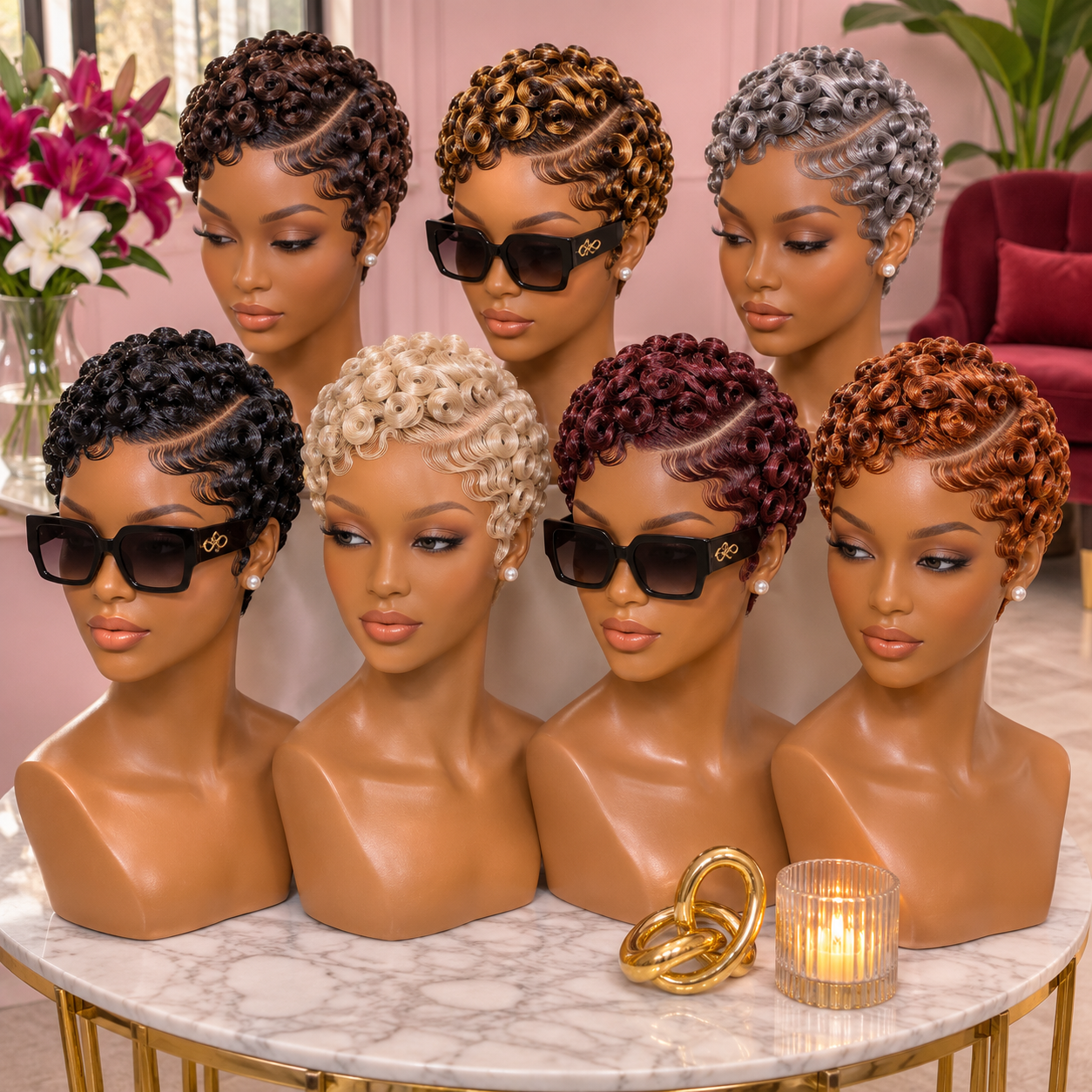
A beautifully arranged pixie hairstyle does not need extra length to create an unforgettable appearance. In this salon display, compact circular rosettes, delicate finger waves, and sweeping diagonal parts transform a familiar cropped hairstyle into a collection of glamorous designs. Each wig maintains a rounded silhouette, while its individual color brings a different character to the carefully arranged curls.
The photograph presents seven mannequin busts positioned in two rows on a white marble table with gold detailing. Three stand in the back, wearing deep chocolate brown, golden caramel, and metallic silver hairstyles. Four mannequins occupy the front, displaying glossy black, creamy pearl blonde, rich burgundy, and warm copper tones. Several mannequins wear oversized black sunglasses, while the others leave their hairlines unobstructed.
Although the wigs share a similar sculpted pixie concept, differences in curl size, spacing, and color reflections give each one its own appearance. The common design consists of small circular curls arranged across the crown, a noticeable diagonal parting, and flatter finger-wave sections that travel toward the forehead and temples.
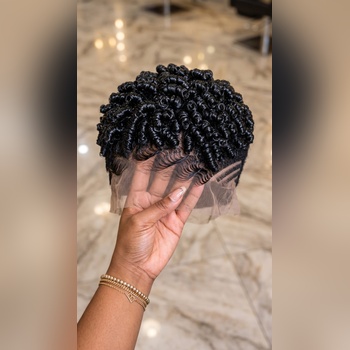
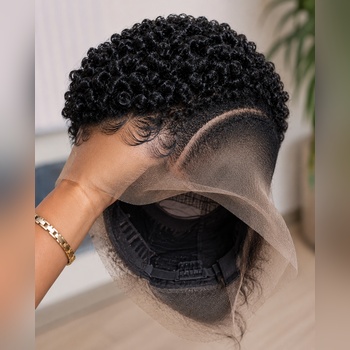
For customers interested in buying a similar wig, these details are more important than the mannequin presentation itself. The correct curl shape, front-wave direction, crown density, and cap fit determine whether a purchased unit will resemble the intended hairstyle.
The Beauty of Circular Rosette Curls
The most recognizable styling element is the collection of circular curls distributed across the upper head. Rather than hanging down like conventional ringlets, these curls sit close to the crown and form compact rolled shapes resembling small rosettes.
Many curls have clearly visible circular openings. Fine strands travel around each opening in closely arranged layers, creating a glossy, sculpted appearance.
The curls are not completely identical in size. Some appear slightly wider near the upper front, while smaller formations occupy the spaces between them and continue toward the visible sides.
This variation helps create fullness without making the hairstyle appear excessively bulky. The overall silhouette remains compact, rounded, and close to the head.
The arrangement also creates a distinctive relationship between the curls and the hairline. The raised rosettes provide decorative fullness, while the flatter strands near the forehead create graceful transitions.
When searching for a similar wig, customers should distinguish circular rosette curls from ordinary loose spirals. A standard curly pixie may have the same approximate length but produce a substantially different appearance.
The Color Collection Offers Distinct Personalities
One advantage of this particular display is the opportunity to compare several color options within the same hairstyle family. Each shade changes the appearance of the circular curls without requiring a completely different cut.
Deep Chocolate Brown
The back-left wig contains dark chocolate-brown curls with warm reflective highlights. The relatively deep color gives the crown a rich appearance, allowing the circular formations to remain the central focus.
Its visible diagonal parting separates the upper rosettes from the finger waves arranged across the forehead. The curls are closely grouped, producing a compact silhouette with subtle depth between individual loops.
Golden Caramel
The back-center mannequin wears warm golden-caramel curls with darker brown areas visible between the spirals. This creates a dimensional effect, particularly where the rounded curls reflect the salon lighting.
The golden shade makes individual circular openings noticeable, while the darker sections preserve depth within the crown.
It is an appealing color option for customers who prefer warmth without choosing a pale blonde hairstyle.
Metallic Silver
The back-right unit displays a silver-gray hairstyle with bright reflective strands. The curls appear tightly arranged around the crown, with delicate finger waves following the front hairline.
The relatively cool color creates a different impression from the warmer brown and copper options.
Because silver shades can vary considerably between manufacturers, buyers should request daylight photographs before ordering.
Glossy Black
The front-left mannequin wears deep black curls. Narrow reflections follow the circular strands, making the individual rosettes visible against the darker spaces between them.
A diagonal parting and carefully shaped temple waves are also noticeable. The black shade emphasizes the overall structure rather than relying on contrasting color sections.
Creamy Pearl Blonde
The front-center-left wig contains pale, creamy blonde curls with soft golden undertones. Compared with the silver version, it appears warmer and less gray.
The lighter shade makes the individual strands particularly visible along the circular curls and sweeping forehead waves.
The crown remains rounded, with closely grouped rosettes that create fullness without excessive height.
Rich Burgundy
The front-center-right mannequin displays dark burgundy curls with wine-red and plum-like reflections.
The circular formations appear especially rich where the light catches their curved surfaces. Darker sections between the rosettes give the hairstyle depth.
The diagonal parting and front-wave styling remain recognizable, providing continuity with the other wigs in the collection.
Warm Copper
The front-right wig contains vibrant copper-auburn curls with reddish-orange reflections. The shade makes the circular rosettes particularly prominent.
The front waves follow the same general direction as the other units, but their warm coloring gives them a brighter appearance.
Small variations in curl placement make this wig visually distinct from the golden caramel and burgundy versions.
Diagonal Partings Give the Hairstyles Their Direction
The visible parting is an essential part of this pixie design. Across the mannequins, a narrow diagonal division separates the circular crown curls from the flatter front section.
The parting travels across the upper forehead area and continues toward the side, creating an asymmetrical arrangement.
Above the division, the hair forms compact circular rosettes. Beneath it, the strands follow elongated curves that sweep toward the hairline.
This contrast between circular curls and directional waves creates structure without requiring a dramatic difference in hair length.
The exact position of the parting varies slightly between the mannequins. Some divisions appear steeper, while others travel along a gentler diagonal path.
Customers requesting a custom version should identify the particular mannequin whose parting they prefer rather than assuming every wig has an identical arrangement.
The intended direction should also be explained from the wearer’s perspective, since left and right orientation can be confusing when using frontal reference photographs.
Finger Waves Add Grace Around the Forehead
Beneath the compact rosettes, finer strands are arranged into sweeping finger-wave patterns. These waves lie closer to the head than the upper curls and create a decorative transition toward the forehead.
Several strands travel together along curved paths, producing narrow reflective bands.
Near the temples, smaller curled sections complete the styling and connect the front waves with the surrounding rosettes.
The finger waves contribute considerably to the finished appearance because they prevent the crown from looking like an isolated cluster of curls.
Instead, the hairstyle appears coordinated from the upper crown to the visible hairline.
The photograph does not show carved razor stripes or closely shaved geometric side patterns. The decorative interest comes from the diagonal partings, circular curls, and carefully arranged hairline waves.
Customers should avoid requesting additional shaved artwork when their goal is to reproduce this particular collection faithfully.
Choosing a Color Without Losing the Curl Detail
Hair color influences how easily individual curls can be distinguished. Dark colors create depth through reflections, while pale shades reveal more of the individual strand arrangement.
Black and chocolate brown place greater visual emphasis on the overall silhouette. Burgundy and copper bring warmer color to the compact crown, while golden caramel provides a softer amber appearance.
Silver and pearl blonde make the circular rosettes appear especially bright, although their exact tones may change under different lighting conditions.
When selecting a color, consider the desired level of contrast, personal styling preferences, and maintenance requirements.
The photograph provides a useful comparison, but it cannot establish whether the colors were produced using dyes, precolored fibers, or another method.
Ask the seller to confirm the actual color specifications and whether the selected shade can be maintained or modified safely.
Finding the Right Wig Specialist
A professional wig maker experienced in sculpted pixies can help reproduce the circular curl pattern and carefully arranged front waves.
Not every supplier offering curly pixie wigs specializes in individual rosette styling. Some products contain ordinary ringlets or loose curls that differ considerably from the photographed arrangement.
When reviewing a stylist’s previous work, look for compact circular curls with recognizable openings, deliberate parting placement, and neatly arranged hairline strands.
Customers may find suitable specialists through local wig salons, beauty supply shops, online wig boutiques, or custom wig-making services.
Ask to see photographs of completed units rather than relying entirely on promotional descriptions.
For buyers who prefer an exact color and curl arrangement, custom production may offer more flexibility than purchasing a ready-made wig.
Get the Details on These Pixie Wigs
Before placing an order, choose the individual color and curl arrangement that most closely matches the desired appearance.
Send the reference photograph to the seller and explain that the hairstyle requires compact circular rosettes, a diagonal front parting, and delicate finger waves near the forehead.
Specify the preferred color rather than requesting a general assortment of shades.
Discuss crown fullness, curl diameter, and the placement of the smaller curls near the temples.
If ordering a custom unit, provide accurate head measurements, including circumference and any additional measurements requested by the maker.
Confirm the proposed fiber composition, cap construction, available sizes, and installation options.
Ask the supplier to provide photographs of the completed unit from the front, both sides, rear, and underside.
Finally, confirm the total price, preparation requirements, shipping arrangements, and any available aftercare services.
What the Mannequins Cannot Tell You About Construction
Although the hairstyles are clearly visible, the mannequin busts conceal the interior construction of the wigs.
The photograph does not establish whether the units use lace-front caps, closures, frontal constructions, or another type of foundation.
It also does not verify whether any wig is designed for glueless installation.
Likewise, the material cannot be identified as human hair or synthetic fibers solely from its glossy appearance.
Before purchasing, request actual product specifications and a complete underside photograph.
The seller should identify the cap size, attachment components, lace dimensions if applicable, and recommended installation method.
HD lace should only be considered a verified product characteristic when supported by reliable manufacturer or seller information.
Ready-Made Wigs or Custom Rosette Styling
Ready-made pixie wigs may suit customers who prefer a convenient purchasing option and do not require every curl to match the display.
However, the size of the circular formations, the direction of the finger waves, and the density around the crown may differ from the reference.
Custom production offers greater control over these details.
A specialist may also be able to modify a suitable ready-made base wig, depending on its fiber and construction.
Before purchasing a unit for restyling, confirm that the material can tolerate the proposed techniques.
Some synthetic fibers may not be suitable for heat reshaping or chemical coloring.
The best option depends on budget, desired accuracy, and the availability of an experienced stylist.
Estimated Prices for Sculpted Rosette Pixie Wigs
The cost of a similar hairstyle may depend on hair material, cap construction, circular curl preparation, color processing, and professional finger-wave styling.
The following USD amounts are illustrative planning ranges rather than verified live prices or quotations for the wigs shown in the photograph.
| Wig Category | Illustrative USD Range | Possible Purchase Scope |
|---|---|---|
| Premium Custom | $340–$820+ | Individual cap measurements, personalized color selection, detailed rosette styling, and professional hairline preparation. |
| Standard Custom | $175–$410 | Custom pixie styling with compact circular curls, diagonal parting, and arranged finger waves. |
| Basic Human Hair | $105–$280 | A human-hair pixie base that may require additional curl setting, coloring, and salon customization. |
| Premium Synthetic | $70–$200 | Higher-priced synthetic pixie options with prearranged circular curls, depending on specifications. |
| Basic Synthetic | $25–$105 | Budget curly pixies that may resemble the rounded silhouette without matching the individual rosette formations. |
Complex color preparation may increase the total cost, particularly when a customer requests a specific silver, pearl blonde, burgundy, or copper shade.
The circular curl arrangement may also require additional labor if the maker must prepare individual rosettes and maintain their separation.
Installation, shipping, lace customization, and future styling appointments may be charged separately.
The photograph does not establish the fiber composition of the displayed wigs. The table describes possible buying categories rather than confirmed product characteristics.
Preparing for a Professional Wig Installation
When a purchased wig arrives, inspect its curl arrangement, parting, color, and cap interior before making any permanent changes.
The installer should confirm the cap measurements and position the unit so the diagonal parting aligns naturally with the intended hairstyle.
The circular curls should remain balanced across the crown without being compressed.
If the wig includes lace that requires trimming, the stylist should assess the fit before removing material.
Any hairline customization should preserve the delicate front waves.
The securing method should be selected according to the actual cap construction and the wearer’s preferences.
Do not assume the unit can be worn without adhesive unless its design and fit support that method.
Keeping the Circular Curls Beautiful
The rosette arrangement requires careful handling because individual curls depend on their strands remaining grouped in rounded formations.
Aggressive brushing can separate the curls and reduce the appearance of their circular openings.
Before washing, confirm whether the wig contains human hair, synthetic fibers, or a blend.
If the unit contains human hair, washing may loosen the original curl setting and require professional restoration.
If it contains synthetic fibers, heat compatibility must be confirmed before using heated styling tools.
Avoid excessive styling product buildup, which can accumulate between closely arranged curls.
Handle the wig by supporting the cap rather than pulling on individual rosettes.
For storage, use a suitable wig stand that maintains the rounded silhouette without compressing the upper curls.
Protecting the Finger-Wave Arrangement
The flatter front waves are particularly sensitive to repeated brushing against their direction.
These sections depend on carefully aligned strands following coordinated curves toward the forehead and temples.
Excessive handling may disturb their arrangement and make the hairstyle appear less sculpted.
If the waves begin losing their shape, consult a stylist experienced in finger-wave preparation.
For wigs containing human hair, professional resetting may be appropriate depending on the material and previous styling methods.
For synthetic units, the manufacturer’s permitted styling techniques should be followed.
Avoid experimenting with unverified chemicals or high heat near the hairline.
Color Care for Dark and Light Pixie Wigs
Different color options may have different care requirements depending on their fiber composition and coloring history.
If a human-hair wig has been chemically colored, its processing history may influence the appropriate washing routine.
Pale blonde and silver shades may show unwanted discoloration more readily, while copper and burgundy tones may change with repeated washing if they were created through dye treatments.
However, the photograph does not establish whether any of these units were chemically colored.
Buyers should ask the supplier about color stability and recommended cleansing products.
Do not attempt to bleach or recolor synthetic fibers unless the manufacturer explicitly confirms that the process is suitable.
Everyday Advantages and Considerations
Compact rosette pixies may appeal to women who prefer decorative hairstyles without long hair around the shoulders.
The circular curls provide fullness while maintaining a relatively close-fitting silhouette.
The sweeping finger waves introduce elegance around the forehead, and the range of colors allows customers to choose an appearance that suits their preferences.
However, maintaining sculpted rosettes may require more attention than caring for ordinary loose curls.
Regular handling, washing, and friction can gradually change the arrangement of the circular formations.
For frequent wear, buyers should consider the time and cost involved in professional maintenance.
Comfort and durability depend on the actual fiber, cap fit, construction quality, and installation method.
A Beautiful Expression of Color and Curl Artistry
This collection demonstrates how a compact pixie can take on several different personalities through carefully selected shades.
The dark chocolate and black versions emphasize the arrangement of the curls, while golden caramel and copper add warmth. Burgundy introduces rich red depth, and the silver and pearl-blonde options create brighter interpretations of the same general style.
Across the display, circular rosettes, diagonal partings, and elegant finger waves remain the essential elements.
For customers seeking a close reproduction, selecting a specific reference and confirming the curl structure, color, cap construction, and installation requirements will help avoid disappointing differences.
With careful customization and suitable maintenance, these sculpted pixie hairstyles can provide a glamorous combination of compact curls and expressive color.
Search Terms
Chocolate brown pixie rosette curls · Golden caramel circular coil pixie · Silver gray finger wave hairstyle · Glossy black diagonal part pixie · Pearl blonde sculpted rosette curls · Burgundy pixie with sweeping forehead waves · Copper auburn circular curl hairstyle · Multicolor salon pixie rosette wigs