
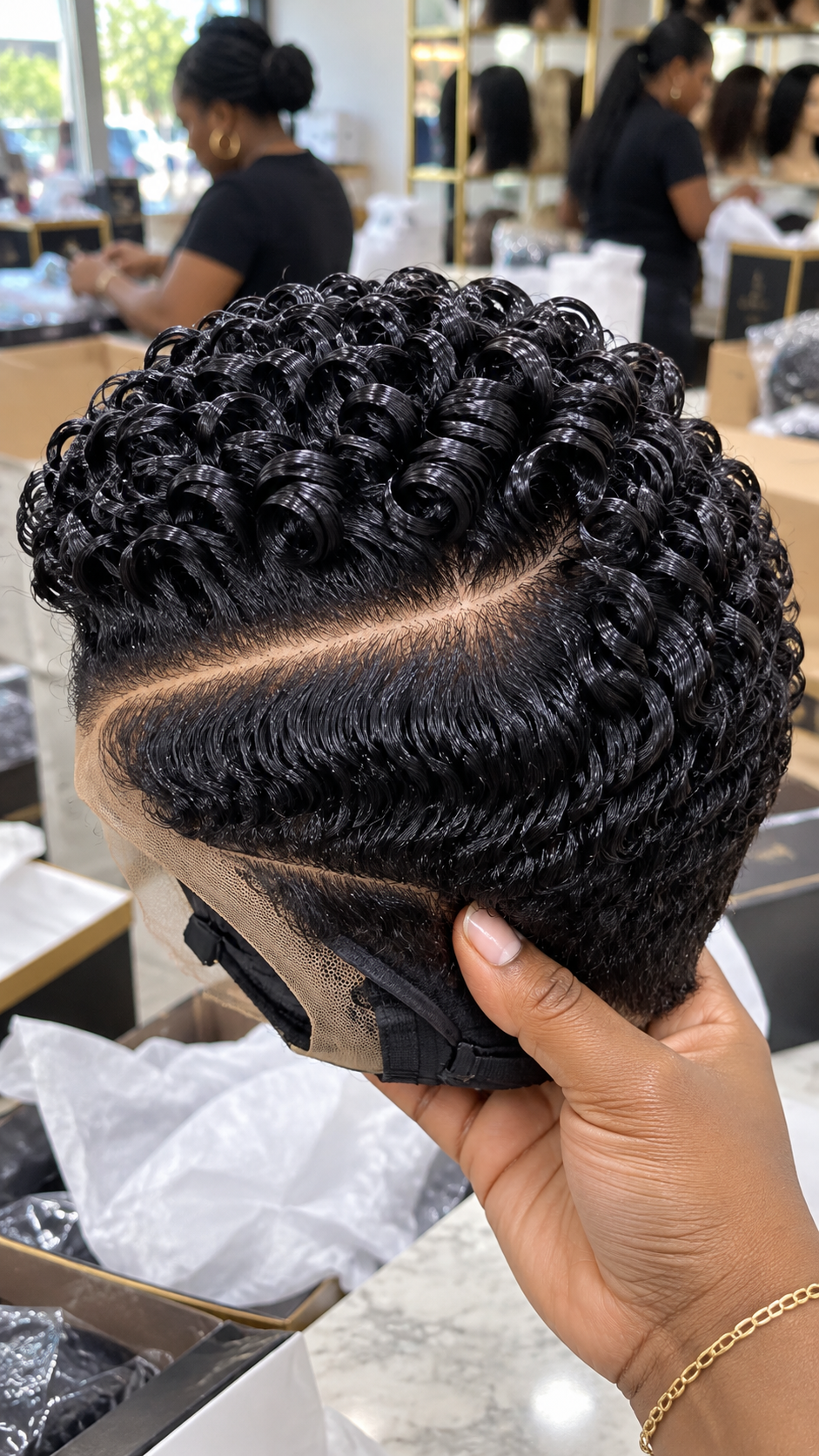
Glossy black ringlets rise above a broad side wave in this beautifully balanced short hairstyle. The crown is full of open curls, while the side lies closer to the head in flowing ridges. A sweeping exposed part separates those two areas, giving the hairstyle a distinctive profile without relying on color or decorative accessories.
The appeal comes from the relationship between volume and direction. Across the top, ribbonlike strands curve into rounded loops. Below the part, the hair follows a continuous wave toward the rear, gradually meeting the shorter lower section. Each area has its own movement, yet the black color connects the whole arrangement.
For women who enjoy short hair with a dressed appearance, this is an expressive reference. The essential details are the open ringlets and the broad wave beneath the part. Preserving their proportions will do more for the finished result than adding extra height or making every curl identical.
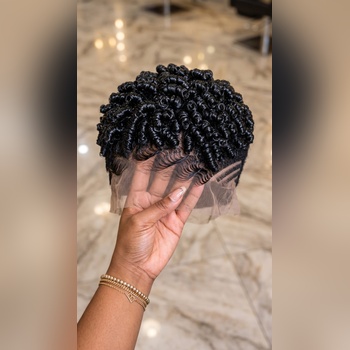
A Crown Full of Ribbonlike Ringlets
The upper curls have visible open centers and broad outer surfaces. They overlap across the crown, creating fullness without becoming a solid mass. Some curls turn toward the front, while others lean sideways or backward, giving the arrangement variety within a rounded outline.
These are larger, more open shapes than tiny finger coils. That distinction matters during a consultation. Ask for ringlets with enough separation to show their curved surfaces, rather than a tightly packed field of miniature coils or a brushed-out finish.
The front curls sit above a relatively close base, which helps their rounded ends stand out. A stylist recreating the look should retain sufficient length for those curves before refining the silhouette. Cutting the top too short at the beginning could limit the available curl size.
The Side Wave Creates a Graceful Profile
The visible side is arranged into a broad band of connected waves. Its ridges travel toward the rear, where the hair becomes more compact. This section provides a quieter visual area beneath the crown while maintaining movement throughout the haircut.
A long, curved part runs above the wave, separating it from the ringlets. Another exposed division appears beneath the waved section toward the front. Together, these lines help the side remain readable beside the fuller hair above it.
When sharing the reference, point out the width of the waved band and the direction of the part. Replacing this section with extra curls would change the hairstyle considerably. Ask to review the side before the final set so its placement can be checked while adjustments are still straightforward.
Why the Black Color Works So Well
The consistent black shade allows the curl pattern and waved ridges to carry the design. Reflections travel across the outer surfaces of the ringlets, while the spaces between them provide depth. The result has plenty of dimension without highlights.
If you want the closest interpretation, request a consistent black finish and ask to see it in daylight. Indoor lighting can introduce warm reflections or make different dark shades appear identical. A short video near a window can help you assess the actual color.
A brown or highlighted adaptation is possible, but it would create a different emphasis. Discuss where lighter strands would sit before approving color work. For this reference, the strongest visual feature is the arrangement of the hair itself.
Getting the Proportions Right
The crown is fuller than the lower side, and that difference is central to the silhouette. The ringlets need room to form, while the temple and lower rear should remain compact enough to support the rounded top.
An in-hand image helps reveal styling detail, but it does not show exactly how the wig will sit on an individual wearer. Ask for a fitted view before choosing the final crown height. Check the front, profile, and rear rather than relying on one flattering angle.
You may prefer a slightly lower top for everyday wear or more fullness through the front. Either adjustment should preserve the relationship between the curls and waved side. Agree on the intended outline before thinning or shortening begins.
Length and Density Choices
The exact strand length cannot be measured from this photograph. Curled strands occupy less visible length than straight strands, and the finished shape also depends on how they are set. Ask the maker to recommend lengths around the desired ringlet size.
Density should be considered by area. The top needs sufficient hair for overlapping curls, while excessive bulk beneath the part could make the side difficult to arrange. A single advertised percentage does not explain that distribution.
Request a description of the finished crown, temple coverage, and nape. If buying a base unit for customization, have the stylist approve its available length and fullness first. A suitable starting point makes it easier to achieve the design without unnecessary correction.
Where This Wig Comes From
The photograph does not identify a verified supplier. To find a similar style, look for wig studios, beauty suppliers, and custom makers with experience in short ringlet units and sculpted side waves. Ask for examples that show both details together.
A ready-styled wig may offer a convenient starting point, while a custom order allows more control over fit and proportions. Another route is purchasing a suitable base and booking a specialist to cut and set it. Confirm that the stylist accepts the chosen material and construction before buying.
Contact businesses by phone, direct message, or WhatsApp with the reference attached. Explain that you want open black ringlets above a broad waved side. Request current footage of the actual product or examples of comparable custom work, rather than relying entirely on promotional photographs.
What to Confirm Before Ordering
Begin with your measurements and wearing routine. Tell the seller whether you plan to remove the wig daily, wear it occasionally, or book longer installations. Those details help determine suitable fitting and maintenance options.
Have the written order describe the ringlet size, crown fullness, curved part, and side-wave placement. Confirm whether cutting, styling, lace preparation, and fitting are included. Ask which adjustments can be made after you have tried the unit on.
For custom work, arrange an approval video before dispatch. It should show the complete exterior and interior, including the rear. Confirm the production schedule, delivery charges, and return conditions before payment, particularly where customization limits exchanges.
Understanding the Visible Construction
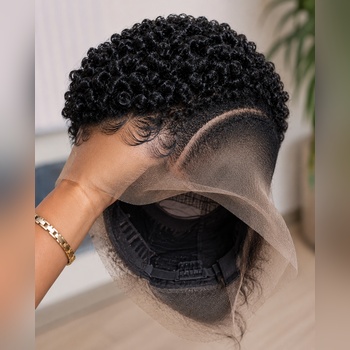
Tan lace extends beyond the front and visible side. Inside the opening, dark cap fabric and adjustment components can be seen. These details make professional fitting relevant, but they do not establish the complete cap type or lace grade.
Ask for the lace dimensions and clear interior photographs. The exposed curved part and side arrangement need an appropriate foundation, so the seller should explain how the chosen construction supports them.
A frontal may provide the necessary styling area when its dimensions suit the design. A smaller closure offers less exposed lace and may require changes to the placement of the side detail. Discuss full-lace construction only where its additional flexibility serves your intended styling needs.
Glueless Wear and Salon Installation
The visible adjustment system does not, by itself, confirm that this unit can be worn glueless. A secure fit depends on cap measurements, depth, band placement, and how the lace settles around the front and sides.
If daily removal is important, request a unit designed and fitted for that routine. The curved part and close side should remain in position without constant pulling. Ask whether an initial fitting or later alteration is available.
For adhesive wear, choose an installer familiar with short styles and exposed side details. Ask for care and removal directions for the specific products used. Support the lace during removal and avoid pulling the wig away by the curls or hairline.
Choosing Between Fiber Options
The photograph cannot establish whether the hair is human hair, synthetic fiber, or a blend. Shine and curl shape are not reliable proof. Obtain written material information and care instructions from the supplier.
A preset synthetic version may suit someone who wants to keep a consistent arrangement. Ask whether the ringlets retain their form after washing and how the side wave should be refreshed. Any heat-friendly fiber still has its own permitted temperature range.
A human-hair version may allow more restyling, but rebuilding the ringlets and connected wave can require skill. Consider the cost and availability of maintenance appointments. Choose the material around the routine you are prepared to maintain.
A Practical Price Comparison
The total cost can include the base unit, custom cutting, side-wave work, curl setting, lace preparation, and fitting. Ask for an itemized quote so you can compare equivalent services.
The USD ranges below are illustrative budgeting examples, not verified prices for the photographed wig. Actual quotations vary by location, material, construction, workmanship, and the services included.
| Tier | Illustrative Price Range | Potential Scope |
|---|---|---|
| Budget | $30–$80 | Ready-made synthetic short curls with a simpler side arrangement. |
| Value | $80–$170 | More detailed preset unit, potentially including lace and minor adjustments. |
| Mid | $170–$340 | Selected fiber and construction options with some custom cutting and setting. |
| Premium | $340–$620 | More extensive customization of fit, crown shape, part placement, and side waves. |
| Salon-Grade | $620–$950+ | Bespoke creation with specialist finishing and an agreed fitting or care package. |
Allow separately for delivery, installation, and future resets unless they are explicitly included. A complete quote helps you decide whether a ready-styled unit or a custom service better fits your budget.
Keeping the Ringlets Arranged
Lift and position the wig from its cap, supporting it underneath. Handling it by the upper curls can stretch sections out of place, while pulling the lace can strain the perimeter.
Before each wear, inspect the crown for compressed or displaced curls. Guide individual sections along their existing direction with your fingertips. Avoid brushing through the entire top unless you intend to change the finish or reset the style.
Use products sparingly and follow the instructions for the confirmed fiber. Repeated layers can make neighboring curls stick together and reduce the separation that gives the crown its appearance. If residue develops, cleaning is more useful than continually adding shine products.
Caring for the Waved Side
The broad side section benefits from gentle handling because its connected ridges are more noticeable than isolated curls. Avoid repeatedly combing across the wave direction or pressing the section flat while adjusting the cap.
Check the exposed divisions for product residue. Clean them using the supplier’s approved method, without scraping the lace or pulling short hairs away from their arrangement. Fine detailing can be difficult to restore after aggressive handling.
If the wave loses its shape, book a stylist who can follow the original direction. Keep clear reference photographs of the side so the reset preserves its width and curved part. A touch-up should restore the existing design before introducing additional cutting.
Washing and Restyling
Review the wig weekly for residue, odor, and buildup around the cap. Washing frequency should reflect actual wear, perspiration, and styling-product use. Follow the maker’s directions rather than assuming a fixed schedule suits every material.
Before the first wash, ask how both the ringlets and side wave will respond. Some preset fibers retain more of their arrangement, while other units require a fresh set. Establish whether you can manage that process at home or need a salon appointment.
Use the recommended cleansing and drying methods, avoiding vigorous rubbing. Do not apply heat until the fiber and permitted temperature have been confirmed. Arrange the next professional reset when the shape becomes difficult to maintain, rather than repeatedly forcing it back with extra product.
Everyday Wear and Storage
The short lower sections sit clear of many collars, while the ringlets provide a dressed appearance around the crown. Simple earrings and an uncluttered neckline allow the side wave to remain visible. The black color works easily with both bright clothing and quieter shades.
The main tradeoff is that the arrangement can be compressed by tight hats, firm headrests, or crowded storage. Leave room around the top when the wig is off, using a support that holds the cap without stretching it.
For travel, choose a structured container with enough space for the crown. Allow time after unpacking to inspect and rearrange displaced curls. With a comfortable fit and a realistic reset routine, the combination of open ringlets and flowing side waves offers an elegant short style with a distinctive profile.
Search Terms
black ribbon ringlet wig · short curls with sculpted side wave · black lace pixie with curved part · open ringlets with waved sides · glossy short curly wig · finger wave side with curly crown · short black wig with side part · rounded ringlets with tapered nape