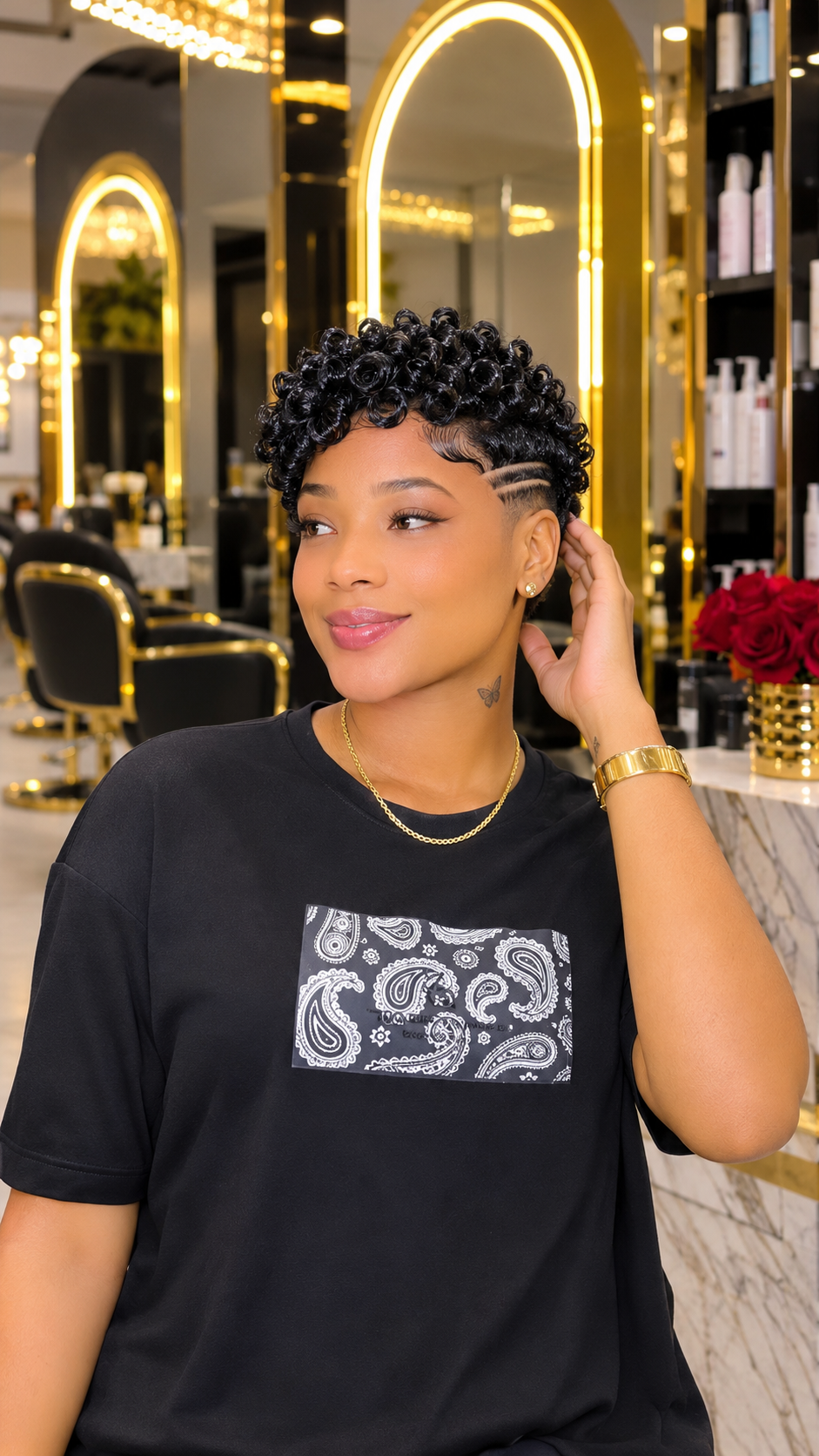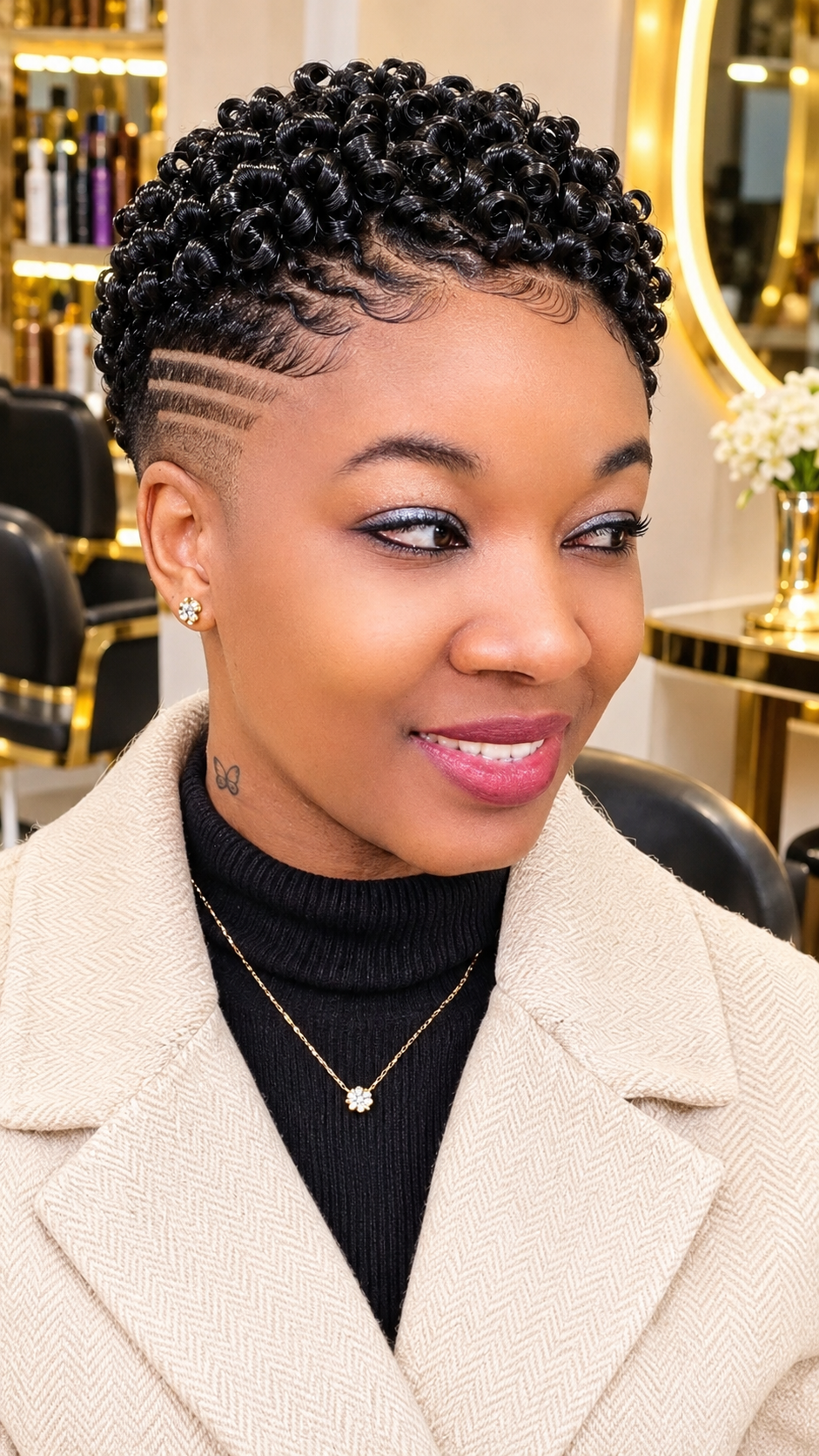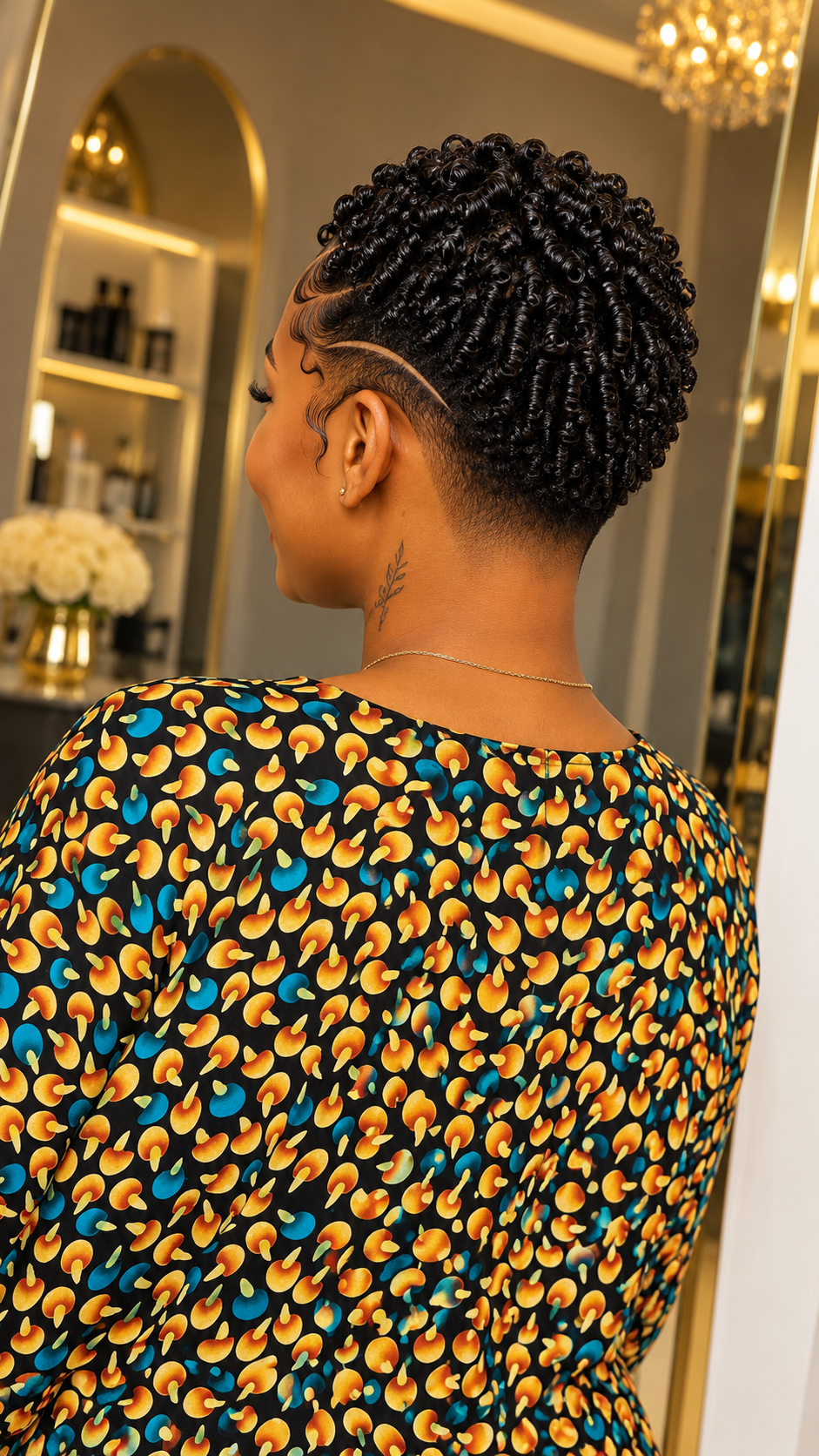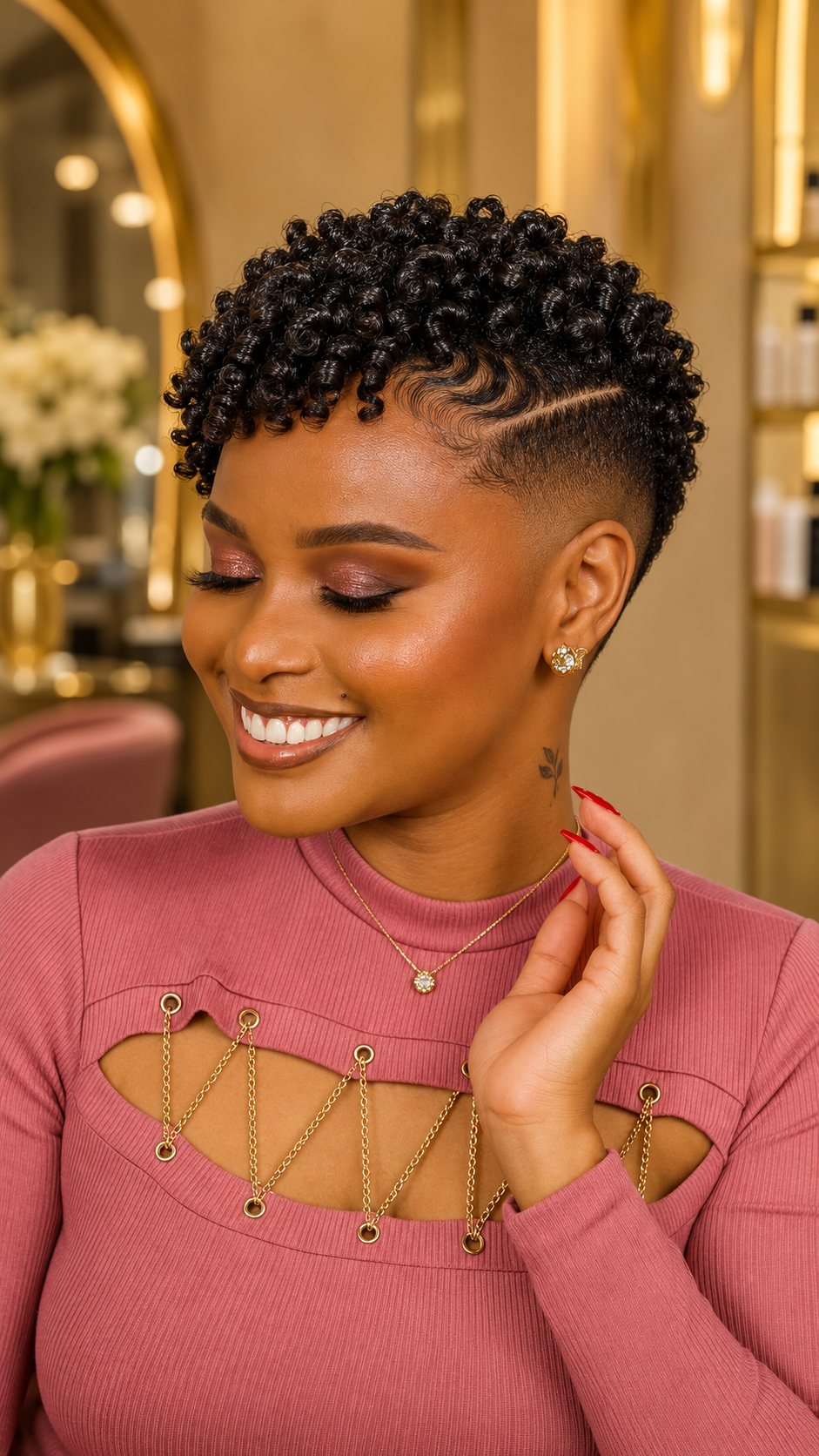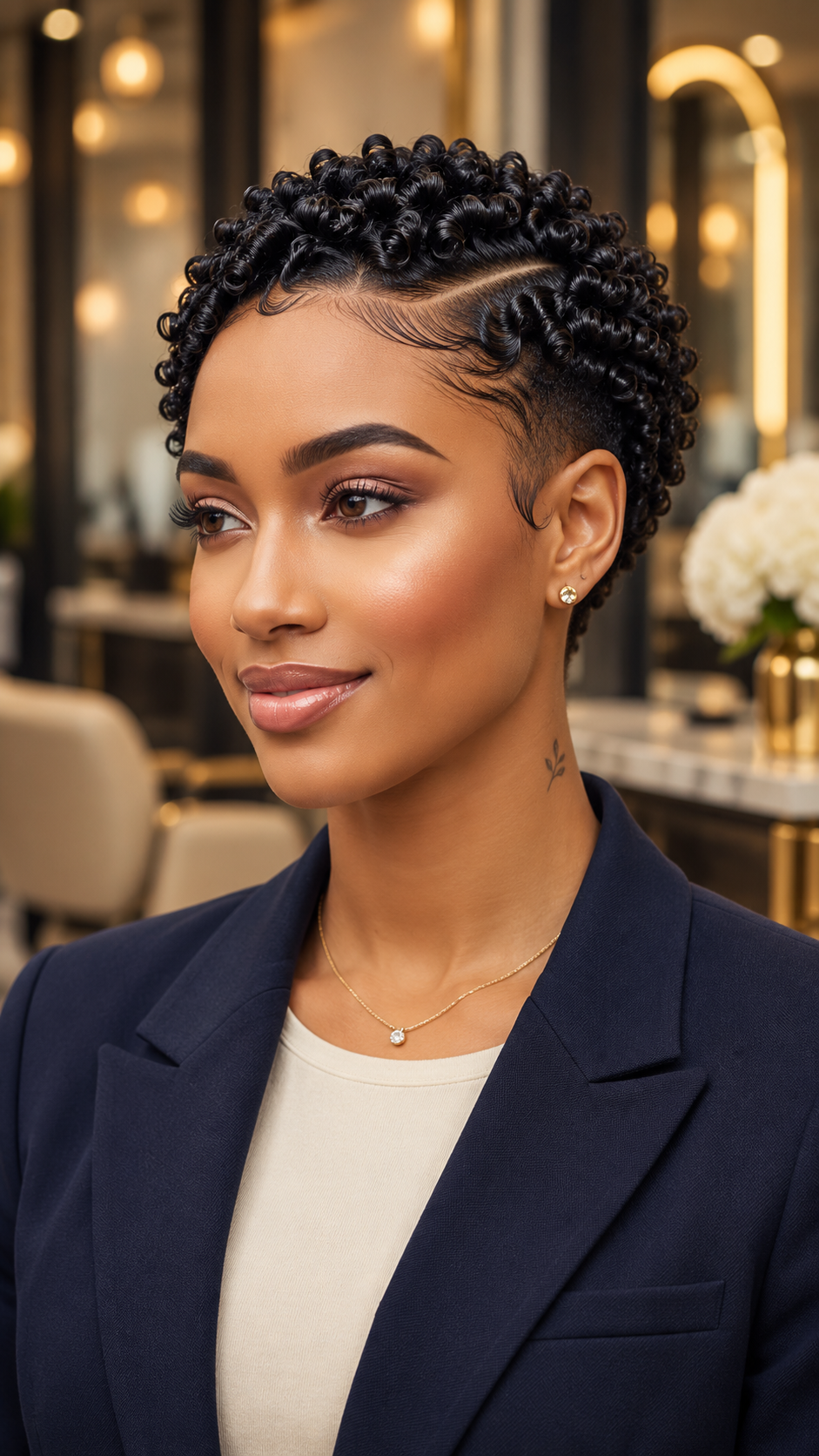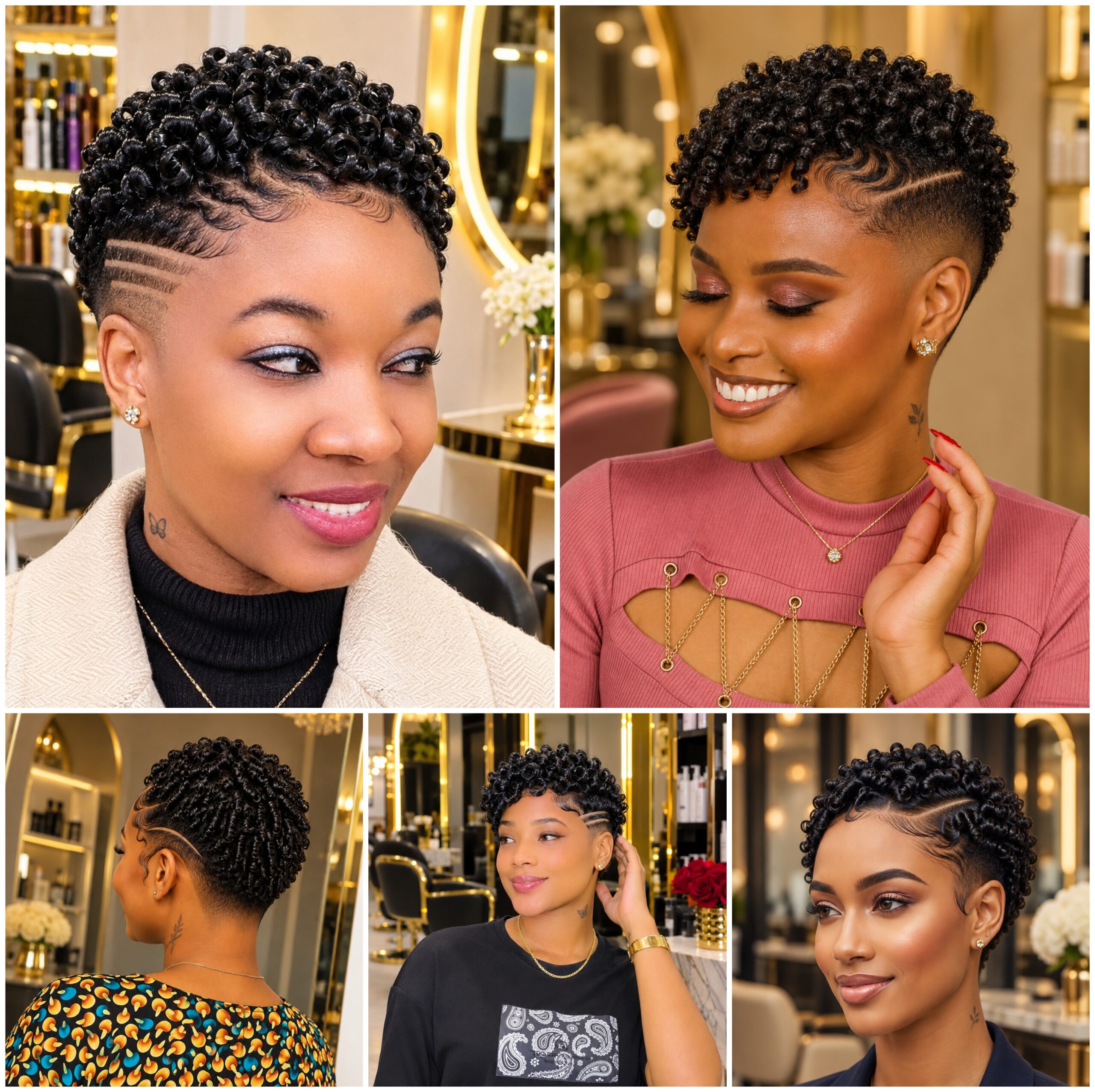
A natural taper brings fullness to the top of the head while gradually reducing the length around the ears and neckline. Add finger-wave edges, and the haircut gains a graceful frame: small, curved sections at the hairline that complement the natural movement above them. The combination offers an attractive balance between an expressive crown and carefully arranged finishing details.
This style can take several forms. The top may be worn as a compact afro, separated coils, or loosely arranged curls, depending on the hair’s natural pattern and the desired result. The edges provide a connecting detail rather than becoming the entire hairstyle. Their scale should suit the haircut, leaving the natural taper as the main focus.
The strongest version starts with a well-proportioned cut. Styling products can arrange the hairline, but the shape comes from the relationship between the crown, temples, and nape. A thoughtful consultation helps establish that balance before the first section is shortened.
A Taper That Follows Your Natural Hair
A taper gradually changes the hair length toward the perimeter. It does not have to expose the scalp or create a dramatic fade. Some women prefer soft coverage around the ears, while others choose a closer lower section for stronger contrast with the crown.
The right approach depends on your existing length, growth direction, and preferred silhouette. A rounded top gives a different impression from a slightly taller crown or a fuller front. Ask your stylist to explain how those choices will look from the side and rear as well as from the front.
Natural shrinkage also affects the finished shape. Discuss whether the haircut will be assessed in its usual dry state, stretched, or through a combination of techniques. The important point is that the finished proportions work with the way you actually wear your hair.
Finger Waves as a Delicate Hairline Detail
Finger-wave edges are small, curved arrangements placed along suitable sections of the hairline. They may follow the forehead, sit near the temples, or appear only at selected points. Their direction should work with the hair rather than require constant pulling against its growth.
A restrained arrangement often suits a natural taper particularly well. A few curves can frame the face while leaving space between the details. Larger forehead waves are another option, but they require enough appropriate hair and should be discussed before the perimeter is cut.
Not every section needs to be laid flat. Some hairlines look better with minimal shaping, especially where the hairs are short or delicate. Ask for a comfortable finish that can be maintained without repeated tension or heavy layers of product.
Choosing the Crown You Want to Wear
The crown determines much of the haircut’s personality. A softly picked top creates a rounded appearance with visible natural volume. Separated curls give more individual movement, while finger coils create small, organized sections that can be arranged across the top.
Choose the finish around your routine. If you prefer quick morning adjustments, discuss a shape that looks attractive with limited manipulation. If you enjoy setting the hair, a coil-based finish may offer the separation you want, provided you are comfortable refreshing it when needed.
Show the stylist examples of both the haircut and the crown finish. A reference that demonstrates the right taper may have a different curl arrangement from the one you prefer. Explaining those elements separately helps avoid a result that matches only half of your request.
Balancing Length Around the Face and Neck
A fuller front can give the haircut a gentle forward emphasis, while more height through the center produces a different profile. Neither requires a large amount of hair, but both depend on leaving sufficient length in the correct places.
Around the ears, decide whether you want soft coverage or a close outline. At the nape, ask for a shape that grows out comfortably and follows your natural neckline. An overly high outline may require more frequent appointments to maintain its appearance.
For a first taper, consider making changes gradually. You can assess the silhouette before requesting a closer side or shorter back. Preserving a little extra length during the consultation gives you room to make informed adjustments.
Where to Have the Cut Created
Look for a natural-hair salon, short-hair specialist, or barber who regularly works with women’s tapered cuts. A useful portfolio should show different natural curl patterns and views of the sides and nape, rather than only freshly styled fronts.
Ask whether the appointment includes cutting, washing, crown styling, and hairline work. Some salons handle the complete service, while others recommend a barber for the taper and a stylist for the final curl arrangement. Confirm the process before booking.
During the consultation, explain how much time you want to spend on your hair at home. Mention your usual washing routine and whether you frequently wear hats, exercise, or rest against a headrest. These everyday details help the professional recommend a practical shape.
Booking Through Phone, DM, or WhatsApp
When contacting a salon, send clear photographs of your current hair and a small selection of references. State that you want a natural taper with finger-wave detailing around suitable areas of the hairline. Explain whether you prefer a soft taper or a closer finish.
Ask for an estimated appointment length and a written breakdown of the services. Confirm whether detangling, conditioning, cutting, and styling are included. If your hair needs to arrive in a particular condition, request those instructions in advance.
Before cutting begins, agree on the shortest areas, crown height, and intended hairline treatment. Tell the stylist if any section feels tender or has recently become fragile. A clear consultation gives both of you a shared plan and reduces the need for corrections afterward.
Where To Buy This Wig
A wig interpretation can offer the appearance of a natural taper without committing your own hair to the cut. Search beauty suppliers and custom wig studios for short natural-style units with a fuller crown and gradually shortened sides.
If finger-wave edges are important, ask how the hairline is constructed and whether those details are already styled or added during fitting. A product photograph alone may not show how the unit looks when worn. Request a fitted video and clear interior views.
You can also purchase a suitable base and have a wig stylist customize it. Have the professional approve the base first, particularly its perimeter length and hair distribution. A unit cut too closely around the front may not provide enough hair for the requested wave arrangement.
Cap Construction and Installation Choices
Because this is a hairstyle topic rather than a specific photographed unit, no particular cap construction can be assumed. For a wig version, discuss the hairline you want to expose and the amount of styling flexibility you need.
A lace frontal may provide space for forehead and temple detailing when its dimensions are appropriate. A closure offers a smaller lace area and may suit a more limited exposed hairline. A conventional cap can work for some tapered styles, although the front arrangement will depend on its design.
For glueless wear, confirm the cap measurements, adjustment system, and intended fit. For adhesive installation, ask an experienced installer to explain preparation and removal. Choose around comfort and wearing habits rather than assuming every short unit can be fitted in the same way.
Density and Length in a Wig Adaptation
Look for hair distribution that supports a fuller top without making the lower sides bulky. A high overall density does not automatically create a better natural taper. Excess hair around the ears may obscure the gradual change in length.
Ask the maker to describe the finished crown height and side coverage. Advertised strand length can be difficult to interpret when the hair is tightly curled, so fitted photographs are especially useful. Confirm whether measurements refer to stretched hair or its resting appearance.
The fiber also affects care and restyling. Request written confirmation of whether the unit contains human hair, synthetic fiber, or a blend. Ask how the crown and edges behave after washing and whether the supplier offers a professional reset.
A Five-Level Budget for Planning
Separate a haircut appointment from the cost of purchasing a wig. A natural-hair service pays for work on your existing hair, while a wig order includes a manufactured or custom-made unit. Their quotes should be compared within the correct service category.
The following USD ranges are illustrative planning examples for wig adaptations, not current supplier quotations. Materials, custom work, location, and included services can change the total substantially. Request a separate local quote for a natural-hair cut and styling appointment.
| Tier | Illustrative Price Range | Potential Scope |
|---|---|---|
| Budget | $25–$75 | Ready-made synthetic tapered unit with limited hairline customization. |
| Value | $75–$160 | More detailed short unit with selected fitting or styling adjustments. |
| Mid | $160–$320 | Broader material and construction choices with some custom taper and hairline work. |
| Premium | $320–$600 | More extensive customization of measurements, crown shape, and perimeter styling. |
| Salon-Grade | $600–$950+ | Bespoke unit with specialist cutting, fitting, and an agreed finishing package. |
Check whether installation, delivery, lace preparation, and later adjustments are included. A complete quote makes it easier to decide where customization will have the greatest effect on the finished hairstyle.
A Manageable Morning Routine
Start by assessing the shape before adding products. The crown may only need a light adjustment to restore its outline. Repeatedly pulling every section apart can change an organized curl finish into a fuller arrangement, so work according to the look you want.
Refresh the hairline selectively. If the waves remain presentable, leave them alone rather than rebuilding them every morning. When an adjustment is necessary, use a small amount of a suitable styling product and gentle pressure.
Avoid treating strong hold as the only measure of a successful product. The finish should feel comfortable and be removable through your normal cleansing routine. If the hairline feels tight or coated, discuss a lighter approach with your stylist.
Washing and Conditioning Natural Hair
Plan washing around your scalp, activity level, and product use. A weekly review is useful even if you do not wash on a fixed weekly schedule. Notice whether the scalp feels comfortable and whether styling residue has accumulated around the front.
Cleanse the hairline thoroughly but gently, then condition according to your hair’s needs. Short hair still benefits from careful handling. Avoid vigorous rubbing simply because there is less length to manage.
After washing, restore the crown using the method agreed with your stylist. If you wear coils, you may need to reset selected sections or the full top. Arrange the edges after the surrounding hair has been positioned so the details complement the final shape.
Protecting the Shape Overnight
A satin bonnet or pillowcase can help reduce friction during rest. Choose a covering that accommodates the crown without pressing it firmly downward. A tight edge around the forehead may disturb the very details you want to preserve.
In the morning, allow compressed sections to settle before deciding they need a complete restyle. Gentle adjustment may be enough for a natural crown. More structured curls may need individual attention.
For a removable wig, follow its storage instructions and place it on a suitable support. Avoid sleeping in it when your routine allows removal. Keep the hairline away from rough surfaces and leave room around the fuller top.
Maintaining the Taper as It Grows
The haircut will gradually soften as the shorter areas grow. Decide whether you enjoy that transition or prefer a consistently close outline. This preference will determine how often you book maintenance.
A review after a few weeks can help establish your schedule. Some women prefer frequent perimeter appointments, while others wait longer and reshape the crown at the same visit. Ask the stylist to assess the whole silhouette rather than shortening the sides automatically.
Keep a photograph of the cut when it feels most comfortable and balanced. It gives your stylist a useful reference for later appointments. Mention any areas that became difficult to arrange so the next trim can address your actual experience.
The Everyday Appeal and Practical Tradeoffs
A natural taper keeps much of the hair away from the neck and makes the crown the focal point. Finger-wave edges add a graceful detail that can suit work, celebrations, or everyday dressing. Earrings remain visible, and the shorter perimeter sits comfortably above many collars.
The tradeoff is that short proportions can change noticeably with growth. A carefully arranged hairline also needs gentle cleansing and occasional restyling. Neither requires an elaborate routine, but both benefit from consistency.
Choose a version that fits the time you genuinely want to spend on your hair. A balanced taper, a crown you enjoy wearing, and a few well-placed hairline curves can create a distinctive result without making every morning a full salon appointment.
Search Terms
natural tapered haircut · finger wave edges on natural hair · short natural taper for women · tapered afro with waved hairline · coily crown with tapered sides · short curls with temple waves · natural taper wig · tapered cut with sculpted edges