
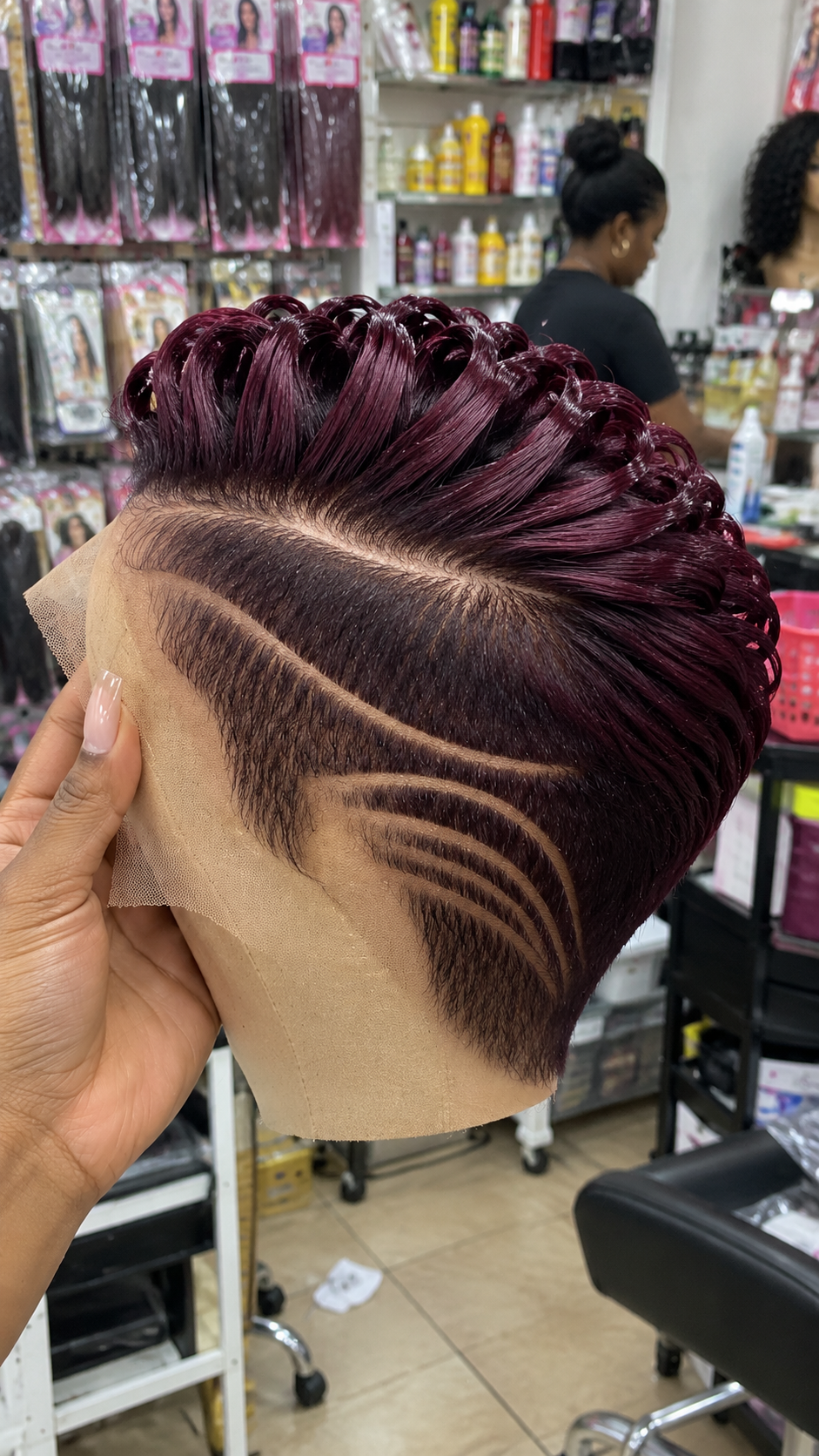
The burgundy hair on this pixie rises from a long side part and bends back into a row of broad, glossy loops. You can follow each section from its darker base to its wine-colored curve, where the strands catch the light. Below the part, the hair sits close to the head form. A long curved line crosses that short panel, with several smaller arcs gathered near its lower end. The change from a raised crown to a close side gives the style its shape.
The loops have a different look from the small, round curls often seen on short wigs. They start as wide sections directed away from the part, rise together and turn inward near the top. From the side, their dark openings show where the hair folds back on itself. The crown has enough height to make those openings visible while the sides stay close, allowing the burgundy shade to appear brighter along the upper curves and deeper near the roots.
In the photograph, a hand holds the wig on a beige head form, and excess lace extends beyond the front edge. This angle shows the burgundy loop curl pixie wig especially clearly in profile. The long part, short temple hairs and curved accents are all visible at once. If you are ordering a similar unit, this is the view to share with your stylist. It captures the relationship between the crown and side that a straight-on product photo can easily miss.


Why the Side Profile Deserves a Fitting of Its Own
Look at the panel directly beneath the part. Its short, dark hair follows the contour of the form, creating an even background for the first long curve. That line starts near the front and travels across much of the visible side. The smaller arcs sit lower and closer together. The space between them gives each curve an individual shape. If the short hairs grow visually into those gaps, the side can begin to read as a single patch of dark hair.
Use the photograph to show a maker where you want the curves to begin and end. Their placement will look different once the unit sits above a real ear and beside a real temple. A side line that looks balanced on a display form may sit too high for your taste or end where the arm of your glasses rests. Bring your usual frames to the fitting and ask for a profile check before the lace is cut. You can decide whether to move the design slightly or keep the long line exactly where it falls.
The opposite profile and the nape need their own discussion. The reference gives one clear view of the side design, so a custom maker should show you how they intend to finish the rest of the wig. You might choose a plain, close side on the opposite temple or repeat part of the curve for a more balanced look. If you wear large earrings, include a photo of your preferred length and shape. That gives the stylist a practical reference for how much hair to leave beside the ear.
The Burgundy Reads Differently Along the Crown
The deepest color appears near the roots and through the close side. On the raised loops, the same dark wine palette looks brighter where the hair bends toward the light. Some sections have a cooler plum cast, particularly in shadow. Those variations are visible in the photograph, though the image alone gives no way to determine how the color was applied. For a similar result, describe where you want the deepest shade and where you want burgundy to show most clearly.
A flat color swatch can help you choose between redder burgundy and a cooler wine shade. Ask to see it beside the darker root color the seller proposes. If the wig is already styled, request a slow turn in indirect daylight. The important moment is when the crown passes out of the brightest reflection. You can see whether the burgundy still reads as a distinct shade or settles into a near-black appearance. Both effects can suit the cut, depending on how much color you want indoors.
Placement matters as much as the shade name. A maker can keep the side dark so the exposed curves remain clear, then let the wine color show through the longer hair above. If you want more burgundy near the front, specify whether you want it visible at the root or concentrated where the first loop turns. A reference taken at eye level helps you judge that decision. The upper section will show a different amount of color from the front than it does in this close profile.
How To Order This Style
Look for custom wig studios, specialist short-wig retailers and salons that show both raised curl sets and close side work in their portfolios. A beauty supply shop can be a good place to try on a short base unit and learn which size feels comfortable. If a listing shows burgundy loops but gives only a front photo, ask for a full side view. You need to see whether the side panel is wide enough for a similar arrangement of curves.
Give a custom maker a brief that identifies the long part, the lifted loops and the cluster of arcs below. State which side you want the design on from your own perspective and mark the reference if the direction matters. Include your preferred height at the crown, your cap measurements and a note about glasses if you wear them. Ask whether the maker will create the curves as exposed lines within the side panel or use a different construction to achieve the same visible effect. A sample photo can clarify what the finish will look like close to your skin.
Before paying, request views of the front, both sides, the back and the inside of the actual unit if it is available. Confirm the fiber, the usable lace area, the cap size and whether the lace will arrive trimmed. For a custom piece, agree on the point at which you will approve the color and side design. Get the turnaround time, delivery charge and alteration terms in writing. If you are booking a separate installation, ask whether the maker expects the local stylist to complete any of the side or hairline work.
For a salon appointment, look for a short-hair stylist or wig specialist with profile photos of their work. Send the reference before booking and say whether you need a fitting, a full curl set or both. If you want a version on your own hair, a consultation with a stylist who works with short sets and a barber who does curved side designs can help establish what is possible. Ask whether the salon can coordinate both services. The crown needs enough length for the loops, and the side needs a clear plan before any hair is cut.
Choosing a Cap Around the Design
Beige lace is visible around the edge in the photo. To choose a cap for a similar wig, ask for an interior view and measurements of the area that supports the part and the patterned side. The longest exposed line runs below the main part, so a cap that accommodates the part alone may leave the stylist with too little room around the temple. Ask the maker to point out both areas on the cap they propose. You can then assess the fit and design together.
A lace-front unit may work when the lace extends far enough behind the hairline and across the side. A frontal can give the stylist more room around the forehead and temple, depending on its dimensions. A closure can suit a simpler interpretation with a fixed part if its available area can support the detail you want. Ask to see a finished example before choosing it for an elaborate side. Full lace may be useful if you expect to change the direction of the hair or order a design that extends farther around the head.
If you want a glueless installation, ask how the adjustable straps, elastic band and other attachments secure the cap. Follow the maker’s instructions for measuring, since circumference alone may leave questions about where the front and sides will land. During a fitting, look down and turn your head in both directions. Check that the side curves return to the same position and that the lower edge feels comfortable near your ear. A cap that needs frequent readjustment can shift the whole pattern out of place.
An adhesive-based installation may suit a compatible lace unit if you want added hold along the edge. Check the height of the part and the position of the lowest arc before the stylist secures or trims the front. Ask which remover matches the adhesive and have the stylist show you how to release the edge without pulling on the short side hairs. If you normally take your wig off each evening, mention that when booking so the fitting method suits the amount of handling you expect.
Ordering Enough Length for the Loops
The crown looks short because the ends turn back into the set. Each broad loop still needs enough strand length to rise from the part and complete its bend. When comparing listings, ask for the height of the finished set as well as the advertised hair length. A profile photo can show whether the loops rise well above the part or lie closer to the head. If you prefer a lower crown, ask whether the stylist can angle the sections farther back while retaining their width.
Density is especially important near the boundary between the crown and side. The top needs enough hair to form broad sections with visible ridges. Too much density at the roots can crowd the part and narrow the dark openings between the loops. The shorter panel needs a lighter distribution so the exposed curves remain readable. For a custom order, ask how the maker plans to vary the density across those areas. A request for a fuller crown can often be met without increasing the amount of hair around the ear.
Think about how you will judge the shape before approving the order. A side view should show the depth of the loops and the distance between the main part and the long curve below it. A straight-on view should show where the fullness sits relative to the center of the face. If one of those views matters more to you, tell the maker. Someone who likes a bold profile might accept a higher set, while someone who wants a close outline can ask for less lift at the front.
Illustrative Prices for a Burgundy Loop Pixie
Use these USD ranges as budgeting examples. Actual quotes vary with the fiber, color process, cap size, lace coverage, supplier and location. Delivery, fitting and future resets may be separate charges. Ask whether the price covers both the burgundy crown and the curved side design, since those can be quoted as separate services when you buy a base wig locally.
| Category | Illustrative Price Range | Potential Scope |
|---|---|---|
| Basic Synthetic | USD 20–45 | Ready-made burgundy pixie with a fixed curl shape and a simple side finish. |
| Premium Synthetic | USD 45–110 | Pre-styled short unit with larger loops, a deeper root shade or a more visible part. |
| Basic Human Hair | USD 95–185 | Short base that may require separate color work, cutting and a professional loop set. |
| Standard Custom | USD 170–310 | Standard cap with a requested wine shade, raised crown and tailored side detail. |
| Premium Custom | USD 310–625+ | Made-to-measure fit, planned color placement and curved side work positioned for the wearer. |
Compare the price of the finished hairstyle. A pre-styled wig in the right color may already have the shape you want through the crown, leaving you to pay for fitting and a limited side adjustment. A plain base can make sense if the stylist confirms it has enough length and suitable construction for the full design. Ask for an itemized quote before ordering so you know what the cap, color, styling and first fitting each contribute to the total.
A Care Schedule for Raised Loops and Short Side Hair
After each wear, look at the largest loops and the point where the hair sits close around the ear. Lift the wig by the sturdier areas of the cap so your fingers stay clear of the raised curves. If one loop tilts, support it from underneath and follow the direction of the existing set. Work on that section individually. Running a brush across the whole crown can pull the wide sections apart and change the spacing between the openings.
For frequent wear, inspect the lace and cap weekly for residue and perspiration. The wash interval depends on wear, product buildup, fiber and the manufacturer’s instructions. When cleaning is due, support the lace and avoid rubbing across the curved side. Blot gently after washing and use a stand that supports the cap without pressing against the crown. Let the short side hairs settle in their original direction as they dry. If the wig is worn with adhesive, remove residue according to the instructions for the adhesive and lace before washing the unit.
Ask for care directions specific to the wine shade. On colored human hair, the appropriate products depend on the processing history and condition of the fiber. On synthetic hair, use the products recommended for that unit. Compare the crown and side in daylight after cleaning if you are concerned about a change in tone or residue. Product can collect along the short side and blur the boundaries of the arcs, so use only as much styling product as you need for a touch-up.
A stylist can assess whether a human-hair unit needs a wet set or another method after washing. With synthetic fiber, check the maker’s limits before using any heated tool or steam. Book a professional reset when several crown loops collapse or when the short hair starts to cross the exposed curves. A clear photograph from the first fitting gives the stylist a record of the original side placement, the height of the crown and how far the loops turned back.
Between wears, place the unit on an appropriately sized stand with enough space around the tallest loops. For travel, use a firm case that supports the inside of the cap and leaves clearance above the crown. Keep the lace edge free from folds. Once you arrive, let the wig rest on a stand and check the side pattern before putting it on. If you wear a head covering on the journey, check where it puts pressure on the top and allow time for a touch-up before an event.
What Makes This Style Worth the Upkeep
The short outline keeps the neckline open, while the lifted loops show off the burgundy without requiring long hair. From the front, the crown supplies most of the volume. From the side, the curved accents give the cut a different point of interest. If you like short hair for occasions, this gives you a look that holds its shape around earrings and high necklines, provided the cap and temple finish are fitted to you.
The commitment is maintaining two finishes at once. The crown needs space to retain its lift, and the side needs enough care for the curves to remain distinct. Tight headwear may flatten the upper loops, while glasses or headphones can rub the lower detail. A fixed side design also limits how far you can redirect the hair. At your fitting, practice putting the unit on yourself and check the profile at eye level. If the curves land where you want them and the wine shade reads well in your usual lighting, you will have a clear sense of how often you will want to wear it.
Search Terms
burgundy pixie wig with curved side lines · wine red loop curl pixie · dark root burgundy short wig · raised loop curls with side part · sculpted burgundy temple design · short lace wig with curved side accents · glossy wine colored pixie curls · burgundy pixie with close sides