
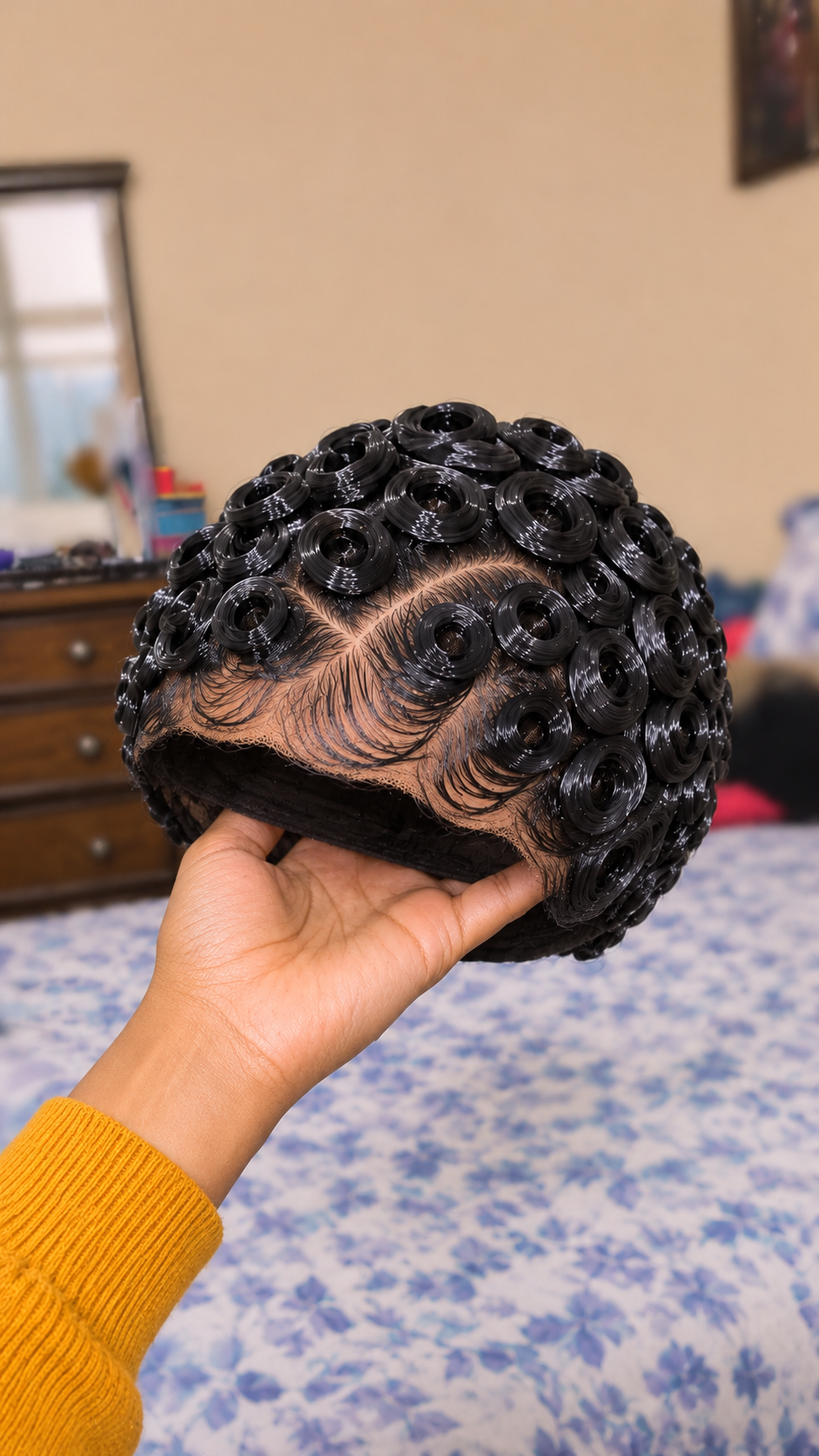
The hand-held view shows details that a portrait of someone wearing the wig might conceal. The warm-toned lace is visible beneath the front waves, and part of the dark cap can be seen through the opening. The angle also gives a clear view of the tops of the curls. Each forms a distinct ring, with smaller rolls fitted around the larger ones. If you want to order a similar black rosette curl wig, use the image to communicate where the hair is divided, how the curls sit, and how much of the front you want swept into waves.
Follow the Part From the Front to the Crown
Start near the front, where the parting branches in two directions. One line continues across the upper section, while the shorter branch defines the edge of an adjacent group of curls. The fork gives the eye a route through the arrangement. A single straight part would organize the hair differently, even with the same curl size and cut. If this detail is what caught your attention, point it out when you send the image to a maker. The term “side part” alone leaves room for a simpler interpretation.


The exposed areas are narrow enough to sit within the design, while the surrounding strands are directed away from them into circles. The part needs enough space to remain visible after fitting. If nearby curls spread over it, the fork can disappear into the crown. If the exposed area is made wider, the eye may go straight to the base instead of following the curls. Ask for an overhead photograph to see the spacing and a front photograph to judge how close the meeting point sits to the hairline.
Think about whether you want the fork visible from the front or mainly when someone sees the wig from above. The photograph emphasizes it because the unit is tilted toward the camera. On the head, a slight change in the angle or starting point can make the same layout appear more discreet. If you have an existing wig that fits well, photograph it from the front and side. Those images can help your stylist understand where you prefer the hairline and how the new part should relate to it.
What Gives the Rosettes Their Shape
The curls in this design are broad, open-centered rolls. Light picks out the strands that follow each circular path, making the edges of the loops visible even against black hair. The rolls have some variation in size, with several larger circles across the crown and smaller ones filling the spaces near the outer edge. This helps the wig look full without requiring each section to stand high. A useful styling brief calls for visible curl centers and a close overall outline.
Listings for short pin curl wigs can show a wide range of shapes. Some units have tight spirals that extend outward. Others have soft waves with only a few rolled ends. To find a close visual match, look at the opening in each curl and the way the hair returns toward the base. In this reference, the loops read almost as small rosettes laid across the head. Their deliberate placement matters more than whether the seller calls them pin curls, sculpted curls, or molded rolls.
Density and length affect different parts of the result. A fuller base may give the stylist more coverage around the crown, but the finished sections still need enough space to show their circular shape. A cut that starts too short may limit the size of the rolls a stylist can form. Ask the supplier how they measure length and request a view of the finished height. A stretched strand measurement can help you compare materials. The shape on a head or stand is what tells you whether the wig will look as cropped as you want.
Set the Front Waves to Suit Your Hairline
The front changes the pace of the curl pattern. Several fine sections curve broadly across the lace, with the longest visible sweep sitting just below the meeting point of the partings. Smaller curves continue toward the sides. Together, they make the hairline feel connected to the crown. If you like the look but prefer less hair across your forehead, ask the stylist to shorten the lowest sweep while preserving its direction. You can keep the arrangement recognizable without matching the length of every front strand.
Try the wig at the height where you expect to wear it before approving that detail. If the cap sits higher or lower than planned, the front curve may reach a different point on your forehead. Check from the side as well, particularly where the fine strands approach the temple. Bring your glasses if you wear them most days. Their arms can affect how the hair sits near the ear, and you can decide together whether to tuck the front wave closer or leave more room around the frame.
Leave the final lace trimming until the placement is settled. The warm mesh visible in the image gives you a reference for the front arrangement, but its appearance on your skin will depend on the shade and what sits beneath it. Ask the supplier to show the lace separately and explain which areas will be trimmed during fitting. If you are new to lace customization, a stylist who works with short units can help you preserve the front design while shaping the edge around your fit.
Get The Details On This Wig
Look for a wig boutique with finished short units, an independent maker who accepts reference-based orders, or a local salon that styles customer-supplied wigs. Useful search phrases include “black rosette pixie wig,” “forked part pin curl wig,” and “short molded curls with finger waves.” Add your city if you want a fitting in person. When reviewing portfolios, look for close crown and temple views. Those are the angles that show whether a stylist can maintain narrow partings and place curls accurately around them.
If a stock wig comes close, ask for a slow video of the exact unit available for purchase. Request the front, crown, both sides, nape, and interior. That gives you a chance to check the shape before discussing changes. A custom order is worth considering if the forked part is essential and the stock options have a single division. If the seller suggests restyling a finished wig, ask which sections they intend to change and whether the existing base supports the new layout.
Send a short brief with the image. For example, you can ask for a compact black pixie with round open curls, a forked part near the front, and a fine sweep across the hairline. State whether you want the original glossy appearance or a softer finish. Ask for the fiber type, cap measurements, lace area, and the price of the wig with styling included. If you want the back to follow the head closely, add that preference because the reference does not show the complete nape.
Before paying for a custom unit, agree on how and when you will review it. A photograph of the part before the curls are fully set can help you catch a placement difference early. A later video can show whether the rolls leave enough of that part visible and whether the front sits as discussed. Confirm the estimated completion date and the alteration terms in writing. For a delivered stock unit, check the seller’s conditions before cutting lace, applying products, or restyling.
Ask How the Cap Supports the Fork
The visible cap opening shows a dark interior and a band, but the photograph gives only a partial view of the construction. Ask for an inside photograph that shows where the lace ends and where any wefted or closed sections begin. The most relevant detail is how much usable space lies beneath both branches of the part. A narrow preset part may suit someone who wants a single visible line, while this layout can require space extending in more than one direction.
A closure wig can be a practical choice when the entire design fits inside the closure’s usable area. A frontal can give the stylist a wider working area across the front, depending on its dimensions and depth. Ask the maker to show where they would place each branch and the temple waves on the proposed base. If part of the design falls beyond the available lace, discuss moving it slightly or choosing a different construction before the wig is made.
For a glueless option, ask how the specific cap is secured and whether its sizing suits daily removal. An adjustable band can be part of the fit, but the whole cap needs to sit evenly for the front to stay in position. If you prefer an adhesive installation, ask a wig stylist to explain preparation and removal for the products they use. Choose the method around how often you want to take the wig off and how much time you can give to fitting it each time.
What You Are Paying For at Each Tier
These five tiers are illustrative budgets in US dollars. Use them to plan what you can spend on the wig and any services needed to achieve the look. Ask suppliers for their actual prices and list the work included in each quote. With this design, a stock unit with similar curls can involve a different amount of labor from a custom wig with individually placed partings and front waves.
| Tier | Illustrative Budget | Purchase Route | What to Ask |
|---|---|---|---|
| Budget | Under $75 | A basic cropped wig or a stock unit with a preset curl pattern | Which parts of the pictured style would still need to be added? |
| Ready to Style | $75 to under $150 | A short unit with a suitable curl shape and room for minor customization | Can the front and part be adjusted on this base? |
| Salon Finish | $150 to under $300 | A selected wig base with a separate or included shaping and setting service | Does the total cover the cut, curl set, front waves, and fitting? |
| Custom | $300 to under $500 | A made-to-order unit with agreed measurements and parting placement | Can you review the placement before the maker completes the set? |
| Premium | $500 and above | A bespoke wig or a package with multiple fittings and aftercare | Which materials, adjustments, and follow-up services are included? |
Separate the base price from the work required to finish it. A basic wig may leave enough room in your budget for local styling if its construction is already suitable. An inclusive quote may be more practical if you want one maker to fit the cap and place the partings. Add shipping, taxes, lace preparation, and installation where applicable. If you compare only the listed price, an offer that leaves most of the styling to you can appear cheaper than it will be once the unit is wearable.
If you need to limit spending, decide which visual detail you would keep first. For someone who loves the pattern through the crown, a good fit and a correctly placed fork may take priority over elaborate front waves. Another wearer might prefer the circular curls and a simpler part that costs less to prepare. Ask the stylist to price those options separately. You can then see whether the additional cost buys a feature you will notice and enjoy.
Plan the Salon Visit Around the Work You Need
Search for a short wig specialist or a stylist who shows both pin curl setting and molded hairline work. A portfolio of loose curls can help you judge their general styling, but close photographs of shaped sections are more relevant to this request. Send the image before booking and explain whether you are bringing a wig to be reshaped or need the salon to supply one. If you own the base, send photographs of its interior, current part, and length along with its material information.
Ask how the stylist schedules the work. A fitting for a finished wig may require a different appointment from a service that includes cutting, setting the crown, and molding the front. If the wig needs to be left at the salon, confirm when you can return to try it on. Bring the reference and agree on the order of decisions. Set the cap position first, mark where the part should branch, and then check how the surrounding rolls will frame it.
Measure according to the maker’s instructions. Circumference helps establish size, while additional measurements such as ear to ear or front to nape may help assess placement. Try the wig over the hair preparation you plan to wear underneath it. Check the front, both temples, and the nape while sitting upright, turning your head, and looking down. If the cap shifts, ask about the fit before changing the styling. A stable position keeps both the part and the front waves where the stylist intended.
A Care Schedule Built Around the Curl Set
Ask what the wig will look like after its first wash. The photograph shows a finished set, while the supplier can explain whether the underlying hair retains that curl pattern or needs to be set again. Get the fiber and care directions in writing. If the wig uses synthetic fiber, follow the manufacturer’s specific instructions for washing and any permitted heat. If it uses human hair, ask how the stylist recommends restoring the separate rolls and the front waves once the hair is clean.
Before each wear, check the part and the curls bordering it. A single loop that has shifted can hide part of the fork. Ask the stylist to show you how to reposition one roll without disturbing the next. After wearing, support the cap while taking the unit off and inspect the front edge for residue or displaced strands. If several sections have flattened, leave a full reset for the method recommended by the stylist instead of working through every curl with a brush.
For regular wear, check the unit’s condition when you put it away and follow the supplier’s washing schedule. Product buildup around the front and a changed feel at the cap are good reasons to check whether cleaning is due under those directions. For occasional wear, plan the wash and any reset far enough ahead of the next event for the unit to dry and be restyled as needed. Ask which product maintains the finish, if any. Repeated applications can change how fine strands lie along the lace.
Store the wig on a stand that supports the cap without stretching it. Leave space around the crown and keep the front waves clear of the shelf or wall. When packing it for travel, use a container with enough room above the rolls to avoid pressing them flat. Let the unit dry fully according to its care instructions before enclosing it. A photograph taken after a successful fitting can also be handy when a stylist needs to see how the curls were spaced around the part.
Decide Which Details You Want to Maintain
This pixie gives you a short silhouette with a detailed crown, an open neckline, and a front you can tailor to your preferences. There are few hanging ends to manage, and the all-black color puts the emphasis on the arrangement itself. The tradeoff is that the visible fork and circular curl centers depend on the hair staying in place. If you like to brush a wig through or change the part often, ask how much restyling those habits would require on this particular unit.
At collection or delivery, compare the front and overhead views with the brief you approved. Check whether both branches of the part are visible, whether the curls sit close enough to give the pixie its rounded shape, and whether the front sweeps sit at the height you wanted. Then check the back, where the reference leaves room for interpretation. If you are satisfied with the shape and fit, ask the stylist to show you how to restore the one detail you would miss most if it moved, whether that is the first roll above the fork or the curve at your temple.
Search Terms
black rosette pixie wig · forked part wig · glossy pin curls · short rounded pixie wig · circular black curls · sculpted hairline waves · lace front curl pixie · molded temple waves