
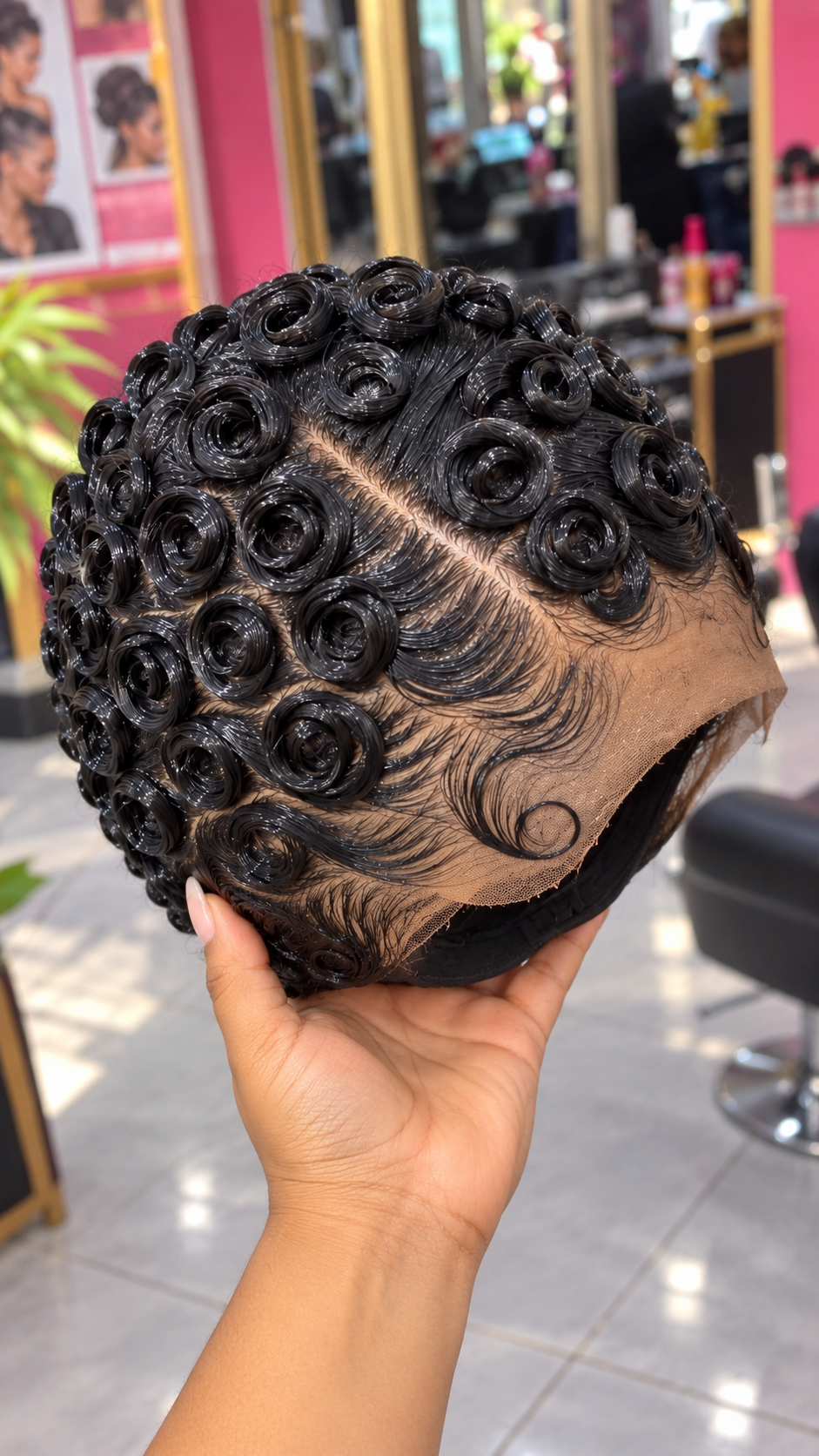
This sculpted pin curl wig is photographed in one hand, with excess front lace still attached. That presentation reveals details a finished portrait might hide: the extent of the untrimmed mesh, the placement of the front waves, and the way the curl pattern continues toward the sides. It also makes clear that the wig still needs individual fitting before its final appearance on a wearer can be assessed. For anyone interested in buying a similar unit, understanding those details is the best starting point for choosing the right product and booking any additional work.
A Part That Shapes the Whole Hairstyle
In this design, the part does more than divide the hair. It creates a visual path through the circular sections and establishes which way the flatter strands travel. On one side, the curls cluster closely across the crown and outer curve. Near the front, longer-looking sweeps follow the lace before ending in small turns. This change in direction keeps the surface from looking uniform. When requesting a similar wig, preserve that contrast rather than asking for identical curls placed evenly across the entire cap.


The visible line appears diagonal because of both its placement and the angle at which the wig is held. A seller should therefore confirm the actual position on a head before describing it as a particular side or depth. Ask for a straight-on photograph with the unit sitting correctly on a stand, followed by a view from above. Those two images can show whether the part begins where you expect and whether it continues far enough to support the styling you want.
Part width also affects the finished impression. Here, the exposed line is noticeable between dark strands, but it does not create a broad empty strip. If you are ordering a recreation, explain whether you prefer this visible separation or a slightly narrower appearance. Ask the maker what their construction allows before requesting changes. A part that looks convincing in a photograph still needs to sit appropriately against the wearer’s head, with surrounding curls arranged to keep the line intentional.
Reading the Curl Work Before You Purchase
The individual curls resemble small rolled ribbons, with a dark opening at the center and strands following a circular path around it. Their sizes vary slightly, which gives the arrangement depth. Larger loops draw attention across the upper and side sections, while smaller curls fill the spaces between them. This variation matters. A wig covered only in large rolls could look bulky, while very tiny curls would produce a different surface. Use the reference to explain the balance you want rather than relying on the general word “curly.”
The front waves lie closer to the base than the raised loops above them. They move across the lace in broad curves, with a particularly visible rounded turn near the lower front section. These details are part of the styling, so they should be included in the order discussion. Some suppliers may offer the same basic cut with minimal front strands; others may automatically create more elaborate swoops. Neither will necessarily reproduce this image unless the front arrangement is agreed upon.
The strong reflections show how the strands have been grouped and arranged, but they do not establish the hair material or the products used. The photograph cannot verify human hair, a particular synthetic fiber, or a lace grade. Treat those as questions for the supplier. A useful product description should identify the material separately from the style name and explain how the completed curl set is maintained. Attractive shine can support the presentation, but it cannot replace that information.
Get The Details On This Wig
To find a similar unit, look for wig boutiques and independent makers who show short pin curls, molded waves, and cropped wig styling in their existing portfolios. Search phrases such as black pin curl lace wig, “short sculpted curl wig,” and “side part pin curl pixie” can help narrow the options. Examine the actual work behind each listing. The relevant evidence is a balanced short shape, visible circular curl centers, and front styling that connects naturally with the sides.
A salon that offers wig customization may also be able to create the look from a suitable base. Contact the stylist before buying that base, particularly if you want a close match. They can explain whether the proposed fiber, length, and cap will support the arrangement. Purchasing a random curly wig first may limit the result, even if its color seems right. The person responsible for the final setting should ideally have a say in the unit they will be working with.
When messaging a seller, describe the order in practical terms: a short black unit, circular pin curls with visible centers, a pronounced side part, and flatter front waves. Attach the reference and ask for an example of comparable work. Request the cap size, fiber description, available lace area, and a complete quote. Also ask whether the pictured finish is included or whether the wig arrives ready for a separate styling appointment. That distinction can change both your budget and the time needed before wearing it.
For a ready-made wig, a video of the actual item is especially useful. Ask the seller to show the front, both sides, crown, back, and interior in ordinary light. For a custom order, discuss which details will be reviewed before dispatch and what happens if the finished shape differs from the agreed brief. Keep the answers with your order record. Clear specifications make it easier to assess the delivered wig and communicate any concern without relying on vague comparisons.
The Difference Between a Good Base and a Finished Set
A base wig supplies the hair and construction; the finished set supplies much of the appearance shown here. Cutting, section placement, curl formation, and front shaping all contribute to the result. Two units made from similar materials can look quite different after styling. When comparing quotes, ask what work has already been completed and what remains. A well-described base can still be a useful purchase, but it should not be confused with a fully prepared unit matching the reference.
The fiber choice should reflect your expectations after cleaning and restyling. If a supplier offers synthetic hair, ask whether the circular pattern is built into the fiber or created through a temporary setting process. If they offer human hair, ask how the curls are maintained and how much work is required to recreate them. Neither label alone guarantees that the wig will return to this exact arrangement after washing. The care instructions should address the finished hairstyle, not only the general hair category.
Heat use requires specific information. Do not assume that a synthetic unit can be reshaped with heated tools because it has a sculpted appearance. Ask for the manufacturer’s directions for that fiber and pass them to the stylist. For any material, discuss whether you intend to keep this set consistently or change the hairstyle later. That choice can influence which base makes sense and whether the cost of a more flexible option is useful for your routine.
Fit the Shape to Your Head
The wig looks compact in the hand, but hand-held scale cannot determine how it will fit an individual wearer. Measure according to the maker’s instructions and compare those measurements with the available cap sizes. Some suppliers request circumference only, while others also ask for front-to-nape and ear-to-ear measurements. Provide the measurements they need rather than estimating from a previous purchase. Different cap designs can fit differently even when their size labels appear similar.
Short wigs reveal fit problems around the ears and lower edges more readily than longer styles that cover those areas. A unit that sits too high may leave an unintended gap, while one positioned too low can crowd the forehead waves. During fitting, check the crown, temples, and nape together. Tightening a strap may improve one area while disturbing another. If the cap cannot sit comfortably and remain stable, ask about a different size or construction before altering the hairstyle.
The close silhouette also depends on what sits beneath the wig. Prepare your own hair in a way that creates an even base and suits your needs, then assess the wig over that actual preparation. A fitting over loose hair may give a misleading impression of the final shape. Ask your stylist how they recommend preparing for the appointment. The aim is to support the cap evenly so the curls retain their intended proportions without unexpected bumps underneath.
Work With the Lace You Can See
The warm-toned mesh extends beyond the styled front in the photograph. It is visibly untrimmed, which means the final edge has not been adapted to a particular wearer. Establish the wig’s position before deciding where to cut. The front waves should sit where you want them, the side areas should align comfortably, and the cap should feel secure. If you are inexperienced with lace preparation, a professional fitting can help you avoid removing material that may be useful for adjustment.
Ask the supplier to identify the lace color and dimensions rather than assigning a premium label from the photograph. Mesh appearance changes with lighting, the surface underneath it, and image exposure. You also need to know how far the lace extends behind the front and around the part. A visible lace edge does not mean the entire cap offers open parting space. Confirm the construction that supports this particular layout before ordering a unit with different styling expectations.
Front customization is a personal choice. You may prefer to keep the long curved swoop visible here, shorten it, or use a quieter arrangement around the temples. Discuss that before the final setting is completed. Reducing the front detail can change how the raised curls relate to the hairline, so it is best treated as a styling decision rather than an afterthought. A good consultation considers both the look you enjoy and the amount of upkeep you want to manage.
Setting a Budget for the Complete Result
The five tiers below are illustrative planning bands in US dollars, not verified market prices or a quote for the pictured unit. They provide a way to compare different purchasing routes. Actual offers depend on documented materials, construction, customization, and included services, and may fall outside these bands. Use the figures to organize your budget while checking what each seller actually supplies. A higher price does not by itself prove better curl work or a closer match.
| Tier | Illustrative Price Band | Possible Purchase Route | Detail to Check |
|---|---|---|---|
| Budget Starting Point | Under $75 | A stock short wig or basic unit intended for occasional use | Whether the pictured curl setting is included or requires separate work |
| Prepared Stock Unit | $75–$150 | A ready-styled wig supplied in a standard size and color | The actual unit’s appearance, fiber information, and cap measurements |
| Stylist-Finished Option | $150–$300 | A selected base combined with cutting, curl setting, and front shaping | The services included and whether fitting is charged separately |
| Individual Custom Order | $300–$500 | A project with agreed measurements, part placement, and styling details | The review process, alteration terms, and precise construction supplied |
| Comprehensive Custom Package | Above $500 | A bespoke unit or a package with additional fitting and care appointments | The materials, workmanship, and services that account for the total |
Ask for the total needed to reach a wearable finish. A quote may cover the wig while excluding trimming, fitting, shipping, taxes, or installation. Another may include several of those services. Write the differences down before comparing the amounts. If your budget needs to stay tight, focus on a suitable cap and convincing styling first. Packaging and optional extras will not correct an uncomfortable fit, an overly bulky crown, or a part placed somewhere you did not request.
Include maintenance in the calculation. A sculpted set may require professional renewal if washing or compression changes the arrangement. Find out who can do that work locally and whether the original maker offers an aftercare service. You do not need a rigid schedule before owning the wig, but you should understand the likely process. An affordable purchase becomes less practical if keeping its defining curl pattern requires appointments you cannot easily arrange.
Plan the Salon Appointment Around the Reference
When booking, ask for a stylist with examples of short wig molding, pin curl setting, or finger-wave work. Send the reference before the appointment and explain whether you want a new unit, a fitting, or a restyle. If you are supplying an existing wig, include its fiber details and current photographs. The stylist needs enough information to assess the request and reserve appropriate time. A general request for “short curls” does not communicate the precision of this particular arrangement.
Discuss the finished outline before individual curls. Establish how close the sides should sit, how much crown height you want, and how the nape should follow the head. Then review the part and front waves. This order helps keep attractive details within a balanced overall cut. Bring any glasses you regularly wear so their position can be checked near the temples. Ask for a final view from the back as well as the front before the appointment ends.
Confirm which tasks belong to that appointment. Some services include preparation, fitting, and setting; others price them separately. Ask whether you need to leave the wig with the salon and what condition it should arrive in. If the unit is being installed, request instructions for removal and later handling. You should leave knowing how to protect the lace and curl pattern, which minor touch-ups are appropriate, and when it would be better to return for professional help.
Choose a Securing Method That Suits Your Routine
If you prefer to remove your wig regularly, ask about a suitable glueless construction and how its stability is achieved. A seller should explain the band, straps, or other components rather than relying on the label alone. The exterior image cannot confirm that this unit is glueless. During a fitting, check ordinary movements such as turning your head and looking down. The cap should remain comfortable, with the front arrangement sitting consistently in the position you selected.
If you want an installed finish, discuss the method with a qualified wig stylist and follow the directions for the products used. Explain that preserving the sculpted front is important because pulling or repositioning it can change the waves. The fit should be settled before the final styling touch-ups. Also consider how often you want to remove the wig and whether you are comfortable with the care that the chosen method requires. Convenience depends on the complete routine, not simply on the length of the hairstyle.
Protecting the Loops Between Wears
Handle this set by supporting the cap rather than lifting the wig by individual curls. The open centers and rolled edges are part of the finished pattern, so repeated pulling can disturb them. Avoid brushing through the arrangement as if it were loose curly hair. If one loop moves, use only the correction method demonstrated by your stylist. A small adjustment may preserve the rest of the work, while unnecessary combing can turn a local problem into a full resetting job.
Before the first wash, ask what the wig is expected to look like afterward. The answer should distinguish the underlying fiber pattern from the salon-created finish. Follow the unit’s instructions for products, temperature, cleaning, and drying. Do not assume that the same circular layout will remain intact without further styling. If a professional reset is part of the care plan, arrange cleaning with that in mind so the wig is ready when you next intend to wear it.
Be cautious about adding products to a finish that is already strongly arranged. More gel, oil, or spray can change how the strands group together and may leave residue. Ask what has already been applied and whether anything is needed for maintenance. Keep any touch-up focused on the area that needs it. The reflective appearance in the photograph is a visual detail, not an instruction to keep increasing shine with each wear.
Store the wig on a suitable support with room around the crown and sides. Avoid a stand that stretches the cap or a shelf arrangement that presses against the curls. For travel, use a protective container that allows the top to keep its shape. After cleaning, follow the drying instructions fully before enclosed storage. Protecting the set from pressure between wears can reduce the amount of corrective styling needed and helps preserve the deliberate spacing of the loops.
The Final Check Before You Commit
Assess the completed wig in ordinary light and from more than the most flattering angle. Look for a balanced crown, consistent coverage, an intentional part, and front waves that sit where you agreed. Check the back and lower edges, even though they are less prominent in the reference. For an online order, inspect the unit before making alterations that may affect return conditions. If something differs from the specification, document it clearly and contact the supplier promptly.
The strongest version of this hairstyle keeps its main elements working together: a short rounded outline, open circular curls, a distinct part, and close front waves. Choose a supplier who can explain both the visible styling and the construction underneath it. Then use fitting and customization to adapt the unit to your own head and routine. That is what turns an appealing photograph into a wig you can wear with confidence and maintain with a clear understanding of what the style needs.
Search Terms
black sculpted pin curl wig · deep side part wig · short rosette curls · black lace front pixie · molded front waves · circular curl wig · cropped pin curl hairstyle · black wig with untrimmed lace