
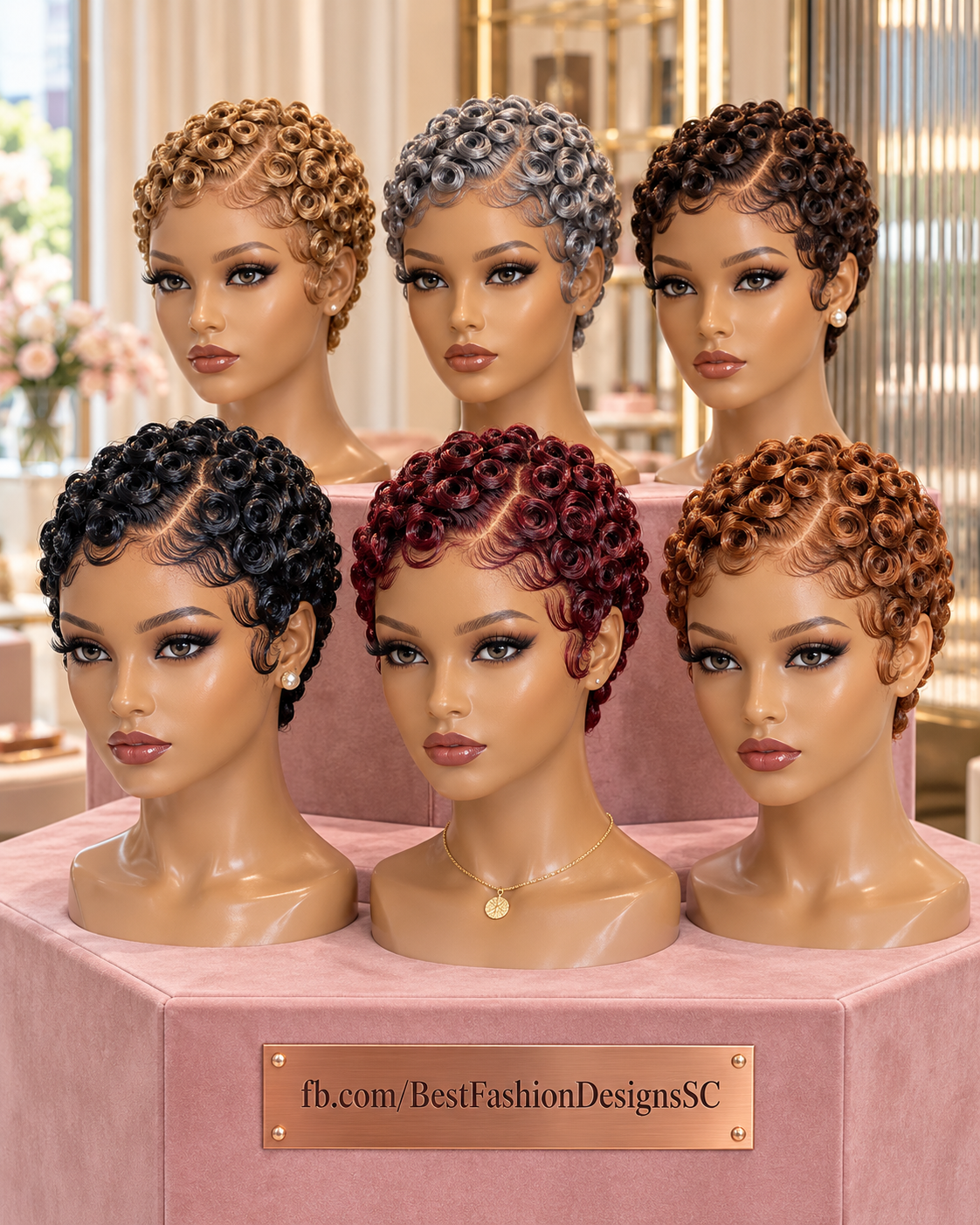
The right color can make a familiar hairstyle feel entirely personal. In this six-wig collection, golden blonde brings warmth to the circular curls, silver-gray makes their shape particularly easy to follow, and deep brown gives the same general arrangement a quieter richness. Black, burgundy, and copper complete the selection, showing how much the appearance of a cropped curl set can change without introducing long hair or a dramatic fringe.
Displayed on two levels of a pink upholstered stand, the wigs share an appealing combination: open pin curls, a curved side part, fine waves around the forehead, and closely arranged hair near the ears. The back row contains golden blonde, silver-gray, and deep brown. The front row contains black, burgundy, and copper. Each head presents its own curl placement, so the collection should be read as six related interpretations rather than six perfectly identical pieces in different colors.
For someone considering a purchase, this photograph offers more than color inspiration. It helps identify the details worth discussing with a seller: the size of the curl openings, the amount of forehead coverage, the position of the part, and the small curled sections beside the ears. Those decisions should come before assumptions about material, cap construction, or price, none of which can be verified from the mannequin display alone.
Pick the Shade You Want to See Around Your Face
When choosing among these wigs, start with the color nearest the forehead and temples. That is the area you will see most consistently when looking in a mirror, taking a photograph, or wearing the wig with everyday clothing. The upper curls are important, but the fine strands framing the face often determine whether the overall appearance feels right to you.


The golden blonde example at the back left has a warm, honey-like appearance. Its lightness reveals the strand direction through the front panel and makes the circular curls stand apart clearly. It is visibly different from the copper wig at the front right, which carries a stronger reddish-orange warmth.
Silver-gray, at the back center, creates a cooler appearance. The lighter outer strands and darker-looking curl centers make the rings easy to distinguish. However, the photograph does not establish whether the product has deliberately dark roots or whether the darker areas result from shadows and the arrangement of the hair.
Deep brown, at the back right, is darker and warmer than the silver and blonde options. Reflections give some upper curls a lighter appearance, but that is not enough to confirm a highlighted color service. Ask the supplier whether the shade is uniform or includes additional color placement before describing it as a mixed-tone wig.
The black, burgundy, and copper units offer three distinct front-row choices. Black emphasizes the pale part and the sweeping perimeter strands. Burgundy gives the curls a wine-red appearance, while copper makes the same general shape feel brighter and warmer. These are separate color directions, not interchangeable versions of a generic reddish shade.
Notice the Small Curls Beside the Ears
One particularly useful detail in this photograph is the way the hair continues toward the ears. Several wigs have a small curved section that follows the temple and turns close to the ear area. That detail helps connect the forehead waves with the fitted side, preventing the upper curls from looking visually isolated.
These side sections should be discussed during ordering because their placement will depend on the wearer’s proportions. A curl that sits attractively on a mannequin may need a small adjustment to clear an ear comfortably. That is a fitting issue rather than a reason to remove the detail automatically.
Ask whether the supplied wig includes these sections as shown and how much can be adjusted. If you prefer a simpler temple area, explain that before final styling. If the curved side strand is one of your favorite elements, make it a specific priority rather than assuming it will appear in every version.
The visible sides are closely arranged, but the photograph does not show a skin fade or carved razor stripes. Adding a shaved-looking pattern would create another hairstyle. A faithful order should concentrate on the curled temple detail and fitted outline actually visible here.
The Curl Openings Matter More Than the General Label
These wigs contain open circular curls with clearly visible centers. They are arranged across the upper head in overlapping groups, with some turning toward the forehead and others traveling around the side. The result differs from loose all-over curls, a fluffy crop, or densely packed miniature coils.
The size of those openings affects the entire surface. Smaller rings would make the hairstyle appear busier and potentially more compact. Much larger rings might require additional length or height. The reference offers a useful middle ground: curls large enough to read individually while maintaining a closely cropped silhouette.
Even within this collection, the curl distribution varies. The copper wig shows several prominent rings near the upper front, while the black wig has its own grouping around the visible part. A buyer should identify the preferred arrangement rather than assuming color is the only difference between heads.
Ask the seller whether the displayed curls are a temporary set or part of the product’s persistent pattern. That answer affects how closely the delivered piece will resemble the photograph after cleaning. A hairstyle name by itself cannot explain the work needed to maintain those openings.
Use the Part to Compare Proportions
A curved diagonal part runs through the upper-front area of each wig. It divides the more densely curled section from a flatter panel of swept strands. This separation gives the hairstyle direction and provides a clear point of comparison when assessing a possible purchase.
Look at how far the part travels and how much hair sits between it and the forehead. A wider front panel will show more of the fine waves. A narrower panel may allow the circular curls to dominate. Neither is automatically preferable, but the difference should be intentional.
The pale appearance of the part does not verify lace construction or a particular cap technology. The mannequin surface and underlying foundation can influence how that line looks. Ask for an interior photograph and a written description before drawing conclusions about the product beneath the styling.
During fitting, the part should be assessed together with the front edge and temple coverage. Moving the cap slightly can change their relationship. It is therefore sensible to settle the position before requesting permanent changes to the perimeter or haircut.
How To Order This Style
Choose one mannequin as the primary reference and identify its position clearly. “Front row, center, burgundy” is a more useful starting point than “the red one.” If you want that arrangement in another color, state the change separately so the seller does not misunderstand which details you are combining.
Then provide a short list of priorities. For this collection, those might include open circular curls, a curved side part, a visible forehead wave panel, and a small temple curl near the ear. Keep the list focused on the elements that genuinely determine your choice.
Ask whether the seller offers a finished stock unit or a custom recreation. A stock purchase should come with current photographs of the exact product available. A custom order needs agreement about measurements, color, part direction, and the amount of styling included.
If you already own a wig, book an assessment before assuming it can be converted. The stylist needs to inspect its usable length, density, material, and construction. A cropped base may lack enough hair for the ring size shown, even if its general outline appears similar.
For custom work, request a written order summary and discuss progress photographs. Ask which decisions can be revised during production and which become fixed after cutting or coloring. Clear expectations make it easier to assess the finished piece without relying on a vague promise of an exact match.
Choose a Seller by Relevant Work
Look for wig makers and boutiques whose portfolios include cropped curl sets and closely arranged forehead waves. A large collection of long straight wigs does not demonstrate experience with this hairstyle. Relevant examples should show the front, profiles, and back rather than only decorative display photographs.
When searching locally, combine your city with phrases such as “pin curl wig salon,” “custom cropped wig maker,” or “wig wave setting.” Use the results to locate possible services, then confirm what each business actually provides. Some sell finished wigs, some style customer-owned pieces, and others focus on installation.
The page address on the display does not establish a verified physical shop, current stock, or a confirmed ordering route. No city or country can be identified reliably from the scene. If a business offers this exact collection, ask for separate product evidence and clear business details.
Before traveling, confirm the full appointment location and whether a fitting sample is available. Before ordering for delivery, confirm the dispatch country, destinations served, and procedure for addressing fit concerns. Those practical details matter as much as finding an attractive photograph.
A useful seller should be willing to explain the product without replacing specifications with broad quality claims. Ask for the material, cap description, available dimensions, included components, and care instructions. The answers should refer to the selected wig rather than a general statement about the entire shop.
Planning the Price of a Colored Curl Wig
The following figures are illustrative USD planning allowances, not verified current listings. They do not identify the material or value of the wigs in this photograph. Use the categories to structure quotations and compare the actual product, customization, and services included.
| Purchase Category | Illustrative USD Range | What to Confirm |
|---|---|---|
| Premium Custom | $500–$1,100+ | Individual sizing, selected foundation, custom shade work, detailed curl placement, temple shaping, and revision arrangements. |
| Standard Custom | $270–$565 | Available base choices, reference-based cutting, part placement, selected color, and styling completed before delivery. |
| Basic Human Hair | $145–$340 | Written material details, processing history, cap specification, and additional charges for color and curl setting. |
| Premium Synthetic | $85–$220 | Fiber instructions, supplied shade, available sizes, curl behavior after care, and permitted resetting methods. |
| Basic Synthetic | $35–$95 | Actual product views, fit limitations, perimeter appearance, color availability, and return eligibility before alteration. |
The price difference between two offers may come from the foundation, material, color work, or styling labor. Ask the seller to explain which. A higher figure is easier to assess when it includes specific services rather than an undefined promise of superior quality.
For this reference, the circular set and temple detailing may be priced separately from the base wig. Some sellers include the first set but charge for fitting. Others may supply an unstyled product and expect a local salon to recreate the look.
Request a complete breakdown covering the unit, cutting, color, setting, fitting, and delivery. If installation is needed, establish whether it is included. For international orders, ask whether import-related charges might be collected separately.
Also consider the cost of future resets. A product that requires professional styling after cleaning creates an ongoing appointment need. Knowing that before purchase helps you compare the initial price with the practical cost of wearing the wig repeatedly.
Understand What the Mannequin Cannot Confirm
The display shows the exterior styling, but it does not reveal the inside of any unit. Lace type, cap ventilation, combs, adjustment components, and the intended securing method remain unverified. A mannequin presentation cannot establish those specifications.
Request interior views of the actual wig being offered. The supplier should identify the materials and explain how the front, sides, and nape are constructed. If lace is included, ask for its stated type and coverage instead of assuming a premium grade from the scalp-like part.
Likewise, do not assume adhesive-free wear because the wig appears closely fitted on a mannequin. Ask how it is intended to be secured and what preparation is required. The answer depends on the product and the wearer’s fit, not just the exterior silhouette.
Human hair and synthetic fiber cannot be reliably distinguished from this photograph. Shine, curl shape, and color are insufficient evidence. Obtain the material description before discussing heat, coloring, or a particular maintenance routine.
Book the Fitting Before Final Perimeter Changes
A good fitting should assess the entire front arrangement. Look at the part, forehead panel, temple curls, and ear clearance together. A small adjustment in placement can change how those details sit, so avoid evaluating one section without considering the rest.
Follow the maker’s measurement instructions when ordering. Provide the requested dimensions and explain any particular coverage preference. A familiar size label from another wig may not translate to the same cap shape or temple position.
If excess lace needs trimming, settle the fit first. If the front feels too heavy, ask whether styling or placement can address the issue before removing hair. The length used to create a circular curl may be needed even when the finished hairstyle appears compact.
Ask to see the back in a mirror or photograph. The complete rear and nape are not visible in this display, and their shape can change the overall result. Confirm whether the back is closely cropped, rounded, or left with more length.
If you wear glasses, bring your usual frames. Check that the temple sections remain comfortable and that putting the glasses on does not repeatedly displace the small side curls. An everyday wearing habit should be part of the fitting discussion.
Color Approval Deserves Its Own Check
Warm display lighting can affect how blonde, brown, copper, and burgundy appear. Request a daylight video of the selected unit before approving the shade. Ideally, ask for the wig to be shown in more than one ordinary lighting condition.
If choosing between golden blonde and copper, have the seller show both together. Their difference is clearer in a direct comparison than in separate edited photographs. The same approach is useful when deciding between deep brown and black.
For silver-gray, ask to see the roots and lower sections closely. The photograph does not establish a specific rooted treatment. If you want a particular balance of pale and darker strands, make that part of the written agreement.
A color name should support the visual reference, not replace it. Suppliers may use different names for similar shades. Keep the agreed photograph or sample associated with the order so there is a shared point of comparison.
Ask About the First Wash Before Buying
The most important care question is whether the circular arrangement remains after cleaning or requires resetting. A wig can arrive beautifully styled even when the underlying pattern looks different after washing. Ask the seller to explain that distinction clearly.
Request care instructions for the confirmed material and setting method. For synthetic fiber, establish compatibility before using heat or chemical products. For human hair, ask about processing history and the recommended approach to caring for the selected shade.
A before-and-after example of the same product can help set realistic expectations. It shows whether the curls largely return after drying or whether a stylist needs to rebuild the arrangement. Neither result should come as a surprise after purchase.
If professional resetting is expected, ask who can provide it and obtain a separate quotation. A local stylist may need to inspect the unit before accepting the service. This is especially relevant when ordering from a seller located far away.
Preserve the Small Details Between Wears
The open centers of the curls and the fine forehead strands need different handling from loose hair. Brushing through the whole top may dismantle the ring arrangement. Ask for a demonstration of how to correct a displaced curl without disturbing its neighbors.
The temple curls should also be handled carefully during application and removal. Use the method recommended for the cap rather than gripping the styled hair. If a side section repeatedly moves, check the fit and wearing routine before adding more product.
Keep product use consistent with the supplier’s instructions. Excess buildup may obscure the visible part or make fine strands clump together. A small styling concern does not necessarily call for treating the entire wig.
For storage, support the foundation without stretching it and avoid compressing the upper rings. Ask how to protect the wig during travel, particularly if you will not have access to a stylist at your destination. Preventing unnecessary flattening can reduce preparation later.
Check the Delivered Piece While It Is Unaltered
For a custom order, request final views before dispatch. Compare the agreed color, curl scale, part direction, temple treatment, and overall outline with the written brief. Resolve visible differences while the maker still has the unit.
After delivery, inspect the wig before washing, trimming, coloring, or applying styling products. Read the return and alteration conditions, and document any concern clearly. Contact the supplier if the product differs from the agreement.
If transport has moved a few curls, ask for targeted instructions suited to the confirmed material. Avoid brushing through the entire style to correct one compressed section. The supplier should explain any normal arrival preparation.
Allow time for inspection and fitting if the wig is for an occasion. Production, courier transit, and final preparation are separate stages. A realistic schedule gives you room to address fit or styling questions without rushing permanent changes.
Choose the Version That Feels Like Yours
This six-piece display offers a focused selection of colors without losing the beauty of the circular curl arrangement. Golden blonde, silver-gray, deep brown, black, burgundy, and copper each place a different emphasis on the part, forehead waves, and closely shaped sides.
The most satisfying choice will be the one whose color you enjoy, whose proportions suit your face, and whose care requirements fit your routine. Select a specific reference, confirm the construction, compare complete quotations, and make time for a proper fitting.
With those decisions settled, the photograph becomes a practical brief for a cropped wig with open curls and delicate face-framing movement. The goal is a piece that looks appealing beyond the display and remains understandable to buy, wear, and maintain.
Search Terms
six shade pin curl wig collection · honey blonde circular curl wig · silver gray curved part pixie · deep brown open ringlet crop · black waved temple wig · burgundy pin curls with side part · copper cropped curl hairstyle · ear framing curls wig