
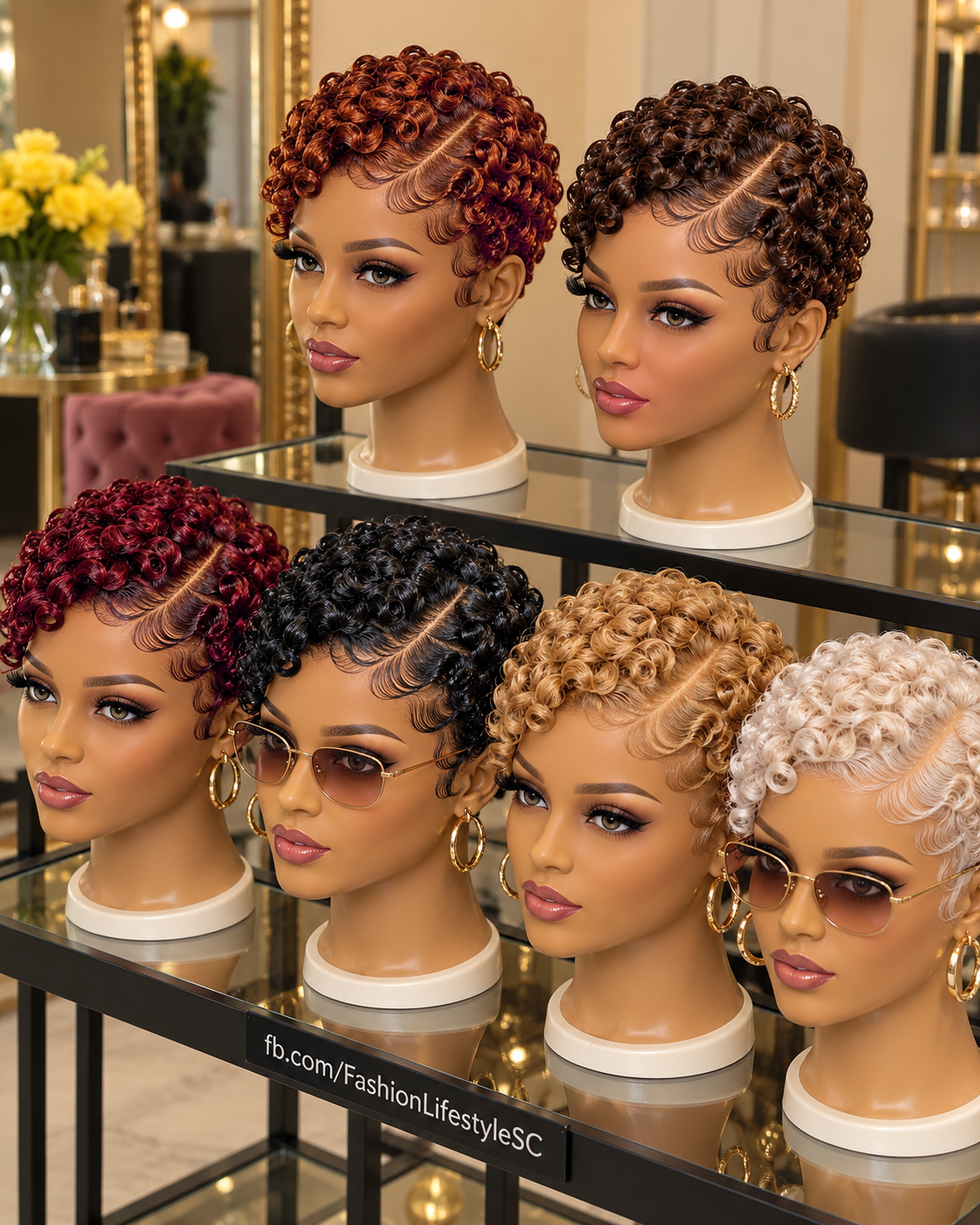
Which color would you buy, what should it cost, and where can you find a seller who can deliver the same hairstyle? Those are the practical questions behind this display of six curly pixie wigs. Copper, deep brown, burgundy, black, honey blonde, and pale platinum offer different interpretations of a closely related cut. Each combines a compact curl arrangement with a visible side part and curved hair along the front and temples.
The photograph is useful for choosing a direction, but it is not a complete product listing. It does not provide verified prices, a physical shop address, material specifications, or ordering terms. The sensible approach is to use the display as a reference, identify the version you want, and obtain a quotation for that particular wig. Color, construction, and the amount of styling included can all affect the final purchase.
Choose Your Color Before Asking for a Quote
There are two mannequin heads on the upper shelf and four below. The upper left wig has a copper-auburn appearance, with brighter orange reflections across its curls. Beside it sits a deep brown version with warmer highlights. On the lower shelf, the visible colors run from burgundy and black to honey blonde and a very pale, slightly warm platinum. These are visual descriptions under the display lighting, not verified supplier shade names.


The copper option draws attention to individual curl ridges and the swept hair beside the part. Burgundy gives a deeper red impression, especially where the curls overlap. If either interests you, request a daylight photograph before ordering. Warm shop lighting can make copper look more golden and brown look more reddish than either appears outdoors.
The black and deep brown versions offer a useful comparison for shoppers who want a darker result. Black produces stronger contrast against the visible parting, while the brown wig shows more tonal variation through the top. Ask to see both against the same background and under the same light. Comparing unrelated promotional pictures makes it harder to judge the actual difference.
Honey blonde and pale platinum make the curl arrangement especially noticeable in this image. However, they should be treated as separate color choices rather than interchangeable “blonde” options. Request a close photograph of the roots, part, and temple area. If you want darker roots, specify that separately; this display does not establish a deliberate dark-root treatment on the lighter wigs.
Similar Cuts Still Need Individual Product Photos
All six wigs belong to a similar visual family, but they should not automatically be treated as identical products. The visible curl openings, top height, and front arrangement vary. The copper and dark brown wigs have rounded curls distributed across the top, while some lower-row curls appear more densely grouped. The lightest version also presents a softer-looking front arrangement from this angle.
A narrow diagonal side part is visible on each piece. Curved, closely arranged hair follows the forehead and temple, creating a flatter border beneath the fuller curls. These are not the angular side channels seen on some other pixie designs. If you want this particular look, include the curved temple styling and uninterrupted side part in your request rather than asking only for a curly wig.
The mannequin faces, earrings, and glasses help stage the display, but they do not establish fit or product quality. In particular, the glasses partly interrupt the view of the black and platinum wigs near the temples. Ask for unobstructed photographs of your selected unit, including both profiles and the back. The display does not reveal every lower edge or the complete rear shape.
Find Out Where To Buy This
Start with a wig boutique, a custom wig maker, or a salon that sells finished pixie units. Show the reference and identify the exact color and shelf position you mean. “The honey blonde wig on the lower shelf” gives a seller a clearer starting point than “one of these curls.” Then ask whether they have a comparable ready-made piece or would need to create it.
The page address visible on the display is not proof of a physical store location, stock availability, or a verified sales service. This photograph alone cannot establish who supplies the wigs. If you contact a page associated with the image, ask whether it sells products directly, shares hairstyle inspiration, or refers shoppers elsewhere. Obtain the actual seller’s details before discussing payment.
For a local purchase, request the shop’s city, full street address, opening hours, and appointment requirements. Confirm whether the selected color is available to view at that location. A salon may offer wig fitting without keeping retail stock, while an online seller may use a collection point rather than a walk-in boutique. Clarifying this first prevents an unnecessary journey.
For delivery orders, ask where the item ships from, whether your destination is covered, and what the quoted delivery charge includes. Request an expected dispatch date and a separate transit estimate. A custom order’s production time is different from shipping time, and neither should be assumed from an attractive display photograph.
What Would a Wig Like These Cost?
The table below gives illustrative USD planning ranges for five possible buying categories. These are not verified live prices, and they do not identify the material or value of the photographed pieces. Use them to structure a quotation request, then compare actual offers in your preferred currency. Each amount refers to one wig rather than the six-piece display.
| Category | Illustrative Price Range USD | What to Check in the Quotation |
|---|---|---|
| Premium Custom | $450–$900+ | Specified cap fit, individual color work, carefully arranged curls, and personalized front styling; confirm the proposed material. |
| Standard Custom | $230–$450 | An existing base adapted to the requested color and pixie shape, with clearly stated limits on alterations. |
| Basic Human Hair | $120–$260 | Written confirmation of human hair, supplied color, and whether the photographed curl setting is included. |
| Premium Synthetic | $70–$160 | Fiber specification, preset curl arrangement, parting construction, and permitted care or restyling methods. |
| Basic Synthetic | $25–$70 | The actual supplied appearance, size options, and whether additional cutting or styling would be needed. |
Ask the seller to separate the product price from fitting, installation, trimming, and future curl resetting. A ready-styled synthetic option and an unstyled human-hair base are different purchases, even if their initial prices overlap. Neither material can be identified reliably from this photograph, so a material claim should come from the product description and seller’s written confirmation.
Color can also change the quote, but a pale wig should not automatically be assumed to cost more. The answer depends on the starting material and how the shade is supplied. Ask whether your chosen color is a standard stock option or requires additional processing. For a custom piece, confirm whether a color adjustment after completion would incur another charge.
Ready-Made Purchase or Salon Recreation?
A ready-made unit may suit you if its size, color, part position, and curl arrangement already meet your needs. Ask for photographs of the item being dispatched, especially when a listing offers several shades under one image. Confirm whether it arrives styled as shown or needs a finishing appointment after unpacking.
A custom commission is more appropriate when the part position, temple arrangement, or overall proportions need adjustment. Explain which elements are essential and where you can accept variation. For example, you might prioritize the compact outline and curved front hair while accepting a slightly different curl diameter. This gives the maker a workable brief without suggesting that every strand must match a staged photograph.
If you already own a suitable wig, a stylist may be able to assess it for a related pixie finish. Send photographs and its material information before booking. Cutting and setting possibilities depend on the existing length, density, foundation, and fiber. Do not assume a barber can create the same result by cutting alone; the front arrangement and curl setting may require a wig specialist.
Make the Fitting About Your Hairline and Ears
The display shows wigs on mannequin heads, so it cannot establish how any piece will fit a particular wearer. Ask which measurements the seller needs and follow their measuring method. Alongside circumference, the relationship between the forehead, temples, and ears matters for a close-fitting pixie silhouette. A cap that sits incorrectly can shift the visible part or make one side appear longer.
No cap interior, attachment hardware, or clearly exposed lace edge is available for inspection here. Consequently, the image does not verify lace coverage, a glueless design, adjustable fittings, or HD lace. If one of those specifications matters to you, request underside photographs and a written explanation of the intended wearing method.
At a fitting, assess comfort and placement before approving permanent changes. Check that the ear area sits appropriately and that the curved temple hair follows the intended position. If the selected unit includes lace requiring trimming, let the installer assess it in place first. Avoid requesting aggressive front cutting simply because the mannequin presentation appears especially close to the forehead.
Ask About the Second Wear Before the First Purchase
A useful ownership question is what the wig will look like after cleaning and restyling. Ask whether the curls are supplied as a temporary salon set or as a factory-set pattern, and request care instructions for the confirmed material. This helps you understand whether refreshing the appearance is a home task or a service to budget for.
The visible circular curls should be handled according to that guidance rather than brushed out automatically. For the flatter front and temple sections, ask how much product is appropriate and how those areas should be repositioned after wear. Repeatedly adding styling product without cleaning as directed can leave a finish different from the one that attracted you.
Do not apply heat, bleach, or dye based on appearance alone. Synthetic heat compatibility varies, and human hair can have a processing history that affects further treatments. If you choose honey blonde or platinum, ask what color maintenance the seller recommends. For copper or burgundy, ask whether the prescribed washing routine includes any specific color-care requirements.
Get a Complete Answer Before Paying
A useful seller response should leave you knowing which wig you are buying, its confirmed material and size, the total price, and where you can collect it or receive delivery. It should also explain what styling is included and what happens if the supplied item differs from the agreed order. Keep the selected product photographs with those written details.
This display offers six appealing color directions, but the strongest purchase is the one supported by clear information. Choose the shade you actually want, inspect that individual unit, and compare the complete cost. That turns a hairstyle reference into a practical shopping decision without relying on an unverified address, assumed construction, or a price attached to the wrong product.
Search Terms
curly pixie wig collection · copper auburn ringlet wig · deep brown side part wig · burgundy pixie curls · black ringlet pixie wig · honey blonde curly wig · pale platinum pixie wig · curved temple hair styling