
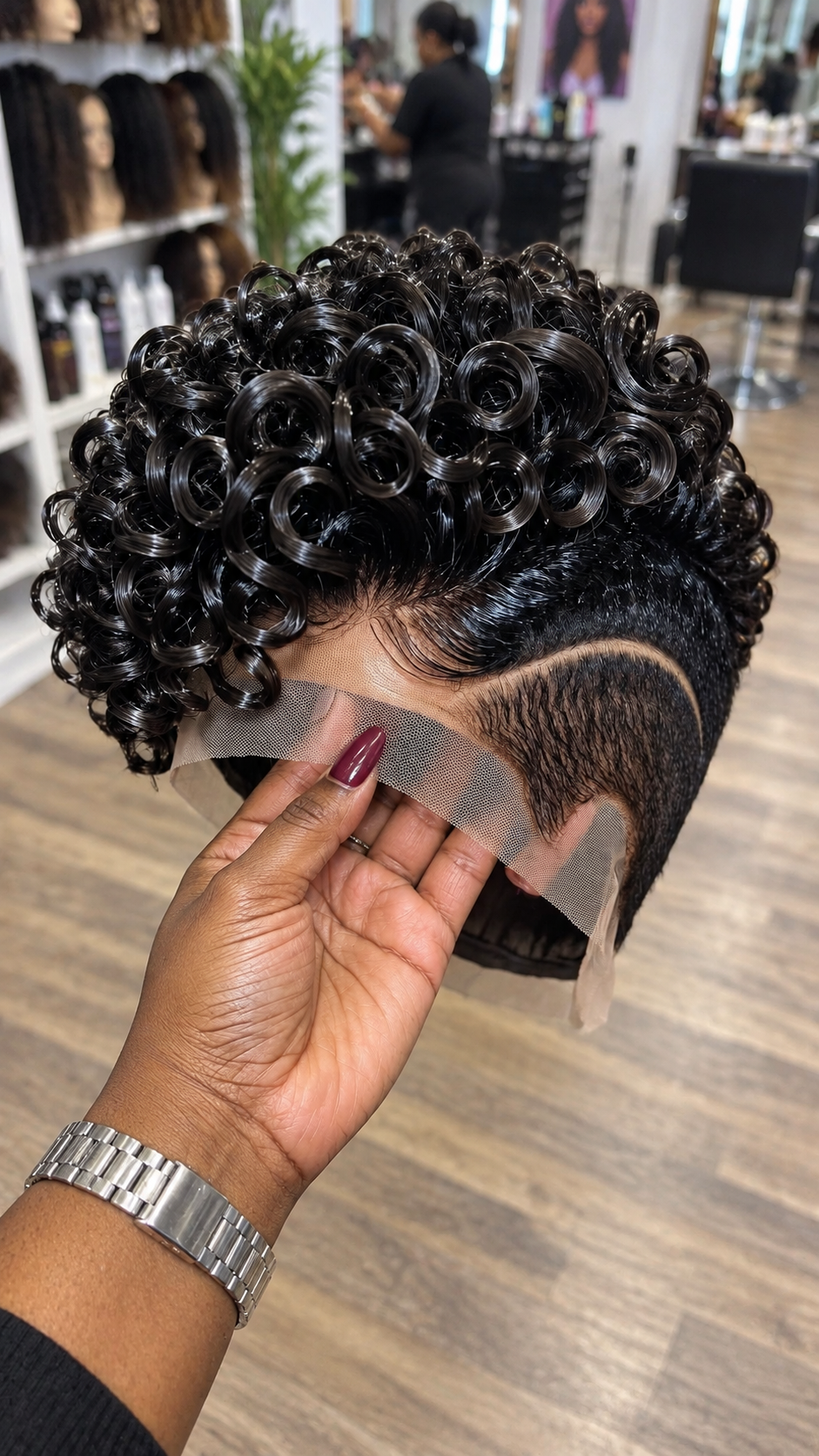
A curved part can change the entire character of a curly pixie wig. In this photograph, a narrow, scalp-colored arc separates a glossy field of black ringlets from a closely cropped side panel. The contrast gives the style its identity: generous circular curls above, compact hair below, and a deliberate boundary between them. Anyone ordering this look needs to pay attention to that relationship, because a wig with similar curls but a different side profile will create a noticeably different result.
The piece is being held before installation, with excess lace extending beyond the front and temple. That makes the photograph useful as a design reference, but it does not show the final fit on a wearer. The buying decision therefore involves two tasks: finding a maker who can reproduce the visible curl arrangement and confirming that the curved side detail will sit correctly once the wig is fitted.
Read the Arc Before Choosing the Curls
The most distinctive detail sits on the visible side. A pale curved channel travels above a dark, close-cut panel, rising toward the rear of the photographed section. Above that channel, longer hair sweeps backward beneath the ringlets. Below it, the hair remains much closer to the base, with individual strands visible near the temple. This is a single prominent curved separation, rather than a pair of parallel razor lines.
Its exact construction cannot be established from the photograph. The lighter channel could involve a deliberately exposed base, a parting arrangement, or customized cutting and placement. Ask the seller to explain how it is made. That answer matters when deciding whether the detail can be moved, widened, or repaired. A channel built into a wig cannot necessarily be repositioned during a salon appointment.


Placement also affects how much of the design remains visible. If the curls fall too far down, they can cover the arc. If the side is cut too deeply, the exposed area can become broader than the reference. For a custom order, describe the desired balance as an uninterrupted curved separation beneath overlapping ringlets, supported by a compact side panel.
Open Centers Give These Ringlets Their Shape
The upper hair forms numerous glossy loops with clearly visible openings. Several curls face toward the camera, while others turn upward or sideways. Their changing orientation creates depth without requiring a tall, uniformly puffed silhouette. The front section projects over the lace, and smaller curls gather around the outer edges of the visible shape.
These are useful distinctions when comparing listings. A tightly packed coil wig, a brushed curl pixie, and this open-ring arrangement may all appear under similar search descriptions. Product names alone will not establish a match. Look for photographs where you can see the centers of the curls and the way neighboring loops overlap. A side view should also show whether the upper section retains its rounded outline.
The color appears black throughout the visible hair. Bright reflections trace the strands, but those reflections do not establish silver highlights or a second color. Similarly, the pronounced shine does not identify the fiber. Human hair and synthetic products can both photograph with strong reflections, depending on lighting, styling products, and processing. Obtain the material description separately.
A Reference Photo Needs a Matching Side View
For this particular design, a straight-on product image is insufficient. The curved channel is a major part of the purchase, so request a photograph from approximately the same angle as this reference. It should show the front curl overhang, the swept section above the arc, and the cropped hair beneath it. Ask for ordinary indoor lighting as well as daylight if the seller can provide both.
The opposite side and rear also need inspection. Neither is fully established here. Do not assume that the other temple carries the same curved detail or that the back has an identical taper. A maker may intentionally create an asymmetric design. That can be attractive, but it should be a choice agreed upon before payment rather than a surprise when the parcel arrives.
A brief video can answer questions that still photographs leave open. Ask the seller to rotate the actual unit slowly and gently lift one small curl section. This helps show how the loops sit over the underlying hair. Confirm that the footage depicts the item being offered, especially when a listing mixes customer photographs, reference images, and sample units.
Where To Buy This Wig
Search among wig makers and sellers who regularly offer customized curly pixie units with cropped sides. A general wig retailer may carry a similar curl pattern, while a specialist may be better equipped to reproduce the arc and the transition beneath it. Ask to see completed work with comparable side detailing, rather than relying on unrelated examples of long lace wigs.
For a ready-made purchase, prioritize the correct side layout and overall proportions. A stylist may be able to refine curl placement, but substantial changes to the foundation can be difficult. For a custom order, provide the reference alongside measurements and a written description of the visible details. Specify black hair, open circular ringlets, the single curved side separation, and the close-fitting lower side section.
Before paying, establish which changes are included. Does the maker supply the unit with its curls already set? Is lace trimming offered only during an in-person fitting? Will the seller accept a return before customization? Request a written order summary covering the material, cap size, construction, styling, and delivery condition. No supplier or product listing can be identified from this photograph alone.
Fit Determines Where the Design Lands
A close-cut side leaves less hair available to conceal poor placement. If the cap sits too high, the temple area may look disconnected from the wearer’s natural proportions. If it sits too low, the shaped section may crowd the ear. Accurate fitting is therefore particularly relevant to this style, even though the top curls attract attention first.
Use the seller’s measurement instructions and confirm which measurements are required. Circumference alone may not resolve front-to-nape length or ear-to-ear placement. Mention how you intend to arrange your natural hair underneath, since bulky preparation can change how the wig sits. The aim is a stable base that allows the side design to remain in its intended position.
The photograph shows untrimmed mesh along the front and visible temple, but it does not establish the lace grade, the complete lace coverage, or the attachment method. It also does not verify a glueless construction. Ask for underside photographs showing the interior and any fastening components. The dark interior area visible below the held unit is not clear enough to identify individual combs or adjustment hardware.
Plan the Fitting Before Any Cutting
Book with a wig stylist who understands fitted pixie shapes and can assess the cropped side without disturbing the ringlets. Explain that the curved detail is already part of the desired design. If additional clipper work is proposed, ask what will be removed and why. A barber’s cutting experience can be helpful, but cutting a wig requires awareness of the foundation beneath the hair.
Inspect the delivered piece first, then try it on with the intended hair preparation. Check the front position, ear clearance, and alignment of the visible arc. Only after those points are settled should any necessary lace trimming take place. Cutting the mesh while the unit is positioned incorrectly can make a later adjustment harder to conceal.
Keep the first appointment focused on fit and proportion. Large amounts of product or aggressive restyling can obscure whether the unit actually matches the order. Before leaving, ask the stylist to demonstrate how to reposition the front loops and how to put the wig on without pulling against the lace.
Budget for the Side Work as Well as the Hair
The material category is only one part of the cost. Reproducing the curved separation, controlling the side density, and arranging the open ringlets may require separate labor. The following table compares five possible purchasing tiers. These are planning categories, not verified offers or an identification of the photographed wig. Request a current written quotation for each option.
| Purchase Tier | What to Clarify | Potential Additional Cost |
|---|---|---|
| Premium Custom | Individually agreed cap fit, curl arrangement, and reproduction of the curved side detail. | Specialist fittings, revisions beyond the agreement, and installation appointments. |
| Standard Custom | Adaptation of an existing pixie base with specified ringlets and side shaping. | Changes to the standard base or additional work on the opposite side. |
| Basic Human Hair | Confirmed human hair specification and whether the pictured styling is included. | Curl setting, density adjustment, lace fitting, and future salon resets. |
| Premium Synthetic | Fiber specification, supplied curl pattern, and availability of the curved side layout. | Professional fitting and any customization permitted by the construction. |
| Basic Synthetic | Actual product photographs and how closely the ready-made shape matches the reference. | Permitted alterations, delivery, and replacement if the design cannot be adapted. |
Compare quotations against the same brief. One seller may include the finished ringlet set and side customization, while another quotes only for an unstyled base. Ask whether shipping, taxes, consultation, and installation are included. A lower initial quote can lose its advantage if extensive corrective work is required after delivery.
Also consider the cost of preserving the look. A buyer who wants the curls arranged professionally after each wash should include those appointments in the budget. Someone comfortable following the maker’s reset instructions may have different ongoing expenses. Neither approach can be priced accurately until the material and maintenance requirements are confirmed.
Protect the Openings Between the Loops
The visible curl centers are part of the design, so avoid treating the finished upper section as something to brush through casually. Brushing can separate the grouped strands and change the ringlets into a fuller shape. For minor adjustments, handle individual loops gently and follow the maker’s advice about which tools and products suit the confirmed fiber.
Ask for washing and resetting instructions before the first wash. Establish whether the supplied arrangement is a temporary salon set or a pattern the fiber is intended to retain. If it is human hair, the loops may need to be recreated after washing. If it is synthetic, suitable handling and any permitted heat depend on the specific product. Do not choose a hot tool temperature from appearance alone.
The close-cut side needs a different kind of attention. Product buildup can make the strands clump and reduce the contrast around the pale channel. Apply styling products sparingly, avoid scraping the exposed area, and consult the maker before trying to widen the part or remove more hair. Those changes can expose construction that the original arrangement was designed to cover.
Judge the Finished Wig at Everyday Distance
After fitting, inspect the result from a normal conversational distance as well as close up. The ringlets should read as separate loops, the arc should remain visible, and the cropped side should sit comfortably around the temple. Turn your head and check whether the upper curls repeatedly fall across the curved channel. That may call for a small placement adjustment rather than more cutting.
The strongest purchase is the one that reproduces the relationship between these elements while fitting your head correctly. Keep the reference available during consultation, agree on the unseen areas before ordering, and leave irreversible alterations until the unit has been assessed on you. Those decisions give the distinctive side design a better chance of surviving the journey from photograph to daily wear.
Search Terms
black ringlet pixie wig · curved side part wig · open circular curl crown · close cropped temple wig · untrimmed front lace wig · glossy black loop curls · swept temple hair detail · curly top tapered side wig