
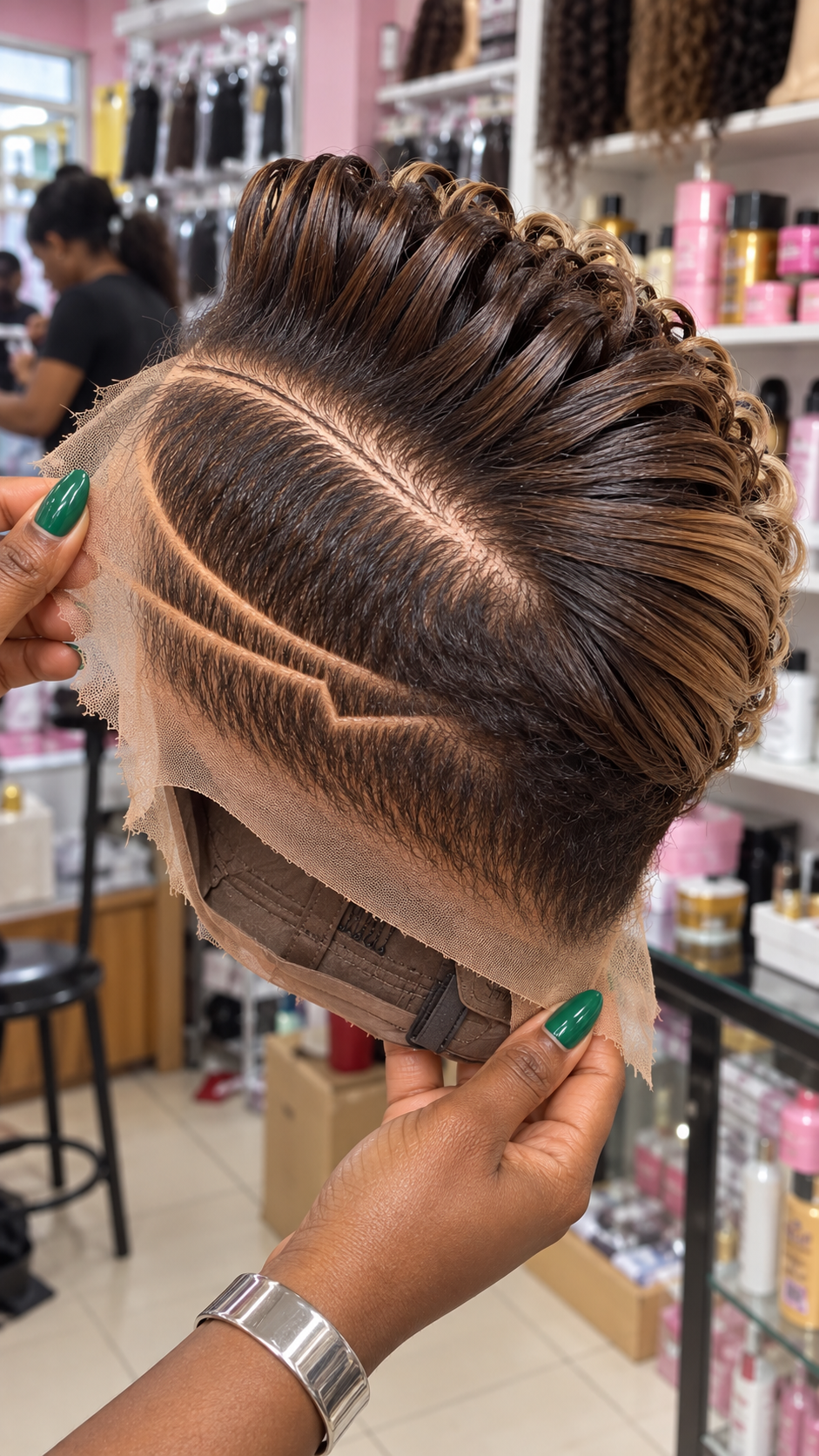
The most revealing detail in this photograph is not the hairstyle’s height or its glossy caramel coloring. It is the sharp change in direction where the raised ribbon-like hair meets the carefully separated temple panel. One section rises into broad, backward-sweeping strands, another curves toward a collection of compact curls, and the lower portion follows a completely different arrangement of exposed parting channels. Together, these elements create a distinctive lace wig whose appearance depends heavily on precision.
Photographed inside a wig and beauty supply shop, the unit is being held with its lace and part of its interior exposed. This allows a prospective buyer to examine details that are frequently hidden in photographs of installed hairstyles. The visible construction includes beige lace, a brown fabric cap, an interior comb, and an adjustable fastening strap. The hairstyle itself combines dark brown roots, warm caramel-brown ribbons, lighter golden accents near the curled ends, and a geometric side design.
For customers searching for a caramel brown pixie lace wig with a sculpted side pattern, this photograph offers a useful reference. It shows why choosing the correct color is only one part of commissioning a similar hairstyle. The width of the ribbons, their direction, the placement of the exposed channels, and the relationship between the curled upper section and the flatter lower hair all contribute to the finished appearance.
A Color Arrangement Built Around the Direction of the Hair
The warm coloring is distributed through the hairstyle rather than appearing as a single uniform shade. Dark brown remains prominent near the roots and throughout much of the closely arranged side section. Across the elevated upper hair, caramel and medium-brown strands catch the light, producing alternating darker and lighter ribbons.
Near the rearward visible edge, the hair gathers into tighter curled forms containing lighter golden-brown accents. These lighter pieces provide contrast against the darker central section without creating the appearance of an entirely blonde wig.
The color distribution becomes particularly noticeable where the broad upper ribbons bend toward the curls. The reflected light follows the curvature of the strands, emphasizing their direction and making the arrangement appear more dimensional.
The photograph does not establish whether these shades were produced through professional coloring, blended hair bundles, or another manufacturing process. It also cannot establish the exact commercial color numbers. A seller may describe the combination using terms such as chocolate brown, caramel brown, or honey-brown highlights, but a buyer should request actual product photographs before selecting a shade.
Matching the Brown Tones Without Losing Contrast
A useful custom-order reference should distinguish the root color from the brighter portions. Asking for a uniformly light caramel wig would not reproduce the appearance shown here. The dark foundation is essential because it separates the individual ribbons visually and provides contrast around the exposed parting channels.
The lighter coloring is most apparent along the raised strands and curled ends. A custom maker should be asked whether the proposed hair can achieve this distribution without making the temple section excessively light.
Customers comparing color samples should inspect them under ordinary indoor lighting as well as daylight. Highly reflective hair can appear lighter in photographs than it does in person. The visible golden streaks may therefore be influenced partly by the shop’s lighting.
The Sweeping Ribbon Arrangement Deserves a Closer Look
The upper section differs from an ordinary curly pixie. Much of the visible hair has been arranged into broad, glossy ribbons that rise from the front and side before bending backward. The strands remain closely aligned within each ribbon, giving the surface a polished, sculptural appearance.
At the upper front, several sections rise almost vertically before curving toward the rear. Moving across the visible side, the strands fan outward and backward. This directional change gives the hairstyle its distinctive profile.
The raised portions are not identical in width. Some appear comparatively narrow, while others gather more hair into broad, sweeping sections. Their placement produces movement without requiring long, freely hanging hair.
At the far visible edge, the ribbon arrangement transitions into compact curls. Several curled ends are clearly visible, including lighter caramel and golden-brown pieces. The curls provide a softer visual boundary to the more controlled central styling.
This combination is important when communicating with a wig stylist. A customer requesting only finger curls might receive a hairstyle consisting of small circular coils across the entire upper section. That would be substantially different from the broad, directional ribbons shown in the photograph.
Volume Comes From Placement, Not Simply Hair Quantity
The upper profile appears elevated because the hair has been guided into upward and backward curves. Adding more hair is not necessarily the correct way to reproduce this shape.
Excessive density could make the ribbons difficult to separate visually, while insufficient density might prevent the elevated sections from retaining their intended appearance. The maker needs to consider both the quantity of hair and how it will be arranged.
A custom wig consultation should therefore include a discussion of the desired height, the width of the individual ribbons, and the degree of separation between them.
Since the photograph does not show the complete rear surface, the exact continuation of the curls behind the visible edge cannot be confirmed. A buyer seeking an identical silhouette should request an additional rear photograph.
Two Exposed Channels Give the Temple Its Geometric Character
The most distinctive design element lies beneath the elevated hair. A long exposed channel begins near the front hairline and curves backward, separating the upper ribbons from the flatter temple section.
Below this channel, another exposed separation travels diagonally through the side hair. Its path includes a noticeable angular change near the rearward portion of the visible temple panel. This creates a geometric effect rather than the appearance of two simple parallel lines.
The hair between these channels is dark brown and closely laid, with fine strands following the shape of the surrounding sections. Beneath the lower channel, the hair remains comparatively compact and follows the lower side contour.
These channels are particularly important because their pale appearance contrasts strongly with the dark hair. The photograph shows exposed parting areas, but it does not establish the precise technique used to create them. They should not automatically be described as razor-shaved lines on a natural scalp.
When ordering a similar wig, customers should specify that the upper separation is curved while the lower design has a more angular progression. Describing both as ordinary side lines would overlook the feature that distinguishes this arrangement.
Positioning the Design on the Correct Side
The visible temple pattern occupies a substantial portion of one side of the wig. Its final appearance on a wearer will depend on the orientation of the unit and the placement of the hairline.
A buyer should confirm whether the maker intends to reproduce the design on the wearer’s left or right side. The original photograph should be accompanied by an explicit instruction, since images can be mirrored during editing or product presentation.
The stylist should also consider the customer’s preferred ear exposure. Although the photograph shows the wig being held rather than worn, the lower temple arrangement may sit differently depending on head shape and fitting.
Any adjustment that changes the lower hairline or removes hair from the side panel should be planned before cutting. The geometric design could become unbalanced if the channels are shortened without considering their original proportions.
Inspecting the Lace Before Choosing an Installation Method
The wig is photographed before its visible lace has been trimmed. Beige mesh extends beyond the front and side hairline, with portions held between the fingers of the person displaying the unit.
The lace is clearly visible, but its exact grade cannot be identified from this photograph. In particular, a seller should not claim that the product uses HD lace solely because the mesh appears fine or translucent in a promotional image.
Part of the interior is exposed beneath the hair. The cap appears brown, with stitched fabric sections, a visible interior comb, and an adjustable strap. The hardware offers useful information about the unit’s construction, although the entire interior is not visible.
The photograph does not prove that the wig is universally glueless. An adjustable strap may assist fitting, and an interior comb may provide an additional attachment point, but the appropriate installation method depends on the cap, the wearer’s measurements, and the manufacturer’s guidance.
For someone purchasing this hairstyle online, an underside photograph is particularly valuable. It should show the complete cap, the position of any combs, the available adjustment range, and the extent of the lace.
Finding a Specialist for This Particular Combination
A general wig retailer may carry brown pixie units, but reproducing the directional ribbon styling and angular temple channels may require a specialist. The most suitable professional is someone experienced with custom lace wigs, sculpted hair arrangements, and precision side styling.
Begin by searching local wig salons and independent wig makers for portfolios showing raised ribbon curls, finger-wave work, and detailed lace-front customization. Photographs of finished hairstyles are useful, but images taken before installation can be even more informative when evaluating construction.
Customers may also contact online wig businesses offering custom styling. Rather than asking whether they sell the exact photograph, explain the elements that must be reproduced and request examples of similar completed orders.
The consultation should establish whether the seller can supply the brown color combination, create the upper ribbon arrangement, reproduce the two temple channels, and provide a cap suited to the customer’s measurements.
What to Include in a Custom Order Request
Send the reference photograph together with the preferred cap measurements and an explanation of the desired styling. Mention the dark brown foundation, caramel ribbons, lighter curled ends, and geometric temple separations.
Ask the maker to clarify whether the hairstyle will arrive fully styled or whether additional salon work will be required after delivery. A lower-priced base wig may seem attractive until the cost of specialized styling is added.
Before booking an appointment or placing a deposit, request a written estimate covering the wig, customization, lace preparation, and any installation services.
For remote purchases, confirm the expected production time, shipping arrangements, and policy for addressing differences between the agreed reference and the completed unit.
If the seller offers a ready-made alternative, request current photographs of the actual product. A stock image may demonstrate the intended hairstyle without confirming the appearance of the unit that will be shipped.
Where the Budget Goes in a Caramel Sculpted Pixie
The expense of this hairstyle is likely to depend on several separate decisions. The first is the underlying wig material and cap construction. The second is the placement of the brown and caramel tones. The third is the labor involved in arranging the upper ribbons and reproducing the exposed temple design.
These costs should be evaluated independently. A premium hair material does not automatically guarantee precise styling, and an attractive custom arrangement does not establish the quality of the underlying fiber.
The following amounts are illustrative USD planning ranges, not verified live retail prices or quotations for the photographed wig.
Estimated Purchase and Customization Price Guide
| Wig Category | Illustrative Price Range | Relevant Considerations |
|---|---|---|
| Premium Custom | $350–$800+ | May include detailed caramel color placement, individually arranged ribbon sections, custom temple geometry, and cap customization. |
| Standard Custom | $185–$420 | Potentially suitable for reproducing the principal ribbon arrangement and side channels on a prepared wig foundation. |
| Basic Human Hair | $100–$260 | May provide a starting unit for additional styling, subject to the hair’s condition, length, and suitability for the intended arrangement. |
| Premium Synthetic | $70–$190 | Could offer a pre-styled brown and caramel alternative if the fiber and construction support the sculpted appearance. |
| Basic Synthetic | $30–$95 | May approximate the overall color and silhouette, although the precise ribbon placement and geometric side work may differ. |
The photograph does not confirm whether the displayed unit contains human hair, synthetic fiber, or a blend. These categories describe possible buying options rather than the material of the photographed product.
Additional costs may include coloring, lace trimming, cap alterations, specialist styling, shipping, and professional installation. Some salons quote these services individually, while others combine them into a custom package.
For this design, buyers should compare the amount of detailed work included in each quotation. A more expensive unit may not be a better match if its side pattern is simplified or its upper ribbons have been replaced with ordinary curls.
Handling the Hair Without Flattening Its Raised Sections
Care should focus on the hairstyle’s actual construction rather than following a generic curly-wig routine. The broad upper ribbons appear intentionally positioned, and repeatedly brushing through them could disturb their separation.
Similarly, compressing the elevated sections under tight headwear may alter their height. The curled ends could also lose their intended arrangement if handled aggressively.
Before the first wash, ask the seller whether the hairstyle was set using products or techniques that require professional restoration. This is particularly important because the image does not establish the method used to produce the ribbon shapes.
If the wig contains human hair, washing and conditioning should account for its coloring history and any styling products present. Excessive manipulation while wet could affect the sculpted arrangement.
If the wig contains synthetic fiber, the manufacturer should confirm whether heat styling is permitted. Do not assume that a curling iron can be used simply because the hair appears glossy or resilient.
Keeping the Caramel Accents Visually Distinct
The hairstyle depends partly on the contrast between dark roots and lighter ribbons. Product buildup could make the strands appear less separated, particularly where the broad sections overlap.
Use only care products suitable for the confirmed fiber type, and avoid adding heavy oils merely to imitate the reflections visible in the photograph.
For a color-treated human-hair unit, the seller should provide guidance about cleansing products and possible color changes over time. For synthetic alternatives, color preservation and cleaning instructions should follow the manufacturer’s recommendations.
The geometric temple channels also deserve protection. Frequent combing across the exposed separations may shift neighboring strands and make the pattern less prominent.
A Useful Inspection Routine When the Wig Arrives
Before arranging an installation appointment, examine the delivered wig under ordinary lighting. Compare the color placement with the reference photograph and confirm that the darker foundation remains visible beneath the caramel sections.
Next, inspect the upper silhouette. The raised ribbons should travel in the agreed direction, and the curled ends should occupy the intended area rather than spreading uniformly around the head.
Examine the temple design separately. The long upper channel and the lower angular separation should be present on the agreed side, with their relative positions matching the approved reference as closely as the custom work allows.
Finally, inspect the lace and cap. Check for visible damage, loose stitching, or hardware problems. Confirm that the unit fits before any lace is permanently trimmed.
Photographing the wig immediately after delivery can help document its original condition. If a custom order differs materially from the approved design, contact the seller before making alterations that could affect the return or revision policy.
Choosing the Hairstyle for the Right Occasion
This caramel and brown sculpted pixie has enough visual detail to work as a statement hairstyle without requiring unusually long hair. Its raised upper arrangement draws attention, while the lower side pattern adds an element of precision that becomes more apparent in close photographs.
It may be particularly appealing for celebrations, portrait photography, salon showcases, and customers who enjoy distinctive wig styling. The warm coloring can also coordinate with neutral clothing, black outfits, cream fabrics, and accessories in complementary brown or gold tones.
For regular wear, comfort and maintenance should influence the purchasing decision. Someone who prefers minimal daily styling may want to ask whether the sculpted arrangement can remain presentable between professional appointments.
The best choice is not necessarily the version with the highest crown or brightest highlights. It is the version that preserves the intended proportions while fitting comfortably and meeting the customer’s expectations for upkeep.
What Makes This Reference Worth Reproducing
The appeal of this wig comes from the relationship between several distinct elements. Dark brown roots provide visual depth, caramel ribbons emphasize the direction of the upper hair, lighter curled ends soften the outer edge, and two exposed temple channels establish a recognizable geometric pattern.
None of these elements should be evaluated in isolation. A successful reproduction requires the color placement, raised silhouette, and side arrangement to work together.
The photograph also demonstrates the value of inspecting a wig before installation. Its exposed lace, visible cap, interior comb, and adjustable strap provide practical information that can guide questions about fitting and customization.
For customers planning to purchase or commission a similar hairstyle, the most reliable approach is to select a maker with relevant sculpted-styling experience, request photographs of the actual unit, confirm material and cap specifications, and agree on the temple design before permanent alterations begin.
When those decisions are handled carefully, the result can preserve the most recognizable qualities of this caramel ribbon pixie: directional movement, warm color contrast, compact curls, and an unusually precise side arrangement.
Search Terms
Caramel brown ribbon curl lace wig · Chocolate root golden caramel pixie · Angular double parting temple wig · Swept back glossy ribbon hairstyle · Brown lace wig with geometric side channels · Honey brown curled ends pixie wig · Beige lace brown adjustable cap wig · Sculpted caramel crown with side parting