
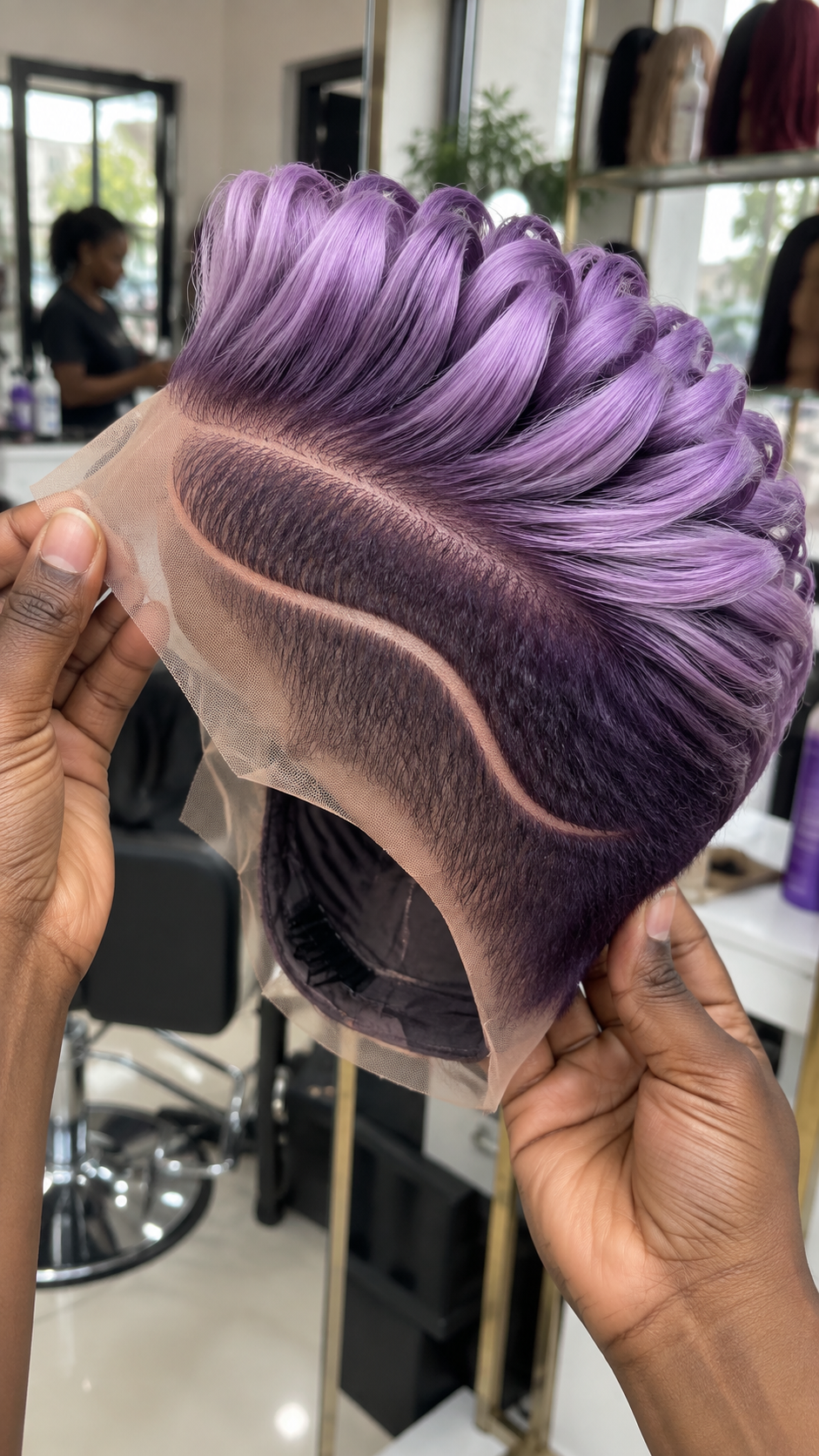
Lavender changes the visual logic of this sculpted wig in a way that goes far beyond simply replacing a natural hair color with purple. The upper crown is arranged into large backward-folding sections whose exposed surfaces carry a soft lavender tone, while the roots and close side descend into a substantially deeper violet. That tonal transition makes the construction easy to read: every raised fold catches the lighter color, every recessed area becomes darker, and the compact lower section creates a strong foundation beneath the crown. A single sweeping channel then travels through the side, adding movement without competing with the color gradient above it.
The photograph is particularly informative because the wig is being held before installation. Excess lace remains visible around the perimeter, portions of the interior cap can be seen underneath, and the lower density can be examined without being concealed against a wearer’s skin. This makes it possible to discuss the visible construction honestly. Lace is clearly present, but the image does not establish a specific premium lace grade. Calling it HD lace would therefore require confirmation from the seller or maker rather than assumption from the photograph.
Lavender Occupies the Raised Surfaces While Violet Anchors the Base
The color placement is the defining element of this version. The upper sections appear in a light lavender-to-lilac family, but the color becomes progressively deeper as the strands approach the roots and side. Near the foundation, the hair shifts into dark violet and plum tones.
This is not the same effect as a uniformly purple wig. The darker foundation gives the lighter crown somewhere to visually emerge from. It also prevents the pastel lavender from making the entire unit appear flat or excessively bright.
A custom order should therefore specify the relationship between the two tones rather than requesting “lavender hair” alone. The maker needs to understand that pale purple belongs primarily across the raised crown surfaces while deeper violet remains visible around the roots, side and recessed areas.
That placement should be checked before shipping. An elevated side photograph can quickly reveal whether the gradient follows the construction or whether the color has simply been distributed randomly.
The Front Crown Begins With Broad Upright Folds
Several sections near the front rise substantially before turning backward. Their shape is elongated and ribbon-like rather than tightly curled. Individual strands travel in the same general direction within each section, producing a broad reflective surface.
The lavender color emphasizes these folds because light reaches their outer faces directly. Darker violet remains visible near the roots, creating a shadow beneath every raised piece. This gives the crown dimensional separation without relying on additional highlights.
The sections should remain individually readable. Combining them into one continuous backward sweep would remove much of the design’s character even if the color remained unchanged.
The Crown Gradually Lowers as It Travels Backward
The upper construction is not equally tall from front to rear. After the larger forward folds establish the silhouette, subsequent sections lean farther backward and begin following the rounded shape of the wig. Their height decreases gradually rather than stopping suddenly.
This progression is particularly visible because of the lavender surface. Each fold creates a light band over a darker foundation, allowing the viewer to follow the direction across the crown.
Toward the rear, the sections become more compact and smaller looped ends appear. This prevents the back from becoming unnecessarily bulky. A successful recreation should preserve that reduction in scale rather than repeating the largest front folds around the entire unit.
The Deep Violet Side Provides Necessary Visual Weight
Beneath the pastel crown is a substantial close side area dominated by deep violet. The darker color is important because it grounds the hairstyle. Without it, the light lavender upper sections could visually overwhelm the compact silhouette.
The side hair is kept much closer to the foundation than the crown. Fine strands remain visible, creating density without the outward projection of the upper folds. This difference in height produces a clear transition between the two zones.
For custom work, the side should not automatically be lightened to match the crown. Keeping it darker is part of the color architecture shown in the reference.
A Single Sweeping Channel Gives the Side Its Signature
Rather than using several parallel carved paths, this wig relies on one prominent sweeping channel. The exposed line begins toward the forward side and travels around the unit in a long curve before tapering near the rear.
The simplicity is effective because the color is already doing considerable visual work. Adding several more channels could make the lower half compete with the lavender crown. The single curve provides enough geometry to separate the dark side into distinct areas while maintaining a relatively restrained profile.
The line is not straight. Its route follows the contour of the wig, gradually bending downward as it approaches the back. A custom maker or barber should therefore use the reference photograph rather than interpreting the request as a generic straight side stripe.
The Channel Width Needs to Remain Controlled
Because there is only one major side path, its width becomes an important proportion. The channel is clearly visible but does not consume the surrounding violet hair. A substantial dark panel remains above it, and another close section remains beneath it.
Repeated maintenance can gradually disturb this balance if the line is recut more aggressively every time. Wig hair does not regenerate, so widening the channel is effectively permanent.
When the line begins to appear less crisp, first inspect whether fine surrounding strands have simply moved across it. Repositioning those hairs may restore visibility without any cutting at all.
The Gradient Should Follow Construction Rather Than a Fixed Horizontal Band
One of the more sophisticated aspects of the color is that the transition does not look like a rigid stripe running around the wig. Lavender appears where the upper sections rise, while darker violet naturally occupies the root areas beneath them.
This makes the gradient responsive to the hairstyle. The amount of pale color visible changes according to the angle of each fold. A tall forward section exposes more lavender, while a lower rear section allows more of the deeper base to remain visible.
A custom colorist should therefore work with the crown map. Creating one fixed horizontal line between light and dark could make the color appear disconnected from the styling.
The Visible Lace Gives the Stylist Room to Establish Final Placement
The photograph shows a generous perimeter of untrimmed lace. This is useful because the final wearing position has not yet been permanently established. A wig stylist can place the cap on the client, evaluate the front and side alignment and then determine where excess material should be removed.
Fine violet strands are visible near portions of the front. Their density is lighter than the heavier crown behind them, helping create a transition toward the perimeter. Those strands should be assessed after fitting rather than automatically removed.
The apparent lace shade in the photograph should not be treated as a universal match. Lighting, camera exposure and surrounding colors can alter how mesh appears. Buyers should ask the seller which actual lace shades are available.
Cap Fit Influences Where the Side Curve Appears
Accurate sizing matters more when a wig contains fixed side geometry. The sweeping channel is attached to the cap, so any shift in cap position also moves the line relative to the wearer’s temple and ear.
A unit that is too loose may move backward during wear. A unit pulled too far forward can place the channel closer to the face than intended. Neither issue can be solved simply by having a beautifully carved side.
For a custom order, follow the maker’s measurement instructions carefully. If several dimensions are requested, provide all of them rather than relying on circumference alone. A local wig stylist can assist with measurements when necessary.
Commission the Color and Shape as Two Connected Specifications
A useful order brief can begin with the crown architecture: large forward folds, progressively lower backward sections and compact rear loops. The second specification is the color map: lavender across the exposed upper surfaces with deeper violet at the roots and side.
The third specification is the lower profile: close density with one long sweeping channel. The final practical details include cap size, available lace shade and whether the customer wants the lace left untrimmed for local fitting.
Separating the request this way makes quality control easier. If the maker produces the correct lavender gradient but changes the side pattern, the difference is obvious. If the shape is accurate but the entire side has been lightened, the color error can be identified independently.
Where to Order Depends on Who Can Reproduce the Gradient
A fully custom wig maker can be a good option when their portfolio shows both sculpted crown work and controlled color placement. Ask to see previous examples rather than assuming that experience with long lavender wigs automatically translates into this compact construction.
Another route is to purchase a compatible base and have a local colorist and wig stylist complete the transformation. This gives the professionals access to the wearer during fitting, although it may require several appointments.
A hybrid approach can also work. The maker can prepare the lavender-to-violet crown and basic shape, while a local professional handles final fitting and conservative side refinement. This can reduce the risk of placing the sweeping channel incorrectly on a remotely sized unit.
Approval Photography Should Include Neutral Lighting
Purple is particularly sensitive to lighting and camera processing. Warm salon lights can make lavender appear pinker, while cooler lighting can push it toward blue. A phone’s automatic image processing may further change saturation.
Before approving a custom unit, request at least one photograph in neutral or natural light. Compare it with the salon-light image to understand the actual color range.
Also request an elevated side angle. It should reveal whether the light lavender follows the raised crown sections and whether the violet foundation remains sufficiently visible underneath.
Custom Pricing Reflects Both Color Labor and Sculpted Construction
This design can require more work than its compact size suggests. The crown must be arranged section by section, the lavender-to-violet placement needs planning, the close side requires density control and the sweeping channel must be positioned accurately. Cap and lace preparation can add further labor.
| Category | Estimated Price Range | Potential Scope |
|---|---|---|
| Premium Custom | $350–$610+ | Higher-grade hair, personalized sizing, custom lavender-violet coloring, hand-arranged crown folds, precision side work and detailed lace preparation. |
| Standard Custom | $215–$365 | Prepared gradient crown and established side channel with more standardized cap sizing and finishing. |
| Basic Human Hair | $125–$225 | A human-hair foundation requiring separate professional coloring, crown setting, side work and fitting. |
| Premium Synthetic | $85–$165 | A higher-quality pre-colored and pre-set option where the crown may retain its sculpted form with less intervention. |
| Basic Synthetic | $40–$95 | A budget interpretation where gradient depth, crown separation, side precision or cap construction may be simpler. |
These figures are general planning ranges rather than verified prices for the photographed unit. Hair source, fiber, coloring method, cap construction, seller location, labor, shipping and professional installation can all change the final total.
Ask whether coloring and crown formation are included before comparing quotations. A lower-priced human-hair base that still needs extensive lavender processing and salon construction can become more expensive than a completed custom unit.
Human Hair Gives More Restyling Freedom but Makes Color History Important
A human-hair version can be useful for a wearer who expects to have the crown professionally reset over time. However, achieving a light lavender surface may require significant color processing depending on the starting hair.
That processing history affects future heat and chemical decisions. A stylist should not treat pale purple hair as though it were untouched dark hair. Conservative temperature and appropriate care products can help protect the strands.
If the lavender eventually fades, color refreshing should preserve the dark violet root relationship rather than covering the entire wig with one flat purple shade.
Synthetic Fiber Can Preserve a Complex Purple Palette With Less Color Maintenance
A pre-colored synthetic version can offer an advantage when the customer wants the lavender and violet placement to remain stable without repeated dye work. High-quality synthetic fibers can also hold pre-set crown shapes effectively.
The tradeoff is reduced flexibility. Heat tolerance varies, and conventional permanent hair color generally should not be assumed suitable. Buyers need to confirm the exact fiber before attempting major restyling or recoloring.
For someone who intends to preserve the original appearance rather than continually change it, a carefully manufactured synthetic version may therefore be worth considering.
Wash the Light Crown Without Mixing It Into the Dark Base
Before washing, photograph the wig from above and from the side. These images record where the large lavender folds sit and how they transition into the violet foundation.
During cleansing, avoid aggressive rubbing between neighboring crown sections. The goal is to remove residue while preserving the direction of the folds. Follow care instructions appropriate for the confirmed hair or fiber.
After drying, restore displaced sections according to the reference photographs. Do not simply brush the entire crown backward, because that can erase the spaces that make the lavender ribbons individually visible.
Use Styling Product Carefully on Pastel Hair
Heavy product can affect both shape and color appearance. Excess oil may darken the visual impression of pale lavender strands, while thick holding products can cause adjacent folds to stick together.
Use only the amount required for control and choose products compatible with the material. If the crown needs professional resetting, mechanical placement and appropriate styling technique are preferable to repeatedly coating the hair.
The deep violet side should also remain free of heavy residue so the single sweeping channel retains a clear boundary.
Preserve the Side Channel Instead of Deepening It at Every Visit
The curved path is already visually strong against the dark violet foundation. It does not need constant enlargement. If strands begin covering portions of the line, reposition them first.
When barber refinement is genuinely necessary, keep the original photograph available. The professional can compare the initial width, curve and endpoint before removing any hair.
This conservative approach preserves the large dark panel above the channel and the lower violet section beneath it. Those areas are necessary for the line to remain balanced.
Book Color Refresh and Structural Maintenance Separately When Needed
Over time, the wig may need color attention without needing a complete crown rebuild, or it may need several loops reset while the lavender remains perfectly acceptable. Treating those as separate services can reduce unnecessary processing.
A colorist can evaluate fading, while a wig stylist can inspect the crown architecture. If barber work is also required, it should remain minimal and follow the established side geometry.
For a newly purchased unit, fitting should happen before any additional side cutting. Establish the cap position first so the sweeping channel can be judged in its actual wearing location.
Storage Should Protect Both the Pastel Surface and the Crown Height
A suitable wig stand or mannequin head gives the large upper folds enough room to remain elevated. Avoid pressing the crown beneath other wigs or storing it against a hard surface.
Pale lavender hair should also be kept away from materials that could transfer pigment. Make sure the wig is fully dry before storage and protect it from unnecessary environmental exposure according to the maker’s recommendations.
For travel, use packaging with enough depth that the tallest forward folds are not compressed. Protecting the original construction is considerably easier than rebuilding every section afterward.
The Gradient Is Successful Only When It Supports the Shape
The strongest quality of this wig is the way color and construction reinforce one another. Lavender occupies the surfaces that rise and catch light. Deep violet remains where the hair approaches the foundation. Broad front folds establish height, the middle leans backward, the rear becomes compact, and one sweeping side channel introduces geometry without overcrowding the lower profile.
For buyers, this provides a precise checklist. Examine the lavender-to-violet transition, crown progression, amount of dark side density, curvature of the single channel, visible lace perimeter and cap sizing options. Request neutral-light approval photographs and confirm construction details directly with the seller.
For wig businesses, the unit offers a strong opportunity to sell craftsmanship rather than merely an unusual color. Showing the gradient from several angles, explaining what customization is included and avoiding unsupported lace claims gives customers a clearer understanding of the product. The purple palette may attract the first glance, but the disciplined relationship between color placement, crown direction and side geometry is what makes the design worth reproducing carefully.
Search Terms
lavender sculpted crown wig · deep violet root lace wig · purple gradient loop wig · single sweeping side channel wig · lilac folded crown hairpiece · dark violet close side wig · pastel purple backward loop wig · untrimmed lace lavender wig