
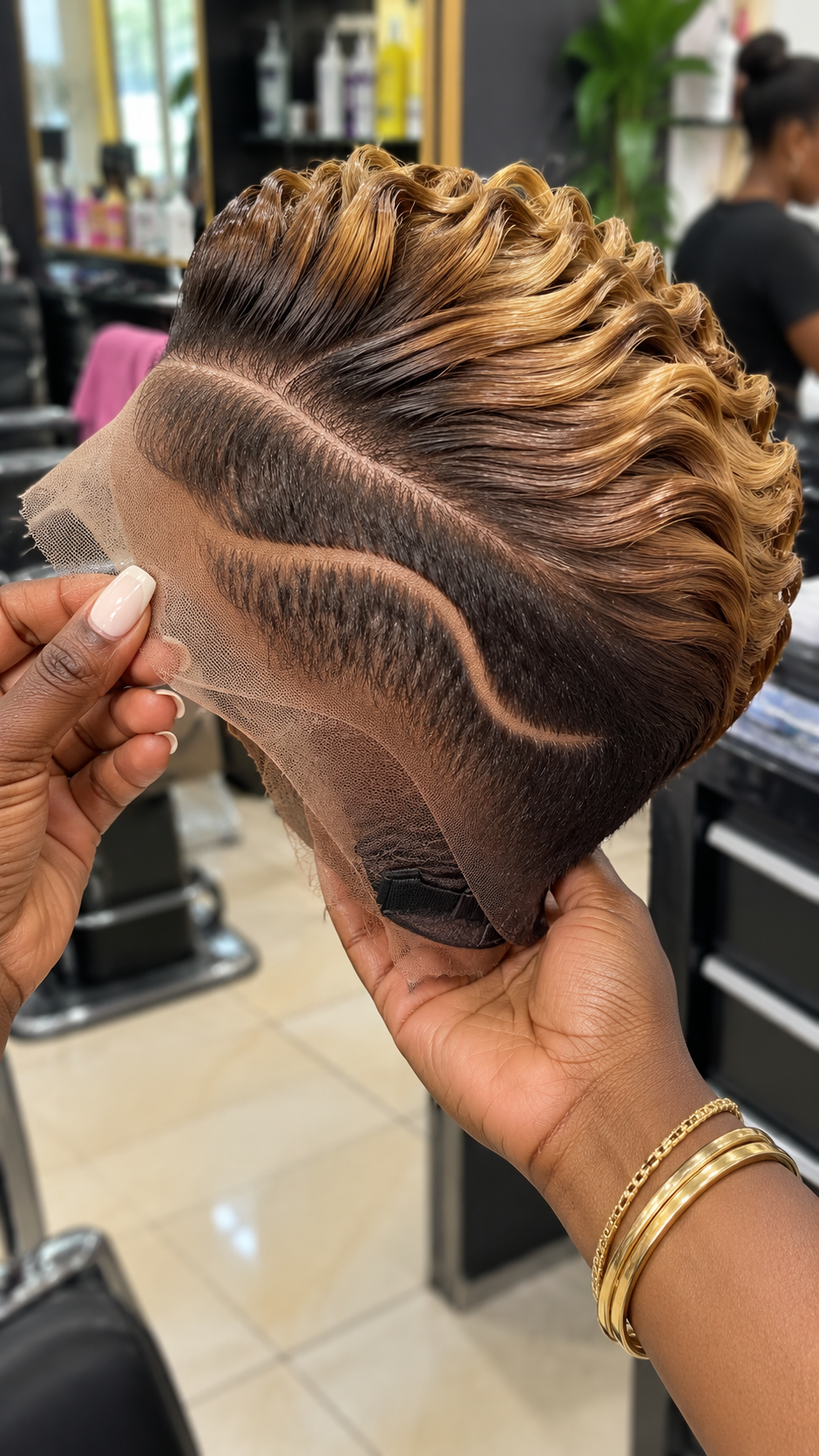
This wig brings together color placement, sculpted movement and an unusually broad side design in a way that makes the entire piece feel intentional from every visible angle. The foundation begins with a deep espresso-brown tone, transitions through softer toffee shades and finishes with brighter golden-honey ribbons across the upper waves. Instead of separating those colors into obvious blocks, the stylist uses the direction of the hair to reveal them gradually. Each raised bend catches a different amount of light, allowing the warmer shades to appear and disappear as the crown travels toward the back.
The side is equally important. A wide close-cropped panel sits beneath the sculpted crown, divided by a long flowing line that changes direction as it travels backward. This is not a simple straight stripe or a group of parallel cuts. The curve works almost like a boundary around the darker side section, giving the wig a recognizable profile before it is even installed. Visible lace surrounds the perimeter, and part of the interior construction can also be seen, making the photograph useful for buyers who want to understand what they are ordering rather than seeing only a finished frontal portrait.
Three Colors Work as One Continuous Palette
The strongest color characteristic here is progression. Near the base, the hair remains dark espresso. Moving upward, medium brown and toffee tones become more visible. Golden-honey sections then appear along selected outer ridges and toward the rear. Because these shades are related rather than sharply opposed, the transition has depth without looking striped.
This matters when commissioning a recreation. Asking only for “brown with blonde highlights” would leave too much room for interpretation. A stylist could produce narrow blonde streaks, chunky highlights or an entirely different balayage pattern. The reference instead shows broader warm ribbons integrated into the sculpted sections. The lighter color follows movement rather than interrupting it.
Color placement should therefore be discussed at the same time as styling. If the brightest strands are distributed randomly, the finished crown may lose the directional effect visible here. A useful consultation should identify the darkest foundation, the medium transitional shade and the golden accent before deciding where each one will appear through the bends.
The Crown Is Built Around Elongated Waves Rather Than Tight Curls
Although the ends bend and turn, the upper structure should not be mistaken for a conventional curly wig. The sections are broad and elongated. Hair rises from the base, bends into an open crest and then travels backward in overlapping layers. That creates a sculptural wave pattern with considerable surface area on each section.
The front has stronger elevation, which gives the silhouette height immediately above the hairline. Farther back, the movement becomes more horizontal. The sections begin to overlap like a sequence of soft folds, leading the eye toward the rear instead of simply building upward.
This change of direction is crucial. Making every section equally upright would produce a rigid crown. Making everything lie flat would remove the dramatic front profile. The reference balances the two: lift first, directional flow second, and a more compact finish toward the rear.
For a stylist, section width is just as important as curl size. Broad sections allow the espresso, toffee and honey tones to remain visible across individual bends. Very narrow curls would fragment those colors and create a completely different surface.
The Side Curve Functions Like a Signature
The most recognizable detail below the crown is the long carved separation sweeping through the side. It begins near the frontal region, travels backward and then drops into a deeper curve before returning toward the lower rear. The changing direction prevents it from reading as an ordinary barber line.
There is also a substantial amount of close hair on both sides of the separation. That spacing is deliberate. The line needs enough surrounding density to remain visible and to preserve its shape once the wig is positioned on a head. If the surrounding panel were reduced too aggressively, the curve could lose the generous proportions that make it distinctive.
Anyone ordering this design should provide a side photograph, not only a front reference. The position of this feature relative to the crown, temple and lower perimeter determines much of the final appearance. It is one of those details that can be technically present yet still look wrong if its scale or angle changes.
Why the Darker Foundation Is Essential to the Color Story
The espresso foundation does more than provide a starting color. It gives the brighter crown sections visual weight. Without that deeper base, the golden-honey areas could dominate and make the entire piece appear much lighter than the reference.
The darker region is especially noticeable near the front roots and throughout the side. As the hair rises, warm brown becomes more apparent. Golden accents are concentrated where the bends catch the eye. This arrangement creates the impression that light is moving across the hairstyle even when the wig itself is stationary.
For clients who prefer warm colors but do not want a fully blonde unit, this type of palette offers a useful middle ground. The deeper base remains prominent while the upper movement receives enough brightness to show every ridge. It can also be easier to coordinate with different wardrobes because the palette contains dark brown, medium caramel and lighter gold within the same piece.
What the Untrimmed Perimeter Reveals Before Installation
The photograph clearly shows lace extending beyond the hairline and side area. That is valuable because it demonstrates that the unit is being presented before final fitting and trimming. However, the photograph alone does not establish a specific commercial lace grade, so buyers should confirm the exact material with the seller rather than assuming it.
The visible perimeter also helps explain why installation can affect the side design. The stylist must first position the unit correctly on the wearer. Only after that position is established should excess lace be removed. A small shift can alter where the sweeping curve sits around the temple and side of the head.
Buyers should ask about lace color, coverage area, cap measurements and the recommended installation method. If tinting or additional customization is required, that can be discussed before the appointment. The goal should be to preserve the relationship between the frontal area and the sculpted side rather than treating lace trimming as an unrelated final step.
Matching This Wig to the Wearer Requires More Than Head Circumference
Head circumference is important, but a highly directional design benefits from more careful fitting. Front-to-nape length, ear-to-ear measurements and the intended position of the side panel can all influence how the finished piece sits.
A properly fitted cap allows the crown to maintain its intended elevation without excessive shifting. It also keeps the side curve where the stylist planned it. If the unit is too loose, movement during wear can make a carefully placed detail appear uneven. If it is too tight, the wearer may be uncomfortable and the lace can experience unnecessary tension.
When ordering remotely, follow the maker’s own measurement guide rather than assuming every company uses identical sizing. If the seller offers custom measurements, send them carefully and ask how much adjustment is available inside the cap.
Recreating the Wave Direction at a Salon
A stylist attempting this piece should study the crown as a map rather than as a collection of curls. The front sections establish height. The central sections introduce longer bends. The rear sections gather the movement and allow the color to become brighter in selected areas.
That means styling should proceed with a planned direction. Random curling followed by combing is unlikely to produce the same architecture. The sections need to relate to one another so that the eye can follow a continuous route from the front through the back.
Product application also needs restraint. Enough hold is necessary to preserve the sculpted ridges, but excessive product can make the strands appear heavily coated or cause neighboring sections to merge. The visible beauty of this wig comes partly from being able to see the strand direction within each broad wave.
If you are taking the unit to a salon for refreshing, show the stylist photographs from several angles before any reshaping begins. The aim should be restoration of the original direction, not automatically creating a new curl pattern.
Ordering Checklist for a Close Recreation
Start by sending the complete reference photograph to the wig maker. Describe the palette as a deep espresso foundation moving into toffee and golden-honey accents. Mention that the crown uses broad sculpted waves rather than small ringlets. Point out the elevated front and the backward movement through the middle and rear.
Next, isolate the side detail. Explain that you want one prominent sweeping division with a deep directional curve rather than several identical parallel lines. Ask the maker whether this work is completed before shipment or should be finished by a barber after fitting.
Then confirm the practical specifications: hair material, cap size, lace type, lace shade, density, internal adjustment system and expected production time. If the seller offers human hair and synthetic versions, ask how closely each material can hold the sculpted crown shown in the reference.
Finally, request current photographs or video of the completed unit before dispatch when possible. Check color distribution and side placement separately. A frontal photograph may make the crown look correct while hiding major differences in the carved panel.
Protecting the Color Placement During Maintenance
Maintenance should preserve both the shape and the color distribution. Repeatedly brushing the crown into loose hair would remove much of the visual organization that allows the three tones to work together. The sections should instead be handled according to the styling method recommended for the actual fiber or hair type.
If the wig is human hair and the color has been processed, cleansing products suitable for colored hair may be appropriate. Synthetic fibers require their own care routine. Because the photograph cannot establish the material, heat settings and chemical treatments should never be selected from appearance alone.
Storage should give the crown enough space to retain its height. Avoid placing heavy objects on top of the unit or compressing it into a small container immediately after wear. A correctly sized wig stand can help protect the overall silhouette.
The lighter golden sections deserve particular attention because dryness or product buildup may become more noticeable there. Instead of continually adding shine products, follow the maker’s cleaning schedule and use only compatible formulas.
Using the Design as a Salon Consultation Reference
This image can be especially useful during a consultation because several construction details are visible at once. Rather than asking a stylist whether they can “make this wig,” discuss the job in separate stages: color formulation, crown shaping, side detailing, cap fitting and final installation.
That conversation makes it easier to identify which professional should perform each stage. Some wig makers are highly experienced with coloring and construction but prefer a barber to execute close side artwork. Others provide the entire unit already customized. Knowing this before ordering can prevent expensive corrections later.
For an appointment, bring both the reference and photographs of your own desired placement if available. The stylist can then decide whether the side curve needs slight adjustment for head shape while preserving its recognizable flow.
Photographs Buyers Should Request Before Ordering
For this particular design, one product image is not enough. A front three-quarter photograph should show the height and initial color transition. A top photograph should reveal how the broad sections overlap. A direct side image should show the complete carved curve. A rear angle should demonstrate how the golden tones and wave sequence finish.
An interior photograph is also useful for confirming the cap, adjustment features and general construction. These images provide much more meaningful information than heavily edited promotional portraits where the lace and foundation are hidden.
For wig businesses, documenting these angles can also reduce repetitive customer questions. Buyers can understand that the side work is part of the unit, see the actual tonal transition and evaluate the crown before contacting the seller.
Styling Choices That Would Change the Identity of This Piece
Several alterations might seem small but would substantially change the reference. Replacing the broad waves with tight curls would remove the long color ribbons. Turning the golden sections into narrow highlights would create a striped appearance. Adding multiple parallel side lines would compete with the single sweeping division. Flattening the front would also change the silhouette immediately.
A personalized version is certainly possible, but buyers seeking this exact visual language should identify which details are non-negotiable. In this case, the strongest combination is the espresso foundation, warm transition, golden cresting sections, elongated crown movement and broad curved side separation.
Keeping those characteristics together allows the design to remain recognizable even after minor adjustments for fit. That is a more reliable approach than attempting to copy every strand while ignoring the proportions that actually give the wig its identity.
Price Expectations for This Level of Custom Work
Prices vary substantially according to country, hair source, cap construction, coloring process and stylist experience. A three-tone unit with pre-shaped crown work and customized side detailing generally requires more labor than a basic ready-to-wear wig. The ranges below are planning estimates rather than prices for the exact item photographed.
| Wig Category | Typical Estimated Range | Main Cost Drivers |
|---|---|---|
| Premium Custom | $520–$1,000+ | Premium hair, custom cap measurements, multi-stage coloring, hand shaping and precision side detailing |
| Standard Custom | $320–$520 | Custom color placement, fitted construction, lace perimeter and professional crown styling |
| Basic Human Hair | $195–$340 | Hair grade, density, lace coverage, coloring and finishing services |
| Premium Synthetic | $120–$220 | Fiber quality, cap design, color complexity and pre-shaped wave pattern |
| Basic Synthetic | $70–$130 | Fiber selection, standard cap construction and limited customization |
A Final Inspection Should Focus on Proportion
Before accepting a custom recreation, look beyond whether the colors are generally similar. Check whether the dark foundation occupies enough of the lower structure. Examine whether the golden areas follow the upper waves rather than appearing as unrelated streaks. Compare the height of the front sections with the flatter directional movement farther back.
Then inspect the side. The large curve should have enough surrounding hair to remain visible and should travel naturally with the shape of the wig. Confirm that the lace and cap fit correctly before allowing permanent trimming or additional barber work.
The appeal of this piece comes from coordination rather than any single detail. Deep espresso provides the visual anchor, toffee creates the transition, golden honey reveals the sculpted movement, and the sweeping side division gives the lower profile a strong identity. When those elements are planned together, the result can remain striking without becoming visually crowded.
Search Terms
espresso to golden honey wig · three tone sculpted wave wig · toffee ribbon wave hair · sweeping curved side design wig · golden honey raised wave crown · espresso brown lace wig · caramel layered sculpted wig · curved side panel wig