
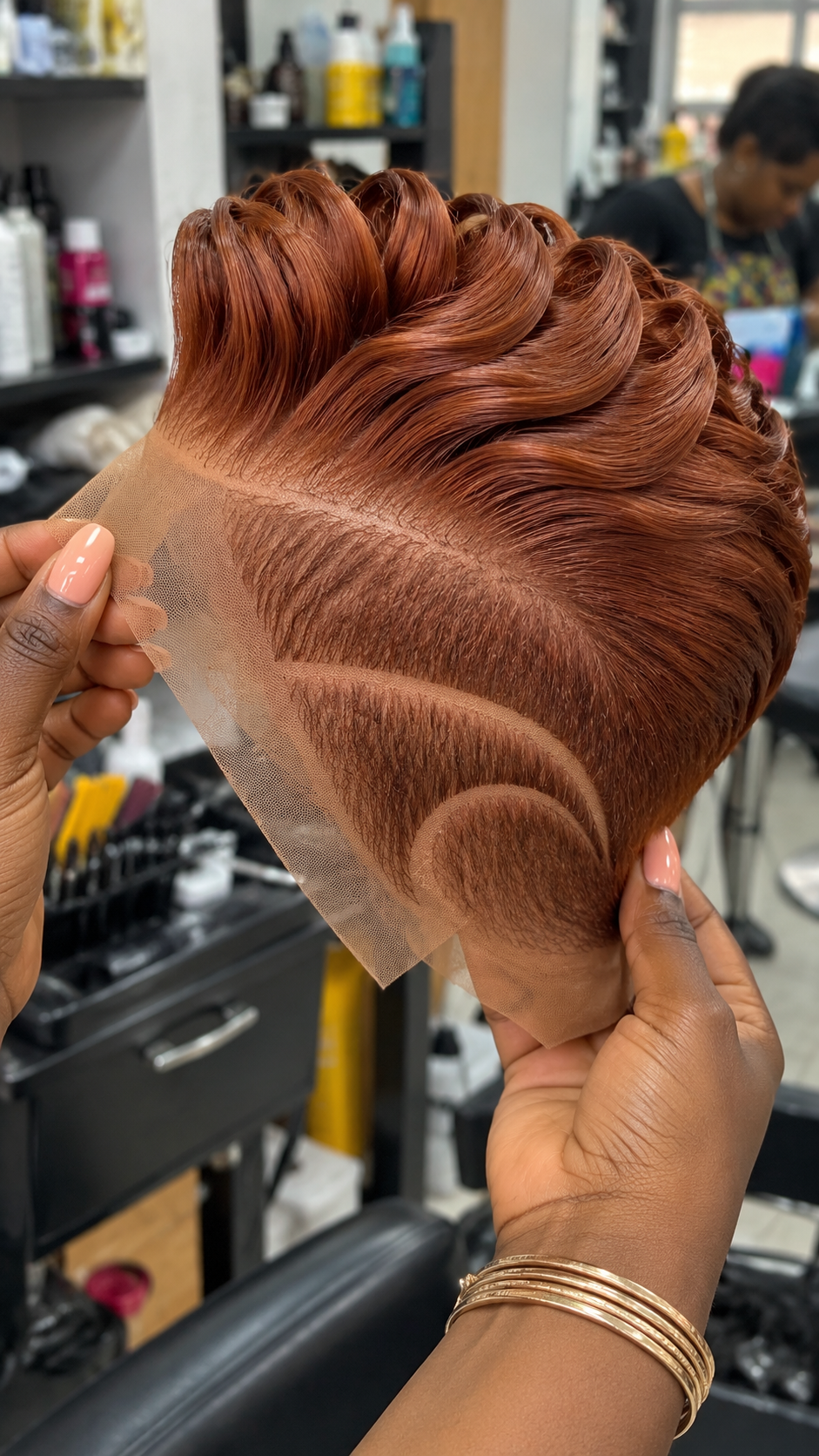
Copper hair becomes especially striking when color and structure are allowed to work together, and this sculpted wig demonstrates that idea from almost every visible angle. Rather than using contrasting highlights, the entire piece stays within a rich copper family, allowing the shape of the hair to become the main attraction. Wide ribbon-like loops rise across the crown, a long diagonal part separates the upper styling from the close side panel, and a large circular carving near the lower side gives the wig an unmistakable signature. The exposed lace around the perimeter also provides a useful look at the unit before installation, making this an excellent reference for anyone considering a highly customized salon wig.
What immediately distinguishes this piece is its consistency. The copper shade continues through the sculpted top, the close side area, and the carved sections instead of changing abruptly between zones. Because the color remains unified, shadows created by the loops become part of the design. Every raised section catches light differently, while the deeper spaces between the loops appear darker. The result has visual depth without requiring several unrelated colors.
Copper From Crown to Side Panel Changes the Entire Impression
Many sculpted wigs use a dark base with brighter accents, but this unit takes another route. Copper dominates the complete exterior. That decision makes the hairstyle feel intentional from the upper loops down to the closely cropped-looking side panel. Under salon lighting, the color moves between warm cinnamon, burnished copper, and deeper auburn depending on where the light reaches the strands.
This matters when ordering a similar piece because “copper” alone is not a precise enough color request. Some copper wigs lean strongly orange, others lean red, and others contain brown undertones. The reference shown here sits in a warm medium-to-deep copper range with enough brown influence to prevent the shade from appearing neon. A buyer who wants this appearance should send the actual reference photograph to the colorist or wig maker rather than relying exclusively on a generic color name or swatch number.
The monochromatic treatment also makes the side carving more interesting. Instead of relying on black hair against a lighter accent, the pattern is produced through differences in hair length and exposed scalp-like spacing. That gives the side artwork a more integrated appearance.
The Crown Is Built From Broad Ribbon-Like Loops
The upper construction is not a collection of tiny curls. The strands are grouped into substantial sections that rise, bend, and return toward the body of the wig. Each section resembles a polished ribbon folded into a controlled loop. This creates height without turning the crown into an oversized round mass.
Near the front, several loops stand higher and more vertically. Moving toward the center and rear, the sections begin to travel backward and overlap one another. That gradual change of direction is important. If every loop were positioned at exactly the same angle, the result could appear rigid. Here, the sequence creates movement from the front toward the back while maintaining a compact overall profile.
A stylist attempting this construction needs to think about section width as much as curl formation. Thin sections would produce a completely different appearance. The reference depends on broad pieces of hair remaining visually grouped so that each loop can be read individually. The surface also carries noticeable shine, which emphasizes the direction of the strands inside every sculpted section.
A Long Diagonal Part Creates the Visual Backbone
Running beneath the upper styling is a pronounced diagonal separation that travels across the side of the wig. This line functions almost like an architectural boundary. Above it sits the sculpted crown; below it is the close, flatter panel containing the carved artwork. The contrast between those two areas keeps the design organized despite the amount of detail present.
The angle is particularly effective because it lengthens the visual path across the wig. A horizontal division could make the side appear segmented into stacked blocks. The diagonal route instead connects the front and rear portions naturally. It also gives the upper loops additional room to rise toward the crown while the lower area remains visually close to the head.
When commissioning a recreation, this separation should be included in the specification. Asking only for “copper loops with side lines” leaves too much open to interpretation. The diagonal placement is one of the elements that determines the proportions of the entire piece.
The Circular Side Carving Is the Signature Detail
The lower side panel contains the detail that makes this particular wig especially recognizable. A sweeping carved line travels through the side and bends downward into a large rounded formation. A second line accompanies part of the route, creating a layered effect before the design transitions into the circular lower section.
This is different from the more common parallel-line treatment often used on sculpted wigs. The rounded element introduces a focal point close to where the ear would sit after fitting. It gives the side artwork a beginning, direction, and destination rather than presenting several disconnected marks.
Accuracy is important here. The circle should not be treated as an arbitrary decorative addition because its scale is related to the surrounding side panel. Making it dramatically smaller could cause it to disappear after installation, while enlarging it excessively could overwhelm the available space. A barber or wig stylist should evaluate the wearer’s head measurements and final wig position before deciding whether any refinement is necessary.
The Lace Perimeter Shows That Installation Is Still Part of the Process
The photograph captures the wig before the excess lace has been trimmed. Lace is visible around the front and side perimeter, and portions of the interior construction can also be seen underneath. For a buyer, this is useful because it separates the styling stage from the final installation stage.
The image does not provide enough evidence to identify a specific commercial lace grade, so buyers should confirm the material directly with the seller. Ask about lace type, lace color, available tinting, cap measurements, adjustment options, and the amount of customization included with the purchase. Those questions are more reliable than assuming a specification from appearance alone.
The final hairline will depend heavily on fitting. Excess lace gives the installer room to position the unit before trimming. That is particularly valuable with this design because placement affects more than the front perimeter. Moving the wig even slightly can change where the circular carving and diagonal separation sit in relation to the wearer’s temple and ear.
Matching the Wig to the Wearer Requires More Than Cap Size
A custom unit with side artwork should be selected with proportion in mind. Head circumference is important, but front-to-nape, ear-to-ear, and temple measurements can also influence where the sculpted areas land. A wig that technically fits but sits in the wrong position may distort the intended relationship between the upper loops and lower carving.
Before ordering, provide the wig maker with the measurements they request rather than estimating a standard size. If a salon will handle the final installation, it can be helpful to show the stylist the reference before purchasing. The stylist may identify placement considerations that should be communicated to the maker in advance.
This is especially relevant for the large circular side element. Unlike a simple color highlight, that carving cannot simply be shifted after the unit has been completed without altering the surrounding hair. Planning its position early is therefore worthwhile.
Color Matching Deserves Its Own Consultation
The copper shade is strong enough to become part of the wearer’s overall look, so choosing the right variation deserves attention. Warm copper can interact differently with different skin undertones, makeup choices, jewelry, and wardrobe colors. Someone may want the exact saturated copper seen here, while another client might prefer a slightly deeper cinnamon version or a softer brown-copper interpretation.
If the goal is to reproduce this reference faithfully, however, avoid changing several variables at once. Altering the color, loop size, side carving, and part placement simultaneously would create a new hairstyle rather than a close recreation. Decide which elements are essential and which can be personalized.
For salon consultations, viewing the shade under both indoor and natural light can be useful. Copper hair is particularly responsive to lighting. A color that appears deep auburn in a darker room can reveal much brighter orange-copper reflections near a window.
What to Request From the Wig Maker Before Production Begins
A useful order description should be specific without becoming confusing. Start with the dominant color and overall silhouette. Explain that the crown uses broad sculpted ribbon loops rather than small curls. Mention the diagonal side separation and the large rounded carving with its accompanying line work. Include the reference image so the maker can see the relationship between these components.
Then discuss construction. Confirm whether the unit is human hair, synthetic fiber, or a blend; what cap size will be used; what type of lace is included; whether the lace arrives untrimmed; and whether the side artwork is completed before shipment. If the wig will need further barber work after delivery, ask whether enough density and appropriate construction have been left in the relevant area.
It is also reasonable to ask for progress photographs when purchasing a higher-priced custom piece. A side photograph is particularly valuable for this design because it allows the customer to check the circular carving before the wig is shipped.
Salon Installation Should Begin With Side Placement
With many wigs, installers concentrate first on centering the front hairline. This design benefits from an additional check: the side artwork should be evaluated before anything is permanently secured or trimmed. Position the wig, examine the diagonal separation, locate the circular carving relative to the ear and temple, and then inspect the crown from multiple angles.
Only after the position is satisfactory should the lace perimeter be prepared according to the chosen installation method. The stylist can then customize the front area while protecting the sculpted loops from unnecessary handling.
A consultation appointment is particularly worthwhile if the wearer has never used this type of structured wig before. A stylist can explain how the unit should sit, which areas can be adjusted, and which sections should remain untouched to preserve the original construction.
Preserving the Copper Surface Without Flattening the Loops
The crown should be handled differently from loose everyday curls. Repeated brushing through the sculpted sections can separate the grouped strands and weaken the loop pattern. Instead, individual sections should be maintained according to the hair material and the products recommended by the wig maker.
Storage is equally important. A stand that supports the cap without pressing against the upper hair can help preserve the silhouette. Avoid crushing the wig beneath clothing, bags, or other units. The front loops are intentionally elevated, so pressure in that area can noticeably change the profile.
Copper color may also require its own maintenance routine depending on the fiber or hair type. Human-hair color can fade or shift with repeated washing, heat, sunlight, and product buildup. Synthetic shades behave differently. Ask the seller for care instructions specifically for the material supplied rather than applying a universal routine.
Using This Style as a Salon or Wig Business Display Piece
For wig businesses, this design offers several strong photographic angles. A three-quarter side view reveals the crown loops, diagonal division, circular carving, and lace construction in one frame. A direct side photograph can focus on the carved geometry, while a higher angle can show the sequence of loops traveling across the crown.
Product listings should ideally include both pre-installation and installed views when available. The pre-installation photograph helps customers understand the construction, while the installed result demonstrates how the lace and side artwork interact with an actual head shape.
Descriptions should also distinguish between what is visibly confirmed and what depends on the individual unit. Hair material, lace specification, cap dimensions, and installation method should come from actual product information rather than assumptions based on photographs.
Custom Wig Price Guide
The labor involved in creating sculpted loops and customized side carving can influence pricing considerably. Hair material, coloring method, cap construction, lace coverage, stylist experience, and whether installation is included will all affect the final amount. The ranges below are general shopping references rather than fixed salon quotes.
| Category | Estimated Range | Typical Considerations |
|---|---|---|
| Premium Custom | $480–$950+ | Premium hair, custom copper coloring, individualized cap work, sculpted crown construction and detailed side carving |
| Standard Custom | $300–$480 | Personalized sizing, copper color work, lace construction and salon-shaped loops |
| Basic Human Hair | $190–$320 | Hair grade, density, lace coverage, coloring and additional styling labor |
| Premium Synthetic | $110–$200 | Fiber quality, heat tolerance, pre-shaped crown and cap construction |
| Basic Synthetic | $60–$120 | Fiber grade, cap type, lace area and level of customization |
Building an Order Around the Details That Matter Most
For someone ordering this wig, the safest sequence is to choose an experienced wig maker or salon, send the reference photograph, provide accurate measurements, confirm the copper shade, and specify the broad ribbon-loop crown. The diagonal division and circular side carving should be discussed separately so neither detail is lost during production.
Before approving the finished unit, examine photographs of the actual wig whenever possible. Check whether the crown retains its layered backward movement, whether the copper color remains consistent across the side panel, and whether the circular carving has the intended scale. After delivery, schedule the fitting with a stylist or barber experienced in lace wigs and precision side work.
The appeal of this piece comes from coordination rather than a single decorative element. Color, loop direction, negative space, side carving, and lace placement all contribute to the final result. Keeping those relationships intact is what allows the design to retain the distinctive character visible in the reference.
Search Terms
copper ribbon loop wig · monochrome copper lace wig · circular side carving wig · diagonal part copper wig · sculpted copper crown wig · curved side design wig · copper loop hairstyle unit · untrimmed lace copper wig