
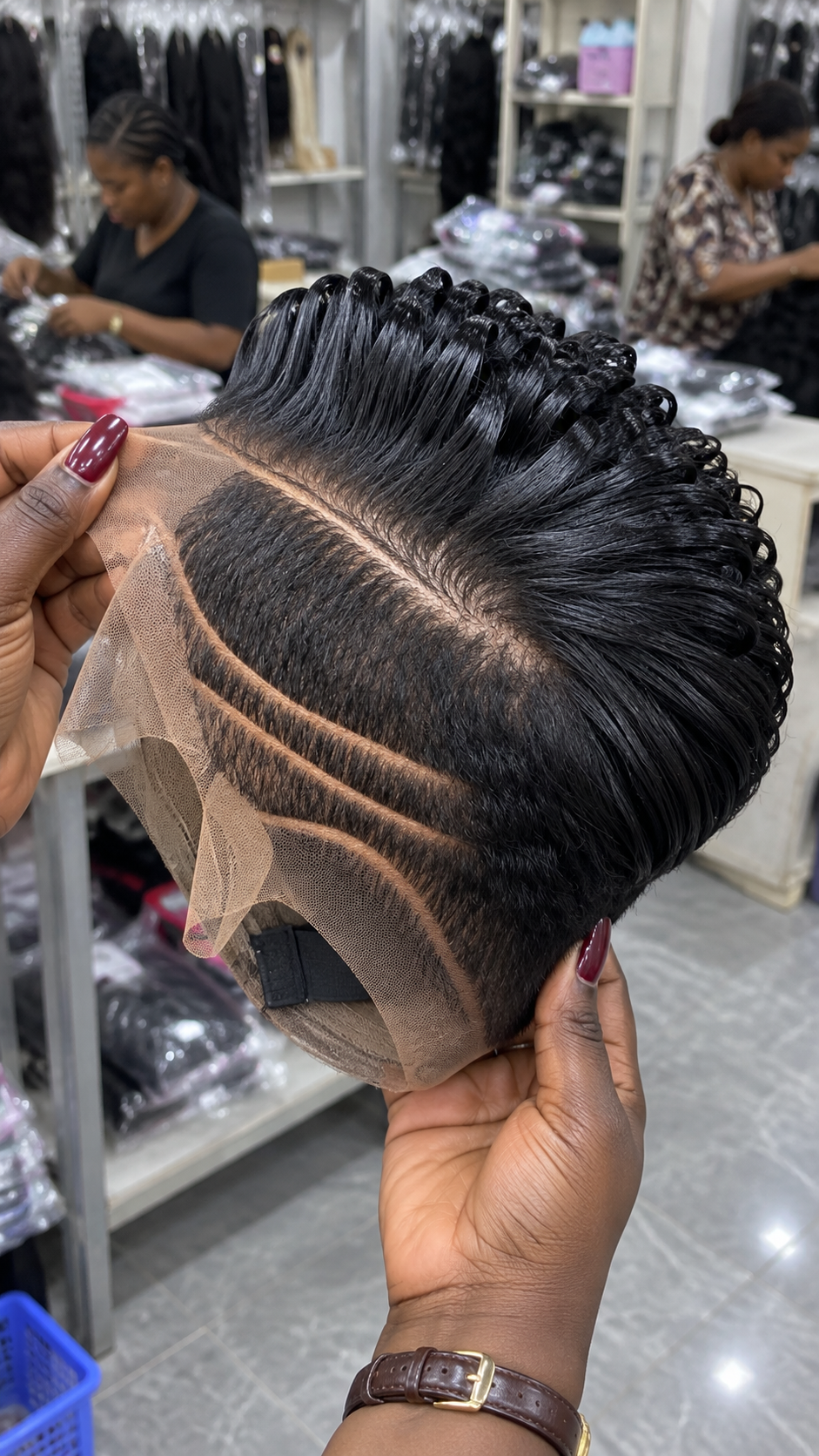
A hairstyle can look impressive from a distance, but the real craftsmanship becomes easier to judge when the wig is photographed before installation. This black sculpted loop wig is a strong example because the image exposes much more than the finished silhouette. The lace extends beyond the hairline, the cap can be seen underneath, the diagonal separation across the side is visible, and the carved line work has been built directly into the darker hair area. Instead of relying on length or oversized volume, the design gets its identity from controlled direction, glossy loop formations, and carefully planned negative space.
The upper section is arranged in elongated loops that travel backward from the front and gradually become tighter toward the rear. That progression gives the hair movement without making the crown unnecessarily bulky. The black color keeps the overall appearance cohesive while allowing light to reveal every bend in the sculpted strands. For clients who prefer a hairstyle with strong visual structure rather than loose curls or long flowing hair, this type of wig offers a very different direction.
The Diagonal Separation Controls the Entire Shape
One of the most important elements in this design is the long diagonal separation running between the sculpted upper hair and the lower side panel. It is not simply a decorative part. It establishes the direction of the hairstyle and creates a visual boundary that makes the upper loops appear more prominent. Because the separation travels at an angle instead of following a straight horizontal route, the eye naturally moves from the front toward the back of the wig.
This is especially useful on a compact hairstyle. Without that diagonal division, the black hair could visually merge into one solid mass. The exposed scalp-like area introduces contrast and gives the construction more depth. A stylist recreating this look should therefore treat the placement of the parting as part of the original design rather than something that can be moved casually during customization.
Why the Sculpted Loops Need Controlled Spacing
The upper hair is arranged into broad, glossy loops rather than traditional round ringlets. Each section rises from the base, bends backward, and settles into the next section. The repetition creates rhythm, but the loops are not identical in size from front to back. Larger shapes are noticeable near the upper front area, while the arrangement becomes progressively tighter as it approaches the rear.
That spacing is important because overcrowding the sections would hide the individual loop pattern. Leaving too much space would have the opposite problem and could expose more of the base than intended. The stylist needs enough separation for each loop to remain visible while keeping the overall surface connected. Product selection also matters. Heavy product can collapse the bends, while insufficient control may allow the sculpted sections to lose their intended direction.
When discussing this wig with a professional, showing the reference image is more useful than requesting a generic curled wig. Ask specifically about sculpted loop placement, backward-directed sections, and preservation of the diagonal side division. Those details describe the actual visual language of this piece far more accurately.
Two Curved Side Lines Give the Lower Panel Its Identity
The lower side area carries another important element: two sweeping curved lines cut through the dark panel. Their shape follows the direction of the hairstyle instead of fighting against it. The upper line begins farther forward and travels backward with a gentle arc, while the second line sits below it and creates a parallel relationship. This makes the design noticeable without filling the entire side with excessive carving.
Placement will matter once the wig is fitted to an actual head. If the cap sits too far forward, backward, or off-center, the lines may appear in a different position relative to the temple and ear. For this reason, a professional fitting should happen before final trimming and finishing whenever possible. The stylist can check where the curved lines land and whether the diagonal upper separation remains balanced after the wig is secured.
Black Hair Makes Precision Easier to Read
The rich black shade plays an important role in this particular design. Because there are no contrasting highlight colors competing for attention, the eye focuses immediately on direction, shine, separation, and carved detail. Light reflects strongly from the sculpted loops, producing alternating bright and dark areas that make each bend easy to see.
Black also creates strong contrast against the scalp-toned areas visible around the diagonal part and side lines. That contrast is part of what makes the graphic elements stand out. Anyone ordering a recreation should consider whether they want this same monochromatic effect before requesting additional color. Highlights could create an attractive variation, but they would change the visual balance seen in this reference.
What the Visible Lace and Cap Tell a Buyer
The photograph clearly shows lace extending beyond the front and side perimeter. It also reveals portions of the interior cap construction underneath. This is valuable when evaluating a wig because it provides information that a finished mannequin photograph may hide. A buyer can see that the piece is intended to be fitted and trimmed rather than judging only the styled hair on top.
However, the exact lace specification should still be confirmed with the seller or wig maker. A photograph alone is not enough to label the material as a particular commercial lace grade. Ask what lace type is being used, what tint options are available, how much lace comes untrimmed, and whether additional customization is included in the quoted price.
The interior should also be discussed before ordering. Cap measurements, adjustment options, comb placement, elastic construction, and preferred security method can influence comfort just as much as the appearance of the hair. A beautiful exterior is only useful when the cap fits the wearer correctly.
Questions Worth Asking Before Paying a Deposit
Instead of sending a seller only a photograph and asking for the same wig, provide a concise specification. Mention the black color, sculpted backward loops, diagonal side separation, two curved side lines, lace perimeter, and compact overall profile. Ask whether the seller is producing the piece from scratch or modifying a preconstructed wig, because that can affect both customization possibilities and pricing.
It is also sensible to request photographs of the actual unit before shipment. Ask for the front, both sides, crown, back, and inside cap. Side photographs are particularly important for this design because the curved line placement is a major part of its identity. A crown photograph can confirm whether the loop direction remains consistent across the top rather than becoming randomly curled toward the back.
If ordering through a salon, schedule a consultation with a wig stylist or barber who is comfortable working with carved side details. Bring this reference and discuss which parts should remain unchanged. The stylist can also advise whether the wig should arrive fully finished or whether final line refinement is better performed during the fitting appointment.
Installation Should Protect the Original Geometry
The goal during installation is not to reinvent the hairstyle. The strongest result will come from preserving the geometry already built into the unit. The diagonal division should remain visible, the two side curves should retain their spacing, and the upper loops should continue traveling in their intended direction.
Before any lace is trimmed, the wig should be positioned and checked from the front, side, and three-quarter angles. This allows the installer to confirm that the parting and side artwork sit where expected. Cutting the lace too early can reduce the amount of adjustment available later.
The lace edge should be customized according to the wearer’s skin tone, hairline preference, and installation method. Because the image shows untrimmed lace, the final appearance will naturally differ once fitting is complete. That is normal. The important point is to preserve the hairstyle’s proportions while adapting the perimeter to the individual wearer.
Keeping the Loop Pattern Intact Between Appointments
This type of sculpted hair requires different care from loose curls. Constant brushing through the loops can disturb the intentional bends and separate sections that were designed to remain grouped. Instead, maintenance should focus on protecting the established shape and refreshing only the areas that actually need attention.
When the wig is not being worn, storing it on a properly sized wig stand can help prevent pressure from flattening the upper sections. Avoid placing heavy objects against the crown. Friction inside bags or drawers can also disturb the rear loop work. If the hairstyle begins losing its arrangement, returning to a stylist who understands sculpted styling is safer than repeatedly adding product without reshaping the sections.
The side artwork also deserves attention. Excessive manipulation around the lower panel may blur the visual separation between the dark hair and the curved lines. A barber or wig specialist can refresh those areas when necessary while respecting the original pattern.
Who This Design Is Best Suited For
This wig makes sense for someone who wants the visual impact of precision styling without depending on long hair. Its personality comes from construction: sculpted loops above, a strong diagonal division through the side, and paired curved lines below. The result can work for clients who enjoy salon-created statement hair but still want a compact silhouette around the head.
It can also be useful for wig businesses because the design photographs well from several angles. The front can emphasize the sculpted elevation, the side can showcase the carved curves, and a three-quarter photograph can display both at once. For product listings, showing the wig before and after installation would give potential buyers a clearer understanding of what they are purchasing.
Ordering a Similar Wig Without Losing the Important Details
Start by saving clear reference photographs and identifying the elements that are non-negotiable. For this unit, those would include the black shade, backward loop direction, compact crown proportions, diagonal side separation, and paired curved lines. Send those requirements to the wig maker before discussing optional changes.
Next, provide accurate head measurements according to the seller’s instructions. Confirm the cap size, lace specification, hair material, density, construction method, expected production time, and whether the side design will arrive already completed. If the seller offers custom color choices, remember that changing the black base will also change the contrast of the carved sections.
Before final payment or shipment, request current photographs or video of the actual unit whenever the business provides that service. Compare the direction of the loops and side-line placement against the agreed reference. After delivery, book the installation with a professional who can fit the lace without disturbing the sculpted hair.
Estimated Custom Wig Price Guide
Pricing can vary significantly by hair material, cap construction, labor, lace specification, location, and the amount of hand styling involved. The figures below are broad planning ranges rather than quotes. A custom sculpted design with carved side work may cost more than a simpler ready-made unit because the shaping and detailing require additional labor.
| Wig Category | Estimated Price Range | What May Affect the Final Price |
|---|---|---|
| Premium Custom | $450–$900+ | Higher-grade hair, individualized cap work, extensive sculpting, professional line detailing and fitting services |
| Standard Custom | $280–$450 | Custom sizing, styled loop pattern, lace construction and personalized side work |
| Basic Human Hair | $180–$300 | Hair quality, density, lace area and the amount of styling included |
| Premium Synthetic | $100–$190 | Fiber quality, heat resistance, cap construction and pre-styled detailing |
| Basic Synthetic | $55–$110 | Fiber type, construction, lace coverage and whether customization is included |
A Strong Reference for Precision Wig Styling
What separates this black wig from a basic curled unit is the relationship between all of its components. The loops provide height and direction, the diagonal separation divides the silhouette, and the two curved side lines introduce a graphic accent without overwhelming the design. The visible lace and cap also make the photograph useful for buyers who want to understand the piece before installation.
For the closest recreation, the best approach is to work with a wig stylist who can reproduce the structure rather than merely approximate the general shape. Confirm the lace and cap specifications directly with the seller, request detailed photographs before shipment, and arrange the final fitting before the lace is permanently trimmed. When those steps are handled carefully, the sculpted loop pattern and curved side detailing can remain the focal points they were designed to be.
Search Terms
black sculpted loop wig · diagonal side part wig · double curved side line wig · glossy loop hairstyle wig · lace front sculpted wig · black carved side wig · backward loop wig style · visible lace cap wig