
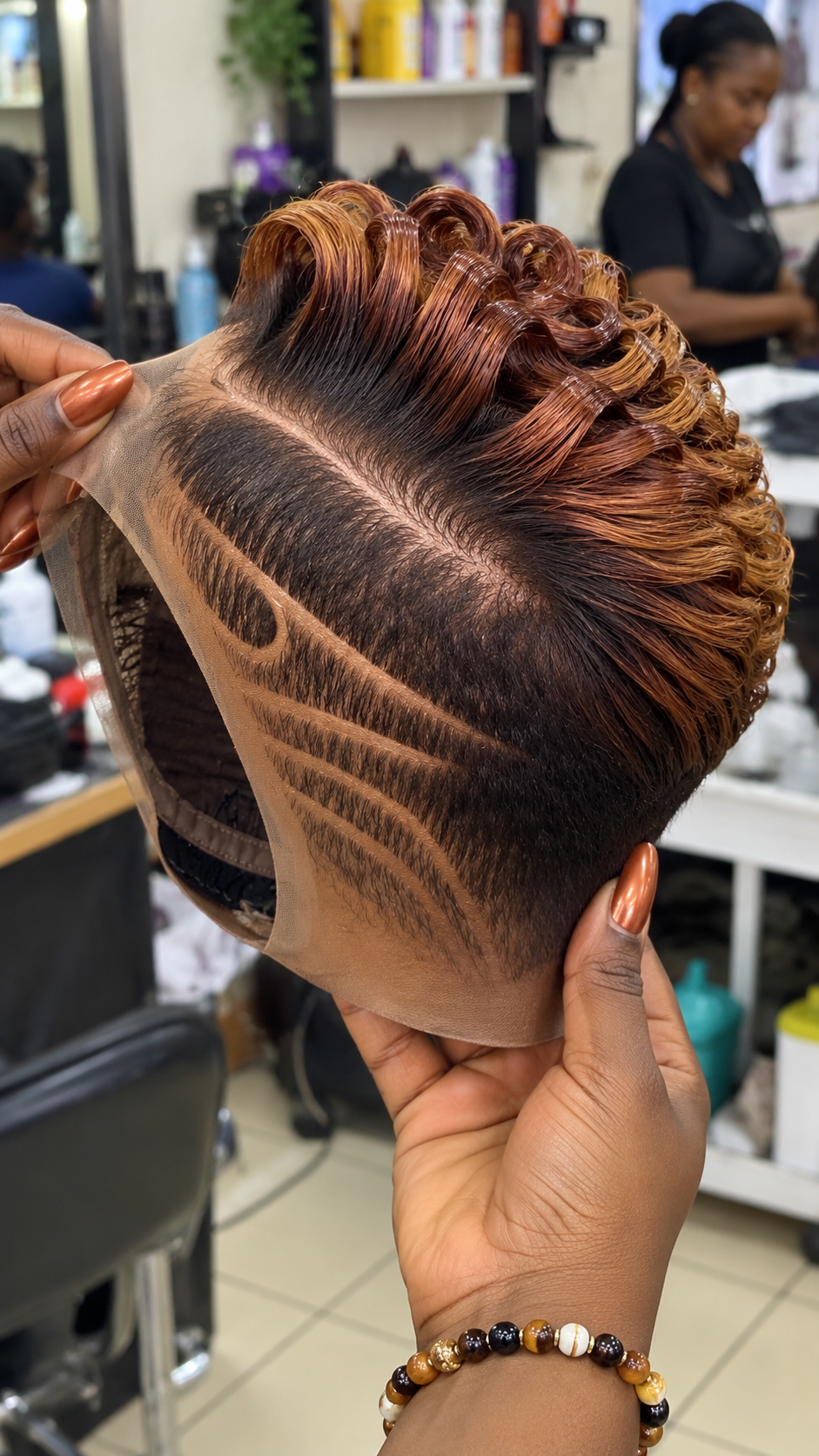
The third reference brings together warm copper movement and barber-inspired side precision. The darker foundation keeps the color grounded, while three parallel lines give the close side a recognizable signature. A faithful recreation has to preserve both ideas; copying only the color would miss half of the design.
Copper needs depth at the root
The warm color in this reference works because it does not begin as one flat orange mass. A deeper brown foundation remains visible beneath the copper movement, which makes the loops look richer and gives the side panel weight. If a colorist is recreating the unit in human hair, ask for a root and base plan before the bright copper is added. If fiber is used, choose a blend that contains both dark and warm strands. The goal is dimensional copper, not a single costume-like shade.
Three parallel lines create a rhythm of their own
The side detail is built from repeated spacing. Each line needs enough dark hair between it and the next line to stay legible. If the channels are widened too much, the side becomes mostly exposed lace; if they are too narrow, the lines disappear in photographs. A stylist should inspect the pattern at normal viewing distance, not only through a close-up camera. The reference shows how a simple repeated motif can balance a busy copper crown without competing with it.
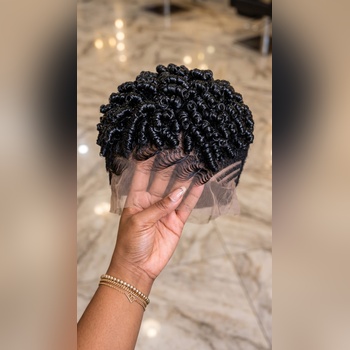
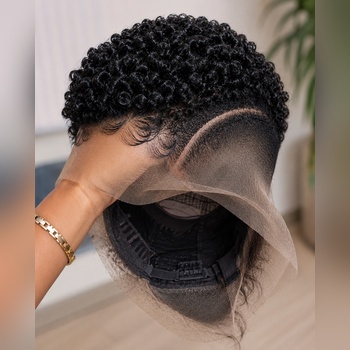
The front loops and rear waves perform different jobs
At the front, the larger loops create lift and a strong entrance into the style. Moving backward, the hair becomes more directional and wave-like, which reduces bulk near the back of the head. That transition is one reason the unit looks wearable rather than spherical. When commissioning a recreation, ask the maker to preserve this change in scale. A crown made from identical loops from front to back would lose the sense of motion and could become too heavy around the occipital area.
Copper photography should include skin-neutral lighting
Warm hair colors can look dramatically redder beside burgundy walls or yellower under incandescent bulbs. For product content, use a neutral wall, daylight or a balanced salon light and avoid aggressive filters. Show one close view of the copper strands and one wider image where the darker base is still visible. Customers deciding between auburn, copper and chestnut need those comparisons. Accurate color content is also useful for repeat orders because the salon can refer back to the approved tone instead of guessing from memory.
Side-line maintenance is different from curl maintenance
The triple-line panel can lose definition from friction even when the upper hair still looks good. A refresh appointment should therefore inspect the side separately. The stylist may need to re-establish the contrast around the lines, clean product residue and check the lace edge near the temple. The crown, by contrast, may only need selective reshaping. Offering these as separate maintenance tasks gives the client a realistic service plan and avoids unnecessary manipulation of the entire unit.
Build the sales description around copper plus precision
This is not simply a red wig and not simply a graphic-side wig. Its value comes from the combination of warm dimensional color, sculpted top movement and disciplined triple lines. A strong product page should explain those three visible elements, then add only verified construction details. If the supplier has confirmed hair type, cap size and lace specification, include them. If not, leave them out. That keeps the copy specific to this unit and prevents the repetitive keyword-heavy descriptions that can make a page look automated.
Planning copper before production
For the copper unit, divide the consultation into color, side-line placement and crown shape. The triple lines should be mapped relative to the ear. Then approve whether the copper leans more auburn or orange. Finally, check that the front loops transition into lower rear waves. Treating those as separate decisions makes the result easier to control.
Proof images for copper work
For the copper version, request a daylight color image before the loops are fully set. Once approved, ask for a straight side photo of the three lines and a top photo of the part. If the maker cannot provide these basic proof images, consider that a warning sign for a high-detail custom order. Documentation protects both buyer and seller.
Copper maintenance by zone
Copper color benefits from protection against excessive heat and direct sun. Wash only when needed, follow the hair material’s product requirements and let a stylist rebuild the large front loops if they collapse. The triple side lines may need a separate touch-up before the crown needs major work.
Cost Planning for Copper Plus Triple Lines
| Option | Typical Range (USD) | Planning note |
|---|---|---|
| Premium Custom | $320–$520+ | High-grade hair, advanced color or detailing, fitting and precision shaping |
| Standard Custom | $220–$320 | Salon-built unit with controlled styling and moderate customization |
| Basic Human Hair | $150–$230 | Human-hair base with simplified finishing |
| Premium Synthetic | $95–$170 | Quality fiber with pre-shaped form and selected custom work |
| Basic Synthetic | $55–$95 | Entry interpretation with fewer custom stages |
These figures are planning ranges rather than fixed retail prices. Final cost depends on hair material, cap construction, color processing, labor, fitting and the complexity of the visible side work. Ask for a written breakdown before paying a non-refundable custom deposit.
Search Terms for the Copper Triple-Line Reference
copper brown sculpted wig · triple side line wig · auburn ribbon waves · warm copper loop top · diagonal part wig · extended lace edge · compact copper crown · custom salon wig
Final copper-unit standard
The copper unit should read as warm movement above disciplined triple lines. Preserve that contrast and the reference remains recognizable even if the exact copper tone is personalized.
Copper strand-test decisions
Before paying the balance, ask to see the inside cap and confirm the exact adjustment system, cap circumference and lace specification. The exterior reference is built around copper loops changing into rear waves, but comfort depends on what is underneath. A cap that is too large can rotate and move the three parallel curved lines out of position; one that is too tight can distort the front edge. Record the measurements on the invoice so a future remake starts from verified fit data rather than memory. If the seller cannot confirm a technical detail, leave it out of the public product description instead of guessing.
Keeping three lines proportional
If another stylist will maintain the unit later, give that person a short technical brief. Note the deep brown and copper palette, the direction of the part, the scale of copper loops changing into rear waves and the location of the three parallel curved lines. Include two or three unfiltered reference photographs. This is more useful than simply saying “make it like before,” because a sculpted wig can change quickly when a new stylist interprets the loops differently. A written brief also prevents accidental changes to the side design during a routine refresh.
Daylight content for warm color
For social content, shoot one image that prioritizes construction rather than glamour. Use neutral light, keep the camera close enough to show the part and three parallel curved lines, and include a second angle that reveals copper loops changing into rear waves. Then capture a wider salon image for context. This combination gives buyers both proof and inspiration. Avoid filters that shift deep brown and copper, because the post may later be used as a color reference by a customer. Accurate images reduce repetitive questions and make the article’s search terms match what people can actually see.
Event-day humidity planning
Before wearing the unit for a long event, test it for at least an hour at home. Check pressure near the ears, movement at the nape and whether the sculpted top changes when the wearer turns the head. The three parallel curved lines should remain in its intended position without over-tightening the cap. If adhesive will be used, follow the product instructions and do not make the event day the first fitting. A short wear test gives time to correct comfort or placement issues while the lace and styling are still easy to adjust.
When to refresh only the side
If this design is remade, protect its identity by deciding which elements are fixed and which can change. Keep the part direction, the relationship between copper loops changing into rear waves and the side, and the recognizable three parallel curved lines. Color within the deep brown and copper family can be adjusted for the client, and loop scale can be tuned for head size. Treat those as controlled variations rather than redesigning every feature at once. This approach creates a recognizable salon signature while still allowing each order to feel personal.
Reorder notes for the next unit
At collection, inspect the unit in ordinary light before leaving the salon. Look at the part from above, check the three parallel curved lines from a true profile, and make sure copper loops changing into rear waves remains separated rather than compressed. Confirm care instructions for the actual hair material and ask when the first maintenance visit should happen. Take one final photo of the finished unit on the wearer or a correctly sized head form. That image becomes the baseline for future refresh work and makes any later change in shape or color easier to diagnose.