
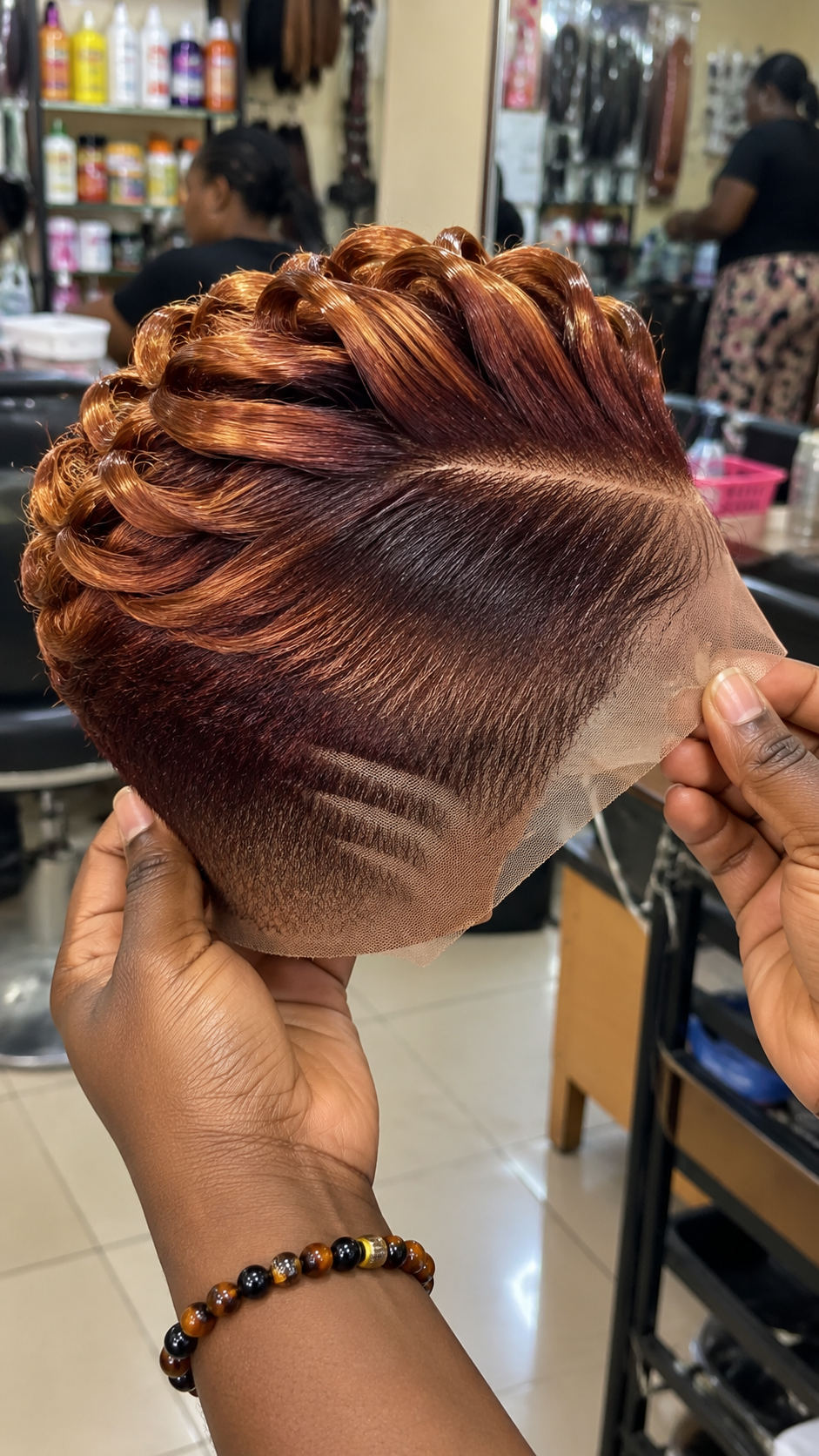
A rich copper-auburn color can completely change the personality of a pixie wig, especially when the hair is arranged into large sculpted loops rather than ordinary curls. The wig shown here combines a deep reddish-brown foundation with brighter copper reflections across the raised sections of the hairstyle. Instead of relying on length for impact, the design uses controlled direction, curved loops, a prominent side part and three parallel side lines to create its visual identity. The result is a compact hairstyle that still offers plenty of detail when viewed from the front, side or slightly above.
One of the strongest aspects of this wig is the contrast between the darker base and the warmer copper areas. The roots and lower sections appear considerably deeper, while the upper loops catch the light in shades ranging from cinnamon brown to polished copper. This variation prevents the color from appearing flat. It also makes the construction of each loop easier to see because every curved section catches light differently.
For women considering a similar wig, the important question is not simply whether copper hair suits them. The placement of the color, height of the upper section, direction of the loops and shape of the side design all influence how the finished wig will look when worn. A custom wig stylist should therefore receive reference photographs from several angles before beginning the order.
The Copper-to-Auburn Color Story
The color visible in this design sits between deep auburn, cinnamon brown and brighter copper. The darker foundation is particularly important because it creates depth beneath the raised loops. If every strand were dyed to exactly the same bright copper shade, much of the separation between the sections could disappear.
The upper hair catches warmer light and produces an almost metallic copper effect, while the lower area remains closer to reddish espresso brown. This is useful inspiration for anyone who likes copper hair but does not want an all-over orange result. Ask a colorist or wig maker for a deep auburn foundation with brighter copper placement through the sculpted upper strands rather than requesting one uniform copper shade.
Lighting should also be considered before purchasing. Copper shades often look brighter beside windows and under warm salon lights, while the same wig can appear deeper indoors. When ordering online, request photographs or a video taken in neutral daylight whenever possible. This makes it easier to judge whether the color leans more toward brown, red or orange.
Why the Loop Construction Matters
The upper section is built around broad ribbon-like loops that travel backward and around the head. These are noticeably larger than traditional finger coils. Each section rises from the base, curves over itself and then joins the overall direction of the hairstyle. Toward the rear, smaller looped pieces create additional movement without overwhelming the silhouette.
This type of construction requires careful control of strand placement. Too much hair in each section can make the loops heavy and bulky. Too little hair can expose unwanted gaps. A stylist recreating the look needs to balance the size of the loops with the density of the base so that the hairstyle retains its sculptural character from multiple viewing angles.
The photograph also shows a strong directional pattern. Hair near the front travels upward and backward, while the side sections sweep around the head. That directional change is what gives the wig its distinctive shape. When commissioning a similar piece, showing the stylist the exact direction of the reference is more useful than simply asking for a curled pixie wig.
The Side Part Creates a Strong Visual Divide
A clearly visible diagonal part separates the raised upper loops from the lower side section. This part is an essential component of the design because it establishes the direction of the entire hairstyle. It also creates an attractive contrast between the densely arranged loops and the flatter hair surrounding the part.
When ordering a custom version, specify which side you want the part to appear on. A stylist may mirror the design depending on your preferred profile, but that should be decided before construction begins. If you regularly photograph or film one side of your face, choosing the part placement intentionally can make the wig more useful for portraits, Reels and everyday wear.
The part should also be examined carefully when buying a ready-made wig. Look for consistent spacing and believable hair direction around the line. A good part should appear integrated into the hairstyle rather than looking like an unrelated opening between two sections of hair.
Three Parallel Side Lines Give the Wig Its Signature Detail
Below the main part, the design includes three narrow parallel lines. They run diagonally through the side section and become progressively shorter toward the lower edge. This is one of the most recognizable details in the photograph and should not be overlooked when recreating the style.
The lines introduce a barber-inspired element without requiring an extreme side shape. Their spacing matters. If they are placed too close together, they can visually merge. If they are spread too far apart, the relationship between them becomes weaker. A wig stylist recreating the piece should map the three lines before finalizing the surrounding hair placement.
Because this is a wig, buyers should confirm how the side-line effect has been constructed rather than assuming it was produced exactly like a haircut on natural hair. Ask the seller for close photographs of the side area and interior construction. This is especially important if the design needs to remain convincing from close range.
Understanding the Visible Front and Interior Construction
The photograph clearly shows lace extending around the front and side perimeter, while part of the interior cap is also visible underneath. The wig is being held before installation, so this is a useful view for shoppers who want to inspect construction rather than seeing only a finished model photograph.
However, a photograph alone is not enough to verify every technical specification. Terms such as HD lace, a particular lace dimension or a specific human-hair grade should not be assumed unless the seller confirms them. If these details matter to your purchase, ask directly before paying.
Useful questions include whether the lace arrives pre-cut, whether the perimeter can be customized, what cap sizes are offered, whether adjustment hardware is included and how the internal structure is secured. If the wig is intended for frequent wear, comfort and fit are just as important as the appearance of the copper loops.
Who Can Recreate This Type of Wig?
This is not the kind of design that should be ordered using only a generic description such as “copper pixie.” Search for a custom pixie wig stylist, sculpted wig specialist or stylist experienced with molded loop hairstyles. A portfolio is particularly valuable because the stylist needs to demonstrate control over curved sections, side-part placement and decorative line work.
If you want the side detailing adjusted after purchasing the wig, consult a stylist or barber who has experience working with wigs. Cutting or altering the side area without understanding the cap construction can permanently damage the piece.
For an online custom order, send the reference image and identify the elements that must remain consistent: the auburn-to-copper palette, broad loop pattern, diagonal part, three side lines and compact overall proportions. Request confirmation before production begins. If the seller offers progress photographs, use them to check color and structure before the final styling stage.
Choosing a Version That Fits Your Personal Style
The original copper-auburn combination is a strong choice for anyone who prefers warm hair colors. Women who usually wear dark brown hair may find this transition easier than moving immediately to bright blonde or vivid fashion colors because the deeper foundation remains visible throughout the wig.
A stylist can also adjust the balance between the two tones without changing the underlying design. More auburn will produce a deeper red-brown appearance. Increasing the brighter copper sections will make the loops stand out more strongly. Keeping the brightest copper primarily on the raised sections can preserve the dimensional effect visible in the reference.
The loop size can also be customized, although major changes will alter the character of the wig. Larger loops create stronger individual sections, while smaller loops produce a busier surface. If the goal is to stay close to this particular design, request broad sculpted loops through the top with smaller curled detailing toward the rear.
How to Order a Similar Wig Without Guessing
Start by saving clear reference photographs showing the top, side, hairline and interior. Contact a wig maker whose portfolio includes comparable pixie constructions. Ask whether the stylist can reproduce the directional loops and side-line pattern rather than merely matching the color.
Next, confirm the cap measurement requirements. Many disappointing custom orders happen because buyers focus entirely on appearance and ignore circumference, front-to-nape length and ear-to-ear measurements. Follow the maker’s measuring instructions rather than estimating your size.
After sizing, discuss color using several descriptions instead of one broad label. “Deep auburn base with brighter copper sections” communicates more information than “brown wig.” If possible, request a color swatch or photograph of the hair before construction.
Finally, obtain written confirmation of the hair material, cap construction, processing time, customization policy and return conditions. Custom pieces may have different return rules from ready-to-ship wigs, so these details should be understood before payment.
Estimated Price Levels for a Similar Custom Design
| Wig Category | Typical Price Range | What to Ask About |
|---|---|---|
| Premium Custom | $450–$850+ | Individual color work, custom sizing, hand styling, detailed loop placement and side-line customization |
| Standard Custom | $280–$450 | Custom copper coloring, styled upper sections, cap sizing and personalized part placement |
| Basic Human Hair | $160–$300 | Hair quality, density, lace type, color processing and whether sculpting is included |
| Premium Synthetic | $90–$180 | Heat resistance, curl memory, cap adjustment and color accuracy |
| Basic Synthetic | $45–$100 | Fiber shine, loop durability, cap comfort and styling limitations |
Prices vary by country, stylist, hair material, customization level and labor. Always request a direct quote from the seller or wig maker before ordering.
Keeping the Sculpted Loops in Shape
This hairstyle should be handled differently from loose curly hair. Constant brushing can disturb the carefully arranged loop pattern. Instead, separate only the sections that genuinely need adjustment and use styling products sparingly. Heavy product buildup can weigh down the raised pieces and reduce the visible separation between loops.
When the wig is not being worn, place it on an appropriately sized wig head so the upper sections are not crushed. Avoid storing it underneath other wigs or inside a tightly packed bag. For travel, use enough space around the crown to protect the sculpted construction.
Human-hair versions may eventually require professional reshaping. Rather than repeatedly applying heat at home, consider returning the wig to a stylist who understands the original arrangement. Synthetic versions require even more caution because heat tolerance varies widely between fibers. Never assume a synthetic wig is heat-safe without checking the manufacturer’s instructions.
Booking a Stylist for Installation and Adjustments
When searching locally, try phrases such as pixie wig installation, custom wig stylist, lace wig fitting or sculpted wig styling together with your city. Review portfolio photographs before booking. A stylist who mainly installs long straight wigs may not necessarily specialize in this kind of compact loop construction.
Send the reference photograph before the appointment and explain whether you need a full installation, lace trimming, cap adjustment or only styling assistance. This allows the stylist to allocate enough appointment time and tell you whether additional customization is required.
If you are purchasing from one stylist and installing with another, ask the maker to leave the lace in the condition preferred by your installer. Communication between the purchase and installation stages can prevent unnecessary alterations.
What to Inspect Before Paying for the Wig
Look closely at the copper placement first. The brighter areas should complement the darker auburn foundation rather than appearing randomly scattered. Then inspect the upper loops. They should follow a consistent direction and maintain enough separation for the curved pattern to remain visible.
Check the diagonal part and three side lines next. These details are central to the design and can be difficult to correct after the wig has been completed. Finally, request photographs of the cap interior, perimeter and any adjustment components. A beautiful exterior does not replace the need for a secure, comfortable construction.
For buyers ordering internationally, ask the seller to photograph the completed wig from the front, both sides, rear and top before shipping. These angles provide a much better basis for approval than one carefully positioned promotional photograph.
Search Terms
Deep Auburn Copper Pixie Wig · Copper Sculpted Loop Wig · Auburn Side Part Wig · Triple Side Line Pixie Wig · Cinnamon Copper Loop Hairstyle · Copper Lace Pixie Wig · Reddish Brown Sculpted Wig · Auburn Copper Curved Loop Wig
Final Buying Notes
This copper-auburn wig stands out because several design choices work together rather than competing for attention. The warm color gradient emphasizes the broad loops, the diagonal part controls the direction of the hairstyle, and the three parallel side lines give the lower section a recognizable signature. The visible lace and interior cap also provide useful clues for shoppers evaluating how a similar wig may be constructed.
For the closest recreation, choose a stylist based on evidence in their portfolio rather than price alone. Send the reference image, discuss the exact copper-to-auburn balance, confirm the loop direction, specify the side-part orientation and make sure the three-line detail is included in the consultation. Verify cap size, hair material, lace specifications and maintenance requirements separately instead of assuming them from photographs.
A carefully commissioned version can offer the visual impact of a highly styled salon pixie while remaining a removable wig. The key is preserving the details that make this particular design recognizable: deep auburn depth, luminous copper sections, broad curved loops, a strong diagonal division and three precise side lines. Those elements should guide the purchase from the first consultation through final fitting.