
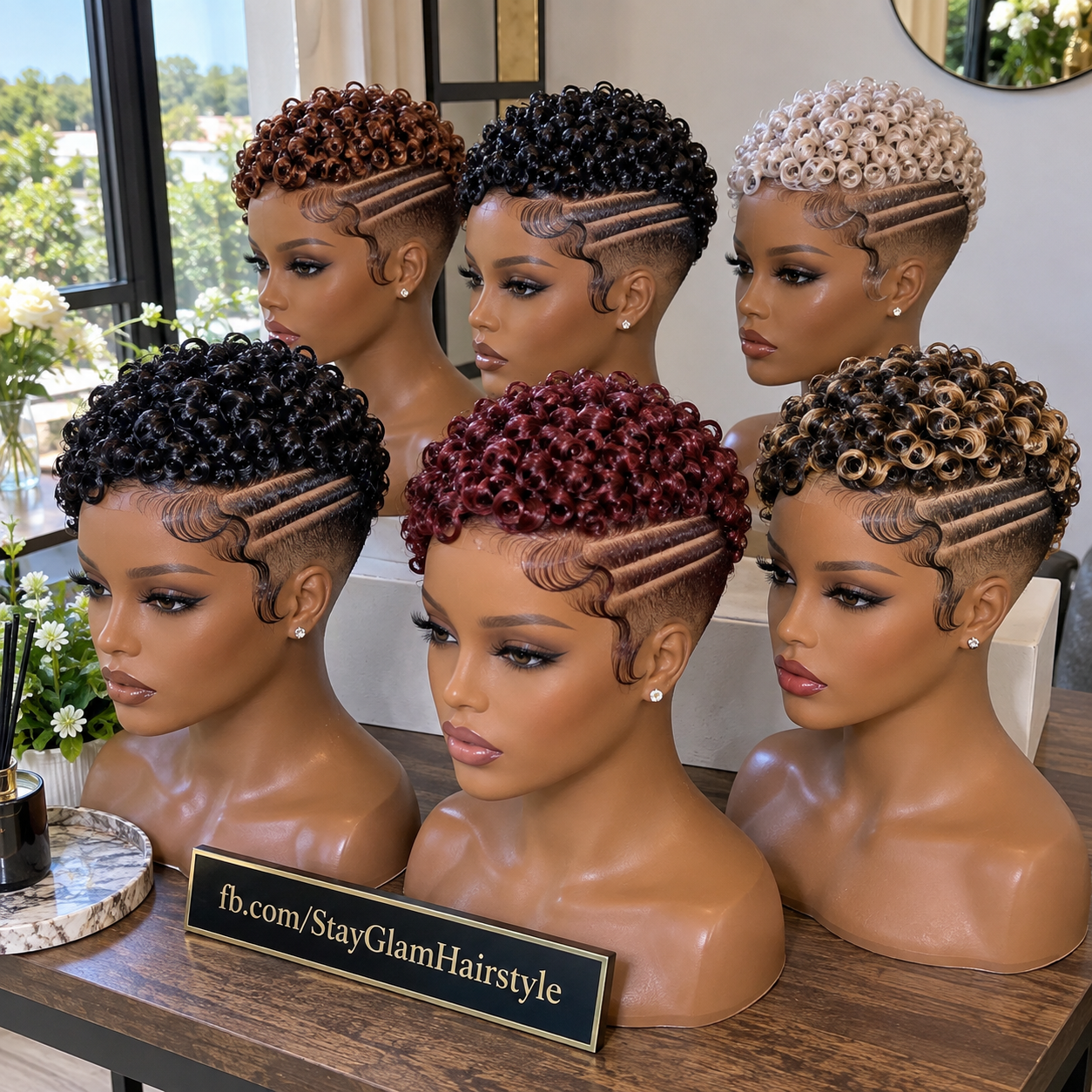
This collection brings together six compact pixie wig designs built around one recognizable salon concept: glossy ring curls across the crown, a tapered side profile, three parallel carved lines and carefully swept temple waves. The hairstyle stays compact around the head while the circular curls create enough height to give the crown dimension. Color changes completely transform the personality of the design, with deep natural black, rich burgundy, pearl blonde, warm chestnut and caramel-highlighted variations all appearing within the same display.
What makes these wigs especially interesting is the relationship between the curl pattern and the side detailing. The crown is intentionally full and rounded, but the sides remain visually lighter. Three narrow parallel lines travel backward above the ear, creating separation between the dense curls and the tapered lower section. A broad finger-wave shape near the temple connects the crown to those lines, so the design feels coordinated rather than divided into unrelated sections.
For anyone ordering a similar wig, the important details are not simply “curly pixie” and a chosen color. Curl diameter, crown density, temple-wave placement, side-line spacing and taper depth all need to be considered together. Preserving those proportions is what gives this hairstyle its distinctive appearance.
Why The Three-Line Side Pattern Changes The Entire Silhouette
The triple-line detail is one of the first elements that separates this collection from an ordinary curly pixie. Three slim parallel channels run through the tapered side section. They are positioned close enough to read as one coordinated design but leave enough hair between them to keep every line clearly visible.
The lines also follow the natural direction of the head instead of appearing completely horizontal. Their slight backward movement visually lengthens the side profile and directs attention toward the rounded curl crown. Because the surrounding hair is kept close, the contrast between the exposed channels and the darker hair becomes easy to see.
A custom stylist should map these lines before completing the surrounding side work. Their spacing matters. Lines placed too close together may merge visually, while excessive spacing can make them appear like three unrelated details. Showing the stylist a side-profile reference is the easiest way to communicate the intended relationship.
Ring Curls Create A Dense Crown Without Hiding The Shape
Across all six variations, the crown consists of numerous polished circular curls. Each curl retains a visible center, giving the upper section a collection of small ring-like forms rather than one continuous mass of hair. The curls overlap enough to create density but remain separated enough for their individual shapes to be recognized.
The overall crown follows a rounded contour. Height is concentrated toward the upper center while the curls gradually sit closer to the head near the sides. This controlled distribution prevents the style from becoming top-heavy and keeps the pixie proportions easy to recognize.
When discussing a custom recreation, ask for compact ring curls rather than generic curls. Spiral curls, loose waves and fluffy coils would all produce a noticeably different result. The reference depends on smooth circular formations with a glossy surface and consistent curl size.
Swept Temple Waves Connect The Crown To The Taper
The sculpted temple section is another important part of the design. A larger curved wave sits directly beneath the curl crown and travels toward the forehead. Smaller curved strands continue downward toward the temple, producing a graceful transition into the tapered side.
This creates a deliberate contrast in texture. The crown contains compact circular loops, while the temple area uses longer directional curves. The difference keeps the hairstyle visually interesting even though the overall length remains compact.
For a salon appointment, mention that the front and temple area should retain a visible finger-wave effect rather than being covered by the crown curls. The stylist may need to position the first row of curls slightly higher so the wave pattern has enough room to remain visible.
Burgundy Wine Gives The Curl Pattern Rich Red Dimension
The burgundy variation introduces a deep wine-red tone across the ring curls while maintaining darker depth underneath. This combination allows the curl openings and overlapping sections to remain easy to distinguish. Under brighter light, raised sections of the curls appear more vibrant, while recessed areas retain a deeper red-brown character.
The burgundy tone also works particularly well with the side design because the tapered area remains visually darker. That creates a noticeable separation between the colorful crown and the closely cut side section without requiring an abrupt color block.
Customers requesting this shade should send a photograph rather than relying only on the word “burgundy.” Wig sellers may use burgundy, wine, cherry red and red-brown for noticeably different shades. A visual reference provides much better guidance.
Pearl Blonde Makes Every Circular Curl Easy To See
The pearl-blonde option produces the strongest contrast within the group. Light strands reveal virtually every circular curl across the crown, making the ring formation particularly noticeable. The lighter color also draws attention to the transition from the crown into the swept front wave.
Against the darker tapered side area, the pale crown becomes an immediate focal point. The triple carved lines remain visible underneath, creating a layered effect where color, curl shape and side detailing can all be appreciated separately.
If ordering a similar pale shade, confirm whether the stylist is working with pearl blonde, creamy platinum, silver blonde or another nearby tone. Those colors can photograph similarly under strong lighting while appearing noticeably different in natural daylight.
Caramel Accents Trace The Circular Movement Of The Curls
The highlighted brown variation uses lighter caramel strands through a darker base. Instead of covering the entire crown with one light color, the brighter sections follow the direction of selected curls. This placement visually traces the circular motion and makes individual rings appear more dimensional.
Highlight placement can dramatically change this hairstyle. Thin accents produce subtle flashes of warmth, while wider highlighted sections create a stronger two-tone appearance. The reference maintains enough darker hair between the lighter pieces to preserve depth throughout the crown.
For a custom order, specify whether you want caramel concentrated toward the top, distributed throughout the crown or placed selectively around individual curls. This prevents a stylist from interpreting “caramel highlights” as conventional straight streaks.
Chestnut Brown Offers A Softer Warm Alternative
The chestnut-brown version provides warmth without the stronger contrast of blonde highlighting or the red intensity of burgundy. Its medium-to-deep brown tone allows light to reflect across the polished rings while retaining a rich base color.
Because the color is relatively consistent, attention shifts toward curl placement and side detailing. The circular openings remain visible due to the shine of the strands, while the tapered sides and triple-line pattern give the hairstyle additional structure.
This type of brown can be a useful choice for buyers who want a warmer result but prefer a more unified color. Ask the stylist whether the proposed shade leans toward chocolate, chestnut, cinnamon or copper-brown before production begins.
Deep Natural Black Emphasizes Shine And Precision
The deepest option in the collection keeps the focus firmly on the construction of the hairstyle. Reflected light outlines each ring curl, while the dark crown and tapered sides create a cohesive overall appearance. The exposed side lines become particularly important because they introduce contrast into an otherwise deep-colored design.
A natural black or soft black tone can also make the sculpted temple wave especially noticeable when the hair has sufficient shine. Light follows the direction of the curved strands and reveals the movement even without a contrasting highlight color.
When ordering, confirm the actual color number or swatch with the seller. Very dark brown, natural black and blue-toned black may all appear nearly identical in some product photographs.
Crown Density Should Support The Rings Instead Of Crushing Them Together
Density plays an important role in recreating this look. A crown that is too sparse will expose large gaps between the curls, while excessive density can push the rings together until their individual shapes become difficult to distinguish.
The wigs shown here use a dense but controlled arrangement. Curls sit close to neighboring curls while maintaining visible openings and boundaries. The result is a rounded crown with strong visual texture rather than an undefined mass.
Ask the stylist to prioritize visible curl separation when deciding density. If additional fullness is desired, it is usually better to distribute that fullness across the crown than to create excessive height in one area.
Side Tapering Needs To Match The Scale Of The Crown
The tapered sides create the foundation that makes the fuller crown stand out. Hair around the ear and temple is kept much closer than the ring curls above it. This contrast produces the recognizable pixie profile and provides a clear surface for the three-line design.
The transition should still feel gradual. An extremely abrupt difference between the crown and sides could make the upper section appear disconnected. The reference instead shows a controlled progression from dense rings into sculpted waves and finally into the close side area.
When commissioning the wig, discuss how much scalp effect you want around the side design. The visual strength of the carved lines depends partly on how closely the surrounding hair is styled.
How To Request This Exact Styling Direction From A Wig Professional
Begin your consultation with photographs showing both the crown and side profile. Explain that the desired result uses a rounded ring-curl crown rather than loose curls. Point out the visible centers of the curls so the stylist understands the intended formation.
Next, identify the broad swept wave at the temple. Explain that this section should remain visible underneath the crown and should connect naturally with the side design. Then specify three parallel carved lines positioned above the ear and traveling slightly backward.
Finally, choose the color treatment. If you prefer a highlighted version, provide separate instructions for base color and accent color. If you prefer burgundy, pearl blonde, chestnut or natural black, request a swatch or sample photograph before confirming the order.
Cap And Material Details Must Be Confirmed Before Purchase
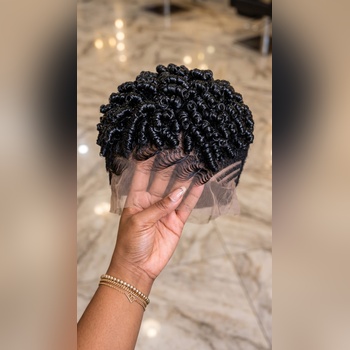
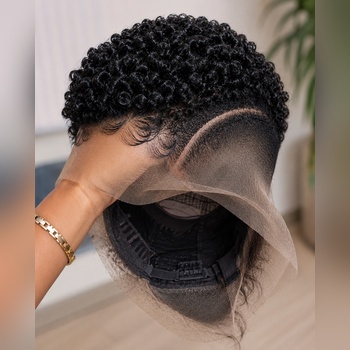
The finished display shows the exterior hairstyle clearly, but it does not provide enough information to verify every construction specification. Buyers should therefore ask the seller directly about cap size, internal adjustment system, hair or fiber type, attachment method and any lace used in the actual product.
Do not assume a specific lace grade solely from the finished appearance. If lace construction is important to your purchase, request the exact specification from the seller. The same applies to claims about human hair, fiber origin or heat resistance.
Ask whether the side design is permanently incorporated into the wig or created during final styling. This matters because the maintenance requirements may differ depending on how the tapered sections and carved lines are constructed.
Estimated Pricing For A Detailed Ring Curl Pixie Unit
Pricing varies considerably between sellers, countries and customization levels. Color work, hand styling, cap construction and the amount of labor required for the side design can all affect the final cost. The figures below are general budgeting ranges rather than prices for the exact wigs shown.
| Category | Estimated Range | What To Discuss |
|---|---|---|
| Premium Custom | $350–$750+ | Custom sizing, detailed crown setting, color service, triple-line design and fitting |
| Standard Custom | $220–$450 | Selected shade, curl density, temple waves, side detailing and cap options |
| Basic Human Hair | $140–$300 | Hair quality, included styling, processing history and customization limits |
| Premium Synthetic | $80–$180 | Fiber quality, heat tolerance, preset curl formation and available colors |
| Basic Synthetic | $45–$100 | Cap sizing, color availability, preset shape and care requirements |
A Practical Order Checklist Before Sending Payment
- Choose your preferred crown color or color combination.
- Send clear front, side and three-quarter reference photographs.
- Request compact polished ring curls with visible circular openings.
- Specify the desired crown density and height.
- Point out the broad swept temple wave beneath the curls.
- Request three parallel side lines with similar spacing to the reference.
- Confirm which side should carry the design.
- Provide accurate head measurements according to the seller’s instructions.
- Ask what material or hair type is used.
- Confirm cap construction and adjustment options.
- Verify any lace specification directly with the seller.
- Ask whether the wig arrives fully styled or requires a salon appointment.
- Confirm production time, shipping cost and return or adjustment policy.
Protecting The Circular Curl Pattern After Styling
The ring formation should be protected from unnecessary brushing and compression. Running a conventional brush through the crown can separate the loops and remove the circular shape that gives this design its identity. Instead, follow the maintenance method recommended for the specific material used in the wig.
Store the unit on a suitable wig stand or mannequin head so the crown is not flattened between wears. Avoid placing heavy objects on top of the curls. If individual rings begin to shift, repositioning them gently is preferable to repeatedly disturbing the entire crown.
Heavy product application can also reduce curl separation. Oils, gels and holding products should be used only when compatible with the wig material and only in the quantity required. Excessive buildup may make neighboring rings stick together and reduce the visible depth of the crown.
Search Terms
Ring Curl Pixie Wig · Triple Line Pixie Wig · Burgundy Ring Curl Wig · Pearl Blonde Pixie Wig · Caramel Highlight Curl Wig · Chestnut Brown Pixie Wig · Sculpted Temple Wave Wig · Tapered Side Curl Wig
Salon Fitting Helps Preserve The Intended Side Profile
Even a completed wig can benefit from professional fitting. A stylist can position the unit so the triple lines sit correctly above the ear and the temple wave follows the wearer’s face rather than shifting too far forward or backward. Placement is particularly important with a design this directional.
Bring the reference photographs to the appointment and explain which details should remain unchanged. The stylist should know that the ring-curl crown, swept temple section and three-line side pattern are all essential parts of the design. Any trimming should support those elements rather than altering the original proportions.
If the unit needs heat or additional setting, confirm the material first. Human hair and synthetic fibers can require very different temperature limits and styling techniques. Never assume that a finished glossy curl indicates heat-safe fiber.
Selecting The Right Color Without Changing The Hairstyle
One advantage of this collection is that the same basic construction works across several color families. Buyers who prefer a deep understated result can choose natural black. Warm chestnut introduces softer brown reflections, while caramel highlighting gives the individual rings stronger separation. Burgundy adds wine-red depth, and pearl blonde places maximum visual emphasis on the curl pattern.
The important point is that color does not need to replace structure. The triple side lines, rounded crown and sculpted temple wave should remain consistent even when the shade changes. This allows a salon or wig business to offer multiple versions of the design without losing the recognizable identity of the style.
For businesses building a collection, offering several carefully chosen colors can also make ordering easier for customers. Instead of presenting dozens of unrelated constructions, the same proven silhouette can be shown in deep, warm, highlighted, red and pale variations.
Turning The Reference Into A Clear Custom Wig Brief
A useful custom brief should describe the hairstyle in a logical order. Begin with a compact pixie foundation and a rounded crown. Request tightly arranged polished ring curls with visible centers and controlled height. Add a broad swept finger-wave section at the front temple, followed by a close tapered side containing three parallel carved lines.
After the construction is established, specify color. For the highlighted option, describe both the darker base and caramel accents. For the red option, request a rich burgundy-wine family rather than a bright primary red. For the pale version, provide a pearl-blonde reference so the stylist can understand the desired undertone.
Before production begins, request written confirmation of the selected color, cap size, material, curl formation, side-design placement and expected completion time. If the seller offers photographs during production, reviewing the crown and side profile before final shipment can help catch misunderstandings early.
This collection succeeds because several small details work together: compact proportions, glossy circular curls, a visible swept temple section, closely tapered sides and three carefully spaced lines. Keeping those details consistent is more important than copying color alone. With a precise reference and a clear consultation, the design can be customized in multiple shades while preserving the distinctive ring-curl pixie identity that makes the entire collection stand out.