
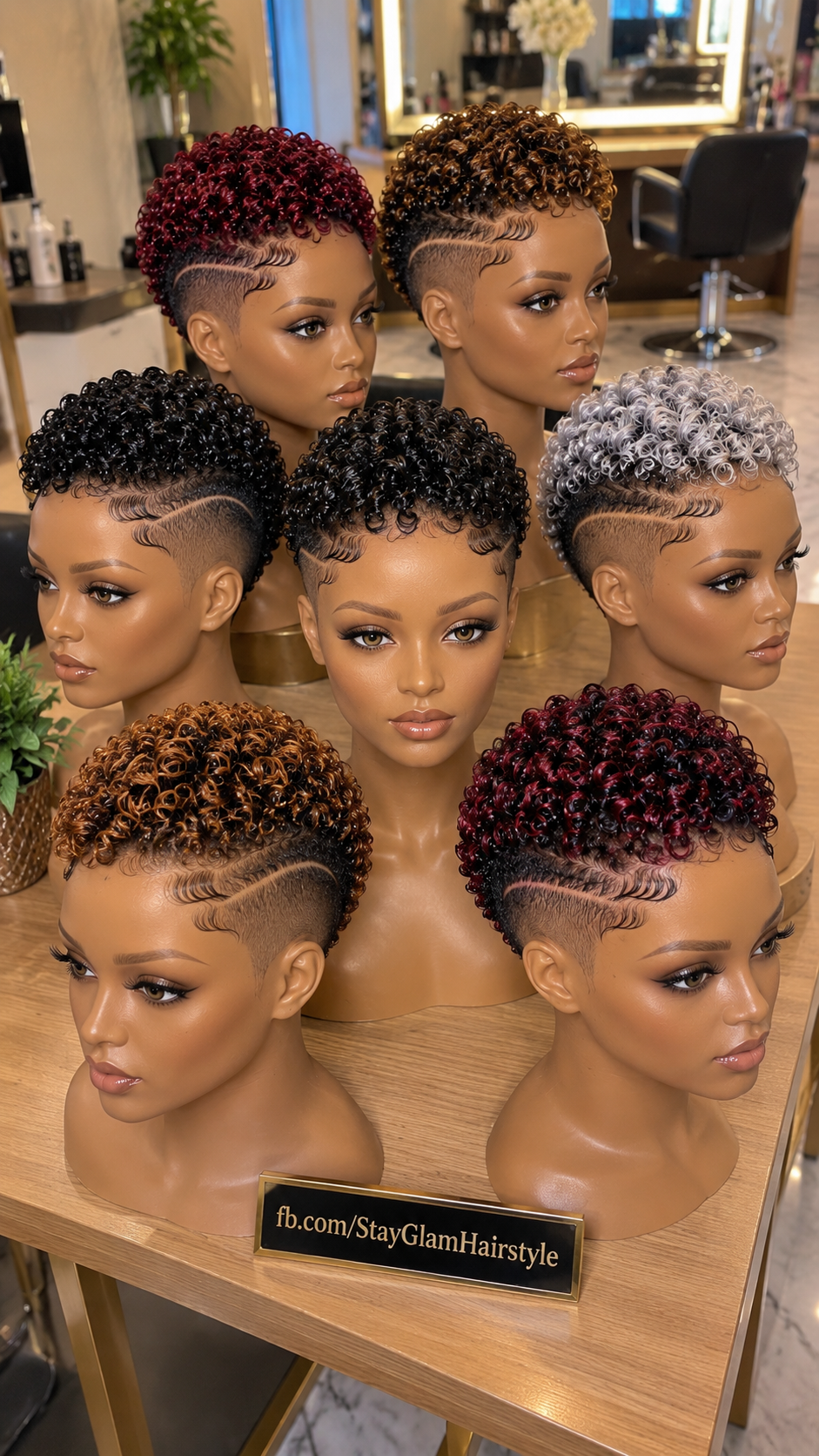
This ring curl pixie wig collection brings together several salon-inspired color choices while keeping the same recognizable compact silhouette. The display includes deep natural black, warm caramel brown, rich burgundy, copper-brown and pearl-silver variations. Across the collection, tightly arranged circular curls create a rounded crown while the sides stay close to the head and carry sweeping carved-line effects. The result is a hairstyle that looks detailed from the front, side and three-quarter angles without depending on long lengths or oversized volume.
One of the strongest visual qualities in this collection is consistency. Each variation keeps the same general relationship between the curled crown and the closely shaped side area, yet the different colors give each piece its own personality. Darker versions emphasize shine and curl separation, copper and caramel shades reveal more tonal movement, burgundy creates a deep wine-red statement, and the pale silver version gives the circular curl pattern a brighter appearance.
For buyers looking for a custom pixie wig, this collection is useful as a reference because it demonstrates how much color and side detailing can change a hairstyle without changing its basic structure. A wig stylist can use these examples to discuss curl size, crown density, color placement, front shaping and the direction of the side design before beginning a custom order.


Compact Ring Curls Build The Rounded Crown
The crown is formed from many small circular curls placed closely beside one another. Rather than falling downward, the curls sit against the head and create a controlled dome. This arrangement keeps the silhouette compact while still providing enough volume for the hairstyle to look full from every viewing angle.
The individual rings are especially important. If the curls were made much larger, the hairstyle would lose its tightly sculpted appearance. If they were made considerably smaller, the crown could appear denser and less visibly separated. Buyers requesting a similar custom wig should therefore show the stylist a clear reference and specify that the curls should remain individually recognizable.
The glossy surface seen throughout the collection also helps reveal the circular construction. Light travels around the curved strands and separates one loop from another. This is particularly noticeable on the warm brown and burgundy pieces, where subtle tonal variation makes the curl pattern easier to see.
Sweeping Temple Lines Give The Style Its Signature Profile
The side sections are not simply reduced in volume. They contain deliberate visual direction that separates the curled crown from the temple area. Several pieces show one prominent sweeping line accompanied by additional parallel accents. The line begins near the front and travels toward the back, creating a strong profile when the wig is viewed from the side.
Above these lines, curved strands move toward the forehead and connect visually with the ring curls. Around the temple, smaller sculpted sections follow the contour of the face. These details make the side view almost as important as the crown itself.
When commissioning this style, send the stylist side-view photographs as well as front references. A front photograph alone may communicate the curl pattern but not the placement of the sweeping lines. Explain how many lines you want, where they should begin and whether you prefer a broad curved division or narrower parallel accents.
Burgundy Ring Curls Create A Deep Wine Red Option
The burgundy versions introduce a saturated wine-red color while preserving the compact ring structure. Because the base remains deep, the color does not overpower the hairstyle. Instead, brighter red reflections appear around the outer curves of the rings, giving the crown additional visual depth.
This color can be useful for buyers who want something more noticeable than a natural dark shade without moving toward a very bright red. Depending on the hair or fiber used, a stylist may describe similar shades as burgundy, wine red, cherry burgundy or deep red. Ask to see an actual color sample before confirming the order because photographs can make burgundy appear warmer or cooler than it looks in person.
Caramel Brown Adds Warm Contrast Across The Curls
Warm caramel and brown combinations appear on several pieces in the display. These shades are particularly effective on circular curls because each loop catches light differently. Darker areas remain visible beneath the crown while caramel reflections appear across the raised sections.
A buyer wanting this effect should discuss color distribution rather than requesting a generic brown wig. Ask whether the stylist can retain deeper tones around the base while allowing warmer caramel or honey-brown strands to appear through the crown. This approach can create dimension without requiring a dramatic contrast between the colors.
The warm brown versions also pair well with the sculpted side work because the darker side area visually anchors the brighter crown. From a three-quarter angle, the transition between the curled top and close side section becomes especially noticeable.
Pearl Silver Gives The Collection A Bright Alternative
The pearl-silver variation provides the lightest option in the display. Its pale color makes every ring highly visible and creates strong separation between the curled crown and the darker-looking root or side area. Under bright salon lighting, the loops appear almost metallic because light reflects strongly from their curved surfaces.
If ordering a similar shade, determine whether you prefer pearl silver, icy silver, platinum or a slightly warmer silver-blonde result. These colors may look similar on a screen but can differ substantially in person. A salon or wig seller should be able to explain which available shade most closely resembles the reference.
Light colors may also require different maintenance depending on the material. Human hair that has been heavily lightened can require careful conditioning, while synthetic fibers have their own care limitations. Ask the seller how the selected material should be washed, stored and refreshed before purchasing.
Natural Black Keeps Attention On The Curl Architecture
The deepest dark versions provide a classic alternative for buyers who want the construction of the hairstyle to remain the main attraction. The dark surface creates strong reflections along each ring while keeping the overall appearance cohesive. Against the closely shaped sides, the glossy curls create a clear difference in height and density.
This variation can also serve as a useful base for customers who prefer subtle customization. A stylist may be able to introduce restrained brown accents or maintain the hair in one deep natural shade depending on the selected material and coloring method.
Front Hairline Styling Connects The Crown And Side Design
The forehead area contains carefully directed strands that curve away from the main crown. These sections help transition the circular curls into the side design and frame the face. The placement varies slightly among the displayed wigs, which gives each variation a customized appearance even though the overall concept remains consistent.
When placing an order, discuss how prominent you want this front styling to be. Some customers may prefer broader sweeping sections, while others may want smaller curves concentrated around the temple. Head shape and preferred placement can influence how the final design sits when worn.
The photograph does not establish a specific technical lace specification, so terms such as HD lace should not be assumed from the appearance alone. Ask the seller directly what construction is being offered, what type of front material is used and how the unit is intended to be secured.
What To Discuss During A Custom Wig Consultation
A consultation should cover more than color. Begin by showing the exact variation you want to reproduce. Identify the ring size, crown height, preferred side direction and front curl placement. If you like elements from two different variations, explain which elements should be combined rather than expecting the stylist to determine that automatically.
Next, provide accurate head measurements according to the salon’s instructions. Circumference, front-to-nape length and ear-to-ear measurements can affect the fit of a custom unit. Ask whether the stylist provides multiple cap sizes or builds according to individual measurements.
You should also confirm whether the wig will arrive fully styled. A photographed sample may represent a professionally prepared display unit, while the product sold by a supplier could require additional salon work. Ask whether ring formation, side detailing, coloring and final shaping are included in the quoted price.
Human Hair And Synthetic Options Require Different Planning
Human hair may be preferred by buyers who expect professional restyling or future color adjustments. However, quality varies considerably between suppliers, so the term human hair alone does not indicate durability or performance. Ask about hair quality, processing history and recommended care.
Synthetic fiber can be a practical choice when the main priority is retaining a preset curl pattern. Some fibers hold sculpted rings very well, although heat tolerance varies. Never use heated styling tools unless the seller confirms the temperature range suitable for the specific fiber.
For either option, the important question is whether the material can maintain the compact circular arrangement shown in the reference. The hairstyle depends heavily on curl placement, so maintenance requirements should be discussed before purchasing.
Premium Custom, Standard Custom And Ready-Made Price Guide
The following figures are planning estimates rather than guaranteed selling prices. Actual prices depend on country, salon, hair material, coloring work, construction and the amount of hand styling required. Request a complete quote from the wig stylist or salon before placing an order.
| Category | Planning Range | Ask Before Ordering |
|---|---|---|
| Premium Custom | $350–$750+ | Hair quality, custom color, cap measurements, ring setting, side detailing and fitting |
| Standard Custom | $220–$450 | Available colors, curl preparation, cap construction and final salon styling |
| Basic Human Hair | $140–$300 | Hair grade, density, processing, styling costs and color availability |
| Premium Synthetic | $80–$180 | Fiber quality, heat tolerance, curl retention and cap adjustment |
| Basic Synthetic | $45–$100 | Preset shape, available shades, maintenance requirements and expected wear |
Ordering Steps For A Similar Salon Piece
- Select the exact color variation you want from the reference collection.
- Send front, side and three-quarter photographs to the wig stylist.
- Specify that you want compact circular ring curls rather than loose curls.
- Confirm the preferred crown height and curl density.
- Show the exact sweeping side-line pattern you want reproduced.
- Discuss front hairline styling and temple placement.
- Provide head measurements using the seller’s measurement guide.
- Confirm whether the unit is human hair or synthetic fiber.
- Ask what cap construction and attachment options are actually supplied.
- Request the total cost including coloring, styling, customization and shipping.
- Ask for completed photographs before collection or dispatch when possible.
Keeping The Ring Pattern In Shape Between Wears
Because the circular curl arrangement is the focal point of the hairstyle, maintenance should prioritize preserving those individual rings. Avoid aggressive brushing through the crown unless the stylist specifically recommends it. Pulling a conventional brush through tightly arranged loops can separate the curl formation and change the silhouette.
Store the wig on an appropriately sized wig stand or mannequin head where the crown will not be crushed. Keep heavy objects away from the curls and protect the unit from unnecessary friction. If the style begins to lose its original arrangement, professional maintenance may be preferable to repeatedly reshaping it at home.
Product use should also depend on the actual hair or fiber. Ask the seller which cleanser, conditioner or lightweight styling product is compatible with the unit. Applying heavy products can alter the appearance of compact curls and create buildup between the rings.
How A Salon Can Recreate The Reference More Accurately
The most reliable approach is to treat the hairstyle as several connected zones. The crown needs consistent ring sizing and balanced volume. The front requires deliberate directional styling. The temple area needs precise placement of the sweeping details, and the lower side must remain close enough to preserve contrast with the fuller crown.
Color should be planned at the same time rather than added as an unrelated final choice. Burgundy emphasizes the circular shapes differently from silver, while caramel brown creates another level of dimension. The stylist should therefore consider how the chosen shade interacts with the ring placement and side structure.
Reference photographs taken from several angles are especially useful. Ask the stylist to compare the work during the styling process rather than waiting until every curl has been set. Small corrections to direction and density are easier to make while the crown is still being arranged.
Search Terms
Ring Curl Pixie Wig · Burgundy Curly Pixie Wig · Caramel Brown Ring Curl Wig · Pearl Silver Pixie Wig · Natural Black Curl Pixie Wig · Sweeping Side Part Wig · Sculpted Temple Pixie Wig · Glossy Circular Curl Wig
Choosing The Right Variation From This Collection
The best way to choose among these pieces is to decide which element matters most to you. Buyers who want the curl pattern to dominate can select a deep natural shade. Those who prefer warmth can consider caramel brown or copper-brown variations. Burgundy provides a richer red direction, while pearl silver creates the brightest contrast and makes the individual loops especially visible.
After choosing the color, compare the side designs. Look carefully at the direction of the sweeping line, the number of parallel accents and the way the front strands connect with the crown. These smaller details can make two wigs with similar curls look substantially different once worn.
Finally, verify every technical detail directly with the seller. A photograph can show color, curl placement, visible side styling and overall proportions, but it cannot reliably confirm hair origin, cap measurements, fiber quality or a specific lace grade. Those specifications should appear in the seller’s product information or written custom-order agreement.
Building A Custom Order Around The Reference
This collection works particularly well as a salon reference because it presents one recognizable pixie concept through several color directions. The compact glossy rings, sweeping side separation and carefully placed temple strands create the common foundation. Color then changes the personality of each version without removing that foundation.
Bring the reference image to a wig stylist, barber or salon professional and identify the exact piece you prefer. Discuss the curl diameter, crown density, side pattern and front placement before production begins. Confirm material, cap size, attachment method, maintenance requirements and total price in writing.
With those decisions made before the wig is built, the finished unit has a much better chance of retaining the qualities that make this collection distinctive: tightly arranged ring curls, controlled crown volume, visible side artistry and a carefully selected color that complements the entire silhouette.