
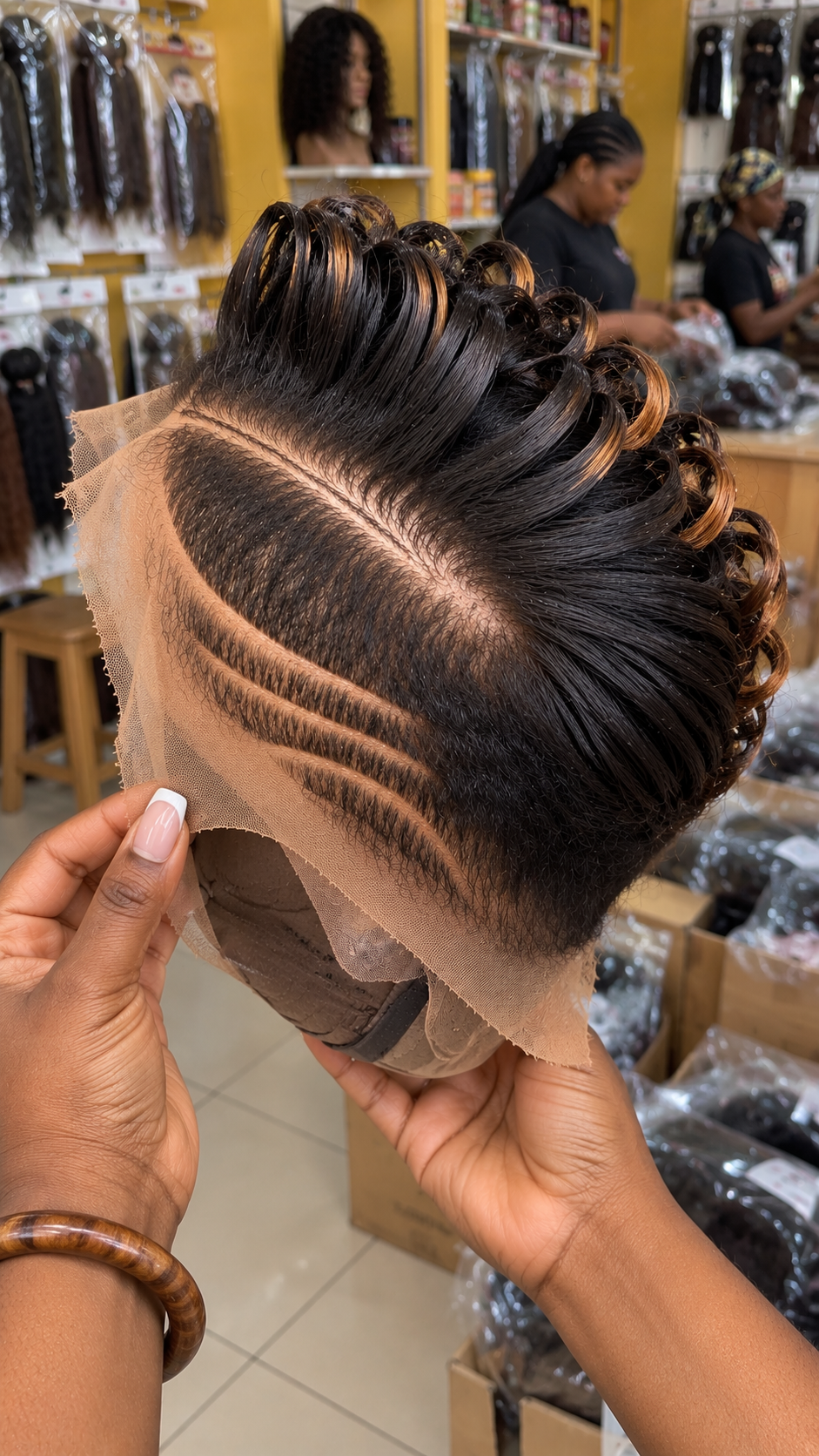
This sculpted pixie wig stands out because the color is used as part of the architecture of the hairstyle rather than as a simple all-over shade. A deep espresso-brown foundation supports warm caramel ribbons that travel through selected looped curls across the crown. The result is a dimensional design where every turn of the hair catches the light differently, while the darker base keeps the overall appearance rich and balanced.
The photograph also reveals that this is not simply a curly wig with highlights added afterward. The entire unit has been constructed around several distinct zones: a raised looped crown, a long diagonal separation, a close side panel, two parallel carved lines and a lace perimeter. Recreating it successfully therefore requires attention to structure, color placement and fitting at the same time.
Espresso and Caramel Work Together Across the Crown
The upper section contains broad glossy loops rather than tiny uniform curls. Their larger shape allows the caramel strands to remain visible as ribbons instead of disappearing into the darker hair. Some loops contain more caramel while others remain predominantly espresso, producing variation across the crown.
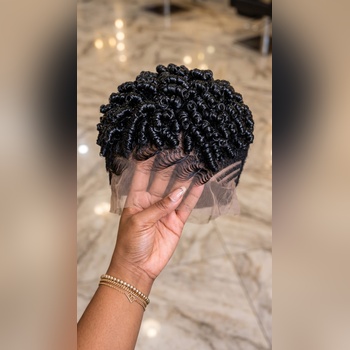
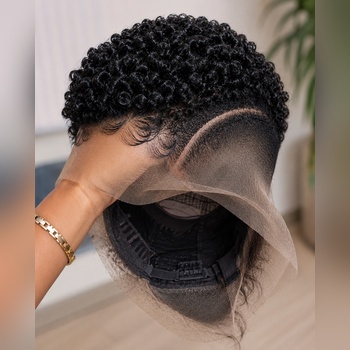
This placement is particularly useful for creating depth. The darker sections visually recede while the warmer caramel portions catch the light. From different viewing angles, the same crown can therefore appear deeper and fuller without requiring excessive height.
Anyone ordering a similar unit should be specific about this point. Asking for “brown highlights” alone could result in thin streaks distributed throughout the entire wig. A better request would describe concentrated caramel ribbons through selected crown loops while keeping the lower sections substantially darker.
The Long Diagonal Part Controls the Entire Silhouette
A prominent diagonal separation runs from the front area toward the rear of the wig. This line establishes the direction of the upper loops and separates them visually from the close side panel beneath.
The part is intentionally visible, making precision important. If it becomes too wide, irregular or poorly positioned, the proportions of the design change. A custom wig maker should therefore study the reference from the side before constructing the curl pattern.
When commissioning this style, discuss whether the part will be permanently established during styling or whether the unit will offer some flexibility. A heavily sculpted design normally looks strongest when the intended direction is preserved rather than repeatedly repositioned.
Two Parallel Side Lines Add a Barber-Inspired Detail
Beneath the primary diagonal part are two narrow parallel lines that sweep backward through the close side section. They provide a strong visual break without competing with the curls above. The lines also create the impression of a carefully executed salon-and-barber collaboration.
This feature deserves its own instruction when placing an order. The number of lines, their spacing, curvature and length should all be discussed. Similar-looking pixie wigs may use one line, three lines or a completely different pattern, so sending the exact reference image is much safer than relying on a general product description.
The Close Side Panel Is Just as Important as the Curls
Much of the impact comes from the contrast between the raised crown and the close-fitting side area. The side panel is dark, compact and directed backward, allowing the upper loops to remain the visual focus. It also prevents the silhouette from becoming bulky around the temples.
A stylist attempting this design needs to maintain that proportion. Too much density in the lower panel can hide the carved lines, while insufficient density may expose more of the construction than intended. The crown and side therefore need to be planned as one composition.
What the Visible Lace Tells You Before Ordering
The photograph clearly shows lace extending beyond the front and side perimeter. That is useful information because it confirms that the displayed piece still requires final fitting or trimming. It also shows how the sculpted side work continues toward the lace boundary.
However, the image alone does not establish a specific lace grade or technical specification. A buyer should not assume that the unit is HD lace, transparent lace or any other particular material without confirmation from the seller. Ask directly about the lace type, dimensions, color options and whether it arrives pre-cut.
How to Explain This Wig to a Custom Stylist
Start with the complete visual structure rather than simply saying that you want a curly pixie. Explain that the desired unit has a deep espresso foundation, warm caramel ribbon highlights, large glossy crown loops, a pronounced diagonal separation and two parallel side lines.
Send the stylist several angles whenever possible. A front photograph communicates the hairline and curl direction, while this side view is especially valuable for explaining the carved details and highlight placement.
Ask the stylist to confirm each major element in writing before the order begins. This reduces misunderstandings and makes it easier to compare quotes from different wig professionals.
Choosing Between Human Hair and Synthetic Construction
The best material depends on budget, intended wear and how much future restyling you expect. Human hair can offer greater flexibility for professional reshaping and recoloring, but a heavily sculpted unit still requires careful maintenance. Premium synthetic fibers can hold a preset curl arrangement well, although heat and styling limitations vary by fiber.
Do not select a material solely because of the photographed shine. Lighting, styling products and finishing techniques can dramatically affect how reflective hair appears in photographs. Ask the seller for unfiltered close-ups and information about the actual fiber or hair used.
Price Guide for This Type of Custom Pixie Wig
| Wig Category | Typical Price Range | Possible Order Level |
|---|---|---|
| Premium Custom | $380–$700+ | Higher-grade hair, custom caramel placement, detailed side work and extensive hand finishing |
| Standard Custom | $230–$380 | Customized color, sculpted loops, diagonal part and side detailing |
| Basic Human Hair | $150–$250 | Human-hair foundation with simplified color and styling work |
| Premium Synthetic | $95–$180 | Quality fiber with preset loops and selected custom details |
| Basic Synthetic | $60–$110 | Lower-cost interpretation with reduced customization |
These figures are general shopping estimates rather than the confirmed price of the photographed unit. Custom labor, hair quality, color work, cap construction, stylist experience and geographic market can all change the final quote.
A Practical Ordering Checklist for This Exact Look
- Send the side reference showing the complete diagonal structure.
- Request a deep espresso-brown foundation rather than an unspecified dark shade.
- Ask for warm caramel ribbons concentrated through selected upper loops.
- Confirm the large looped curl pattern before production begins.
- Specify two parallel curved lines through the close side panel.
- Provide every head measurement requested by the wig maker.
- Ask which lace material and perimeter construction will actually be supplied.
- Confirm whether final cutting, fitting and finishing require a salon appointment.
Salon Fitting Can Make the Custom Details Read Better
Even a carefully constructed unit can benefit from professional fitting. The side lines and diagonal separation are designed to sit in particular positions relative to the temple and ear. If the cap is positioned incorrectly, those details may appear too high, too low or too far forward.
For that reason, buyers who are unfamiliar with fitting highly sculpted wigs may want to book an appointment with a wig stylist. Bring the reference photograph so the stylist understands how the finished piece is intended to sit.
Preserving the Caramel Loops Between Wears
The looped crown should be handled differently from loose everyday curls. Avoid repeatedly pulling through the loops with a brush or comb because their deliberate arrangement is part of the design. Separate only the sections that genuinely need adjustment and follow the maintenance instructions provided for the actual hair material.
Storage matters as well. Keeping the wig on an appropriate stand can help prevent the crown from being flattened. Avoid placing heavy objects against the upper loops, and protect the sculpted side area from unnecessary friction.
Why This Design Works as a Custom Wig Showcase
For wig businesses, this design demonstrates several customization skills in one product: controlled highlight placement, sculpted loops, a strong diagonal division, close side work and visible lace construction. It can therefore function as more than a single color option.
The same structural template could be offered with alternative color combinations while preserving the characteristic shape. Espresso with caramel creates the warm version seen here, while clients could request copper, burgundy, honey or cool silver accents depending on their preference. The important business practice is to show which elements can genuinely be reproduced rather than promising an identical result without considering individual measurements and materials.
Search Terms
espresso caramel pixie wig · caramel ribbon curl wig · loop curl lace pixie · diagonal part pixie wig · double line side design wig · brown highlighted sculpted wig · caramel loop crown wig · visible lace curly pixie