
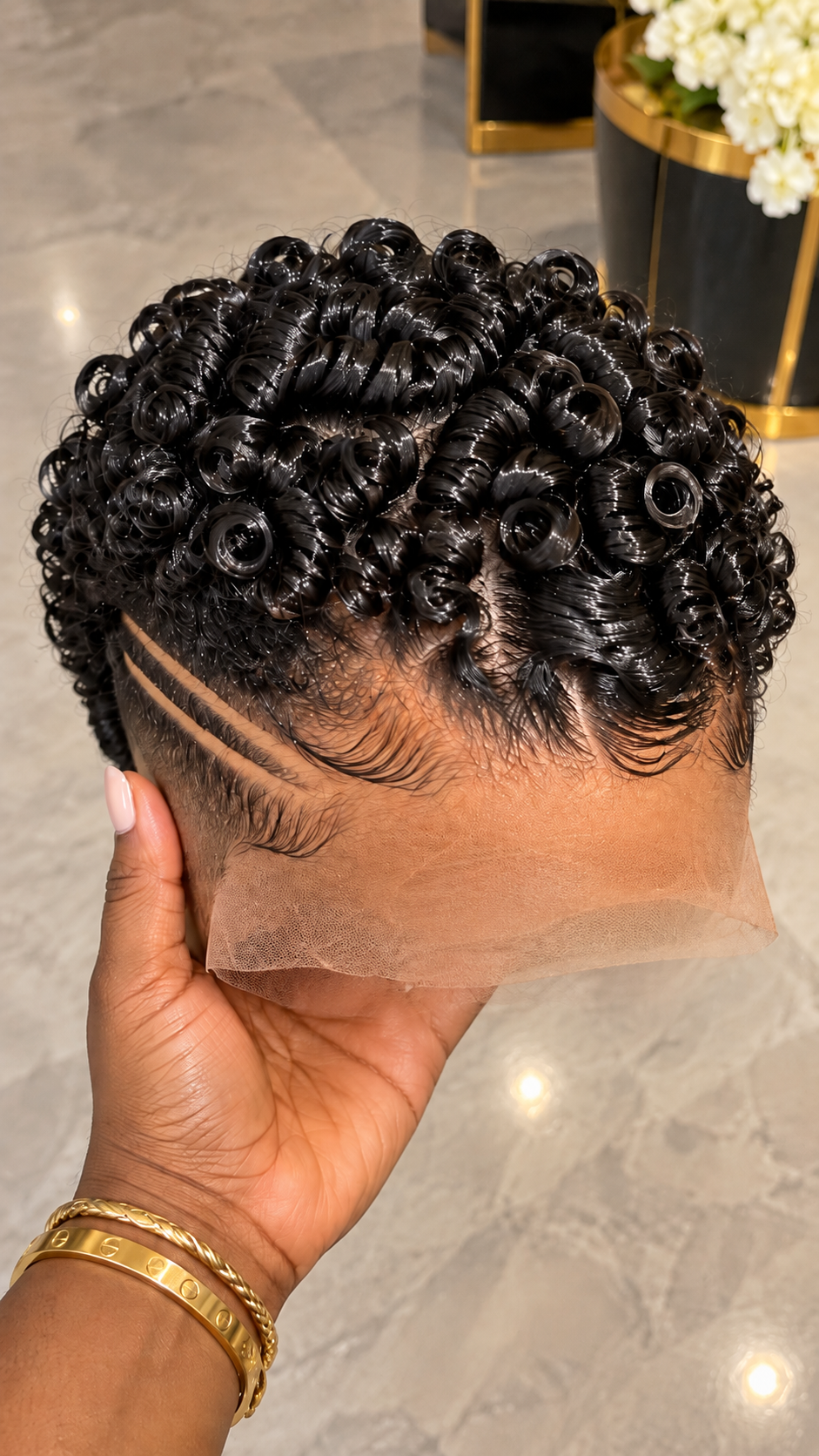
This pixie wig is built around upright corkscrews, a glossy deep-black finish and precision side work. The photographed unit is shown before the lace is trimmed, making the hairline construction, curl placement and tapered profile especially easy to inspect. Rather than treating the wig as a generic curly crop, the design uses several controlled zones: a dense crown, a molded frontal transition and a closely worked side panel.
Why the Curl Pattern Stands Out
The crown uses upright corkscrews arranged close together while keeping individual openings and strand direction visible. This density gives the wig a full appearance without turning it into a long or oversized style. The reflective finish emphasizes each curl and creates narrow highlights across the black hair.
When commissioning a similar unit, curl diameter and direction should be discussed separately from overall density. A stylist can produce a very different result with the same amount of hair simply by changing the size of the set or allowing the curls to fall too loosely.
Precision Work Along the Side
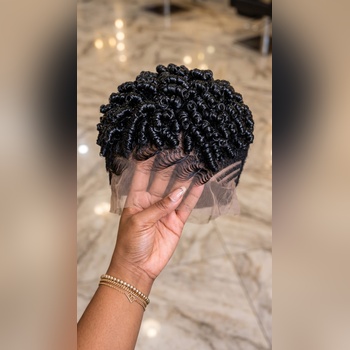
The most identifiable profile detail is the double side lines. This section is kept close enough for the lines to remain clearly visible and separated from one another. The side design should be established before the upper curls are allowed to settle into their final position, otherwise the crown can hide the pattern.
The transition is softened by feathered lace hairline. Fine strands bridge the difference between the raised crown and the tapered area, giving the perimeter a deliberately styled appearance rather than an abrupt cut.
What the Visible Lace Tells a Buyer
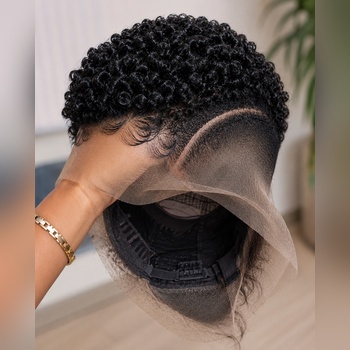
The reference shows an extended lace perimeter before installation. This is useful when discussing customization because the buyer can see where the styled hairline ends and where trimming will take place. Ask the maker about lace tone, width, density and whether the frontal shaping arrives pre-set.
Do not assume that every pixie unit described online as lace front will have the same construction. Request close photographs of the actual product, particularly around the temple and side design.
How to Request This Style at a Salon
Show the reference photograph and identify the non-negotiable elements individually: deep black color, upright corkscrews, double side lines, feathered lace hairline, compact pixie proportions and a glossy strand-by-strand finish. This is more reliable than asking only for a curly pixie wig.
A wig stylist who regularly works with molded pixie units is the strongest option. If the side pattern is especially important, choose a professional whose portfolio includes precision line work and tapered wig construction. A barber-experienced stylist may also be helpful for refining the side geometry.
How to Order a Similar Wig Online
Start by confirming cap measurements and hair material. Next confirm color, crown density, curl size, side-line count and lace configuration. Send the reference and ask the seller to repeat the requested details in writing before production begins.
If approval photographs are available, request front, side and crown views. The side view confirms the line pattern, while the crown view shows whether the curls have the required density and separation.
Price Guide for Comparable Custom Work
| Type | Estimated Price | Typical Configuration |
|---|---|---|
| Premium Custom | $475–$950+ | Premium human hair, detailed hand setting and precision customization |
| Standard Custom | $275–$525 | Human hair with professional curl setting and side detailing |
| Basic Human Hair | $150–$315 | Human-hair base requiring additional styling |
| Premium Synthetic | $90–$200 | Higher-grade fiber with structured pre-set curls |
| Basic Synthetic | $45–$110 | Entry-level fiber with simpler customization |
These ranges are general estimates. Final pricing depends on hair material, cap construction, lace, stylist, location and the amount of hand finishing required.
Keeping the Crown and Side Work Intact
Store the wig upright so the crown is not compressed. Avoid brushing through the curls. Refresh individual sections with the fingers and use only a small amount of compatible finishing product. Heavy product can make neighboring curls merge and reduce the visible definition.
Protect the lace and side pattern from friction during storage. If heat is needed, confirm that the hair or fiber is heat safe before applying it. The goal is to preserve the curl openings, clean side lines and fine molded perimeter work.
Search Terms
upright corkscrews pixie wig · double side lines wig · feathered lace hairline pixie · glossy black curl crown · tapered side wig · visible lace pixie unit · sculpted black hairline · compact ringlet wig