
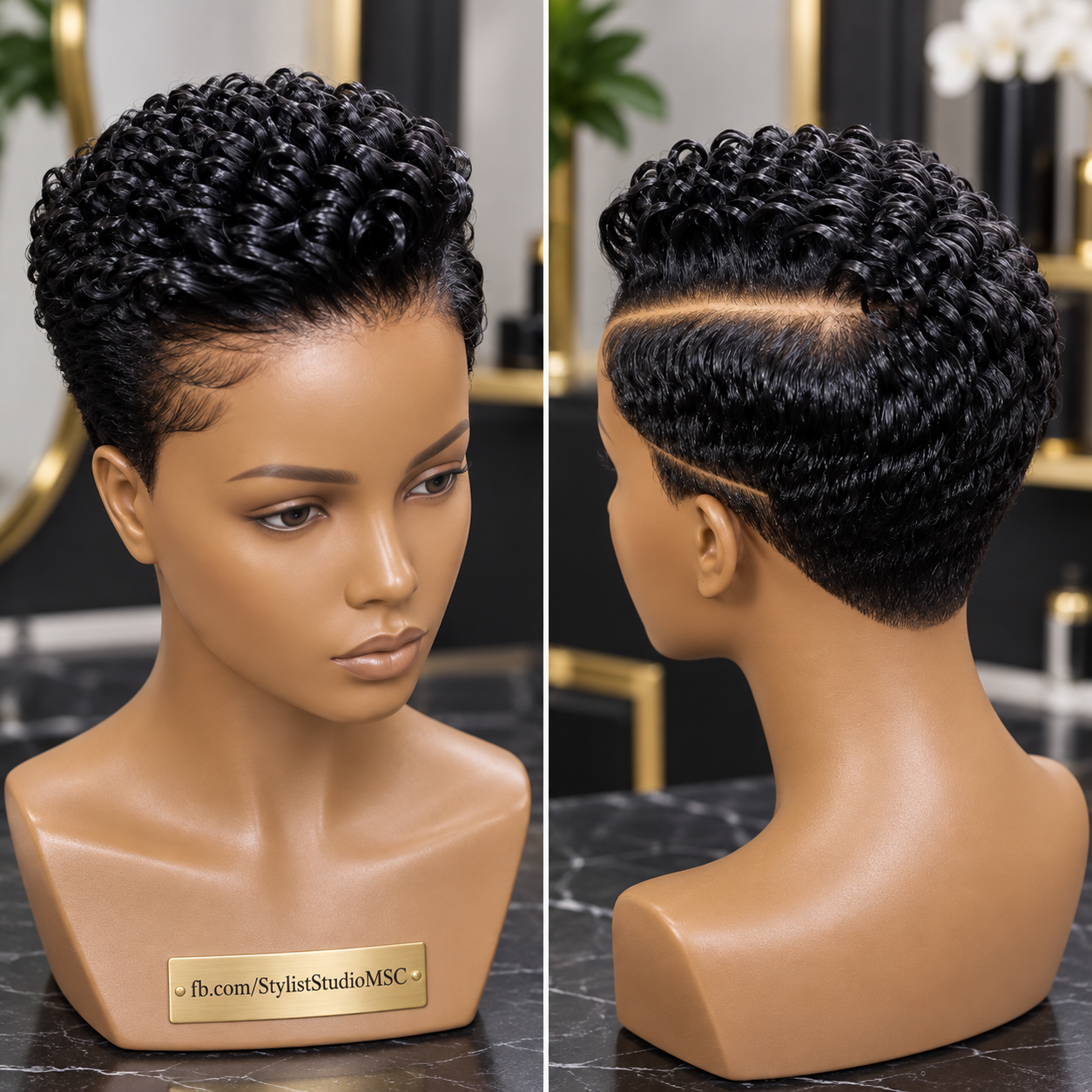
This glossy black pixie wig combines a dense crown of small sculpted ringlets with a close tapered back and a distinctive double side parting. The hairstyle keeps its strongest volume across the top while the sides and nape remain compact, giving the wig a precise salon-shaped silhouette.
The deep black color makes the curl pattern especially visible under direct light. Every ringlet catches a narrow reflective highlight, creating contrast between the rounded curls and the darker spaces beneath them. From the front, the crown appears full and polished; from the rear three-quarter view, the structured side work becomes the main visual detail.
Mirror-like glossy hair, silky reflective finish, healthy wet-look shine, individually visible strands, ultra-defined hair texture.
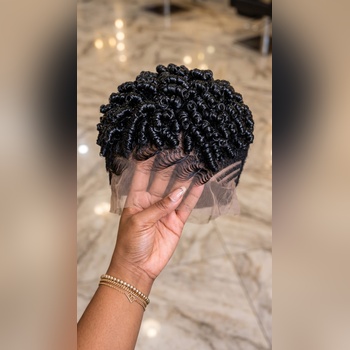
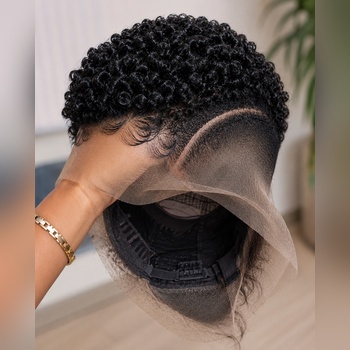
Compact Ringlets Build Volume Across the Crown
The upper section is formed from numerous small circular curls positioned closely together. Rather than falling downward, the curls sit directly against the crown and overlap slightly, producing controlled volume without adding excessive height or length.
Individual ringlets remain visible throughout the hairstyle. Some face forward while others turn toward the sides and back, preventing the crown from looking mechanically uniform. This variation is important when recreating the style because the finished wig should show many separate curl shapes rather than one continuous curled surface.
A stylist recreating the look should work with small sections and maintain approximately the same curl diameter throughout the upper crown. The front can be directed slightly forward and sideways to create the compact pixie profile visible from the face.
Jet Black Color Highlights the Reflective Curl Pattern
The wig stays within a deep jet-black color family from crown to nape. There are no contrasting blonde, copper or burgundy sections competing with the construction, so attention remains on the ringlets and side detailing.
Strong salon lighting produces silver-like reflections across the curved surfaces of the black hair. These are light reflections rather than separate highlight colors. For a similar result, request high-gloss jet black hair rather than adding lighter streaks.
Healthy-looking shine is particularly important for this design because every circular curl benefits from a visible reflective edge. Hair that appears excessively dry can make the crown look less dimensional.
The Front Uses a Soft Sculpted Hairline
The front hairline is kept relatively natural and compact beneath the curls. Fine strands around the temple are directed into controlled curved shapes that connect the crown with the shorter side.
These hairline details remain subtle rather than covering a large portion of the forehead. Their purpose is to soften the transition between the fuller ringlet crown and the close temple area.
For a lace version, the installer can lightly customize the front density if necessary, but excessive plucking should be avoided. The visual strength of this hairstyle comes from maintaining a substantial, dark foundation beneath the curls.
Double Side Parting Creates the Signature Detail
The most recognizable side element is the pair of long, narrow parting lines. The upper line begins near the front-side area and travels backward beneath the crown. A second line follows below it, creating a separated panel of dark hair between the two.
From the rear three-quarter angle, the upper parting continues farther toward the back while the lower line frames the shorter side section. This construction gives the hairstyle a barber-inspired appearance without requiring an exposed skin fade.
When ordering a custom wig, specify two narrow parallel side partings and provide a clear side reference. Asking only for “lines on the side” can result in short shaved marks that do not reproduce the longer structure of this design.
The Side Panel Remains Dense and Glossy
The hair between the two partings is considerably shorter than the crown but still retains visible strand direction. It is combed backward in a controlled pattern, allowing the side to remain dark and substantial.
This is an important distinction when reproducing the hairstyle. The side should not appear completely shaved or bare. Keeping enough dark hair inside the panel preserves the strong contrast against the exposed parting lines.
The lower edge becomes progressively closer around the ear and toward the nape, producing a neat transition into the back.
A Close Nape Keeps the Back Compact
The rear view shows the crown gradually reducing in length as it approaches the nape. The lowest section sits close to the head, preventing the hairstyle from becoming bulky at the back.
This tapered shape helps the upper ringlets remain the focal point. It also creates a practical pixie silhouette that follows the contour of the head instead of extending outward around the neckline.
For custom construction, the wig maker should evaluate the back from several angles before finalizing the density. Too much hair at the nape can change the entire profile of the style.
Why the Front and Back Views Matter When Ordering
This hairstyle changes considerably depending on the viewing angle. A front photograph communicates the curl density, hairline and overall crown proportions, while a rear three-quarter photograph reveals the double parting and tapered construction.
Both references should be supplied to a wig maker. Ordering from only the front view may produce an attractive curly pixie but miss the distinctive side structure completely.
Ask the seller to confirm that the side partings and tapered back are incorporated into the actual wig construction rather than added only during final styling.
Where to Have This Wig Made
Look for a custom pixie wig maker, lace wig specialist or stylist experienced with sculpted pixie units. Portfolios showing close-up side and back views are especially useful because they demonstrate whether the stylist can reproduce precision parting work.
A salon that combines wig customization with barber-style detailing can also be a strong option. The stylist needs to understand curl setting, density control, close tapering and side-line placement rather than focusing only on lace installation.
Before paying a deposit, send the reference images and specifically ask whether the ringlet crown and double side parting can both be reproduced.
How to Order a Similar Wig Online
Describe the unit as a jet black glossy ringlet pixie lace wig with a compact tapered back and double parallel side parting. Include front and rear three-quarter reference images with the inquiry.
Confirm the cap size, lace type, hair material, curl construction and side detailing before production begins. If ordering human hair, ask whether the ringlets arrive professionally set or require styling after delivery.
For custom orders, request completion photos when available. Compare the crown density, ringlet size, side-line placement and nape shape before approving the finished unit.
Choosing Human Hair for This Pixie Design
Human hair offers greater flexibility when the wig will be washed, reset or professionally restyled over time. A stylist can reform individual ringlets and adjust their direction after cleansing.
High-quality hair is especially useful for maintaining the reflective black appearance. The strands should accept styling products without becoming excessively stiff or coated.
Because the crown contains many small curls, professional resetting may be helpful after several washes. Keeping the original reference photographs makes it easier for the stylist to restore the intended proportions.
Premium Synthetic Hair Can Hold the Ringlets Longer
A quality synthetic unit may appeal to wearers who want the circular curl pattern to remain relatively consistent between wears. Factory-set fibers can maintain their shape with less frequent heat styling.
Choose a fiber with realistic strand separation and a controlled sheen. Extremely reflective synthetic hair can look plastic under strong lighting, while very matte fibers may lose the polished appearance associated with this design.
If heat adjustments are needed, follow the manufacturer’s temperature recommendations and confirm that the fiber is heat resistant before using styling tools.
How Much It Costs
| Wig Type | Estimated Price | Typical Details |
|---|---|---|
| Premium Custom | $475–$900+ | Premium human hair, fine lace, custom ringlet setting, detailed double side parting and precision tapered construction |
| Standard Custom | $275–$525 | Human hair, lace front, professionally shaped black ringlets, tapered back and custom side lines |
| Basic Human Hair | $160–$325 | Human-hair pixie base with salon-set curls and simplified side detailing |
| Premium Synthetic | $85–$195 | Higher-grade fiber, lace front, preset glossy ringlets and close pixie construction |
| Basic Synthetic | $40–$110 | Factory curly pixie with basic lace and simplified tapered sides |
Final pricing depends on hair quality, lace construction, cap customization and how much hand work is required to form the ringlets and side detailing. Installation, shipping and future maintenance are commonly charged separately.
Booking a Professional Wig Installation
When booking, tell the stylist that the unit has a compact pixie construction with detailed side partings. Ask whether the appointment includes lace trimming, fitting, securing the wig, hairline work and curl adjustment.
The stylist should check the position of the side lines before permanently securing the unit. If the wig rotates even slightly, the parting can sit too high or too low around the temple and ear.
After placement is confirmed, the ringlets can be lightly repositioned without disturbing their circular structure.
Keeping the Ringlets in Shape
Avoid repeatedly brushing through the finished crown. Brushing can separate the grouped strands and reduce the visible circular pattern that gives this hairstyle its distinctive appearance.
Instead, reposition individual curls with the fingers. A small amount of suitable styling product can be applied when necessary, but heavy creams and oils should be used sparingly because they may weigh down the compact curls.
For human-hair units, periodic professional curl resetting can restore the crown after washing or extended wear.
Maintaining the Deep Black Shine
The black color should remain rich from the crown through the shorter side and back sections. Use products appropriate for the wig’s fiber type and avoid residue-heavy products that can create a dull film over the strands.
When cleansing human hair, use gentle handling around the small ringlets. Allow the unit to dry on a supportive wig stand before reshaping the crown.
The goal is to retain a reflective finish while keeping each curl visually separate rather than coating the hair with excessive product.
Protecting the Double Parting
The two side lines are precision details and should not be repeatedly widened during maintenance. If the shorter side requires trimming, show the stylist the original reference before any cutting begins.
The spacing between the lines should remain visible and consistent. Altering that central strip can make two distinct partings appear like one oversized shaved section.
Storage Helps Preserve the Pixie Shape
Store the wig upright on a head-shaped stand rather than flattening the crown inside a small container. The upper ringlets need enough space to retain their rounded shape.
Keep the unit away from direct heat and prolonged sunlight. If traveling with it, lightly support the crown so the curls are not compressed beneath other items.
With appropriate installation and maintenance, the combination of jet-black ringlets, sculpted hairline, double side parting and compact tapered back can remain visually striking through repeated wears.
Search Terms
black ringlet pixie lace wig · glossy black curly pixie wig · pixie wig with double side parting · jet black ringlet crown wig · curly pixie wig with tapered back · black pixie lace wig with side lines · sculpted ringlet pixie wig · glossy curly wig with parallel side parting