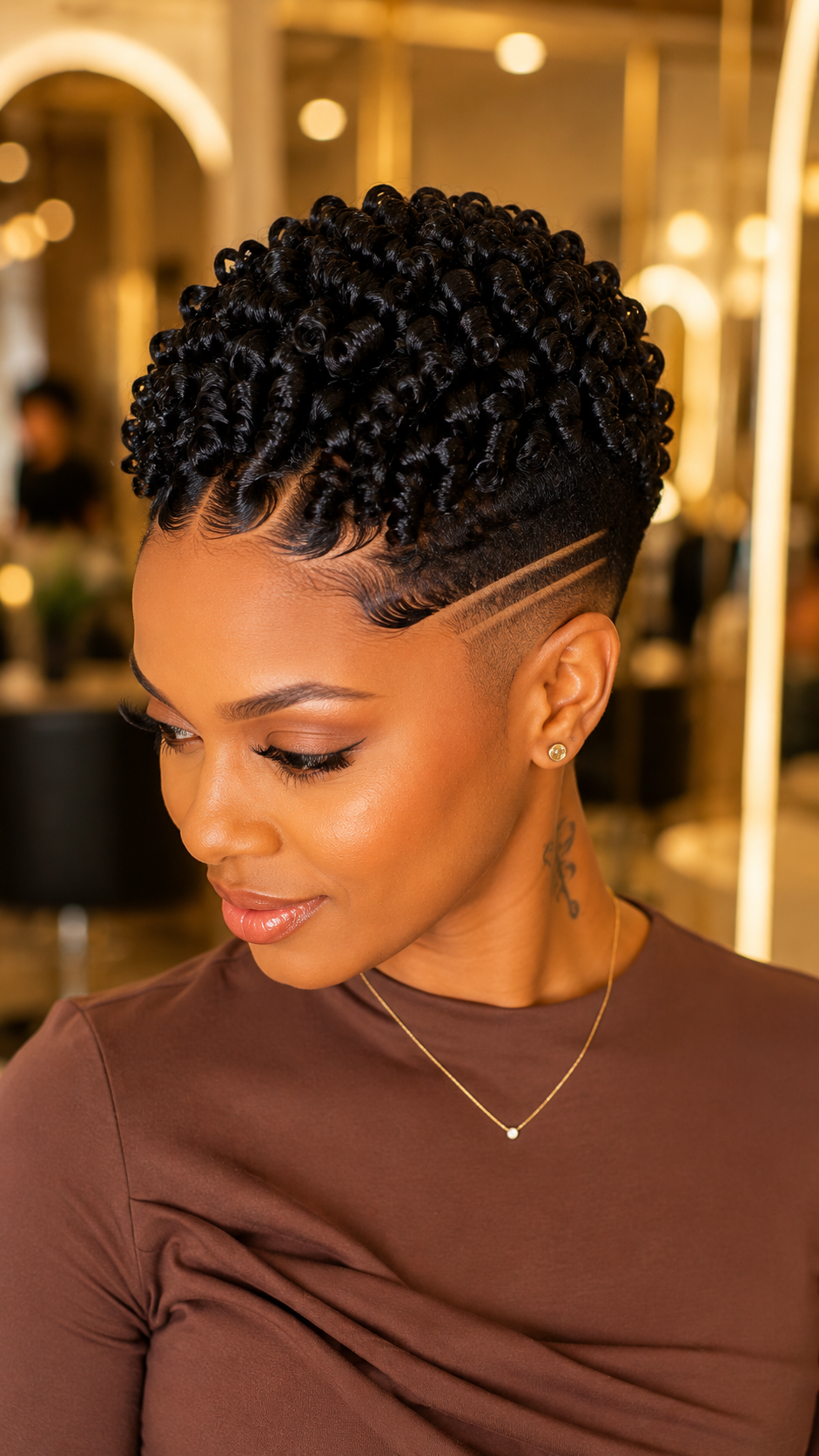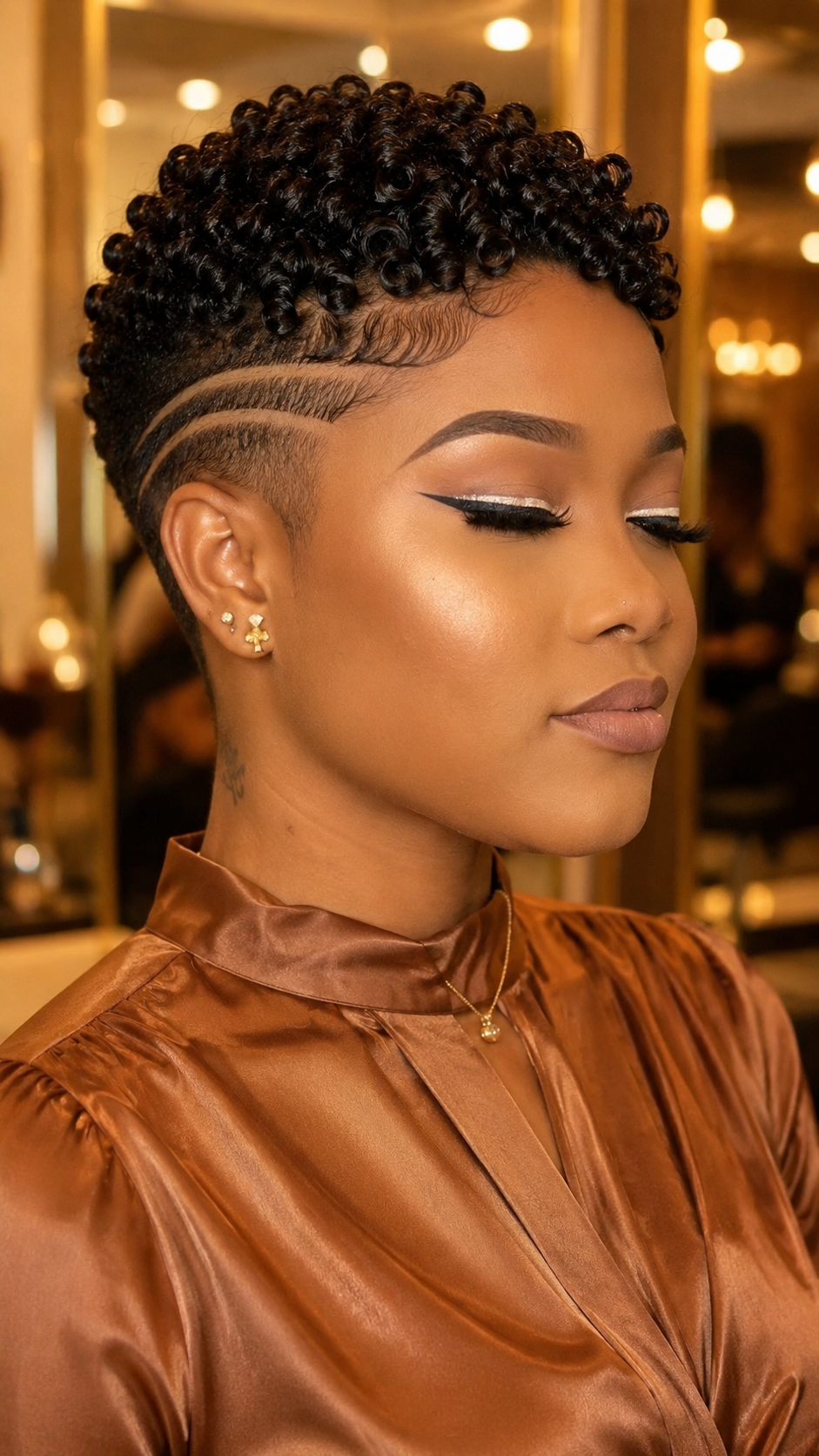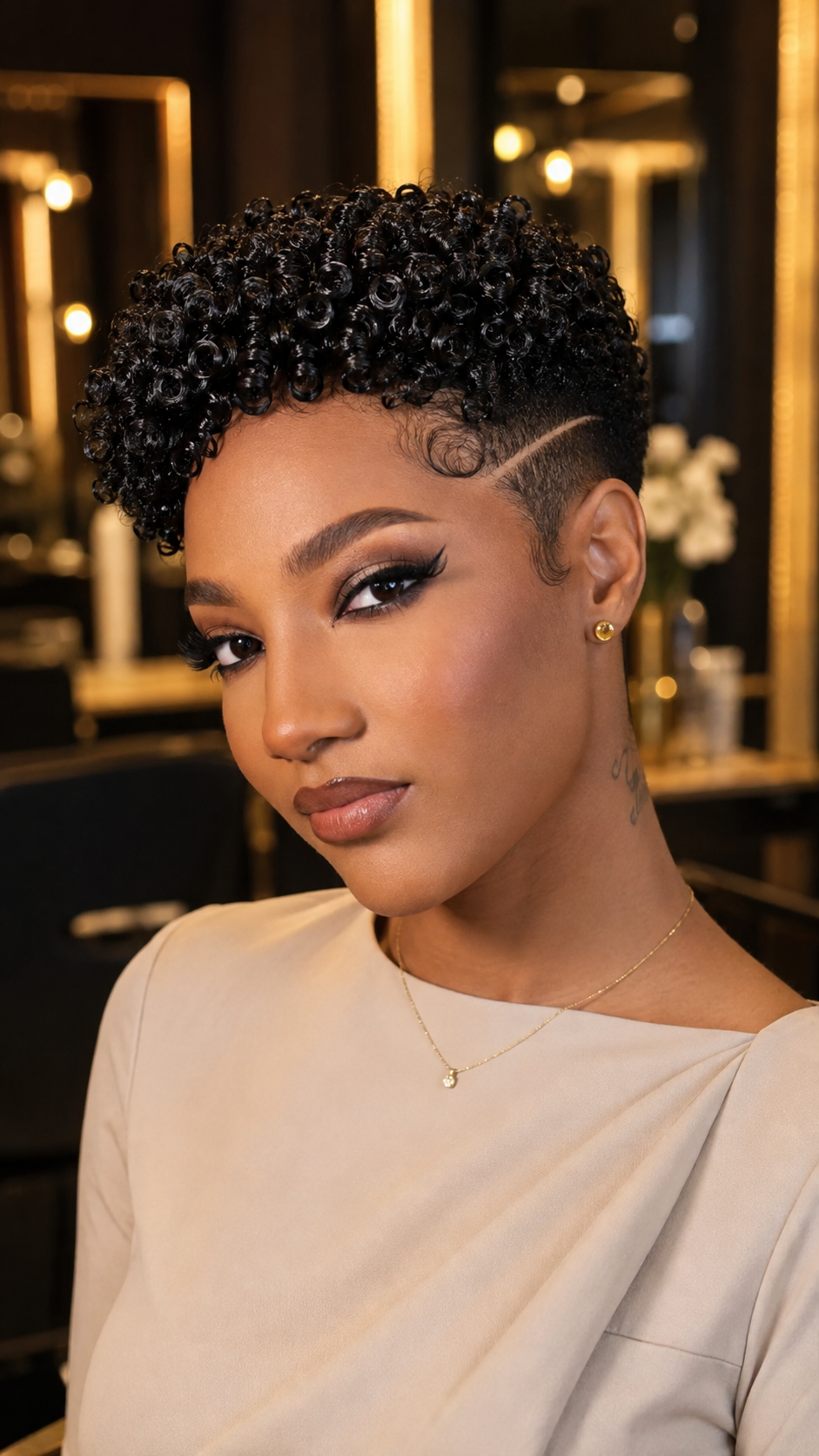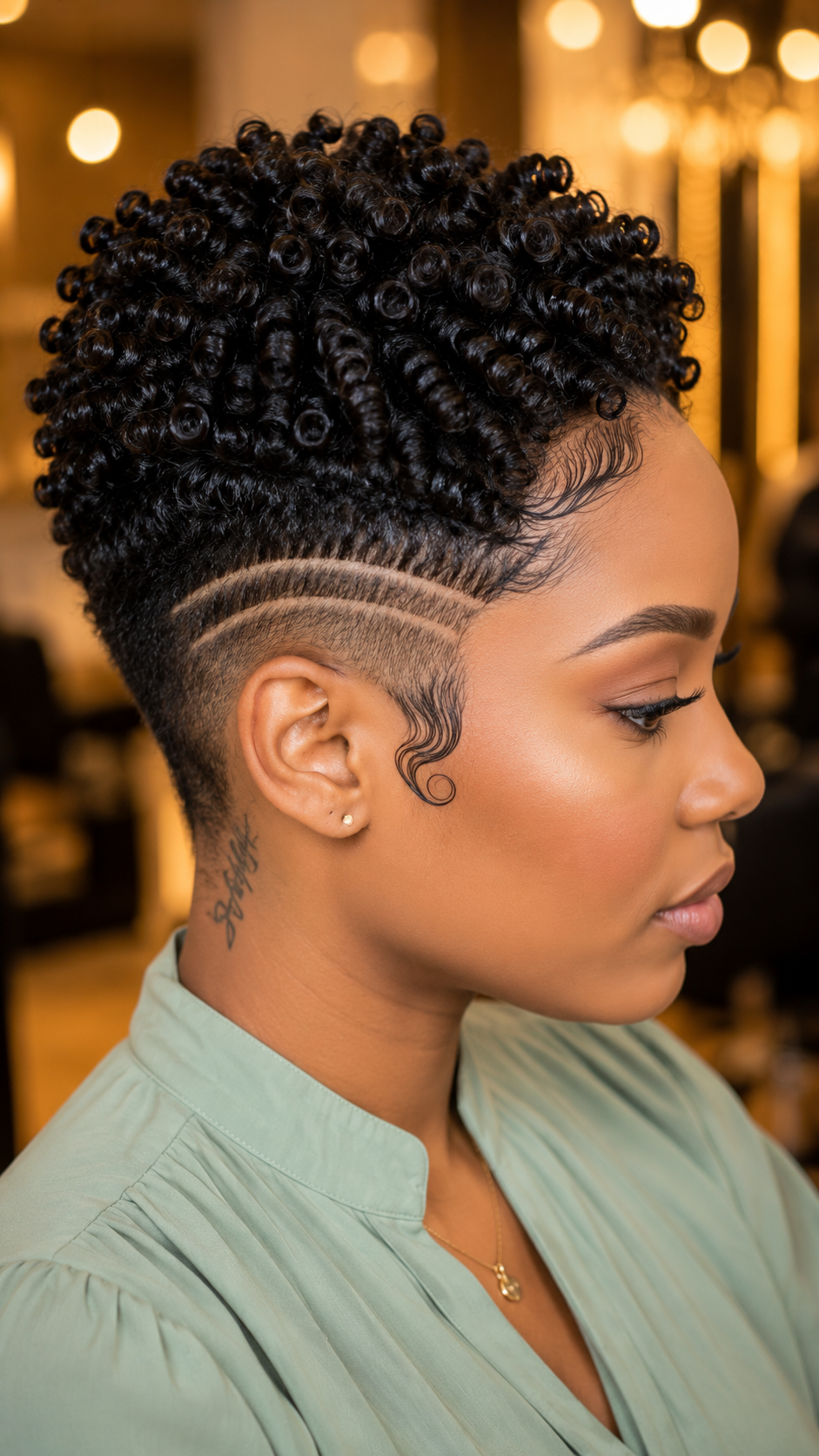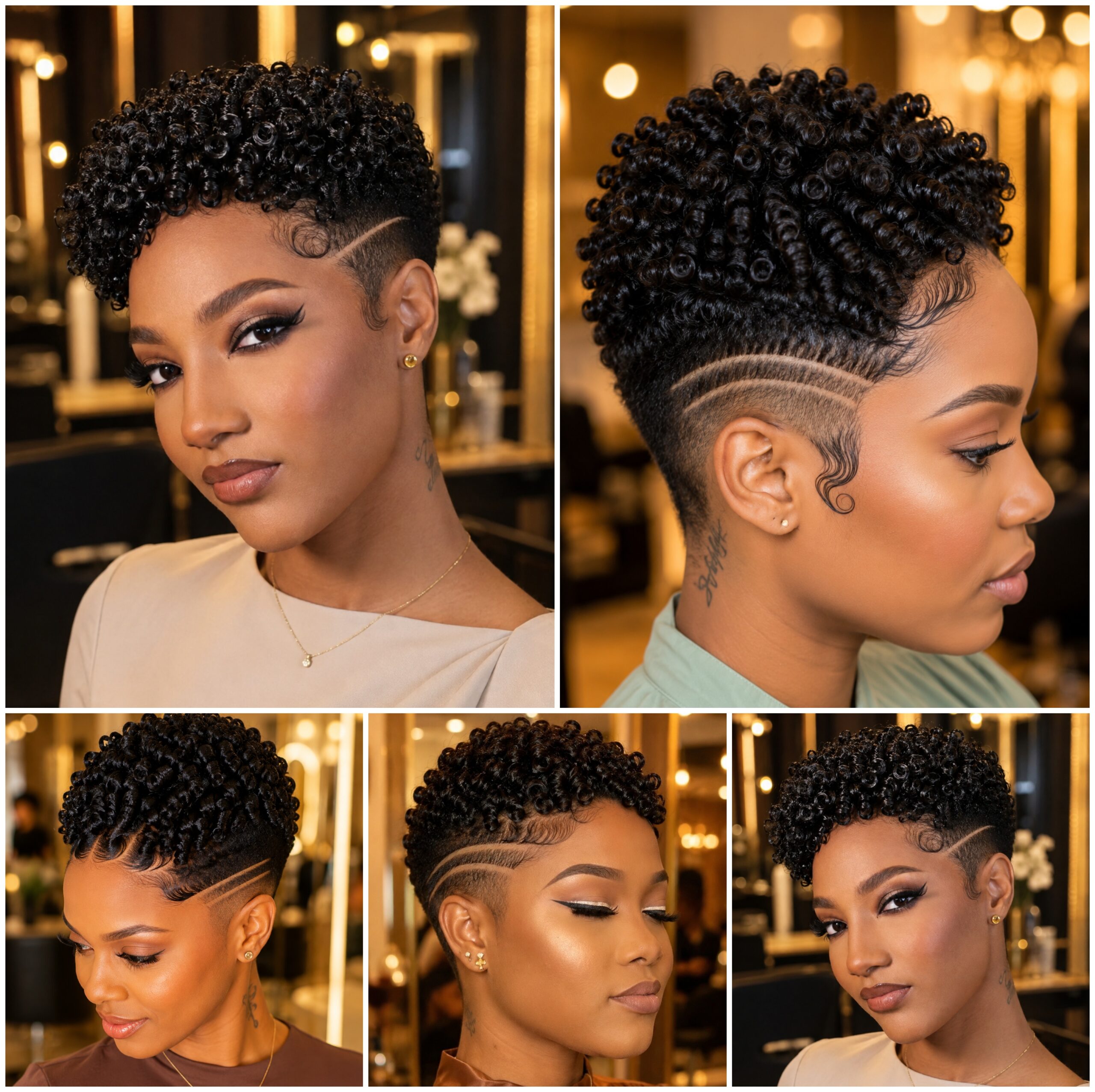
Spiral curls paired with closely tapered sides create a striking contrast between volume and precision. In this hairstyle, the upper section carries clearly separated spiral curls while the sides gradually become shorter toward the temple and ear. Two parallel side lines complete the profile, adding a deliberate detail without competing with the curl pattern above.
The appeal of this look comes from proportion. The curls need enough height and density to remain the dominant element, while the taper keeps the lower sections controlled. The double lines then create a recognizable side signature. When these three elements are balanced correctly, the hairstyle can look attractive from the front while becoming even more distinctive when viewed from the side.
This design can inspire a natural-hair appointment or a custom wig order. The construction method will differ depending on the chosen option, but the same visual priorities remain important: separated spiral curls, controlled crown volume, a gradual taper, and two accurately positioned side lines.
Building the Spiral Pattern Across the Top
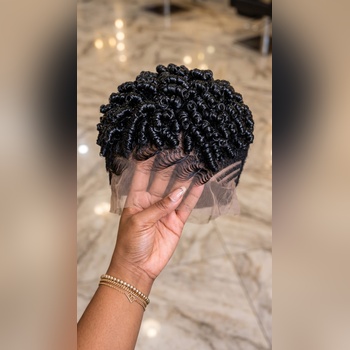
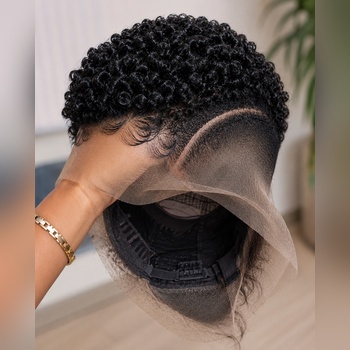
The upper section should contain recognizable spirals rather than loose waves or an undefined curly mass. Each curl needs enough separation for its circular pattern to remain visible, especially around the front and upper side areas.
Curl diameter has a major influence on the final appearance. Very large curls can make the hairstyle appear heavier and reduce the contrast with the tapered perimeter. Extremely tiny coils create a different texture altogether. Medium-small spirals generally provide enough movement while maintaining the compact proportions associated with this type of cut.
Density is equally important. Packing too much hair into the crown can hide individual curls, while insufficient density can expose gaps between sections. A stylist should distribute the hair so that the spirals overlap naturally without becoming visually crowded.
A glossy finish can further emphasize the curl pattern because light follows the curves of individual strands. The goal is visible shine with clearly separated spirals rather than an excessively coated appearance.
How the Taper Supports the Upper Volume
The taper provides the foundation for the entire silhouette. Hair becomes progressively closer toward the lower sides and back while enough length remains above to connect naturally with the spiral section.
This transition should be gradual. Removing too much hair directly beneath the curls can create a harsh shelf between the crown and the side. Leaving excessive bulk around the temples, however, reduces the visual impact of the taper and can partially hide the line design.
For natural hair, an experienced barber can establish the perimeter before the upper curls receive their final shaping. For a custom wig, density around the side sections must be planned carefully because a ready-made curly unit may contain more hair than required for a convincing tapered profile.
The objective is not simply to make the sides extremely close. The taper should guide the eye upward toward the spirals while maintaining a balanced head shape.
The Role of Two Parallel Side Lines
The double-line detail distinguishes this hairstyle from a basic tapered curly cut. Two narrow lines are positioned through the side area with enough spacing for both to remain independently visible.
Parallel placement usually creates the clearest effect. The lines can follow a slight angle that works with the natural direction of the taper rather than appearing randomly placed. Their exact length and position can be adjusted according to the wearer’s head shape and temple area.
Line thickness also matters. If the channels become too wide, they can dominate the entire side profile. Very faint lines, on the other hand, may disappear quickly as natural hair grows. A barber can choose an appropriate depth based on hair density and the desired visibility.
Keeping the design to two lines allows the spirals to remain the main attraction while still giving the side profile a recognizable identity.
Getting Clear Separation Between Individual Curls
A successful spiral crown depends on definition between neighboring sections. The curls should not merge into one continuous surface. Visible separation helps reveal the direction and shape of each spiral.
For suitable natural hair, a stylist may work in small sections and shape curls individually. Product selection depends on hair texture, porosity, and the desired level of hold. Heavy application can reduce bounce, so the amount used should support the curl rather than overwhelm it.
On a wig, the styling method depends on whether the unit uses human hair or synthetic fiber. Synthetic hair should never be exposed to heat unless the manufacturer confirms the fiber is designed for it. Human-hair units may offer greater restyling flexibility, but their exact care requirements still depend on processing and construction.
Mirror-like shine, a silky reflective surface, individually visible strands, and well-separated spirals can make the upper texture especially noticeable in photographs and videos.
Choosing Between Natural Hair and a Custom Wig
Natural hair can be an excellent option when the existing length and curl characteristics are suitable. The barber can create the taper and double lines while a stylist forms the spiral pattern above. Regular maintenance will be necessary because growth gradually changes both the taper and the visibility of the carved lines.
A custom wig offers another route for someone who wants the appearance without permanently cutting the sides of their natural hair. However, the unit needs to be designed with the correct density distribution. A conventional curly wig that is simply trimmed around the perimeter may not automatically reproduce the same silhouette.
Custom construction allows the buyer to discuss crown height, curl diameter, side density, color, and the placement of the two lines before the unit is completed.
When comparing these options, consider how frequently the hairstyle will be worn, the desired maintenance routine, available budget, and access to a stylist experienced with tapered Afro-inspired hairstyles.
Price Levels for Different Wig Constructions
The cost of recreating this hairstyle as a wig varies according to hair material, cap construction, labor, customization, density, curl preparation, and seller location. Shipping and additional fitting services can also affect the final amount.
| Wig Option | Price Position | Typical Customization |
|---|---|---|
| Premium Custom | Highest range | Detailed custom construction, tailored density, spiral formation, precision tapering and personalized finishing |
| Standard Custom | Upper-mid range | Customized crown proportions, curl selection and side shaping with moderate individual adjustments |
| Basic Human Hair | Mid to upper range | Human-hair base with simpler shaping and fewer construction modifications |
| Premium Synthetic | Lower to mid range | Higher-grade synthetic fibers with established curl structure and customized perimeter cutting |
| Basic Synthetic | Entry range | Ready-made synthetic base with limited reshaping and personalization |
Rather than selecting a unit based solely on price, buyers should compare the construction photographs and determine whether the seller has previously created tapered curly designs. A cheaper wig that requires extensive reconstruction may not provide the intended result.
Details to Confirm Before Commissioning the Wig
Reference photographs are especially valuable for this hairstyle because written descriptions can be interpreted in different ways. Send images that clearly show the curl size, crown height, taper depth, and double-line placement.
Explain that the top should contain separated spiral curls with concentrated volume while the side gradually reduces in density and length. The two side lines should remain visible and distinct rather than blending into a single wide channel.
If ordering remotely, ask for photographs of previous work from several angles. A front-facing image alone cannot demonstrate whether a stylist can accurately create the taper and line placement.
Confirm the required head measurements, hair or fiber type, color, expected completion date, deposit conditions, shipping charges, alteration policy, and return terms before payment. Customized products frequently have different return conditions from standard ready-to-ship wigs.
Finding the Right Barber or Wig Specialist
Experience with the specific construction matters more than choosing a stylist based only on general hair services. For natural hair, look for a barber whose portfolio includes tapered cuts on coily or curly textures. Precise line work should also be visible in previous examples.
If commissioning a wig, search for makers who regularly create cropped curly units rather than focusing exclusively on long wigs. Ask whether the stylist can control density around the sides and reproduce carved-line effects without compromising the overall structure.
Local searches such as “tapered curl stylist,” “Afro barber double line design,” “custom curly pixie wig maker,” or “spiral curl wig stylist” can help narrow the options. Adding a city or neighborhood name will make the search more relevant to local services.
Send the reference photograph before making an appointment. This gives the professional an opportunity to confirm whether the entire hairstyle can be completed in one location or whether separate barbering and curl-styling appointments would be more appropriate.
Shopping Online for a Similar Spiral Wig
Online listings should be examined beyond the main product photograph. Look for side and rear images showing how the hair behaves around the perimeter. A unit with excellent curls but excessive side density may require substantial customization to achieve the intended taper.
Pay attention to the listed curl pattern and overall length, but do not rely entirely on product names. Different sellers can use the same curl terminology for noticeably different textures.
Before purchasing, ask whether the unit can be customized to create a fuller spiral crown with closely shaped sides. If the double-line detail is important, confirm whether the seller can reproduce it or whether it should be added later by a local wig stylist.
A sensible ordering process is to choose the base unit, confirm the fiber or hair type, select the color, provide measurements if requested, send the reference image, specify crown volume and side density, explain the double-line placement, and obtain written confirmation of the customization.
Keeping the Spirals Looking Defined
Repeated brushing can disturb the individual spiral pattern, so maintenance should focus on preserving curl formation. The correct method depends on the material and how the hairstyle was originally created.
Natural curls may need moisture and occasional reshaping according to the stylist’s recommendations. Individual sections that lose their spiral can often be addressed without completely rebuilding the entire crown.
For wigs, storage is particularly important. A wig stand can help maintain the crown silhouette and reduce unnecessary compression. The curls should not be crushed beneath clothing, packaging, or other objects for extended periods.
Products designed for natural hair should not automatically be used on every wig. Similarly, heat tools should only be applied when appropriate for the specific hair or fiber. Following the maker’s instructions can help protect both curl formation and longevity.
Maintaining the Double Lines as Hair Grows
On natural hair, the side lines gradually become less distinct as new growth appears. The exact maintenance interval varies because hair growth rate and preferred line sharpness differ from person to person.
A barber can refresh the existing channels rather than repeatedly redesigning the entire side. Keeping the original placement consistent helps maintain the relationship between the two lines and the upper spiral section.
The taper may also need attention during these appointments. Refreshing only the lines while allowing excessive growth around them can reduce their visibility.
For wig versions, maintenance is different because there is no natural regrowth within the unit. Instead, attention should be given to maintaining the shaped side density and avoiding damage to the areas used to create the line effect.
Adapting the Proportions to Different Preferences
The basic idea can be personalized without losing its identity. Some wearers may prefer a compact crown that remains close to the head, while others may choose slightly taller spirals for additional volume.
The side lines can also be positioned at different angles. A subtle upward direction can visually connect them with the crown, while a more horizontal placement creates a stronger separation between the upper and lower sections.
Color offers another opportunity for variation. Natural black and deep brown shades emphasize the silhouette and reflective curl pattern, while warmer brown, copper, honey, or burgundy tones can make individual spirals more noticeable under light.
When changing color, consider how the shade interacts with the tapered area. Strong color differences between the crown and sides can substantially alter the appearance, so reference images are helpful when planning multi-tone versions.
Preparing a Useful Reference Set for Your Appointment
A clear reference set should include more than one photograph. Save a front view to demonstrate the crown silhouette, a side view showing both lines, and a rear or three-quarter angle that reveals how the taper connects around the head.
Point out the elements that should remain consistent: spiral curl size, crown density, gradual side taper, spacing between the two lines, and the overall height of the hairstyle.
If ordering a wig, request progress photographs when the maker offers this service. Seeing the unit before final finishing may provide an opportunity to confirm whether the crown and sides have the expected proportions.
The strongest results come from treating the hairstyle as a complete design rather than concentrating on the curls alone. The spiral crown creates movement, the taper controls the silhouette, and the two side lines supply the finishing detail. Keeping all three in proportion is what gives this hairstyle its distinctive side profile.
Search Terms
Spiral Curl Taper · Double Side Hair Lines · Tapered Spiral Curls · Double Line Side Design · Glossy Spiral Crown · Curly Taper With Lines · Spiral Curl Side Taper · Parallel Side Hair Lines