
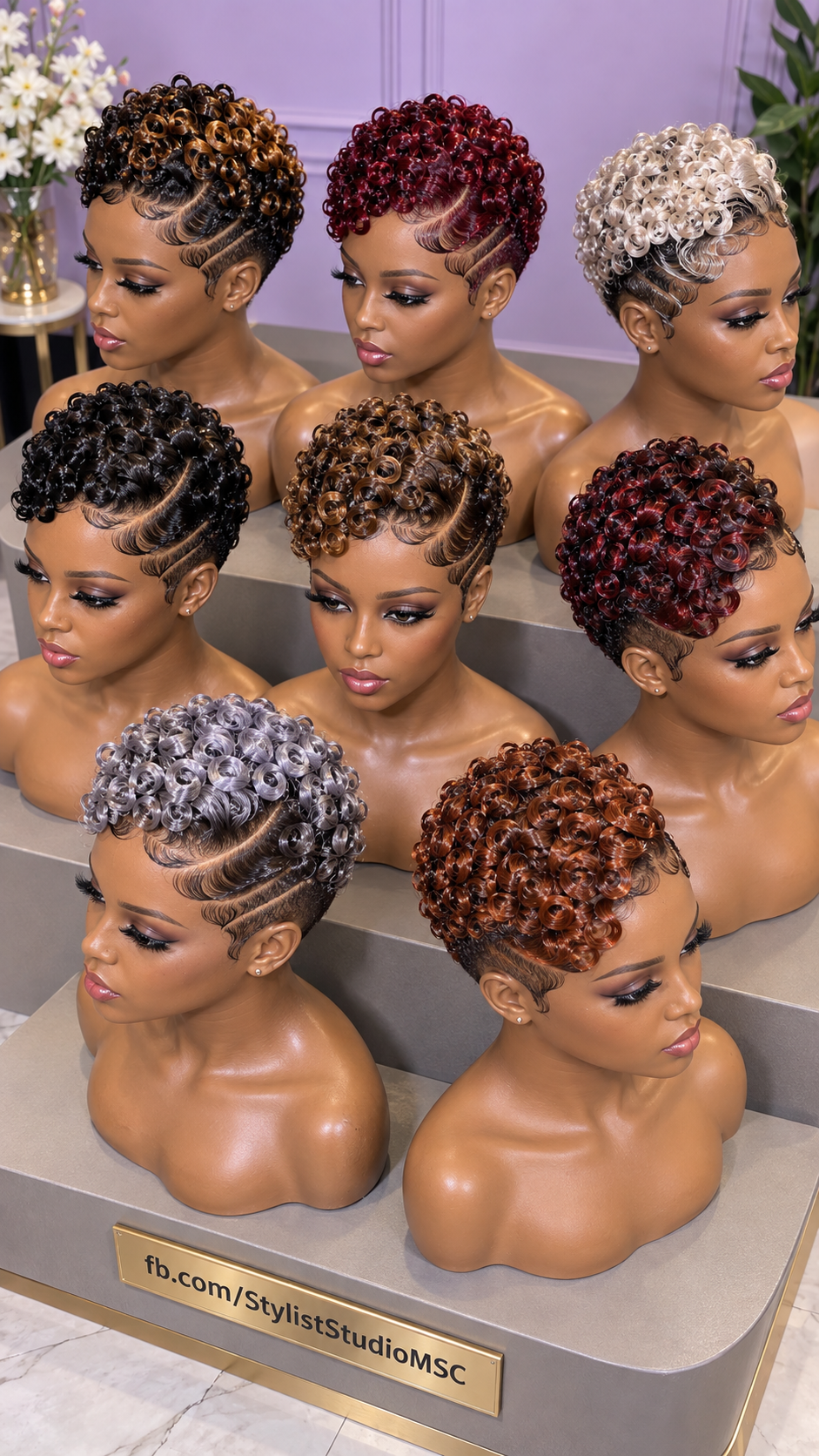
This collection centers on a distinctive salon-finished wig concept that combines tightly arranged loop curls with sweeping side-part sections, low tapered areas and precision line detailing around the temples. The eight displayed variations show how one recognizable construction can move through several color families without losing its signature shape. Deep natural black, rich burgundy, warm chestnut brown, copper, champagne blonde and smoky silver tones all appear across the collection, giving buyers several directions while preserving the same compact curled silhouette.
The most noticeable element is the relationship between the crown and the side section. Small circular curls are packed closely across the upper area, creating controlled volume and a glossy dimensional surface. A diagonal part separates this curled crown from the sculpted side, where longer strands are pressed into sweeping finger-wave-inspired curves. Some versions also include parallel carved lines beneath this section, adding another layer of precision to the design.
This is not simply a basic curly wig with a different color applied to each unit. The appeal comes from the combination of curl placement, parting direction, side contour and carefully positioned hairline details. Anyone ordering a similar wig should treat those elements as separate customization decisions instead of assuming that requesting a curly pixie alone will produce the same result.
The Diagonal Part Creates the Main Visual Direction
A clearly visible diagonal part runs from the front toward the side of many wigs in the display. This part does more than separate sections of hair. It creates the visual path that organizes the entire hairstyle. On one side, compact loop curls build height and density. On the opposite side, the hair lies closer to the head and follows a sweeping curved direction.
That contrast helps the hairstyle remain detailed without appearing overcrowded. If every section carried the same curl density, the carved side work could disappear beneath the volume. By separating the crown and temple areas, the design allows each element to remain visible.
When placing a custom order, buyers should show the stylist exactly where they want the diagonal separation to begin. The angle can affect how much of the curled crown appears from the front and how much side detailing remains visible. A small change in placement can noticeably alter the finished silhouette.
Compact Loop Curls Build a Polished Crown
The crown uses numerous small curls shaped into rounded loops. They are packed closely but remain individually recognizable, producing a rich surface rather than one solid mass of hair. Light reflects around each circular section, making the curl arrangement especially noticeable in brown, burgundy, silver and blonde variations.
The loops also appear to follow the contour of the head. The upper center carries the greatest concentration, while the surrounding sections gradually transition toward the hairline and sides. This creates a rounded profile that looks intentional from several viewing angles.
For customers requesting this effect, curl diameter should be discussed during the consultation. Larger curls would produce a softer and more open result, while very tiny curls could create a denser appearance. The reference collection sits between those extremes, using compact sculpted rings that remain clearly visible.
Sweeping Temple Sections Make the Style Recognizable
One of the strongest details in this collection appears beside the diagonal part. Instead of immediately transitioning from curls into a plain tapered side, the hair forms broad curved sections that sweep toward the temple. These strands create a finger-wave-inspired effect and visually connect the crown to the hairline.
The placement varies slightly between the displayed wigs, which demonstrates how this detail can be personalized. Some versions use a larger sweeping curve, while others emphasize several smaller lines around the temple. The important characteristic is that these strands remain controlled and close to the surface rather than turning into loose curls.
If this is the feature that attracts you to the hairstyle, mention it specifically when ordering. Sending a close-up reference of the temple area is useful because a general front photograph may not show the direction of every curved section clearly.
Carved Side Lines Give the Wig a Barber-Inspired Finish
Several units incorporate two or three narrow parallel lines through the tapered side. These details introduce a barber-inspired element that contrasts with the polished curls above. The lines generally follow the direction of the diagonal part, helping the upper and lower sections feel connected.
The spacing matters. Lines placed too far apart can appear unrelated, while lines positioned too closely may lose definition from a normal viewing distance. In this collection, the spacing is narrow and consistent, creating a coordinated pattern beneath the larger sweeping section.
Before purchasing, confirm whether the design is permanently constructed into the wig or requires additional customization by a stylist. The image shows the finished appearance but does not establish the production method. Buyers should ask the seller for side photographs of the exact unit they are considering.
Burgundy Brings Depth to the Circular Curl Pattern
The burgundy variations have a deep wine-red character that works particularly well with the compact curl construction. Darker areas remain visible between the rings, while brighter red reflections appear where the curved strands catch the light. This gives the crown considerable dimension without requiring multiple dramatically different colors.
Burgundy is also useful for customers who want a noticeable change from natural dark hair while still preferring a rich, deeper palette. The color can look more red, brown or purple depending on lighting, so buyers should request photographs taken under neutral lighting before approving a custom color.
If ordering human hair, discuss how the burgundy shade will be achieved and how frequently it may need refreshing. Colored human-hair units can gradually lose intensity with washing and heat exposure. The wig maker should provide maintenance instructions appropriate for the specific hair used.
Chestnut and Copper Shades Reveal More Curl Separation
The warm brown units demonstrate another advantage of this sculpted curl structure. Chestnut, cinnamon and copper reflections naturally emphasize the edges of individual loops, making the crown appear highly dimensional. Darker areas between the curls prevent the result from becoming visually flat.
A warm brown variation can also work well with darker side sections. The deeper foundation visually anchors the hairstyle while allowing the upper curls to receive most of the color attention. Customers who want this effect should specify whether they prefer an all-over brown unit or a darker base with brighter upper sections.
Ask the colorist to provide a sample or reference before production whenever possible. Terms such as chestnut, caramel and copper can describe significantly different formulas between salons, so a visual reference is more reliable than a color name alone.
Smoky Silver Creates a High-Contrast Alternative
The silver variation near the front of the display offers one of the strongest contrasts in the collection. Pale smoky curls sit above darker side areas, allowing both the circular crown and the diagonal part to become highly visible. The tone appears closer to a cool silver or muted platinum than a warm yellow blonde.
This type of color requires careful communication because silver can range from bright metallic white to deeper graphite. Customers should provide the reference photograph and ask the colorist to match the tonal direction rather than simply requesting “silver hair.”
For human-hair units, ask how the lightening process affects the hair and whether professional maintenance is recommended. For synthetic units, confirm the exact factory shade before purchasing because later color changes may be limited or unsuitable for the fiber.
Champagne Blonde Adds a Softer Light Option
The pale blonde variation provides another light-colored choice but creates a warmer impression than the smoky silver unit. The compact curls reflect more light, making the crown appear especially detailed. Darker elements around the lower areas help maintain contrast and keep the overall shape easy to read.
Buyers interested in this shade should compare creamy blonde, champagne and pale beige samples. Photographs can shift warmer or cooler depending on salon lighting, so daylight images are useful before confirming the final color.
A darker root or tapered foundation can also be requested if the customer wants more depth. This is particularly helpful when the goal is to keep the sculpted side details visible rather than allowing the entire hairstyle to become one uninterrupted light shade.
Natural Dark Hair Keeps the Focus on Shape and Shine
The deepest dark variation demonstrates the structure without relying on strong color contrast. Instead, the appearance depends on shine, curl separation, the diagonal part and the sculpted side work. This option is particularly useful for customers who prefer a natural dark palette while still wanting an elaborate pixie design.
Gloss becomes especially important with darker hair because reflected light is what separates one loop from another visually. A polished finish can make each curl readable, whereas excessive product buildup may cause the crown to appear heavy.
Maintenance should therefore focus on preserving the curl structure and controlled sheen rather than constantly applying additional styling products. Ask the wig maker which products are suitable for the actual fiber type.
How To Order the Correct Version From a Wig Stylist
Start by choosing the exact mannequin or color combination from the reference image that most closely matches your goal. Do not simply send the complete collection and ask for the same hairstyle. Mark the specific color, side design and curl arrangement you want so there is less room for interpretation.
Next, discuss the crown. Explain that you want compact circular loop curls with controlled height rather than loose spirals. Then identify the diagonal part and show the stylist where it should travel. If the sweeping temple section is important, send a close crop showing its direction.
After that, specify the side pattern. State whether you want two lines, three lines or another variation. Ask whether the pattern will be incorporated during construction or customized after the wig is fitted.
Finally, provide head measurements when custom sizing is available. Confirm production time, payment terms, shipping cost and the seller’s adjustment policy before paying. If ordering online, request finished photographs from the front, both sides, crown and back before dispatch.
Interior Construction Should Be Confirmed Before Purchase
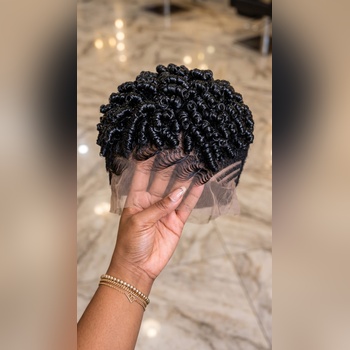
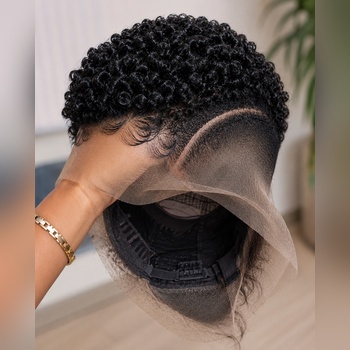
The display focuses on the exterior hairstyles, so the exact internal construction cannot be confirmed from this photograph. Buyers should not assume a particular lace type, cap design or attachment method solely from the finished appearance.
Ask the seller for photographs of the inside of the wig. Check whether adjustable straps, combs or other securing elements are included. Discuss cap circumference and whether the unit can be altered if the initial fit is too loose or tight.
This step is particularly important for sculpted pixie designs because correct placement affects the alignment of the side details. A beautiful carved pattern can sit in the wrong position if the cap does not fit correctly.
Human Hair or Synthetic Fiber: Which Direction Makes Sense?
The photograph itself does not verify whether these displayed units are human hair, synthetic fiber or a blend. That information should always come directly from the seller. Each material category can work for this type of hairstyle, but maintenance and customization possibilities differ.
Human hair can be appealing for customers who want professional recoloring or future restyling. However, elaborate loop curls may need to be reconstructed after washing. Ask whether the seller provides a resetting service or whether a local wig stylist can reproduce the original curl arrangement.
Synthetic fiber can be convenient when the style is manufactured to retain its shape. Higher-quality fibers may preserve the curls with less manipulation, but heat tolerance varies widely. Never apply hot tools without confirming the manufacturer’s recommended temperature.
Premium Custom to Basic Synthetic Price Guide
The following ranges are general shopping estimates rather than prices for the exact wigs displayed. Custom coloring, detailed side work, cap construction, hair quality and stylist labor can all change the final quote.
| Wig Category | Estimated Range | What Buyers May Expect |
|---|---|---|
| Premium Custom | $300–$650+ | Higher-grade human hair, custom color work, sculpted crown, precision side detailing and personalized fitting |
| Standard Custom | $180–$350 | Custom curl arrangement, selected color and salon-shaped side sections |
| Basic Human Hair | $120–$250 | Human-hair base requiring additional professional customization |
| Premium Synthetic | $70–$160 | Higher-quality synthetic fiber with pre-shaped curl structure and factory color choices |
| Basic Synthetic | $35–$90 | Budget-oriented option with fewer personalized construction and color choices |
Book a Fitting Before Making Major Adjustments
A professional fitting is worthwhile for a wig with this much side detailing. The stylist can check where the diagonal part sits, whether the temple section aligns naturally and whether the tapered area follows the head correctly. Any adjustment should preserve the original curl pattern rather than changing the character of the crown.
Bring the reference photograph to the appointment. If the unit needs trimming or reshaping, show the stylist which details must remain untouched. This is especially important around the carved lines and sweeping temple strands.
Customers who plan to wear the wig frequently may also want to schedule maintenance appointments. A stylist familiar with sculpted pixie wigs can refresh individual loops and restore the intended silhouette without rebuilding the entire hairstyle unnecessarily.
Preserving the Circular Curls Between Wears
Store the wig on an appropriately sized wig stand or mannequin head so the crown is not compressed. Avoid placing other items on top of it. The compact loops rely on their rounded shape, and prolonged pressure can flatten the highest sections.
Do not brush through the crown as if it were a loose curly wig. Individual loops should remain separated and sculpted. If a curl moves out of position, follow the wig maker’s recommended method for reshaping it or take the unit to a professional.
Use only products suitable for the confirmed fiber type. Heavy oils and excessive styling product can collect between the loops and reduce definition. Mirror-like glossy hair already creates strong visual depth in this design, so careful maintenance is more useful than repeatedly coating the curls with additional product.
A Coordinated Color Collection for Wig Businesses
For wig sellers, this display offers a strong collection strategy. A single recognizable silhouette can be offered in several carefully selected shades rather than producing unrelated hairstyles. Customers can compare natural dark, burgundy, warm brown, copper, blonde and silver options while understanding that the fundamental construction remains consistent.
This approach can also simplify custom ordering. A seller can establish the loop-curl crown and diagonal side design as the base model, then allow customers to select color, side-line configuration and cap options. That creates variety without losing brand recognition.
The result is a visually distinctive pixie collection built around precise details rather than length. Compact curls provide volume, the diagonal part organizes the shape, sweeping temple strands create movement and the carved lines add a customized finish. Together, those elements make the hairstyle recognizable from both front and side angles.
Search Terms
Side Part Loop Curl Pixie Wig · Sculpted Temple Curl Wig · Burgundy Curly Pixie Wig · Champagne Blonde Loop Curl Wig · Smoky Silver Pixie Wig · Copper Brown Sculpted Curl Wig · Triple Side Line Pixie Wig · Natural Black Loop Curl Wig