
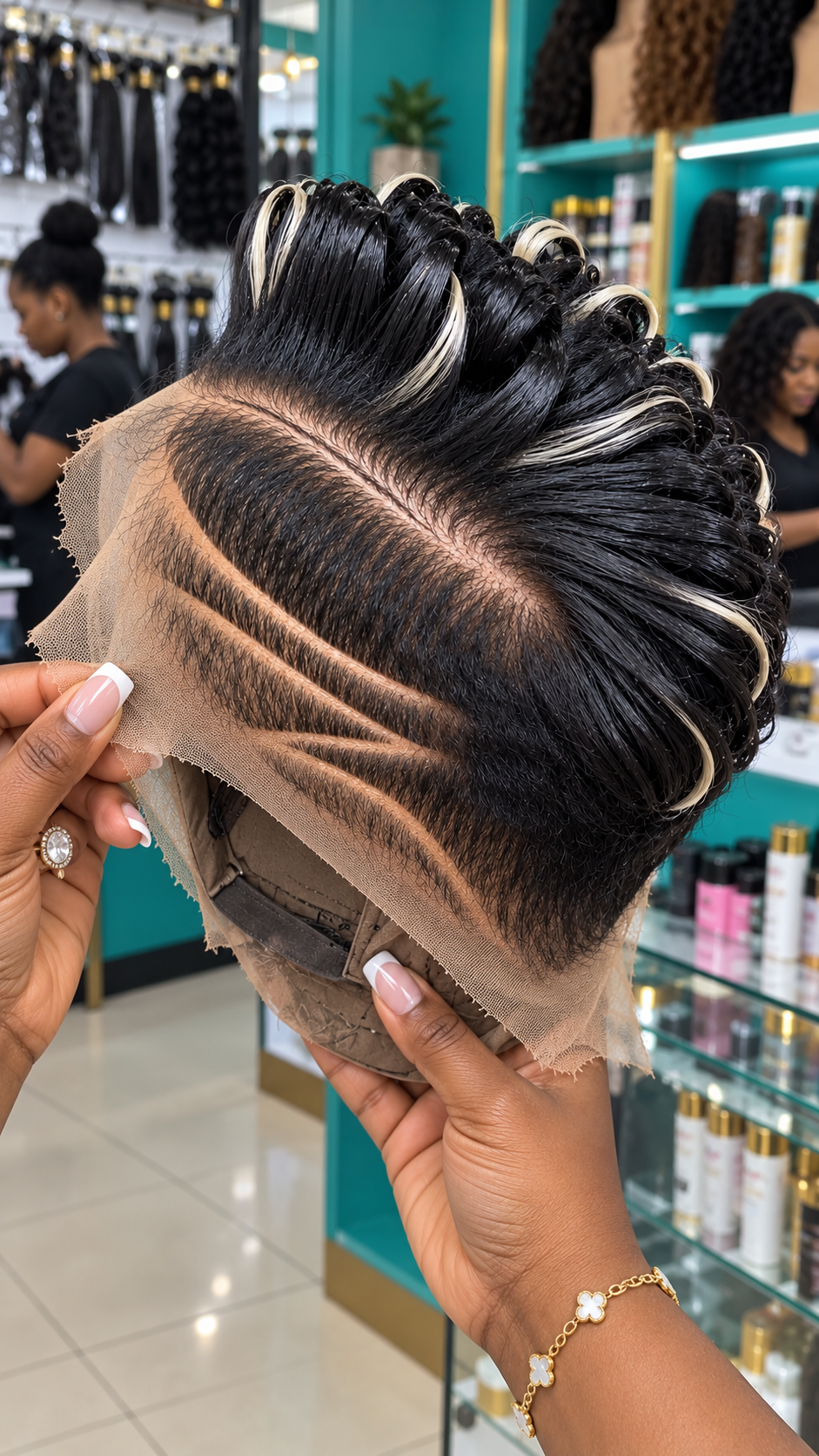
This black and pearl-blonde sculpted pixie wig stands out through contrast rather than an all-over light color. The foundation remains deep black, while narrow ivory and pale blonde ribbons appear selectively through the raised upper loops. A long diagonal part separates the elevated crown from a close dark side, and two angled line details create a sharp accent below it. The photograph also exposes the lace perimeter and part of the internal cap, making it useful for discussing both appearance and construction with a wig maker.
The hairstyle depends on controlled direction. Broad sections rise from the dark root area, curve backward and form a connected sequence of loops across the crown. The pale strands follow those curves instead of appearing as randomly scattered highlights. This placement allows the lighter color to emphasize movement while black remains the dominant shade.
For a custom order, avoid describing this simply as a black-and-blonde pixie. The stylist needs information about the width of the loops, highlight placement, dark-root coverage, diagonal part, close side and the exact two-line design. Breaking the reference into these components gives the maker a much clearer target.
Pearl Blonde Ribbons Work Best As Selective Accents
The light color visible in the photograph is concentrated in narrow sections rather than distributed evenly across every strand. Depending on the salon lighting, these accents range from creamy ivory to pale pearl blonde. They are particularly noticeable on the upper curves, where reflected light increases their brightness.
Black remains visible between the blonde ribbons and throughout most of the roots. That spacing is important. If too many pale strands are added, the wig can begin to look predominantly blonde instead of black with strategic contrast. If too few are used, the sweeping loop pattern will lose some of the visual emphasis created by the reference.
When choosing hair, ask the supplier to show the actual pale shade before production. Commercial descriptions such as platinum, ivory, pearl and light blonde can refer to noticeably different tones. A neutral or slightly creamy pale blonde is visually closer to the photographed accents than a strongly yellow golden blonde.
The Highlight Placement Should Follow Each Loop
The blonde strands do more than add color. Their position helps reveal the architecture of the crown. Several light ribbons travel through individual dark sections, curve over the top of a loop and continue backward with the surrounding black hair.
This means the color should be planned together with the styling direction. Randomly mixing blonde fibers throughout the crown could create a speckled effect, while thick blonde panels would produce much larger blocks of color. The reference uses narrower accents that remain visually connected to the sweeping movement.
If the wig is being custom colored, show the stylist close views of the crown and request separated pearl-blonde ribbons through selected loops. Ask for the black base to remain clearly visible around every highlighted area.
The Raised Crown Progresses From Upright To Swept Back
The front portion of the crown has greater vertical lift. Broad black sections rise sharply before folding backward, creating height near the front without forming a conventional fringe. Farther toward the rear, the loops gradually lower and follow the rounded contour of the wig.
This progression is one reason the hairstyle appears balanced. The stylist is not repeating an identical curl at the same angle across the entire top. Each section changes slightly as it travels toward the back.
Ask for broad sculpted loops rather than small spiral curls. The strands within each loop should remain relatively aligned so that the surface appears polished and the pale accents can be seen clearly. Excessive separation or fluffing would change the structured character of the crown.
A Strong Diagonal Part Separates Height From The Close Side
The exposed diagonal part is one of the clearest structural features in the photograph. It travels from the front toward the rear and creates a clean boundary between two very different areas of the wig.
Above the part, the hair immediately gains height and moves into the sculpted crown. Below it, the strands remain dark and much closer to the cap. The contrast in both volume and direction makes the part appear especially prominent.
Part direction should be agreed before styling begins. Reversing the part means reversing the flow of the loops and repositioning the side design. If you have a preferred side based on how you normally wear your hair, tell the wig maker before the unit is completed.
The Two-Line Side Detail Uses An Angled Meeting Point
Beneath the primary part, two narrow exposed lines create a graphic side accent. They are not simply two perfectly parallel stripes running from front to back. Their placement changes toward one end, creating an angled relationship that gives the design more character.
This detail is easy to lose in a generic order. A request for “side lines” could be interpreted in many ways. Send a cropped photograph of this area and specify that you want two lines with the same directional relationship visible in the reference.
The surrounding side should remain predominantly black. Keeping this area dark provides the contrast necessary for the exposed lines to remain readable and prevents the blonde accents above from competing with the graphic work below.
The Close Dark Panel Makes The Upper Color Look Brighter
The lower side carries very little visual bulk compared with the crown. It remains compact and dark, creating a foundation beneath the black-and-pearl upper section. This difference in volume makes the loops appear more elevated than they would on a uniformly full wig.
It also gives the pale highlights more impact. Because the eye moves from a nearly all-black side into a crown containing intermittent ivory ribbons, the color transition feels intentional rather than continuous.
For a close recreation, avoid requesting additional blonde panels through the lower side. Keeping the light color concentrated above the diagonal part preserves the contrast shown in the reference.
The Visible Lace Needs A Separate Product Specification
Lace clearly extends beyond the styled perimeter. The photograph therefore supports describing this as a lace-based construction, but it does not establish the exact commercial lace grade. Terms such as HD lace should only be used if the seller confirms that specification.
Before ordering, ask what lace material and shades are available, how much lace is included around the unit and whether it will arrive uncut. The appropriate shade should be selected for the intended wearer rather than chosen solely because it resembles the lace shown in the photograph.
If professional installation is planned, show the unit specifications to the installer before trimming the lace. They can advise how the perimeter should be prepared for the chosen fitting method.
Inspect The Cap Before Committing To A Custom Purchase
The photograph exposes part of a brown-toned internal cap and securing components beneath the lace. Because the complete interior is not visible, buyers should ask for additional photographs rather than assuming exactly how many combs, straps or other attachments are included.
Request front, rear and side views of the inside. Ask whether the cap has adjustable features and whether any internal components can be changed during a custom order. Buyers who prefer not to use combs should mention this before production.
A secure cap matters with this hairstyle because the diagonal part and side lines are position-sensitive. Excessive movement can change where those details sit once the wig is worn.
Measurements Help Preserve The Intended Placement
Use the wig maker’s own measurement instructions instead of relying on a generic size chart from another company. Common measurements can include circumference, front to nape, ear to ear and temple to temple, but construction methods vary.
For a higher-value custom order, consider having an experienced wig stylist assist with measuring. Accurate sizing can help the close side sit correctly while keeping the sculpted crown centered in the intended position.
Before production begins, ask the seller to repeat the recorded cap size and measurements back to you. This simple confirmation can prevent avoidable misunderstandings.
Specifications Worth Sending With The Reference Photo
- Deep black foundation with selective pearl-blonde or ivory accent ribbons.
- Dark roots remaining visible around the part and lower side.
- Broad sculpted loops with stronger lift toward the front.
- Backward movement that gradually lowers toward the rear.
- Long diagonal part separating the crown from the close side.
- Two angled side lines positioned beneath the primary part.
- Lace construction with the actual lace type confirmed by the seller.
- Cap sizing based on the maker’s required measurements.
- Internal securing components confirmed before production.
- Finished photographs required before shipment.
Premium Custom / Standard Custom / Basic Human Hair / Premium Synthetic / Basic Synthetic
No verified retail price or material specification is visible in the photograph. The ranges below are general budgeting examples rather than a price quotation for this exact wig. Custom coloring, cap construction, lace choice, density, labor and the complexity of the sculpted crown can all change the final amount.
| Category | General Planning Range | What May Influence The Price |
|---|---|---|
| Premium Custom | $350–$750+ | Individual cap sizing, precision color placement, detailed loop setting, lace customization and side-line work |
| Standard Custom | $220–$450 | Selected black-and-pearl palette, custom part direction, sculpted crown and side detailing |
| Basic Human Hair | $140–$300 | Hair grade, density, cap construction and additional professional styling |
| Premium Synthetic | $80–$180 | Higher-grade fiber, multi-tone color placement and stronger preset shape retention |
| Basic Synthetic | $45–$100 | Stock sizing, simpler color combinations and fewer customization choices |
Approve The Black-To-Blonde Ratio Before Final Setting
One of the easiest ways for this design to go wrong is by using too much light hair. Ask the stylist to photograph the prepared color before the crown is completely set. Check whether black still dominates and whether the pale sections appear as deliberate ribbons.
Also inspect the undertone of the blonde. If it looks strongly yellow or golden, it will create a warmer result than the pale pearl accents visible here. If it becomes extremely white, the contrast may look sharper than the reference.
Color approval is especially useful before intensive styling because changing strand placement after the crown has been sculpted can require portions of the design to be rebuilt.
Buying A Base Wig First Can Work With The Right Stylist
Another route is purchasing a suitable black base unit and booking a local wig stylist for the color placement and sculpting. Show the reference before buying the base so the stylist can confirm whether the length, density and construction are suitable.
The upper hair must be long enough to create the broad loops, while the side needs to support a much closer finish. The stylist also needs access to selected strands for the pearl-blonde accents. A base with unsuitable density or an incompatible construction can make the recreation more difficult.
Ask for separate quotations for coloring, cutting, loop setting and side detailing. Comparing the complete styling cost with a finished custom unit will give you a more realistic purchasing decision.
Request Multiple Angles Before Shipping
A single front photograph cannot verify this hairstyle properly. Ask for an elevated view of the crown, a clear side photograph of the diagonal part and angled lines, and a rear view showing how the loops finish.
Check whether the pale ribbons continue naturally through selected sections rather than suddenly stopping. Confirm that the front loops retain their height and that the rear becomes progressively flatter.
Also request a photograph of the complete interior if cap construction matters to you. Save all approved photographs with the order details in case the wig later needs maintenance or replication.
Protect The Pearl Ribbons When Storing The Wig
The contrast strands make any disruption in the loop pattern particularly noticeable. Store the wig where the crown will not be crushed or pressed against another unit. A suitable mannequin head or wig stand provides space for the sculpted sections to retain their direction.
Avoid brushing through the loops as if they were loose curls. Doing so can separate the grouped strands and scatter the pale accents. If individual sections loosen, use the original photographs as a guide when having them professionally reset.
For travel, use a container with enough room around the crown. Compressing the unit for convenience can create significantly more styling work later.
Maintenance Depends On Whether The Unit Is Human Hair Or Fiber
The photograph does not confirm the hair material. That information should come directly from the maker because it determines which cleansers, finishing products and styling methods are appropriate.
If the unit is human hair, ask whether the pale sections were colored or constructed from separately selected hair. If it is synthetic, request the exact fiber-care instructions. Avoid applying products designed for human hair to an unidentified synthetic unit.
Use lightweight finishing products where possible. Excessive product can cause the aligned strands to separate, attract buildup and reduce the crisp contrast between black and pearl blonde.
Never Guess The Safe Styling Temperature
The glossy surface does not prove that heated tools can be used safely. Confirm the material and its recommended temperature range before attempting to reshape any loop.
If heat is approved, remember that reproducing the original shape requires more than simply curling the hair. The section needs the correct width, direction and amount of lift. A small tight curl will not match the broad loop visible in the reference.
When several sections lose their formation, professional resetting is often more practical than attempting each one independently. Bring the original photograph so the stylist can compare the intended sequence.
Search Terms
Black Pearl Blonde Pixie Wig · Ivory Highlight Sculpted Wig · Black Blonde Loop Crown Wig · Angled Side Line Pixie Wig · Deep Side Part Pixie Wig · Pearl Blonde Highlight Wig · Lace Front Sculpted Pixie Wig · Black And Platinum Loop Wig
Turn The Photograph Into A Precise Salon Or Wig Order
The defining feature of this design is the controlled relationship between a predominantly black foundation and a small number of pale accent ribbons. The blonde sections trace the curves of the crown, while dark roots maintain depth around the long diagonal part. Broad loops rise strongly at the front and gradually sweep backward, and the close side carries two angled lines without introducing unnecessary extra decoration.
The photograph also confirms visible lace and reveals part of the internal cap, but technical specifications that cannot be established visually should be requested from the seller. In particular, confirm the hair material, lace grade, lace shade, cap size and complete securing system instead of assuming them from appearance.
Before paying, send the reference and document the black-to-pearl color ratio, highlight placement, loop width, crown height, part direction and two-line side design. Confirm measurements, total price, production time, shipping arrangements and the seller’s policy for custom adjustments. Ask for final photographs from several angles before dispatch. These steps give the wig maker a detailed production brief and make it much easier to preserve the distinctive black foundation, pale ribbon accents and sculpted crown that make this particular pixie design recognizable.