
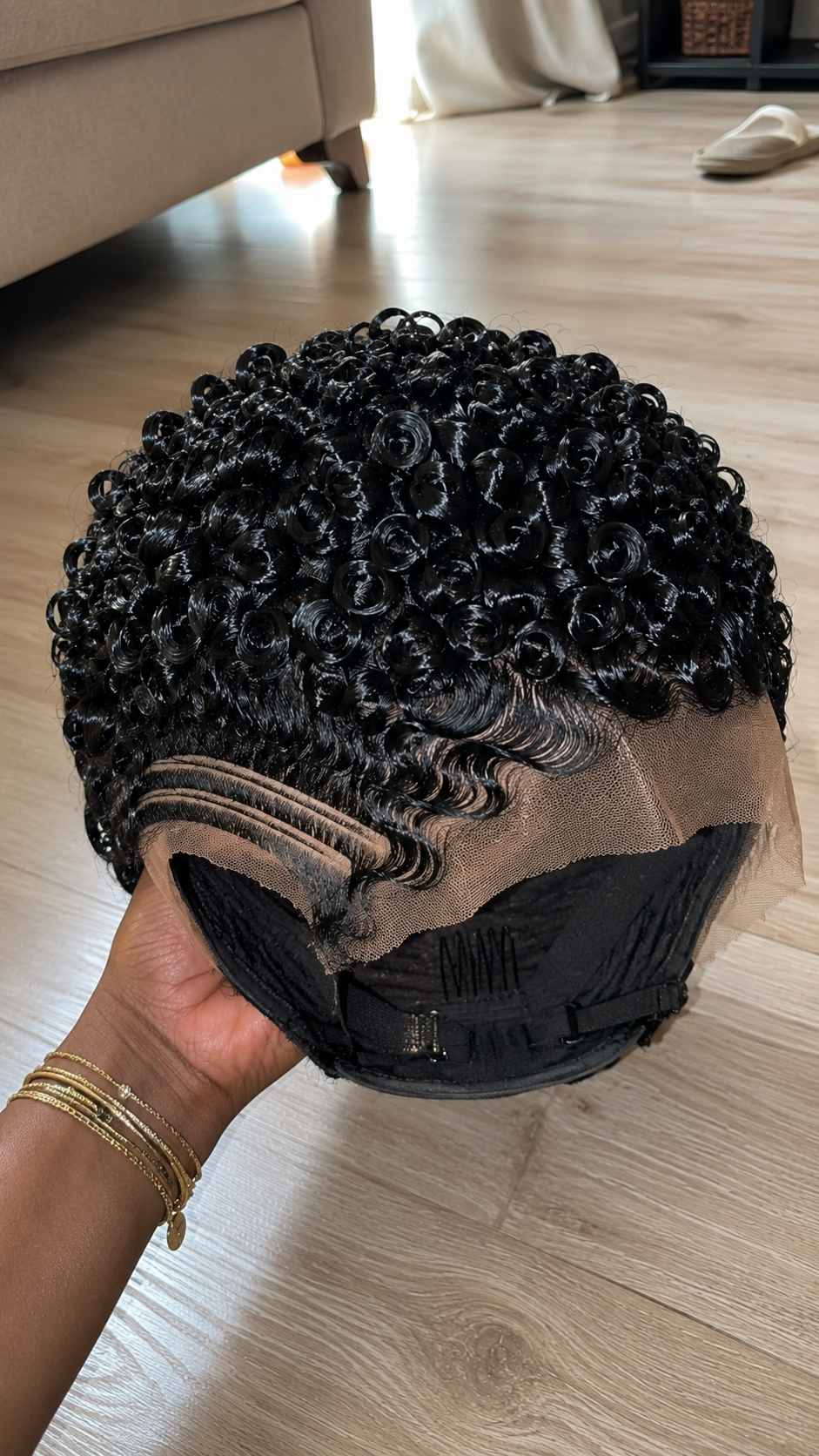
A short curly pixie wig can look beautiful from the outside and still become frustrating to wear if the inside cap is poorly designed. On a compact style, the internal construction matters even more because there is very little hair length available to compensate for shifting, bunching, or uneven tension.
This type of pixie uses a dense black ringlet crown, sculpted waves around the perimeter, and short side detailing. But when the wig is turned slightly upward, another important part of the product becomes visible: the combs, straps, elastic, stitching, and cap structure underneath.
Those details determine whether the wig sits securely, whether it feels balanced, and whether the front and side remain in the correct position throughout the day.
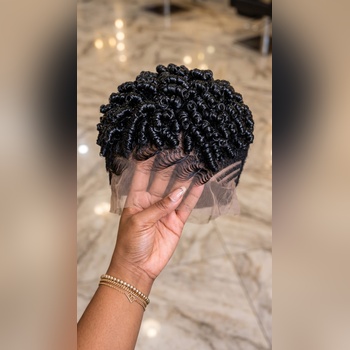
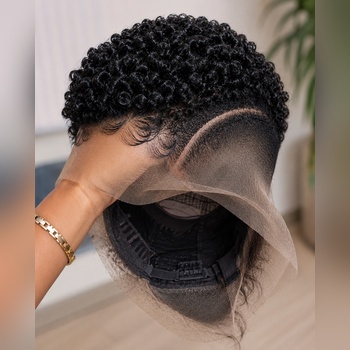
Before buying a short glueless pixie, do not inspect only the hair. Ask to see the inside cap too.
Where To Buy A Short Curly Pixie Wig With Good Cap Construction
Custom wig makers. A custom maker can usually provide more control over cap size, elastic placement, comb position, lace dimensions, and overall fit. If you know that certain comb positions are uncomfortable for you, mention that before construction begins.
Local wig boutiques. Buying in person lets you turn the unit inside out and inspect the actual hardware. Check whether the elastic is secure, whether the combs are firmly stitched, and whether the cap feels balanced from side to side.
Instagram and TikTok wig sellers. Ask for an inside-cap video rather than relying only on styled product photos. A seller showing the interior clearly usually gives you more information about what you are actually buying.
Etsy wig makers. Independent sellers may allow custom choices for cap size, elastic band, comb placement, lace type, and short-side construction.
Online wig stores. Search for glueless curly pixie wigs, short human-hair pixie wigs, adjustable pixie wigs, and short lace-front wigs. Read the construction details carefully.
Amazon, AliExpress, and Temu. Budget units may use standardized caps. Customer photographs can reveal whether the straps loosen easily or whether the combs sit in awkward positions.
Wholesale suppliers. If you buy stock for resale, inspect more than one unit. Hardware placement and stitching quality can vary between batches.
Order inquiries: WhatsApp [WhatsApp: +XX XXX XXX XX XX]
How Much Does A Short Curly Pixie Wig Cost?
Premium Custom Human Hair: approximately $260–$520+. Higher-priced units may include better human hair, custom cap measurements, HD or Swiss lace, adjustable elastic, better stitching, detailed curl setting, and hand-finished short sides.
Standard Custom Human Hair: approximately $180–$360. This range can offer strong cap construction and good human hair without every premium feature.
Basic Human Hair: approximately $120–$250. These units may use more standardized caps and simpler internal hardware.
Premium Synthetic: approximately $60–$160. Quality synthetic fibre can hold compact curls well, but internal construction still varies significantly between brands.
Basic Synthetic: approximately $25–$80. Budget units may use thinner elastic, simpler straps, or lighter-duty combs.
Shipping, customs charges, professional fitting, lace customization, cap alterations, and styling can increase the final cost.
Why Cap Balance Matters On A Pixie
Long wigs have weight distributed through much more hair.
A pixie is compact.
That means small construction problems can shift the whole unit more easily.
If one side of the cap pulls tighter than the other, the frontal can sit slightly crooked. If the rear strap is too loose, the wig may gradually move backward. If the combs are badly positioned, they can pull the lace unevenly.
The cap should feel balanced before the styling is even considered.
Look At The Adjustable Strap
Many glueless pixie wigs include adjustable straps near the back.
These help fine-tune the fit, but they have limits.
A strap can correct minor looseness. It cannot turn a badly oversized cap into a properly fitted one.
When inspecting the wig, check whether the strap hardware feels secure and whether both sides adjust evenly.
Loose plastic or weak stitching can become a problem after repeated wear.
The Elastic Band Should Not Pull The Front Backward
An internal elastic band can provide excellent glueless security.
However, excessive tension can change the way the front lace sits.
If the band pulls too strongly toward the rear, the frontal may lift or move backward from the intended hairline.
The correct band tension should secure the wig without distorting the perimeter.
More Combs Do Not Automatically Mean Better Security
Some buyers see several combs and assume the wig must be more secure.
That is not always true.
Comb location is more important than quantity.
A few well-positioned combs can stabilize the unit effectively. Too many can create pressure points or make installation unnecessarily complicated.
Check The Front Comb Position
If a comb sits close to the front, it should not pull directly against delicate lace.
The security hardware needs to interact with stronger cap material whenever possible.
Repeated force on thin lace can contribute to damage over time.
Ask the seller whether the front comb is attached to reinforced material or directly beside the lace.
Side Combs Can Create Uneven Tension
A side comb inserted more deeply on one side than the other can twist the wig slightly.
This may affect the alignment of finger waves, carved lines, or short side details.
When wearing the unit, attach both sides with similar tension.
If the wig sits correctly without side combs, you may not need to force every comb into the hair.
Comb Placement Should Work With Your Natural Hair
Internal combs need something secure to grip.
If your natural hair is very short, extremely fine, or arranged differently from what the cap assumes, some comb positions may not be useful.
In that case, elastic security and cap sizing become even more important.
Tell a custom maker how you usually prepare your natural hair under the wig.
Combs Should Not Cause Scalp Pressure
A secure wig should not require constant pulling against the scalp.
If a comb creates pain or concentrated tension, remove it and reassess the fit.
Long-term comfort matters, especially if the wig is intended for daily wear.
Security should come from several elements working together rather than one comb taking all the force.
Inspect The Stitching Around The Hardware
Look closely at where the combs, straps, and elastic are sewn into the cap.
The stitching should look secure and reasonably neat.
Loose threads or hardware attached through very thin material can indicate an area that may fail with repeated use.
This is one reason inside-cap photographs are valuable before purchase.
The Cap Should Not Collapse When Held
A wig cap needs flexibility, but it should still maintain a recognizable shape.
If the interior collapses completely or twists easily when held, it may be harder to position consistently.
A structured but flexible cap can make short wigs easier to put on in the same position each time.
Look At The Relationship Between Lace And Cap
The lace front should transition cleanly into the rest of the cap.
Bulky seams behind the frontal can sometimes create a visible ridge once the wig is worn.
Short hair makes this easier to notice because there is less volume available to hide the construction.
Check the transition from lace to cap both inside and outside.
Cap Color Can Matter Too
On black hair, dark cap sections may remain relatively easy to hide.
But the cap color can still become visible around sparse areas or short sides.
If the unit includes scalp-like sections, ask whether the tone is appropriate for the intended appearance.
The inside does not need to look attractive by itself, but it should not create obvious dark shapes through the exterior.
A Short Wig Needs Accurate Cap Size
Glueless security starts with size.
If the cap is too large, tightening every strap may cause bunching. If it is too small, the lace can sit under excessive tension and the side perimeter may rise.
For a custom order, provide the measurements requested by the maker.
Head circumference is important, but front-to-nape and ear-to-ear measurements may also affect short-wig fit.
Do Not Use Straps To Fix A Major Size Error
This is a common mistake.
A wearer receives an oversized unit and tightens the rear straps as far as possible.
The back becomes smaller, but excess cap material may still remain at the crown or sides.
The wig can then develop folds that show through the short hairstyle.
Choose a closer base size instead of relying on maximum strap tension.
Check Whether The Wig Is Truly Glueless
“Glueless” is widely used in wig listings, but the actual construction varies.
Some units fit securely through cap sizing and elastic alone.
Others still work best with temporary adhesive around part of the frontal.
Ask what the seller means by glueless and what security features the cap includes.
This helps avoid purchasing a unit that does not match your intended installation method.
The Nape Area Should Stay Flat
A short pixie leaves the lower rear area exposed.
If the cap bunches at the nape, the problem can become visible immediately.
The rear band should sit smoothly without rolling upward.
When trying the wig on, move your head normally and check whether the lower edge remains in place.
Short Hair Makes Cap Wrinkles Easier To See
A long wig may cover a small cap fold with several layers of hair.
A close-cut pixie cannot.
This means fit problems that would be minor on a long unit can become highly visible on a short one.
Any repeated wrinkling near the side or back deserves attention before lace is permanently trimmed.
Check The Crown From Inside
The interior can reveal whether the upper section is machine constructed, hand tied, or built from several different materials.
You do not need every unit to use the same construction method.
What matters is whether the method provides enough stability and whether the exterior crown remains well covered.
Ask questions if the seller’s product description does not explain the construction.
Cap Ventilation Affects Comfort
Dense short curls can create a warm crown.
Breathable cap sections can improve comfort, especially during long wear or in hot climates.
Inspect whether the cap contains areas that allow airflow.
However, ventilation should not create large visible gaps through the exterior.
Glueless Fit Should Be Tested Without Styling Distractions
When trying a new unit, position it correctly before arranging every curl or finger wave.
First evaluate the cap.
Does it sit flat?
Does the frontal remain in place when you turn your head?
Does the nape lift?
Do the sides pull?
Only after the fit is correct should you spend time refining the hairstyle.
Move Your Head During The Fit Test
A wig can feel secure while you are standing still.
Turn your head left and right.
Look down and then upward.
Smile, talk, and make normal movements.
The cap should remain reasonably stable without creating painful tension.
Check The Wig With Glasses If You Wear Them
Short pixies expose the temple and ear area, so glasses can interact directly with the cap.
Test whether the frame arms fit comfortably without pushing the side outward.
If combs or elastic sit directly where your glasses rest, long-term wear may become uncomfortable.
Removable Combs Can Be Useful
Some wearers prefer elastic security and dislike internal combs.
Ask whether the combs can be removed without damaging the cap.
A professional wig maker can often modify the interior if the structure allows it.
Do not simply tear or cut them out without checking where they are stitched.
The Hardware Should Be Easy To Replace
Straps and combs are wear components.
After extensive use, they may eventually loosen or break while the hair and lace remain usable.
A well-constructed wig should allow a repair specialist to replace common hardware without rebuilding the entire cap.
If you are buying a premium human-hair unit, repairability is worth considering.
Ask For An Inside-Cap Video Before Ordering
A single photograph is useful, but a short video provides more information.
Ask the seller to open the cap, show the lace, stretch the elastic lightly, move the straps, and point out the combs.
This helps you understand how the components interact.
For custom units, it also gives you a chance to spot obvious issues before shipping.
How To Find A Stylist For Cap Adjustment
Search for a wig alteration specialist, custom wig maker, glueless wig specialist, or pixie wig stylist.
Ask whether they adjust cap size, replace elastic bands, move combs, repair straps, and work on short lace units.
Send photos of the inside and outside before booking so the stylist can determine whether the problem is construction or fit.
Appointments can usually be requested through phone, WhatsApp, Instagram DM, Facebook, or the salon’s booking page.
What To Ask Before Ordering
- What cap sizes are available?
- Does the wig include an adjustable elastic band?
- How many combs are inside the cap?
- Where are the combs positioned?
- Can the combs be removed if necessary?
- Can you show me the inside of the exact unit?
- Does the rear strap adjust on both sides?
- Is the wig designed to stay secure without glue?
- Can the elastic band be replaced later?
- What lace type is used?
- Can you show the cap stretched gently in a video?
- Can I approve the construction before shipping?
Inspecting A Wig When It Arrives
Before cutting the lace, turn the unit inside out.
Check every comb and strap.
Make sure the elastic is not twisted.
Look for loose stitching.
Then try the wig on with the lace still intact and adjust the straps gradually.
Do not immediately tighten everything to the maximum setting.
Find the minimum tension required to keep the unit stable.
Do Not Cut Lace Until The Cap Position Is Correct
The cap fit determines where the frontal will ultimately sit.
If you cut the lace while the wig is pulled too far forward or backward, you may remove material based on the wrong position.
Fit the interior first.
Then evaluate the hairline.
Trim only after you are confident that the cap is sitting where it belongs.
Maintenance Of The Interior Cap
Product, sweat, and natural oils can build up on bands and cap material.
Clean the unit according to the care instructions for the specific hair and construction.
Do not aggressively pull or twist the elastic during washing.
Allow the cap to dry completely before storage.
Repeated storage while damp can affect both comfort and durability.
Search Terms
glueless curly pixie wig · pixie wig inside cap · short curly wig cap construction · adjustable pixie wig · short human hair wig with elastic band · curly pixie wig for black women · glueless short lace wig · pixie wig with combs and straps · custom pixie wig cap · short ringlet wig · lace front pixie wig · secure glueless pixie wig
Final Thoughts
The inside of a short pixie wig is easy to ignore because the curls naturally receive most of the attention.
But the cap is what determines whether those curls remain in the correct position once the wig is actually worn.
Good security does not come from one extremely tight strap or a large number of combs. It comes from correct cap size, balanced tension, useful hardware placement, flat seams, and an interior design that supports the short exterior shape.
Before buying, request an inside-cap photograph or video. Check the straps, combs, elastic, stitching, lace transition, and cap size. If you are ordering custom, discuss where you prefer the security features to sit.
A short curly pixie should feel secure without feeling forced onto the head. When the cap fits correctly, the lace, side details, waves, and ringlet crown all have a much better chance of staying where they were designed to sit.