
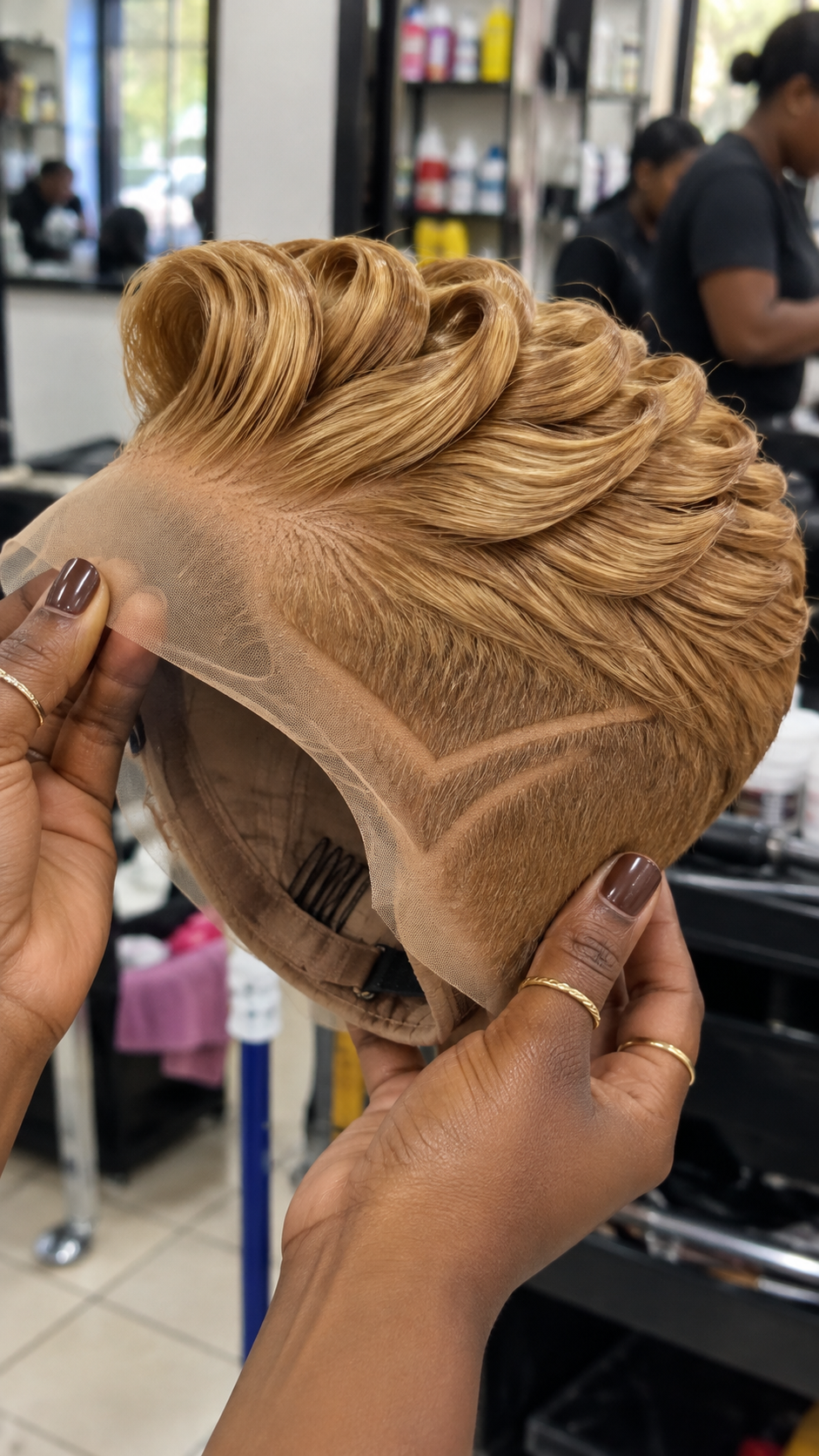
Golden blonde becomes much more interesting when the hairstyle gives the color enough structure to show its depth. This wig does exactly that. Rather than depending on dark roots, contrasting streaks or several competing shades, the design uses a warm Golden Honey Blonde palette across the visible crown and close side area. The result is a coordinated sculpted wig in which the shape of every loop becomes part of the color story.
The upper section is arranged into large polished loops that travel backward from the front. They overlap in stages instead of sitting as separate ringlets, creating a crown that looks carefully constructed from one continuous sequence. Beneath the raised hair, the side is kept very close and carries two sweeping curved lines. That combination gives the unit two distinct visual levels: a dimensional upper section and a flatter graphic area underneath.
The photograph also exposes important parts of the unfinished installation. Lace extends beyond the hairline, the interior cap is visible and the side construction can be inspected before the unit is fitted to a wearer. For someone ordering a custom wig, these details are useful because they reveal much more than a finished portrait would.


Golden Honey Blonde Without a Contrasting Dark Root
One of the strongest characteristics of this piece is the continuity of its color. The crown, closely cropped visual section and hair near the perimeter remain within the same warm blonde family. There is no obvious black root creating a dramatic division between the upper and lower areas.
This changes the personality of the hairstyle considerably. A dark-rooted blonde design usually emphasizes contrast first. Here, the eye notices the sculpted shape before anything else because the color moves continuously through the construction. Light striking the raised loops creates brighter golden areas, while the deeper folds naturally appear slightly darker. The dimensional effect is produced by the physical direction of the hair rather than by heavy color blocking.
When requesting a similar shade, the reference photograph should accompany the order. “Honey blonde” alone is not precise enough. Some suppliers interpret that term as pale yellow blonde, others as caramel, beige blonde or even light brown. This reference leans toward a rich warm golden family with enough depth to avoid looking icy or platinum.
Large Loops Give the Crown Its Signature Profile
The top is not arranged as ordinary curls. Individual sections have been lifted, curved and folded into broad loops. The front pieces are especially noticeable because they rise away from the base before bending backward. This produces height without requiring a long hairstyle.
As the construction moves toward the center and rear, the loops overlap more closely. Their size and direction change gradually, preventing the crown from appearing like a row of identical rollers. Some sections form open arches, while others bend more tightly and disappear beneath the neighboring piece.
This variation is essential when recreating the look. Uniform loops placed at exactly the same height could make the wig appear rigid. The reference instead shows a controlled sequence in which each section contributes to the next one. A stylist recreating the design should study the crown from several angles rather than relying only on a frontal photograph.
The ends are incorporated into the overall formation instead of hanging freely. That helps maintain the compact silhouette and keeps the emphasis on the sculpted surface.
The Blonde Side Panel Creates an Unusual Tonal Effect
Many sculpted wigs pair a bright crown with a dark close-cut side. This piece takes a different approach. The visible side area remains blonde, so the transition between the elevated crown and the lower section is based primarily on length and direction rather than a sudden color change.
That tonal consistency can make the side appear softer while still preserving the visual illusion of a closely shaped cut. The hair is dense enough to create coverage, but its height is dramatically reduced beneath the crown. The distinction becomes especially clear around the curved line work.
Anyone ordering this design should specify that the lower area should remain within the blonde color family. Otherwise, a maker could reasonably assume that a darker root or natural-black side is desired. For this particular look, keeping the blonde through the side is a major part of its identity.
Two Sweeping Curves Replace Conventional Straight Barber Lines
The side design deserves separate attention because it changes the entire profile of the wig. Two narrow curved channels sweep backward through the close section. They follow a similar path but maintain enough separation to remain individually visible.
The upper curve begins beneath the crown and travels toward the rear. The lower curve follows beneath it and bends more strongly as it approaches the back. Because both lines follow the contour of the unit, they appear integrated into the hairstyle rather than added as isolated decorative marks.
When communicating this detail to a wig maker, “two side lines” is not descriptive enough. Specify that they are curved, directional and positioned within the close blonde side panel. Sending the image is the safest way to communicate the intended spacing.
Placement also matters after installation. If the wig sits too far forward, backward or to one side, the curves may no longer occupy the intended position around the temple and above the ear. This is one reason accurate cap sizing matters for a design with fixed graphic details.
Why the Crown Needs Controlled Height
The loops are prominent, but the wig does not rely on excessive volume. Most of the height is concentrated where it contributes to the sculpted silhouette. The lower sections remain close, while the crown rises in deliberate stages.
This proportion keeps the piece wearable. Increasing the crown too much could turn the loops into a much larger updo and change the character of the reference. Flattening them, on the other hand, would remove the architectural quality that makes the design recognizable.
For a custom order, it can be useful to specify “medium sculpted elevation” and provide the reference photograph. Ask the maker to preserve the broad loop shapes rather than adding extra hair simply to create fullness.
Density and volume are not the same thing. A unit can contain sufficient hair while still being shaped into a compact silhouette. Skilled styling controls where the density is visible instead of allowing the entire crown to expand equally.
Visible Construction Helps With Pre-Purchase Evaluation
Because this wig is being held before installation, the photograph provides a rare opportunity to inspect the perimeter and interior. Lace is clearly visible around the front and side. The cap and internal components can also be seen through the opening.
What cannot be determined reliably from the photograph is the commercial grade of the lace. It would therefore be inappropriate to label this specifically as HD lace without confirmation from the maker or seller. A buyer should ask what lace material is used, what shade it comes in and whether alternative shades are available.
The same caution applies to the hair material. The photograph alone does not prove whether the fibers are human hair or synthetic. That specification should be confirmed before purchase because it affects maintenance, heat styling, longevity and potential recoloring.
Ask for interior photographs if buying online. A seller should be able to explain the adjustment system, cap size, comb placement if present and any other features intended to secure the wig.
Getting the Blonde Shade Right Before Production Begins
Warm blonde shades can shift dramatically under different lighting. Salon lights may emphasize gold, while daylight can reveal beige or orange undertones that are less noticeable indoors. For this reason, color approval is especially useful for a custom order.
If possible, request photographs of the hair in both neutral indoor light and daylight before the entire unit is completed. Compare the sample with the reference image rather than with a color name alone.
Clients who prefer a slightly deeper result can ask the maker whether a honey-caramel variation is available. Those wanting something brighter can discuss a lighter golden option. However, changing the shade significantly will create a different visual effect from the piece shown here.
If exact reproduction is the goal, avoid adding silver, platinum or strong copper streaks. The appeal of this wig comes partly from its unified golden surface.
Installation Should Protect the Pre-Shaped Crown
A heavily sculpted wig requires a different approach from a loose straight or curly unit. The installer should handle the crown carefully because aggressive combing can separate the loops and alter their direction before the wig is even fitted.
Before trimming the lace, position the unit and inspect the side from both directions. Check where the curved lines fall in relation to the wearer’s temple and ear. Only after the fit is confirmed should permanent customization begin.
The lace should be trimmed according to the actual unit and the wearer rather than according to a generic distance. A qualified wig stylist can determine the appropriate perimeter while preserving the visual relationship between the hairline and the side design.
If the crown has shifted during shipping, photograph the wig before making changes. Minor displacement may be corrected by an experienced stylist without rebuilding the entire top.
Salon Consultation Points That Are Easy to Miss
Bring more than one reference angle to the appointment whenever possible. The front view communicates crown height, the side view shows the curved detail, and a top view reveals how the loops overlap. One photograph rarely explains every part of a sculpted unit.
Tell the stylist that the objective is to preserve the original loop sequence. If additional styling is required, discuss exactly which sections need attention before products or tools are applied.
Also ask whether the stylist is comfortable working around a pre-designed close side panel. A conventional wig installation may focus mainly on the frontal area, but this piece requires attention to the side because the graphic pattern is a major feature.
Booking a consultation before the main installation can be worthwhile for a custom unit. The stylist can inspect cap fit, lace placement and crown condition in advance, reducing the chance of rushed decisions during the final appointment.
Styling Clothes Around an All-Blonde Sculpted Wig
A Golden Honey Blonde wig already provides a strong visual focal point, so clothing does not need to compete with it. Chocolate brown, black, ivory, cream and deep olive can all provide contrast while allowing the blonde to remain prominent.
Warm earth tones such as terracotta and muted rust can create a tonal outfit, although using too many similar golden shades at once may reduce the contrast around the hair. Deep green or navy can make the blonde appear brighter.
Gold jewelry naturally works with this palette, but the side pattern should remain visible. Large earrings positioned directly over the curved detail may hide one of the most interesting parts of the wig. Smaller earrings or carefully positioned hoops can keep the profile open.
Because the crown has significant structure, simple necklines often pair well with it. The hairstyle already supplies shape and movement above the face.
Preserving the Loops During Storage
Storage is particularly important for this design. Placing the wig upside down or compressing it under other items can flatten the front loops. A properly sized wig stand can support the cap while leaving the sculpted crown unobstructed.
Avoid repeatedly brushing through the top. These are intentionally formed sections, not curls that need to be separated for additional volume. If a loop becomes displaced, targeted correction is preferable to combing the entire crown.
Before using heat, determine the actual fiber type and manufacturer recommendations. Human hair and heat-friendly synthetic fibers have different tolerances, while some synthetic materials should not be exposed to conventional hot tools at all.
Product buildup can also change the appearance of blonde hair. Heavy oils or sprays may make a warm blonde shade appear darker and can cause the sculpted sections to lose separation. Use products appropriate for the confirmed hair material and apply only what is necessary.
A Better Way to Request This Wig From a Seller
Begin with a complete visual specification rather than simply asking for a blonde wig. Explain that you want a Golden Honey Blonde sculpted unit with broad raised loops, a close blonde side panel and two curved side channels.
Send the reference image and ask whether the seller can reproduce the crown at approximately the same height. Confirm that the blonde continues through the visible lower section instead of changing to black.
Then discuss cap measurements, lace type, fiber or hair material, adjustment features and production time. If the piece is made to order, request progress photographs before shipping. A side photograph should be included so the curved design can be checked.
Do not assume that a seller’s standard product photograph guarantees identical handmade placement. Sculpted units can vary because individual sections are shaped manually. If exact placement is important, state that requirement before paying the deposit.
Premium Custom / Standard Custom / Basic Human Hair / Premium Synthetic / Basic Synthetic
| Option | Suitable Buyer | What Should Be Verified |
|---|---|---|
| Premium Custom | Buyer seeking close control over blonde shade, crown proportions and side-line placement | Custom measurements, color sample, lace specification, hair source, loop construction and approval photos |
| Standard Custom | Buyer wanting the main golden silhouette with selected personalized details | Cap sizing, available blonde shades, side design options and crown height |
| Basic Human Hair | Buyer prioritizing future professional restyling | Hair authenticity, previous processing, density, lace coverage and heat recommendations |
| Premium Synthetic | Buyer who values strong shape retention in a pre-styled unit | Fiber type, heat tolerance, shade stability, washing method and loop recovery |
| Basic Synthetic | Buyer seeking the general look at a lower entry point | Cap comfort, fiber quality, shine level, lace material and expected lifespan |
The exact price of the pictured wig cannot be established from the photograph. Quotes can vary substantially according to hair or fiber type, lace construction, cap work, coloring, customization and the amount of hand styling required for the crown and side details.
Quality Checks Before Accepting a Custom Order
First examine the blonde tone across the entire visible surface. A custom recreation intended to resemble this reference should not suddenly become very dark at the sides unless that change was requested. Check the crown, rear and close panel under the same lighting.
Next, inspect the loops. They should have recognizable individual shapes while still connecting visually from front to back. Look for collapsed sections, uneven gaps or areas that have been unnecessarily overfilled.
Study the curved side channels from a normal viewing distance as well as close up. Both should remain readable and should travel in a deliberate direction. The lower curve should complement the upper one rather than intersecting it randomly.
Finally, inspect the lace and interior construction before cutting anything. Confirm that the size corresponds with the order and that adjustment components function properly. If there is a serious discrepancy, contact the seller before altering the unit.
Why This Blonde Version Deserves Its Own Reference
This design is more than a recolored version of a darker wig. Using Golden Honey Blonde throughout the visible structure changes how the crown, side panel and carved curves interact. The reduced color contrast places more responsibility on the physical styling, making the loop construction especially important.
The broad upper shapes create shadow and brightness within a single color family. The close side introduces a different scale without abandoning the blonde palette. The curved channels then provide enough separation to make the lower area visually interesting.
For wig businesses and stylists, this is a useful reminder that color placement should be considered together with construction. A dramatic shade does not necessarily require multiple highlights. Sometimes one carefully selected tone, distributed consistently across a strong silhouette, produces the more recognizable result.
Search Terms
Golden Honey Blonde sculpted loop wig · warm blonde ribbon crown wig · honey blonde close side wig · double curved side line wig · golden blonde raised loop crown · monochrome honey blonde lace wig · sculpted blonde crown with side curves · warm golden loop hairstyle wig