
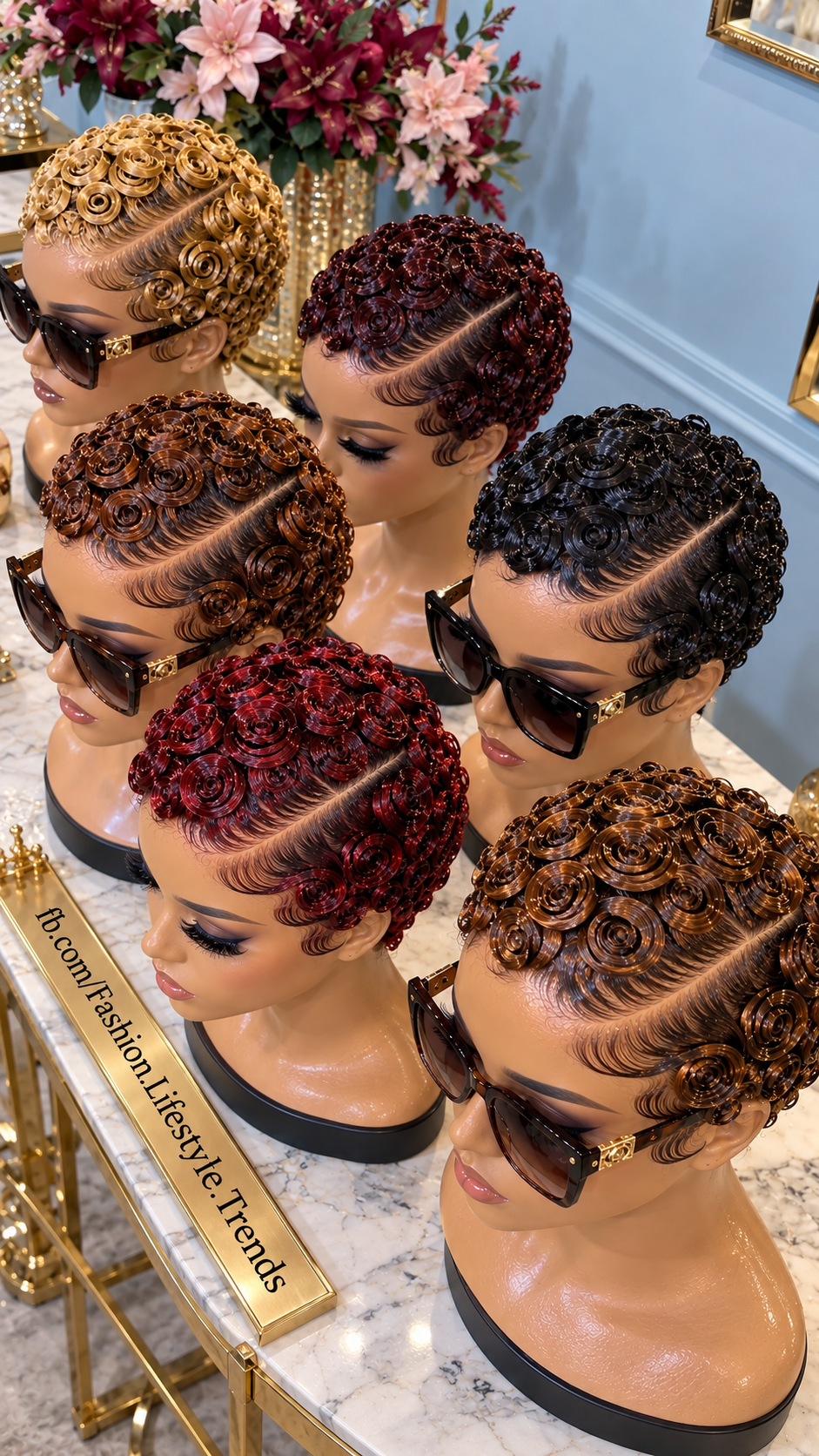
This six-wig collection focuses on a very specific combination: compact circular ringlets across the crown, a long diagonal side part and layered feathered waves sweeping toward the temple. The same sculpted structure appears in several colors, including jet black, deep wine burgundy, cherry red, golden blonde and warm caramel-brown variations.
The design works because the hairstyle does not rely on one curl pattern alone. The upper sections are covered with individually shaped circular rings, while the area beneath the part is pressed into elongated curved waves. Small curls around the temple connect these two sections and prevent the hairstyle from looking divided.
Compact Ringlets Build a Rounded Crown
The crown is densely covered with small polished ringlets. Each curl forms a visible circle rather than falling downward as a conventional spiral. This keeps the overall silhouette close to the head while still producing considerable visual volume.
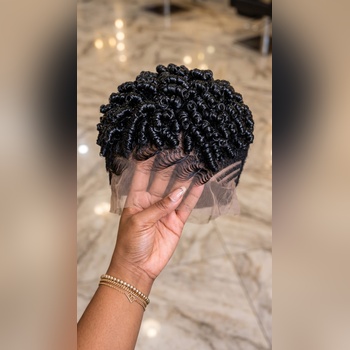
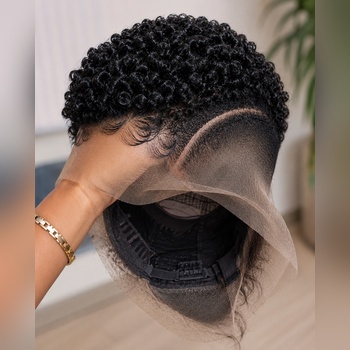
The curls are also arranged in slightly different directions. Some sit almost flat against the surface, while others rise enough to catch stronger highlights. This variation prevents the crown from looking mechanically uniform.
For a custom recreation, request small sculpted ring curls with visible centers and close crown placement. Showing the stylist a close-up reference is useful because ordinary roller curls can become much softer and larger than the pattern seen here.
The Long Diagonal Part Controls the Entire Shape
A prominent diagonal part runs from the front toward the side of each wig. It acts as the visual boundary between the circular crown curls and the sweeping wave section.
The exposed line is relatively narrow and follows a gentle curve rather than appearing completely straight. Darker colors make this part particularly noticeable because of the contrast between the hair and scalp-toned base.
Its position matters. Moving the part significantly can change the direction and proportion of the feathered waves, so anyone commissioning the style should specify the preferred side before the unit is set.
Layered Side Waves Create the Signature Detail
Beneath the part, several elongated waves travel toward the temple. Each section contains many fine, individually visible strands that follow the same curved direction.
The upper wave begins close to the part and opens outward. Additional waves underneath follow similar curves but terminate at slightly different points. Together they create the characteristic layered side pattern visible throughout the collection.
This area requires more precision than simply brushing the hair toward one side. A stylist familiar with finger-wave shaping, sculpted pixie styling and detailed edge work will be better suited to reproducing it.
Jet Black Emphasizes Every Reflective Curve
The jet-black version provides the deepest contrast. Highlights appear along the outer edges of the circular curls, while their centers remain dark. The result gives the crown substantial depth even though the hairstyle itself remains compact.
Black also makes the fine side-wave strands particularly visible. Under direct lighting, each curved section develops narrow reflective lines that clearly reveal the direction in which the hair has been sculpted.
For a comparable finish, request a rich glossy black rather than a faded off-black shade.
Wine Burgundy Gives the Ringlets a Deeper Red Direction
The darkest red variation sits closer to burgundy and wine than bright red. Its recessed sections appear almost black-red, while the raised surfaces reveal warmer ruby reflections.
This tonal change is especially noticeable on circular curls because each ring catches light from a different angle. The resulting color appears considerably more dimensional than a flat burgundy surface.
When ordering, specify whether you want a deep wine base with brighter red reflections rather than simply requesting burgundy, since sellers may interpret that description differently.
Cherry Red Creates a Brighter Alternative
Another red unit moves noticeably closer to cherry. It retains dark depth around the base and between the ringlets but produces stronger red highlights across the crown.
This version is useful for someone who likes burgundy but wants the red tone to remain obvious even when the wig is photographed indoors.
A colorist can create a similar effect using a deeper root or underlying red combined with brighter cherry sections. The precise formula will depend on the starting hair and whether the wig uses human hair or synthetic fiber.
Golden Blonde Makes the Circular Pattern Stand Out
The lightest wig uses a rich golden blonde rather than a pale platinum shade. Because the color reflects considerably more light, individual rings are immediately noticeable throughout the crown.
Its warm golden direction also complements the highly polished styling. Highlights appear almost metallic on the upper surfaces of the curls while slightly darker golden areas remain between them.
If ordering this shade, terms such as rich golden blonde, warm honey gold or deep golden blonde can provide a useful starting point, but a reference photograph should still be supplied.
Warm Caramel Brown Adds Amber Highlights
The warmer brown wigs combine a deep brown foundation with brighter caramel and amber reflections. Their color sits between chocolate brown and golden copper, creating enough contrast to reveal the ringlet pattern without becoming excessively bright.
The sweeping side waves also benefit from this palette. Fine strand lines alternate between darker brown and warm reflective sections, giving the wave work additional depth.
This shade can be particularly effective when a buyer wants something warmer than natural brown but less red than copper or burgundy.
Deep Bronze Brown Offers a Richer Neutral Option
One of the darker brown interpretations appears more bronze than golden. Its deepest areas retain a chocolate-like base while the exposed curves develop warm bronze reflections.
That balance gives the wig a rich appearance without moving fully into blonde or red territory. Under warmer indoor lighting it can appear more caramel, while neutral daylight may reveal considerably more brown.
Before purchasing a custom unit, request photographs under more than one lighting condition whenever possible.
Temple Ringlets Connect the Waves to the Crown
The circular curls do not stop abruptly at the top. Several smaller rings continue around the temple and side, creating a gradual transition between the elongated waves and densely curled crown.
This small detail makes a major difference to the overall construction. Without those transitional curls, the wave section could appear disconnected from the rest of the hairstyle.
When sending instructions to a wig stylist, include side-angle photographs rather than only a frontal reference. They show exactly how the curls continue around the head.
High Shine Is Essential to the Finished Appearance
The visual impact of these wigs depends heavily on reflection. The ideal surface has mirror-like glossy hair, a silky reflective finish, healthy wet-look shine, individually visible strands and highly visible curl separation.
The objective is not simply to coat the hair in oil. Excessive product can make adjacent ringlets merge and obscure the small circular shapes. Instead, the stylist needs enough polish to highlight individual strands while preserving separation between each curl.
Human-hair and synthetic units require different finishing products, so always follow the manufacturer’s heat and product recommendations.
What to Ask for at a Wig Salon
Look for a wig stylist whose portfolio includes sculpted pixie wigs, finger waves, molded curls and precision ringlet work. A stylist who mainly installs long straight or loose-wave wigs may not routinely perform this type of detailed setting.
Send the reference before booking and identify the details separately: compact ringlet crown, diagonal side part, layered feathered waves, temple curls and glossy finish.
Also confirm whether the stylist supplies the wig, colors an existing unit or only provides styling. This prevents unexpected additional appointments or costs.
Selecting the Right Base Before Custom Styling
The starting wig needs sufficient density across the crown because the hair will be separated into many small curls. If the base is too sparse, gaps may become visible between the finished rings.
The side area must also provide enough workable hair for the longer sweeping waves. A unit that has already been cut extremely close around the temple may restrict what the stylist can reproduce.
Before buying an unfinished base, send its length, density, fiber type and photographs to the person who will style it. Their approval can prevent purchasing a unit that cannot support the intended design.
Where to Buy a Similar Ringlet Pixie Wig
Search wig boutiques, independent custom wig makers and online sellers specializing in sculpted pixie units. Generic searches for a curly wig may return styles with completely different curl construction.
Useful descriptions include sculpted ringlet pixie wig, circular curl crown, diagonal side-part pixie and finger-wave ringlet wig. Compare photographs carefully rather than relying exclusively on product names.
When contacting a seller, provide the reference image and specify the exact color family you prefer. Ask whether the photographed wig is the actual product or a styling reference, particularly when purchasing through social media.
Custom Wig Price Guide
| Category | Typical Price Range | What You May Receive |
|---|---|---|
| Premium Custom | $450–$950+ | Higher-grade hair, personalized coloring, extensive hand setting and detailed wave sculpting |
| Standard Custom | $250–$500 | Custom color options, shaped crown curls, side part and professional finishing |
| Basic Human Hair | $130–$320 | Human-hair base that can be professionally colored, cut and sculpted |
| Premium Synthetic | $80–$210 | Better-quality fiber with stronger curl retention and more polished pre-styling |
| Basic Synthetic | $35–$100 | Entry-level pre-styled unit with limited customization possibilities |
These ranges are general estimates rather than fixed prices. Hair quality, fiber type, density, coloring, stylist experience and location can all change the final cost. Intricate curl placement can also increase labor because dozens of individual rings may need to be shaped separately.
Booking the Style Without Missing Important Details
Start by sending the reference photographs to the stylist and asking whether they can reproduce the curl construction. Specify your preferred color and mention whether you already own a suitable wig.
Once the stylist confirms the project, ask about the deposit, turnaround time, fitting procedure and any maintenance appointment that may be recommended later.
For a made-to-order unit purchased remotely, request final photographs before shipping. Ideally, obtain front, side and crown views so the parting and curl placement can be checked before the wig leaves the seller.
Protecting the Circular Curls Between Wears
Storage is particularly important with this style because pressure can flatten the raised ringlets. Place the wig on an appropriately sized stand and keep the crown away from objects that could compress it.
Avoid brushing through the curls. If dust or loose strands need attention, work carefully around individual sections rather than pulling a comb through the entire crown.
Minor displaced curls may sometimes be repositioned, but extensive reshaping is better handled by a stylist, especially if the fiber has specific temperature limitations.
Why the Same Shape Works Across Several Colors
Keeping the curl structure consistent while changing color demonstrates how dramatically shade influences the same hairstyle. Black emphasizes contrast and depth. Burgundy and cherry introduce richer red reflections. Golden blonde reveals almost every ring, while caramel and bronze browns create warmer transitions between highlights and shadows.
This makes the design useful for a coordinated wig collection because customers can choose their preferred color without losing the recognizable crown shape and sweeping side detail.
For wig businesses, additional variations could explore espresso-to-toffee, dark chocolate-to-copper ginger or natural black-to-caramel combinations while retaining the distinctive circular ringlet construction.
Search Terms
Glossy Circular Ringlet Crown · Sweeping Diagonal Side Part · Feathered Temple Wave Pattern · Jet Black Sculpted Ringlets · Wine Burgundy Circular Curls · Cherry Red Ringlet Pixie · Golden Blonde Ring Curls · Caramel Bronze Side Waves