
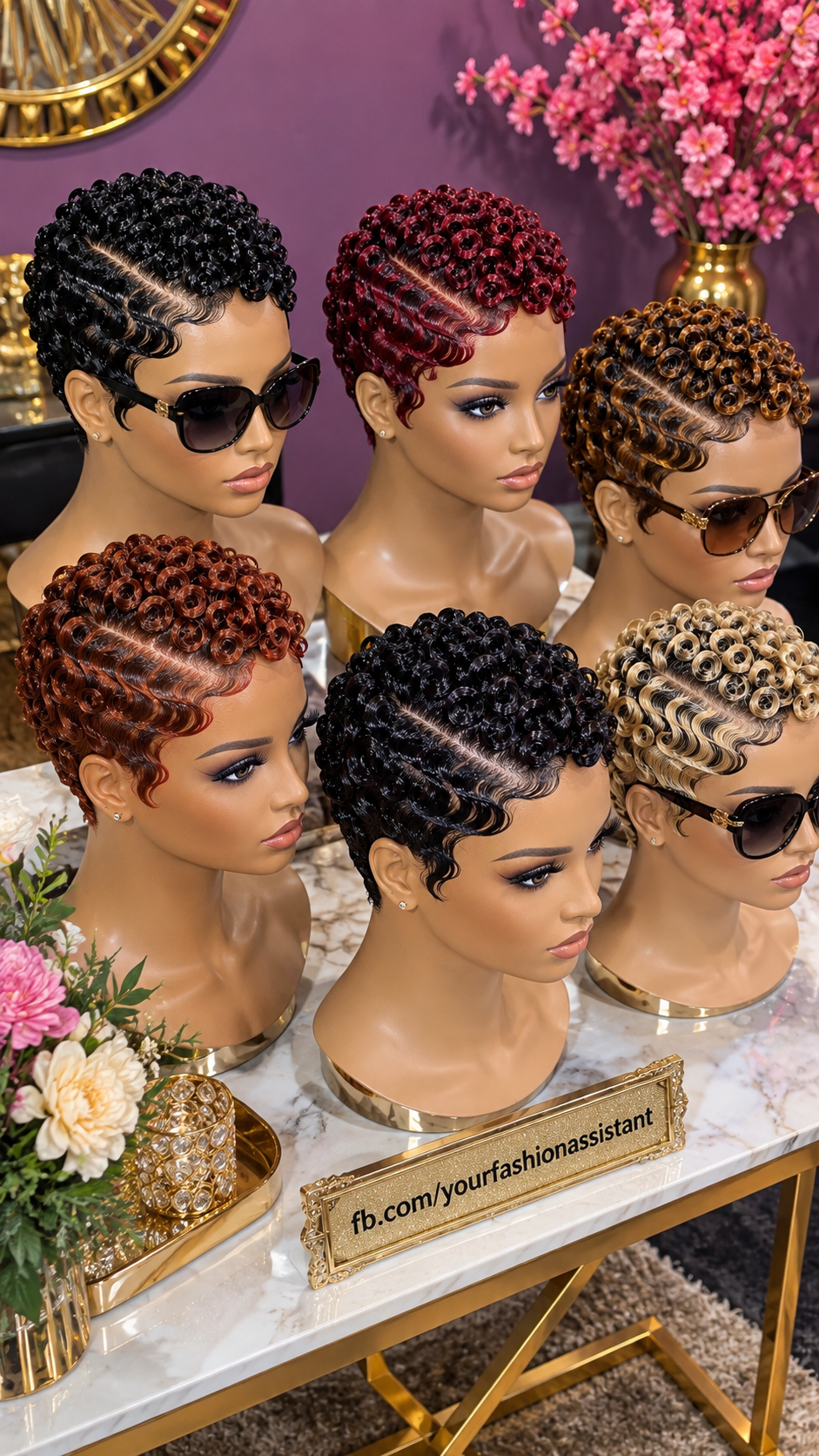
A carefully styled pixie wig does not need extra length to create impact. This collection shows how compact ring curls, sweeping side waves, precise parting and rich color can completely change the character of a cropped wig. Jet black, deep burgundy, warm copper brown and blonde combinations are displayed side by side, making the differences in curl definition and color placement especially easy to see.
The strongest connection between the wigs is their circular curl structure. Small glossy rings cover the crown while broader sculpted sections sweep diagonally across the front and side. Instead of relying on volume alone, the design uses deliberate curl placement to create movement from the crown toward the temple.
For buyers searching for this type of unit, it is important to describe more than the color. The curl diameter, diagonal parting, front wave direction, tapered lower profile and glossy finish all contribute to the appearance. A generic request for a curly pixie may produce something very different.
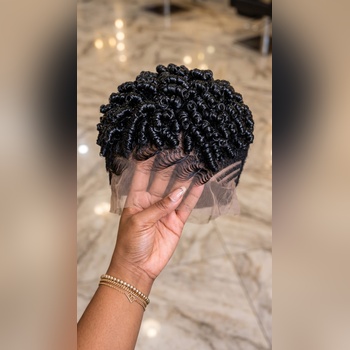
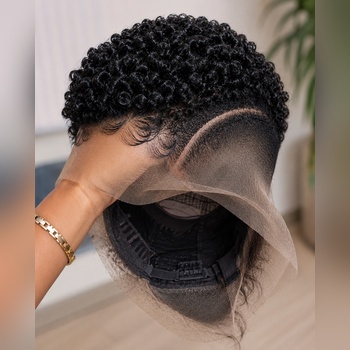
Compact Ring Curls Give Every Wig a Sculpted Crown
The most recognizable element across the collection is the dense arrangement of small circular curls. Each ring remains individually visible rather than being brushed into one continuous curly surface. This gives the crown a decorative, almost coiled appearance while keeping the overall silhouette close to the head.
The rings also vary slightly in size and direction. Some sit almost flat against the crown, while others rise enough to create additional dimension. Smaller curls fill the spaces around the larger formations so there are few empty areas between them.
This arrangement requires careful styling. If the rings are positioned too loosely, the crown can lose its compact profile. If they are packed too tightly, individual curls disappear. The balance between separation and density is what gives this type of pixie its distinctive character.
Diagonal Parting Creates Movement Across the Front
A visible diagonal part separates the circular crown from the sculpted front section on several of the wigs. The part begins higher on one side and travels toward the temple, creating a clear directional line through the hairstyle.
Below it, the hair is arranged into broad finger-wave-inspired curves. These sections follow the shape of the forehead and gradually sweep toward the side. The result creates a transition from tightly wound rings to longer flowing curves without introducing additional length.
When commissioning a similar unit, send the wig stylist a reference showing this part clearly. The placement of the diagonal section affects the entire balance of the hairstyle.
Jet Black Gives the Curls Maximum Shine Contrast
The jet black versions demonstrate how much detail can be created with a single dark shade. Light catches the upper surface of each curl, producing bright reflective bands against the deeper interior of the rings.
This contrast allows the circular pattern to remain visible even without highlights. The black versions also make the sculpted side waves particularly noticeable because every individual strand catches a narrow reflection as it curves toward the temple.
For a similar appearance, request deep jet black hair with a high-gloss ring-curl finish. The aim should be reflective strand definition without making the hair appear overloaded with styling product.
Burgundy Creates a Richer Color Shift Under Light
The burgundy version changes noticeably depending on how the light reaches the curls. Deeper areas appear almost wine-colored, while the exposed surfaces of the rings reveal brighter cherry and red-burgundy reflections.
That variation works particularly well with circular curls because each loop naturally contains highlighted and shadowed areas. The color therefore appears dimensional even though the wig remains within the same burgundy family.
If ordering this shade, asking only for red may produce a much brighter result. A description such as deep burgundy with cherry-red reflections gives the stylist or seller a more useful direction.
Copper Brown Brings Warmth Without Going Blonde
The copper-brown versions sit between very dark brunette and golden blonde. Their warm tone makes the curl pattern highly visible while retaining enough depth around the roots and inner portions of the rings.
Under warm indoor lighting, these shades can appear particularly rich because copper, chestnut and reddish-brown reflections become visible across different strands.
Someone wanting a similar result could ask for a warm copper brown or deep auburn-copper family and request photographs of the actual available hair color before ordering. Shade names can vary considerably between wig suppliers.
Blonde and Darker Roots Produce Strong Dimension
The blonde version uses a noticeably lighter palette while maintaining darker depth between some of the curls. This contrast prevents the crown from appearing like one solid pale surface.
Light blonde rings are especially effective for displaying the circular construction because highlights travel around the full circumference of each curl. Darker sections beneath them create shadow and make the rings appear more dimensional.
When requesting this combination, discuss root depth as well as the blonde shade. A completely uniform blonde wig will not necessarily create the same contrast visible in a dimensional blonde-and-dark-root combination.
The Front Waves Are Just as Important as the Crown
Although the ring curls attract attention first, the broad waves around the front are essential to the overall design. These sections are arranged much flatter than the crown and follow controlled S-shaped curves toward the temple.
This change in structure prevents the hairstyle from becoming visually repetitive. Circular curls dominate the upper section, while elongated waves introduce a second type of movement around the face.
A skilled wig stylist can use these waves to adjust how the hairstyle frames the forehead and temple. Their placement should therefore be considered during customization rather than treated as an afterthought.
The Tapered Lower Profile Keeps the Shape Compact
The wigs maintain a close profile around the ears and lower sides. This prevents the crown curls from expanding outward and creating a much larger silhouette.
The contrast between the fuller upper area and the close lower perimeter is a key part of the pixie construction. It allows the ring curls to provide height and decoration while the lower portion remains controlled.
For a custom order, discuss the desired amount of side coverage before cutting begins. Some wearers may prefer the sides extremely close, while others may want slightly more hair retained around the ears.
How to Describe This Style to a Wig Maker
Start with the overall construction: a compact pixie wig with a rounded crown covered in individually arranged glossy ring curls. Then specify the diagonal part and the broad sculpted waves positioned below it.
Next, choose the color family. Options inspired by this collection include jet black, deep burgundy, copper brown and dimensional blonde. If using highlights or darker roots, explain where you want the contrast concentrated.
Finally, discuss the side and back profile. Tell the stylist that the lower areas should remain close enough to preserve the compact pixie silhouette while the crown retains its circular curl pattern.
Finding a Salon That Can Reproduce the Curl Work
Search for a custom pixie wig stylist, sculpted wig specialist or wig maker experienced with molded curls. Portfolio photographs are extremely useful. Look specifically for stylists who show close-up images of curl placement rather than only finished frontal photographs.
A stylist experienced with finger waves can also be valuable because the front sections require controlled directional shaping. The combination of ring setting and wave work is more specialized than simply curling an ordinary wig.
Before booking, send reference photographs and ask whether the stylist can reproduce both techniques on the same unit.
Buying a Similar Wig Online
Specialist wig boutiques, independent wig makers and salon-based wig businesses are good places to search. Use descriptive phrases rather than relying on broad searches such as “curly wig.”
Look closely at product photographs. Determine whether the listing shows the actual styled wig being sold or merely demonstrates what can be achieved after professional customization.
Before paying, confirm the cap size, hair material, color, density, construction and whether the ring curls arrive pre-styled. Also ask whether the front wave work is included or needs to be completed by a stylist after delivery.
Custom Ordering Step by Step
First, select the color combination and send the seller a reference photograph. Ask for an actual photograph or color sample whenever possible rather than relying exclusively on shade names.
Second, provide the measurements requested by the wig maker. Accurate sizing helps position the diagonal part and sculpted front sections correctly when the wig is worn.
Third, confirm the crown styling. Specify that you want individually visible circular rings rather than loose curls or waves.
Fourth, discuss the lower profile and any additional side detailing. Finally, request photographs of the completed unit before shipment so you can check the color and curl arrangement.
Price Guide for a Sculpted Ring Curl Pixie Wig
| Wig Category | Typical Price Range | What May Be Included |
|---|---|---|
| Premium Custom | $450–$900+ | Premium hair, custom sizing, color work, individual ring setting, sculpted waves and detailed finishing |
| Standard Custom | $250–$500 | Custom pixie shaping, chosen color, ring curls and front-wave styling |
| Basic Human Hair | $130–$320 | Human-hair base wig that may need professional cutting and curl setting |
| Premium Synthetic | $80–$200 | Higher-grade fiber with pre-formed curls and better shape retention |
| Basic Synthetic | $35–$100 | Affordable pre-styled option with fewer customization possibilities |
These are broad reference ranges rather than prices for the exact wigs pictured. Hair quality, color processing, cap construction, stylist experience and the amount of hand styling can substantially affect the final cost.
Human Hair Versus Synthetic for Ring Curl Styling
Human hair is often useful when a wig will undergo significant professional customization. It provides more flexibility for reshaping and future styling, although the exact possibilities depend on the quality and previous processing of the hair.
A quality synthetic wig can be attractive when the circular curls have already been set into the desired arrangement. Certain synthetic fibers retain pre-formed shapes very well and may require less frequent resetting.
Always confirm heat resistance before applying heated tools to synthetic hair. Fiber specifications should come directly from the manufacturer or seller.
Booking an Appointment for Installation and Final Shaping
Send the salon photographs of the wig before scheduling. Explain that the unit contains a sculpted ring-curl crown and directional front waves so the stylist can allocate enough time for fitting and finishing.
Ask whether the appointment includes fitting, hairline work and minor curl corrections. If the wig requires additional cutting around the sides or back, mention this during booking rather than waiting until the appointment begins.
For a highly sculpted pixie, finding someone familiar with compact wig construction can help preserve the original shape during installation.
Maintaining Individually Formed Ring Curls
These curls should not be treated like ordinary loose curly hair. Brushing through the crown can separate the rings and destroy their circular arrangement.
If one curl moves out of position, adjust that individual section rather than combing through the entire wig. Products should also be used sparingly because excessive buildup can make neighboring rings stick together.
Follow the care recommendations for the specific hair or fiber. Human hair and synthetic units can require substantially different washing and styling methods.
Preserving the Waves Around the Hairline
The flatter front waves can lose their direction if they are repeatedly rubbed, folded or compressed during storage. Keep this area supported and avoid placing heavy objects against the front of the wig.
When storing the unit, use a suitable wig stand or sufficiently spacious container. The crown should have enough clearance that the ring curls are not pressed downward.
Careful storage is particularly valuable with this hairstyle because much of its appeal comes from deliberately positioned curls rather than naturally falling strands.
Choosing a Color From This Collection
Jet black places maximum emphasis on shine and sculpting. Burgundy introduces rich red reflections, while copper brown creates a warmer appearance with strong visibility through the rings. Blonde offers the brightest contrast and makes the circular formations particularly noticeable.
None of these colors changes the fundamental structure of the hairstyle. The same ring-curl crown and sweeping front sections remain recognizable across the different shades.
That makes color selection largely a question of the visual effect you want from the same underlying construction. When ordering, compare actual hair samples whenever possible because lighting can significantly change how these shades appear in photographs.
Search Terms
Glossy Ring Curl Pixie Wig · Jet Black Circular Curl Pixie · Burgundy Ring Curl Wig · Copper Brown Pixie Curls · Blonde Ring Curl Crown · Diagonal Part Pixie Wig · Sculpted Side Wave Pixie · Compact Glossy Curl Crown