
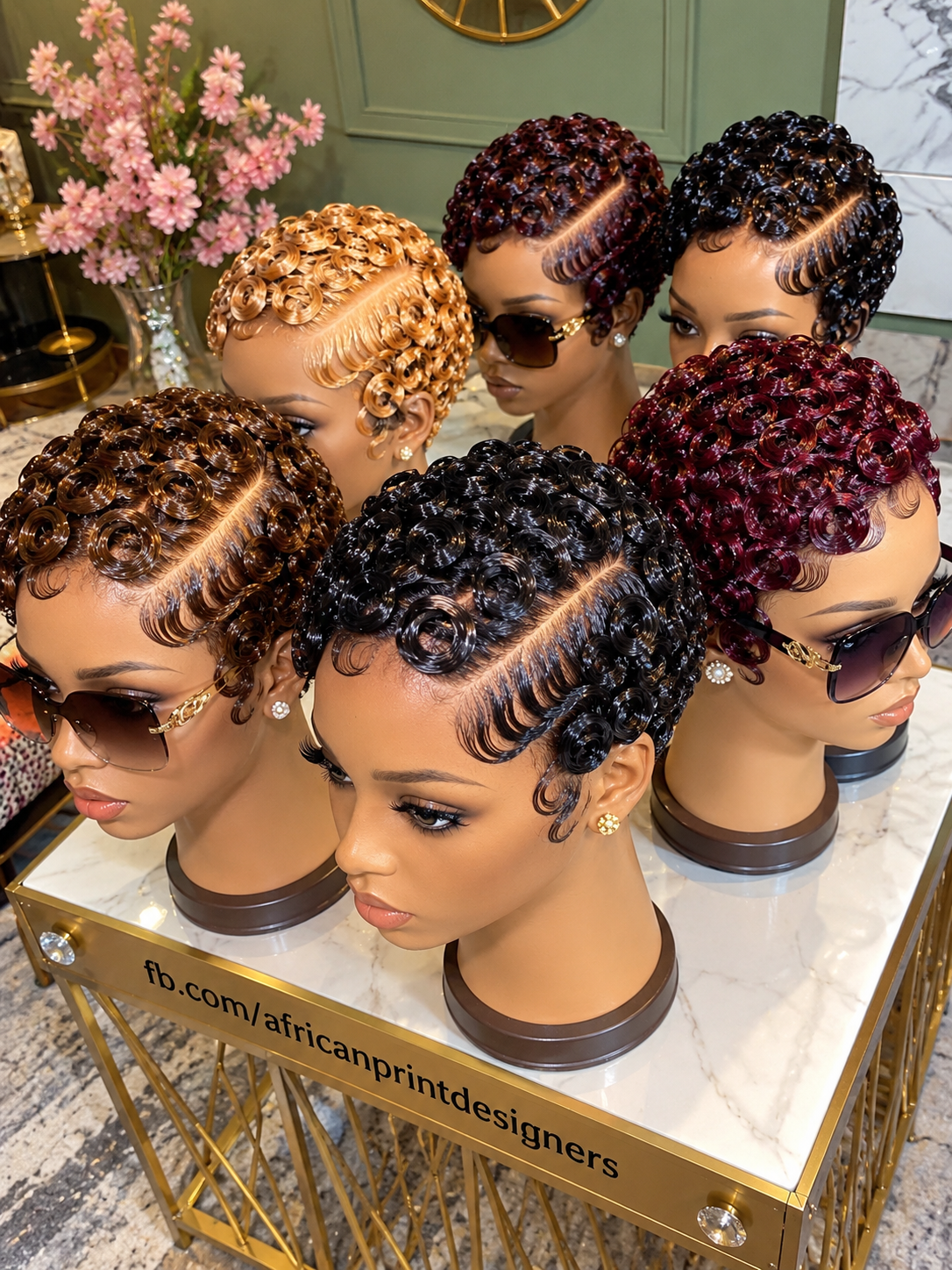
A polished pixie wig can completely change the way a compact hairstyle looks, especially when the design combines glossy finger curls, carefully shaped side waves, and a visible side part. The styles shown here use closely arranged circular curls across the crown with sleek sculpting around the front and temples. Instead of relying on length or heavy volume, the visual impact comes from curl placement, shine, color, and the precision of the hairline.
This type of wig is especially appealing for women who want a hairstyle that looks carefully styled without requiring long hair. The compact silhouette keeps the overall appearance neat while the individual curls create plenty of detail. Depending on the color, the same basic curl concept can look dramatically different. Jet black gives the style a rich glossy appearance, burgundy adds depth, while honey and warm brown shades make the individual curl loops much easier to see.
Why Finger Curls Work So Well on Pixie Wigs
The most noticeable detail is the arrangement of the curls. These are not loose everyday curls falling randomly around the head. The hair is formed into small, glossy ringlets that sit close together across the crown. Each curl has a visible circular shape, giving the wig an almost hand-set appearance.
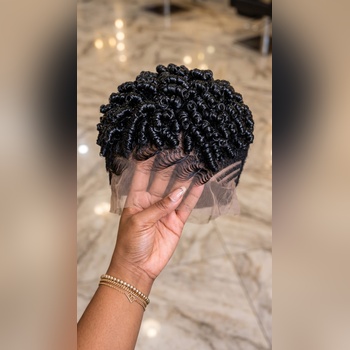
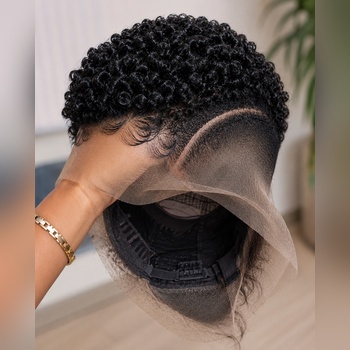
That structure is particularly useful on a pixie-length wig because there is less hair available to create volume and movement. Rather than adding unnecessary length, the stylist uses curl direction and placement to create dimension. Some curls sit upright, others angle toward the side part, and smaller sections transition into flatter waves around the hairline.
The result can look sophisticated from several angles. From above, the viewer sees the pattern created by the curls and parting. From the side, the sculpted temple area becomes more prominent. From the front, the combination of the hairline, curl placement, and glossy finish gives the style its character.
The Deep Side Part Makes a Big Difference
A strong side part is one of the key elements in these wigs. Rather than hiding the part beneath dense curls, the styling deliberately exposes it. This separates the curled crown from the sculpted side section and gives the hairstyle a clear direction.
For a wig buyer, the parting area is also worth inspecting carefully. A realistic part should not look like a thick artificial line. On lace constructions, the goal is usually to create the appearance that the hair is emerging naturally from the scalp. Knot size, lace color, hair density, and how the part has been customized can all influence the final result.
When ordering online, close-up photographs of the part and hairline are much more useful than relying only on a front-facing promotional photograph. Ask the seller whether the displayed parting comes pre-styled or whether additional customization will be necessary after delivery.
Sculpted Side Waves Give the Wig Its Signature Look
The sides deserve just as much attention as the curls. The hair around the temples is shaped into sweeping wave patterns that follow the direction of the part. These sections sit flatter against the base, creating contrast with the raised ringlets above them.
This combination is useful because an entire wig covered with identical curls can sometimes appear too uniform. Introducing flatter wave sections breaks up the shape and draws attention toward the face. Carefully styled edges can then connect the larger waves with the hairline.
When requesting this look from a wig stylist, showing photographs from multiple angles is helpful. Terms such as finger curl pixie wig, sculpted side waves, deep side part pixie, and glossy ringlet pixie wig can help communicate the general direction, but a visual reference remains important because curl placement varies significantly between stylists.
Choosing Between Black, Burgundy, Honey and Brown
Color has a major effect on how these curls appear. Black provides strong contrast against the scalp-like parting and creates a deep reflective shine. It is also particularly effective when the goal is a classic pixie appearance where the shape of the hairstyle receives more attention than the color.
Burgundy changes the character considerably. Under indoor lighting, darker burgundy can appear almost black in the shadows while brighter red tones become visible where light strikes the curls. This gives the circular curl pattern additional depth without requiring multiple highlight colors.
Honey and golden brown shades emphasize individual strands more strongly. Because lighter sections reflect more visible detail, the separation between neighboring curls becomes easier to see. Chocolate and warm brown shades offer another option for buyers who want something between deep black and brighter honey tones.
If ordering a custom wig, request photographs or video of the actual hair color whenever possible. Studio lights, phone cameras, editing, and screen settings can make brown, copper, burgundy, and honey shades appear significantly different online.
Human Hair or Synthetic Hair?
Both human-hair and synthetic wigs can be used for this type of pixie design, but they behave differently. Human hair generally gives the stylist greater flexibility for reshaping curls, adjusting the part, changing the direction of the waves, and refreshing the hairstyle later. It may also provide more natural variation between individual strands.
A quality synthetic wig can hold carefully formed curls extremely well. That can be useful for a style built around numerous small ringlets because the wearer may want the curl pattern to remain consistent. However, heat tolerance varies greatly between synthetic fibers, so buyers should never assume that curling irons or other heated tools are safe unless the manufacturer specifically states that the fiber is heat resistant.
For either option, the quality of construction matters as much as the fiber itself. Density, cap fit, hairline work, parting space, curl placement, and finishing can determine whether the finished wig resembles a salon-styled pixie or simply looks like curled hair attached to a cap.
What to Ask Before Ordering a Similar Wig
Before paying for a custom piece, send the seller a clear reference photograph and identify the details you want preserved. Ask whether the wig will arrive with the curls already formed, whether the side waves will be styled before shipping, and whether the hairline requires additional work.
It is also sensible to ask about cap size and construction. A beautiful pixie can still be difficult to wear if the cap is too large or too small. Request the seller’s measurement guide rather than choosing a cap based only on assumptions such as small, medium, or large.
For lace versions, ask what type of lace is being supplied, how much parting space is available, whether the knots have been treated, and whether the hairline has been customized. If the wig is advertised as glueless, ask what actually secures it. Depending on the construction, this may include an adjustable elastic band, internal combs, clips, or other built-in adjustment features.
How Much It Costs
Prices vary substantially according to hair quality, construction, customization, country, stylist, and whether the wig is supplied fully styled. The figures below should therefore be treated as broad shopping estimates rather than fixed market prices.
| Wig Type | Typical Price Range | What You May Expect |
|---|---|---|
| Premium Custom | $300–$700+ | Higher-grade human hair, customized hairline, detailed curl setting and professional finishing |
| Standard Custom | $180–$350 | Human-hair or blended construction with customized styling and parting |
| Basic Human Hair | $100–$220 | Simpler construction that may require additional cutting and styling |
| Premium Synthetic | $70–$160 | Better-quality fiber with a pre-shaped curl pattern and improved cap construction |
| Basic Synthetic | $35–$90 | Affordable option with limited customization and simpler construction |
Custom hand styling can increase the final price because creating numerous consistent finger curls and shaping the sides takes additional time. Lace customization, coloring, cutting, and shipping may also be charged separately. Always request the complete price before placing an order.
Where to Get This Hairstyle Done
If you already own a suitable wig, search for a wig stylist experienced with pixie cuts and finger waves rather than choosing a salon based only on general hairstyling services. Working on a wig requires different techniques from styling natural hair, particularly around the lace, parting, cap structure, and hairline.
Useful searches include pixie wig stylist near me, lace wig customization salon, finger wave wig stylist, and custom pixie wig salon. Look through the stylist’s portfolio before booking. Ideally, the portfolio should contain actual pixie wigs and close-up hairline work rather than only long lace-front installations.
When contacting a salon, send the reference image before making the appointment. Explain that you want compact ringlet curls across the crown, a visible side part, sculpted waves around the temple, and a glossy finish. Ask whether the service includes washing, cutting, curling, lace customization, and final styling or whether those services are priced individually.
Where to Buy a Similar Wig
Similar styles can be found through independent wig makers, specialist beauty stores, custom wig businesses, online marketplaces, and salons that accept made-to-order wig requests. Searching for the exact visual characteristics usually produces better results than searching simply for “pixie wig.”
Try combinations describing the curl pattern, parting, construction, and color. When you find a seller, compare customer photographs with the seller’s promotional images. A shop showing close-ups of the lace, inside cap, parting, and finished hairline gives you more information to evaluate than one displaying only heavily edited model photographs.
For custom orders, confirm the final specifications in writing. Include the chosen color, cap measurement, preferred parting side, lace type if applicable, curl size, desired density, and whether you expect the wig to arrive completely styled. This reduces the possibility of receiving a wig that technically matches the product category but looks very different from the reference.
How to Book a Wig Styling Appointment
Start by contacting a salon or wig specialist and sending photographs of the desired result. Mention that the appointment is for a wig rather than natural-hair styling. Tell the stylist whether you already have the wig or need them to source one.
If you already own it, provide information about the fiber whenever possible. The stylist needs to know whether it is human hair, a blend, or synthetic because the appropriate products and heat settings can differ. For a new custom piece, ask whether a consultation or deposit is required before construction begins.
Before confirming the booking, request the estimated service price, appointment duration, deposit policy, and what you need to bring. Some specialists may ask you to deliver the wig before the appointment so they can wash, cut, set, or customize it in advance.
Maintaining the Ringlet Pattern
A hairstyle with many carefully arranged curls should not be handled like a loose curly wig. Constant brushing can separate the ringlets and quickly change their appearance. Instead, follow the care instructions appropriate for the specific fiber and use minimal manipulation between wears.
When the wig is not being worn, placing it on an appropriate wig stand can help protect its shape. Avoid crushing the crown beneath other wigs or storing it while damp. If individual curls begin to loosen, they can often be reset, but the correct technique depends on whether the wig is human hair or synthetic.
Heavy product buildup can also reduce the visual separation between the curls. The goal is a healthy reflective finish rather than hair saturated with styling product. A professional wig stylist can refresh the set when the curls begin losing their original formation.
Details That Make a Custom Order Look More Convincing
For this particular style, small details matter. The crown should have enough density to support the circular curls without looking excessively bulky. The part needs enough contrast to remain visible, while the temple sections should transition naturally into the sculpted waves.
The curl sizes do not necessarily need to be identical. Slight variation can prevent the hairstyle from looking mechanically manufactured. At the same time, the overall direction should remain intentional so the curls work together rather than appearing randomly placed.
Buyers should also pay attention to how the hairstyle looks from the sides and back. Product photos often emphasize the front because that is where the lace and parting receive the most attention, but a pixie wig exposes much more of its overall construction than a long wig. Request additional angles before purchasing an expensive custom unit.
With the right cap, carefully arranged curls, a realistic parting area, and properly sculpted sides, this type of pixie wig can deliver a highly polished appearance without relying on length. The strongest versions balance the glossy ringlets with flatter wave sections so that the hairstyle retains both dimension and a compact silhouette.
Search Terms
Glossy Finger Curl Pixie Wig · Deep Side Part Pixie Wig · Ringlet Pixie Wig · Sculpted Side Wave Wig · Burgundy Finger Curl Wig · Honey Brown Pixie Wig · Black Curly Pixie Wig · Lace Pixie Wig With Side Part