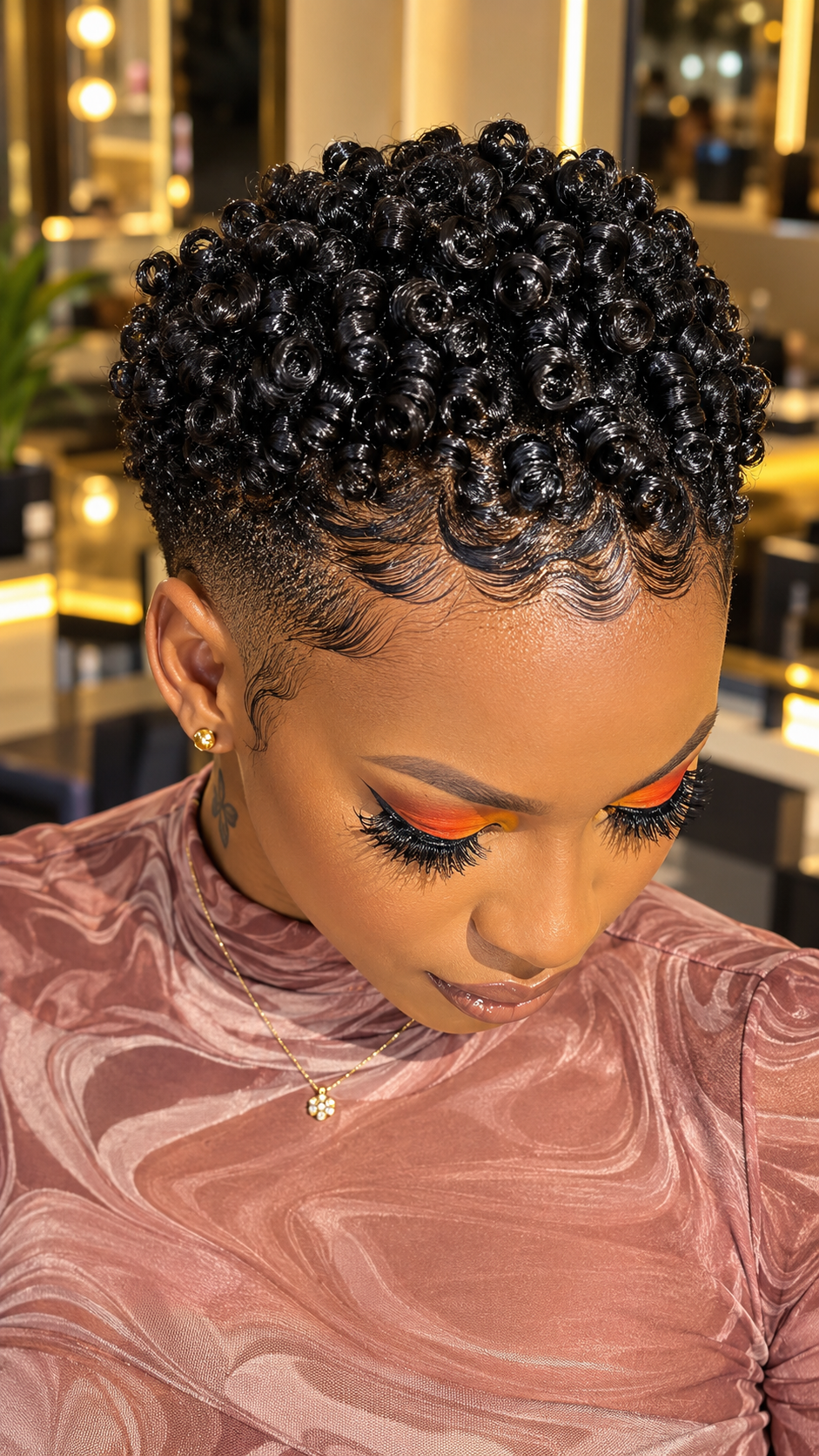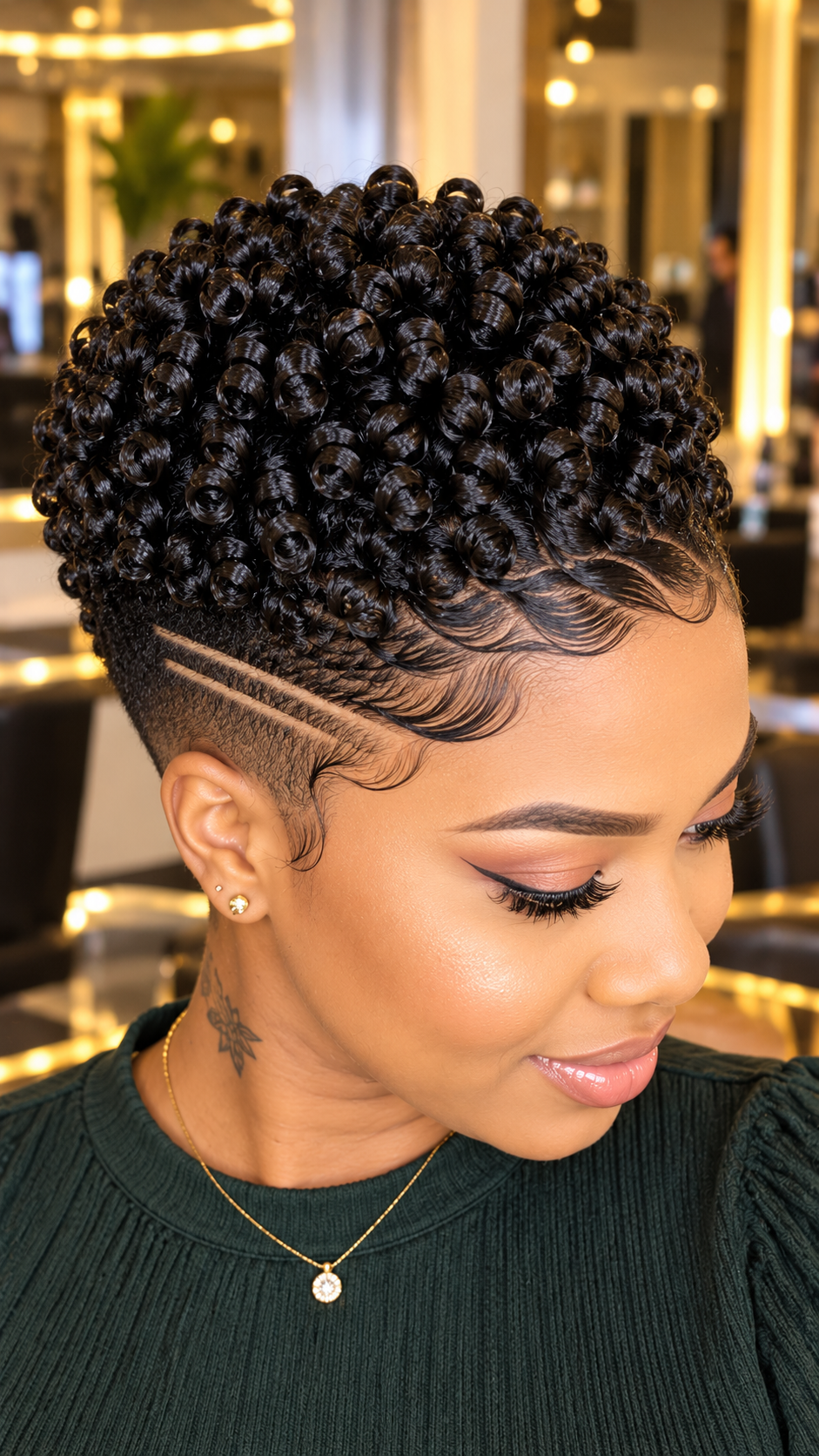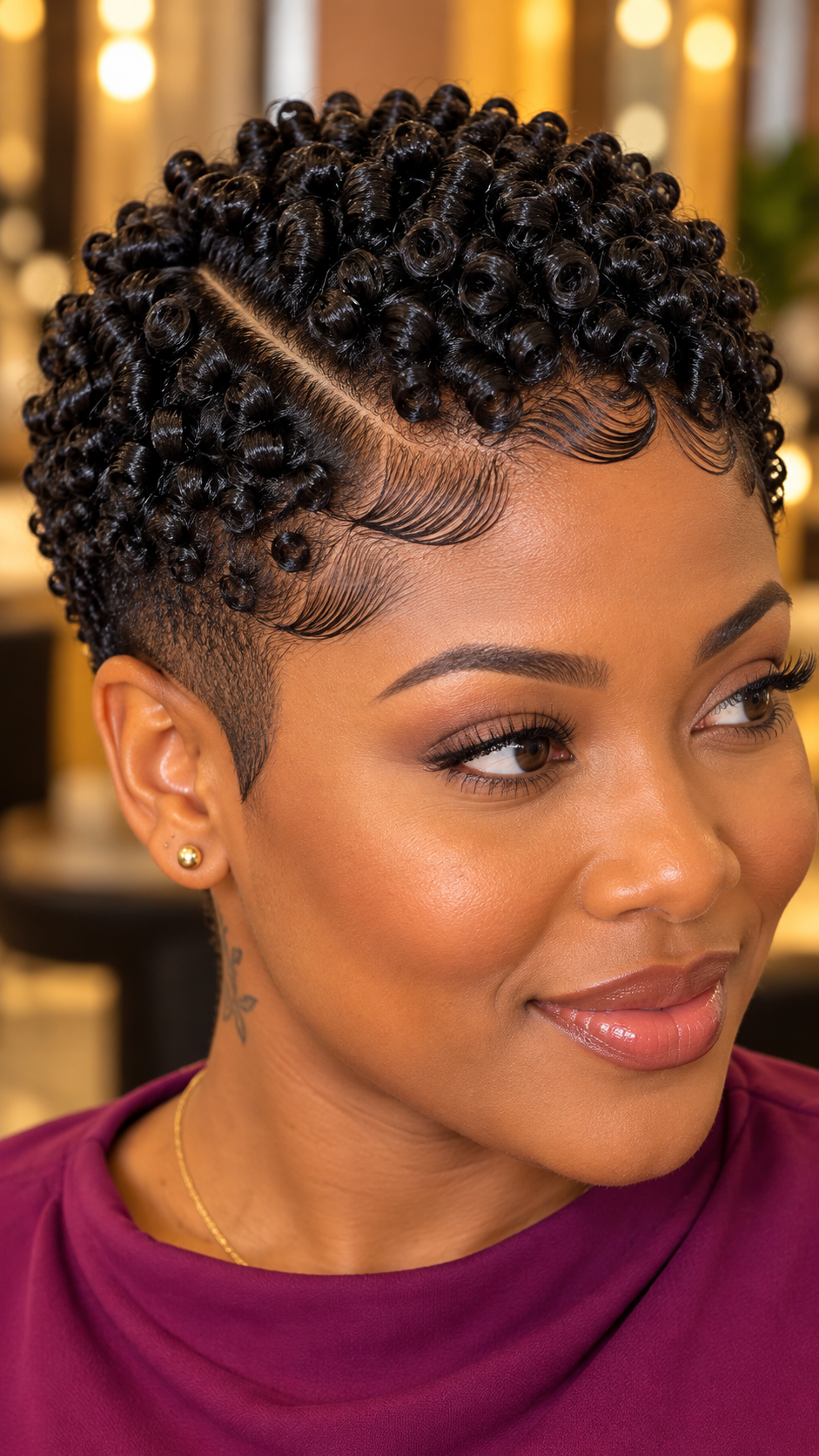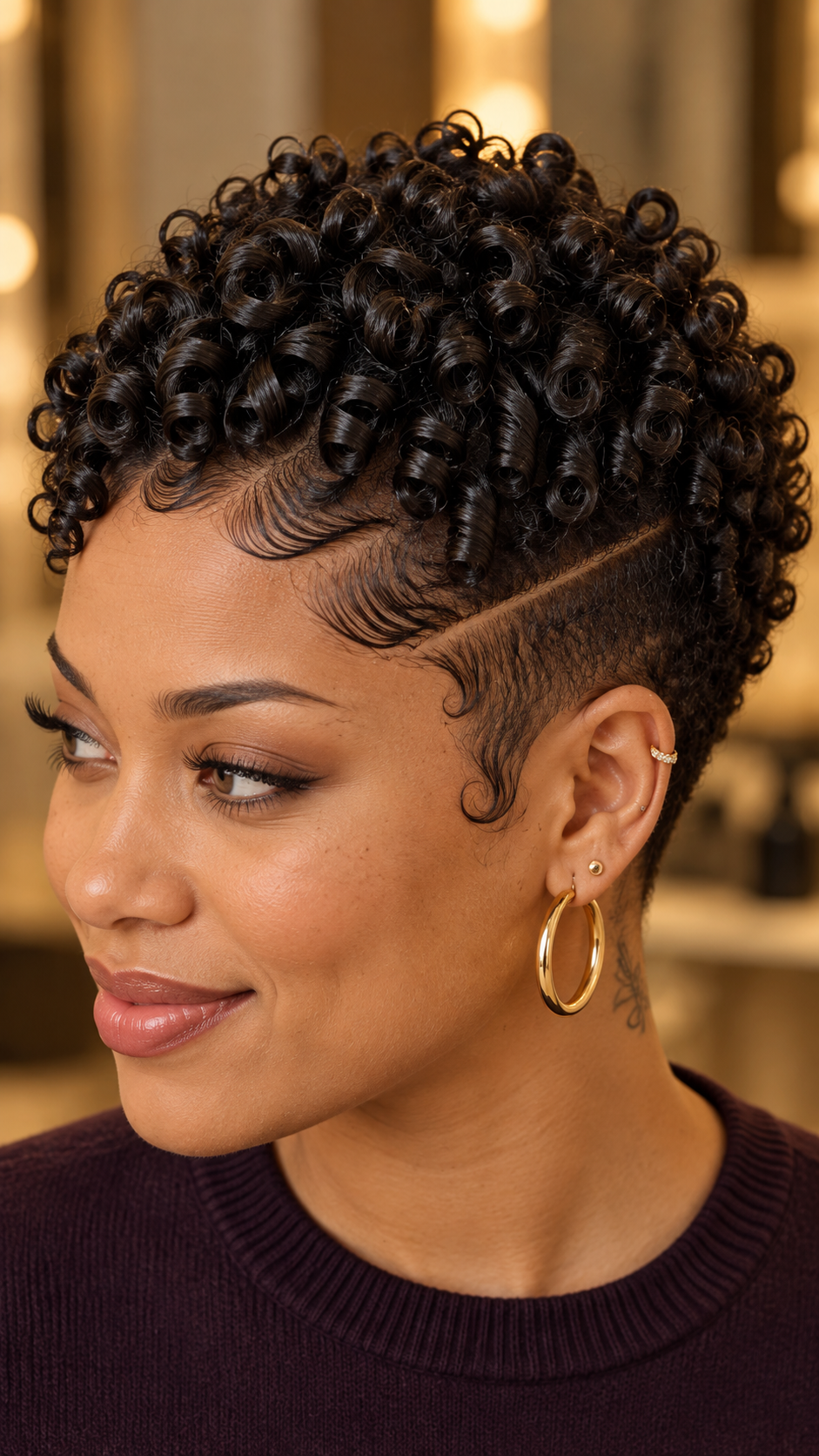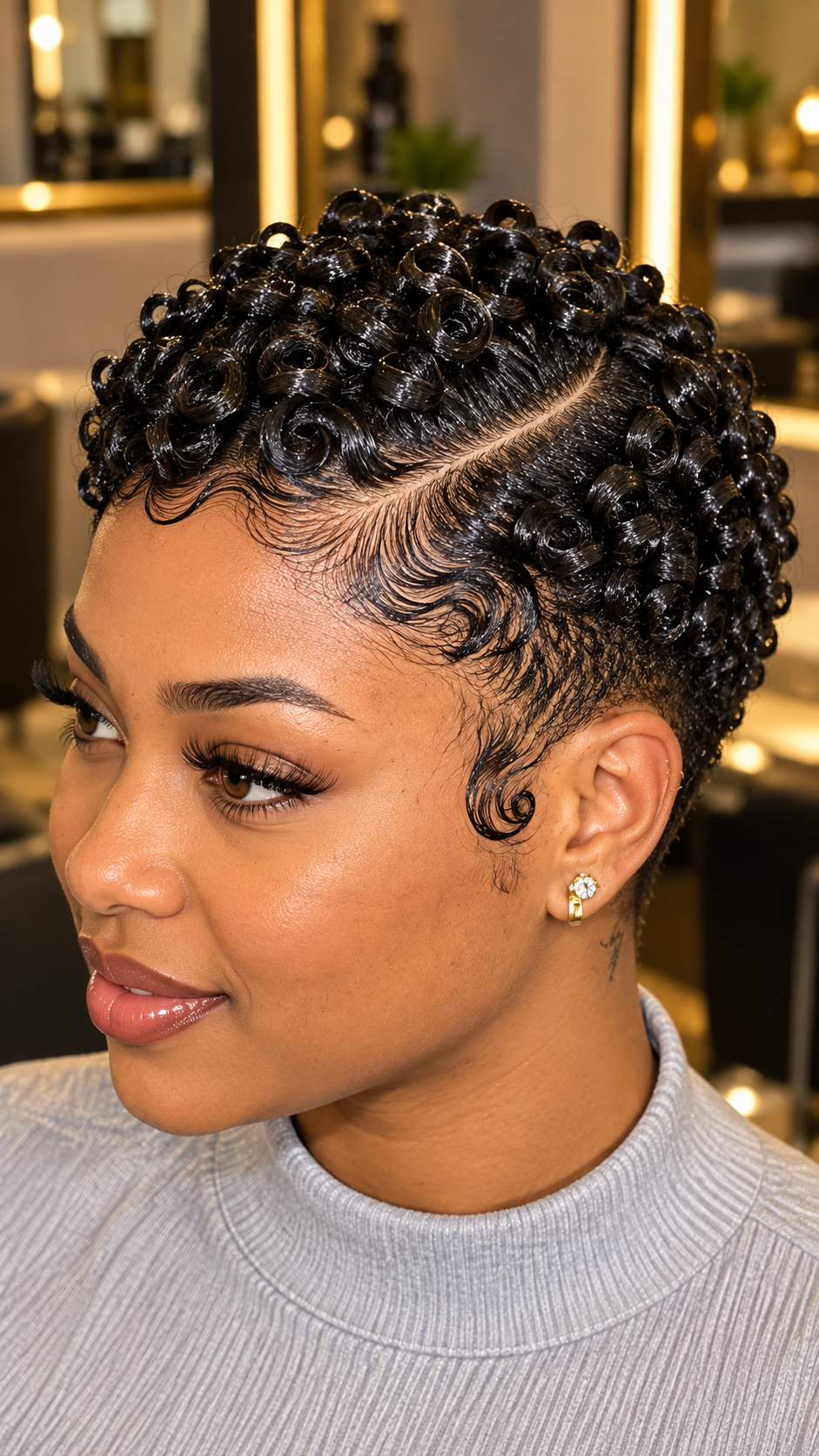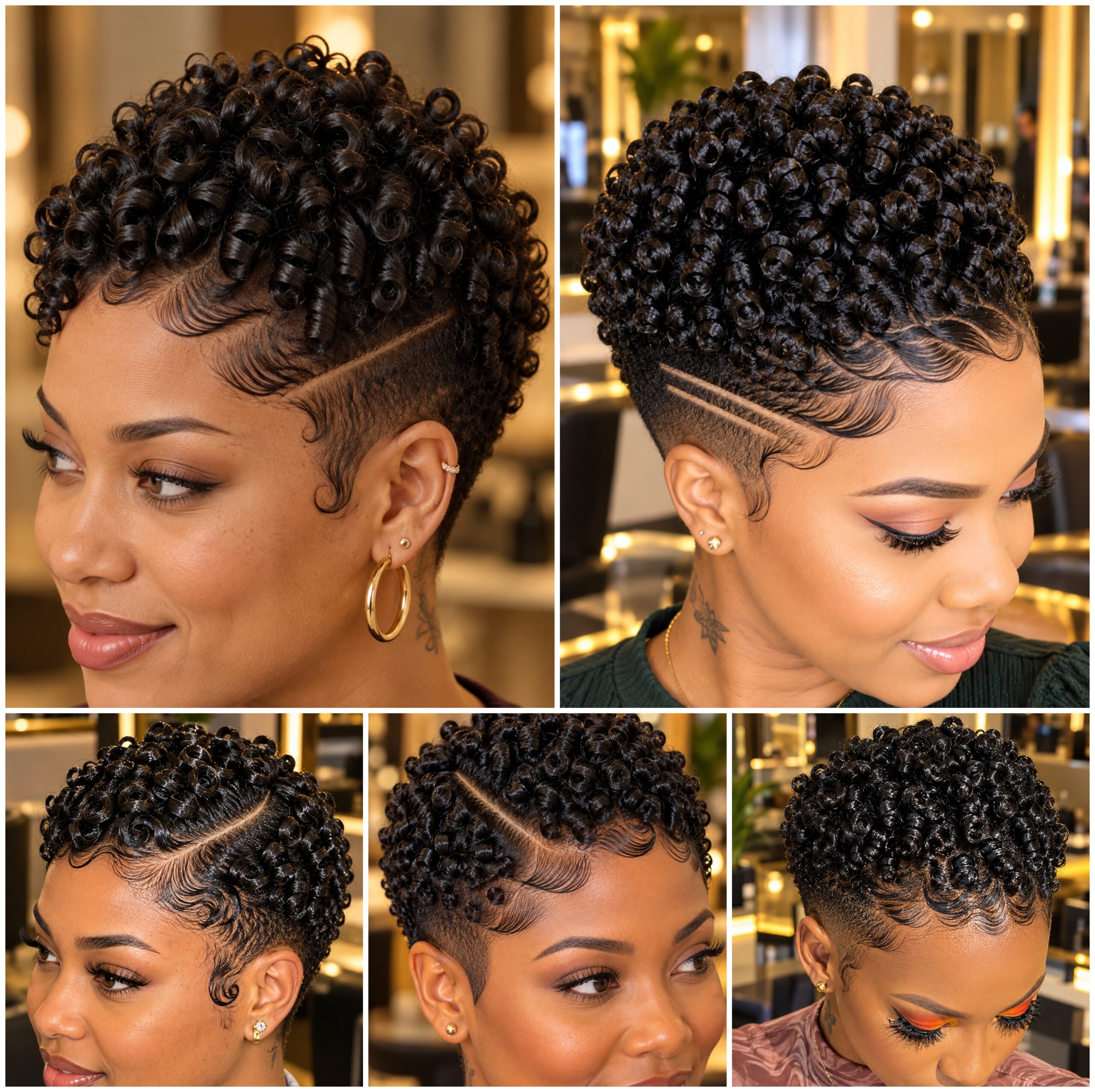
A sculpted finger-wave hairline flowing into a crown of compact natural coils creates an expressive hairstyle that combines classic hair artistry with precision barber cutting. The closely faded sides introduce contrast beneath the fuller curls, while subtle side detailing adds character without overwhelming the carefully arranged front.
This hairstyle is particularly appealing for women who appreciate glossy finger waves, springy Afro coils, and neatly graduated side fades. The combination allows the front hairline to appear polished while the upper curls retain their natural movement, making the finished look suitable for everyday activities, professional settings, and special occasions.
Where Sculpted Waves Meet Natural Spirals
The most distinctive element is the transition between the carefully arranged front section and the fuller coiled crown. Rather than styling the entire head with one technique, the stylist creates a controlled wave pattern along the forehead while preserving individual spirals across the top.


Small S-shaped curves can follow the natural hairline and gradually connect with the curls behind them. This contrast creates visual depth without requiring excessive crown height or complicated side artwork.
For women with tightly curled 3C to 4C hair, the front may require additional moisture and flexible-hold styling products to maintain the wave pattern. The crown can remain naturally coily or be shaped into individual finger coils depending on the desired appearance.
Preparing the Hair for Two Different Styling Techniques
Start with a gentle shampoo followed by a moisturizing conditioner. Clean, detangled hair makes it easier to separate the front section from the crown and helps styling products distribute more evenly.
Apply a lightweight leave-in conditioner while the hair is damp. The crown can receive curl foam or a flexible styling cream, while the front section may benefit from a small amount of mousse or edge-control product.
Avoid applying heavy products across the entire head. The finger waves need controlled hold, but the coils should remain flexible enough to preserve their bounce and individual spiral structure.
Keeping the products separate allows the stylist to achieve a sleek front without making the upper curls appear stiff or weighed down.
Forming a Rounded Crown with Visible Coil Separation
The upper hair can be divided into small sections and wrapped around the fingers to create individual spirals. Smaller sections generally produce tighter coils with greater separation, while slightly larger sections create additional fullness.
Maintaining a softly rounded silhouette helps the curls appear balanced from the front, sides, and back. A little extra height through the center can provide volume without making the crown excessively bulky.
Natural shrinkage should be considered before trimming. Tightly coiled textures may become significantly shorter after drying, so preserving additional length initially allows the stylist to refine the final proportions afterward.
Once the coils have dried, individual spirals can be gently repositioned with the fingers. Excessive brushing may separate the curl pattern and introduce unnecessary frizz.
Creating Elegant S-Shaped Hairline Waves
The front section requires careful control. A fine-tooth comb, fingers, and lightweight styling foam can be used to guide the hair into flowing curves along the forehead.
The waves may extend across the entire front or remain concentrated toward one temple for a slightly asymmetrical appearance. Smaller curves generally complement a compact coiled crown better than oversized patterns.
The natural growth direction should guide the wave placement. Forcing delicate edges into unfamiliar positions may require excessive product or tension, making the hairstyle more difficult to maintain.
After the desired pattern has been created, a satin scarf can be placed gently around the front while the styling product sets. This helps preserve the curves without disturbing the curls behind them.
Designing the Fade Around the Temples
The faded sections gradually reduce hair length around the temples, ears, and neckline. A low fade preserves additional density through the upper sides, creating a softer connection with the coiled crown.
A closer skin blend produces stronger contrast and makes the front waves more noticeable. However, very closely cut areas generally require more frequent maintenance because new growth quickly changes their appearance.
The rear transition should follow the natural contour of the head. Balanced graduation around the neckline helps the hairstyle maintain consistent proportions when viewed from different angles.
Adding a Personal Accent to the Side Profile
The shorter temple area can remain simple or include a small shaved design. A narrow diagonal line, gently curved accent, or two carefully spaced marks can introduce additional personality.
The artwork should remain proportional to the available faded area. A restrained design allows the flowing hairline waves and springy coils to remain the primary visual elements.
When multiple shaved accents are requested, clear spacing helps each detail remain visible as the hair grows.
Useful inspiration searches include finger wave Afro fade hairstyle, coily crown with shaved side design, and women’s natural hair fade with sculpted edges.
Choosing a Salon with Wave-Setting Experience
Look for an Afro hair salon, natural hair studio, finger-wave specialist, or barber experienced with women’s short coily cuts. The ideal professional should understand both detailed hairline styling and precision fade techniques.
Helpful searches include finger wave stylist near me, natural hair coil specialist, women’s Afro fade barber, and short coily hairstyle salon.
Review recent client photographs before booking. Pay particular attention to the quality of the front waves, the consistency of the crown curls, and the smoothness of the side transitions.
A stylist experienced only with traditional finger waves may not specialize in fading, while a barber may not provide detailed coil styling. Confirming both skills beforehand is important.
Booking the Complete Hair Appointment
Appointments are commonly arranged through Instagram, WhatsApp, salon websites, telephone booking, or online scheduling platforms.
Send clear reference photographs showing the preferred crown height, front wave pattern, fade depth, and any additional side detailing. Front and profile images are especially useful because they show how the two styling techniques should connect.
Ask whether shampooing, conditioning, detangling, finger-coil styling, wave setting, cutting, fading, and finishing products are included in the quoted price.
Some salons offer natural hair styling and barber services separately. When necessary, request a combined appointment so both professionals can coordinate the final proportions.
Finding a Wig with a Similar Silhouette
Women who prefer a removable hairstyle can explore custom wig makers, specialist Afro wig retailers, beauty supply stores, and online wig shops.
Useful searches include finger wave pixie wig for Black women, short coily lace front wig, natural finger coil wig, and curly tapered Afro wig.
Human-hair units provide greater flexibility for reshaping individual coils and styling the front waves. Quality synthetic units may retain their original curl pattern with less daily manipulation, although changing the hairline design can be more difficult.
A lace-front construction can help create the appearance of a naturally styled front. However, a true scalp-level fade and shaved side details are generally more convincing on natural hair than on a conventional wig.
What to Examine Before Purchasing
Check cap measurements, crown density, coil diameter, lace shade, hairline construction, and temple coverage. The front lace area deserves particular attention because the wave pattern needs enough flexibility to be shaped close to the forehead.
Excessive density around the temples may hide the compact faded appearance. Request photographs showing the unit from the front, both sides, and back whenever possible.
For custom orders, provide several reference images and explain the desired relationship between the sculpted front, fuller crown, and reduced side sections.
Ask whether the wig can be customized after delivery, whether it arrives pre-styled, and what maintenance products are recommended for its specific fiber type.
Protecting the Waves During Sleep
The front hairline may require more protection than the crown because its shape depends on carefully positioned sections. A satin scarf tied gently around the hairline can help preserve the curves overnight.
A satin bonnet can protect the coils behind the front section, while a satin pillowcase provides additional protection against friction.
Avoid tying the scarf too tightly, particularly around delicate temple areas. The goal is to hold the styling pattern in place without creating unnecessary pressure.
Refreshing the Curls Without Disturbing the Front
Between wash days, lightly mist the crown with water when additional moisture is needed. Apply a small amount of leave-in conditioner or curl foam, then reshape loose spirals individually with the fingers.
The front waves can be refreshed separately using a small amount of mousse. Guide each curve back into its established position and allow the product to set before touching the hairline again.
Heavy oils and thick creams should be used sparingly. Excessive buildup can reduce curl bounce and make the sculpted front appear coated rather than naturally glossy.
Maintaining the Fade and Side Detailing
The closely cut areas generally show new growth before the crown requires another complete styling session. As the temples and neckline become fuller, the contrast between the curls and faded sections gradually decreases.
A barber can refresh the side blend and restore any existing shaved accents without removing unnecessary length from the upper curls.
Women who prefer a softer appearance may allow the fade to grow slightly between appointments, while those wanting a sharper side profile may schedule more frequent touch-ups.
The combination of sculpted hairline waves, compact natural coils, and carefully graduated sides creates a distinctive hairstyle with both softness and barber precision. Gentle edge care, regular moisture, and timely fade maintenance help preserve the overall silhouette while allowing the curls to remain lively and expressive.
Search Terms
finger wave coil fade hairstyle · sculpted finger wave hairline · coily crown with side fade · natural Afro finger wave pixie · women’s curly fade with wave edges · finger coils with carved temple detail · short coily fade for Black women · sleek front waves with Afro coils