
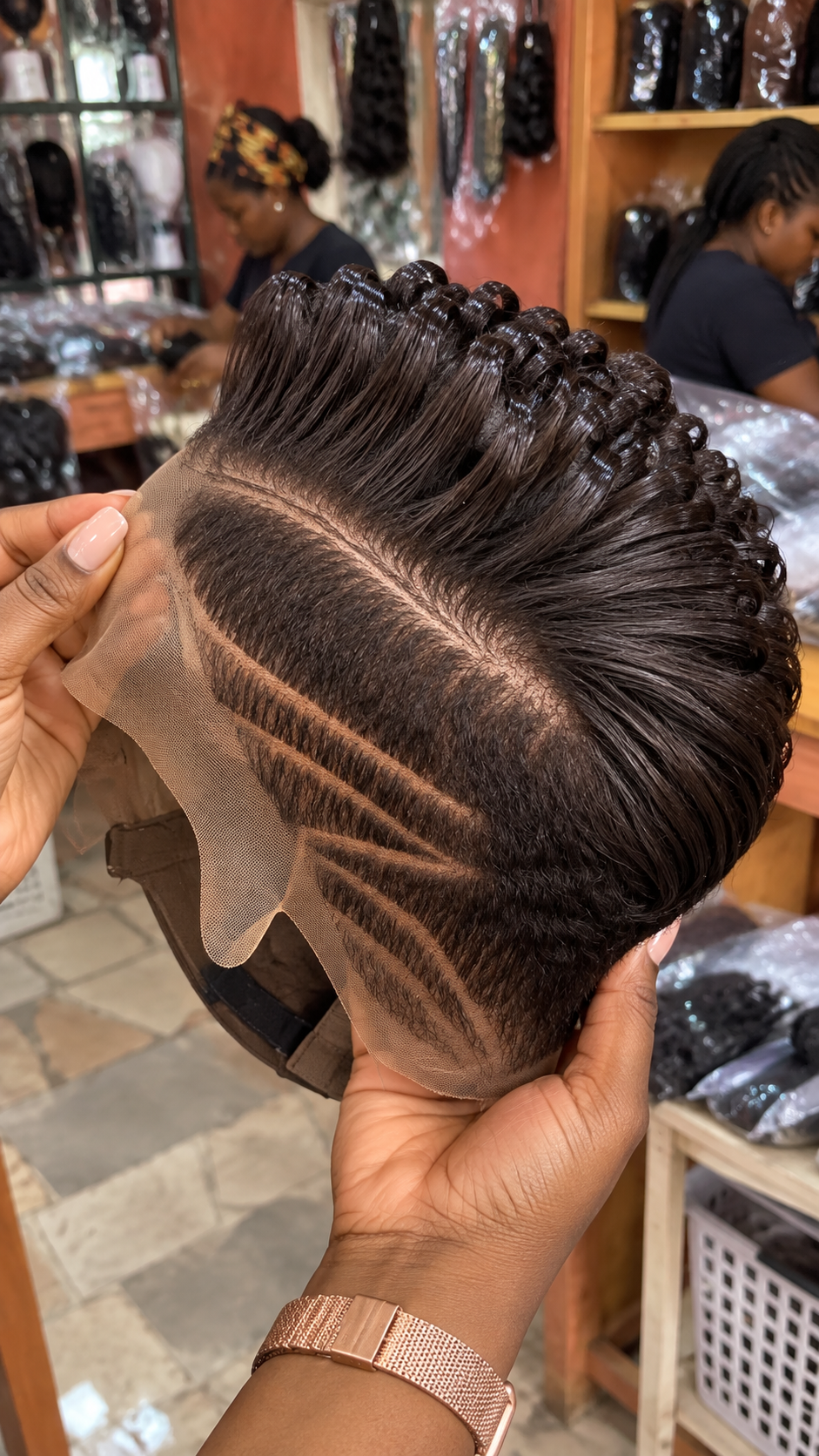
The burgundy-copper unit is the most color-sensitive of the group. Dark wine tones and warmer red reflections share the same sculpted surface, so lighting, processing and maintenance all influence the final appearance. The side lines remain disciplined, preventing the vivid crown from becoming visually overloaded.
Burgundy and copper should not collapse into one red tone
The upper surface shows a dark wine-like foundation with brighter copper-red reflections. That layered effect is more sophisticated than a single red dye. A colorist should decide where the deeper burgundy remains dominant and where the brighter warmth appears. Ask for a strand test if the unit is human hair, because lifting dark hair into copper can change texture. For fiber, compare swatches in neutral light. The final result should have depth in the shadowed areas and warmer movement on the raised loops.
Red color changes the visual weight of the crown
Bright warm sections attract attention, so the top can appear fuller than an identical black version. That means the stylist may need slightly less visual bulk to achieve the same proportion. Evaluate the crown in normal room light before adding more hair or enlarging the loops. The goal is a sculpted red silhouette, not maximum volume. This is a useful point for clients who bring a black reference but request a vivid burgundy-copper conversion: color itself changes how the shape is perceived.
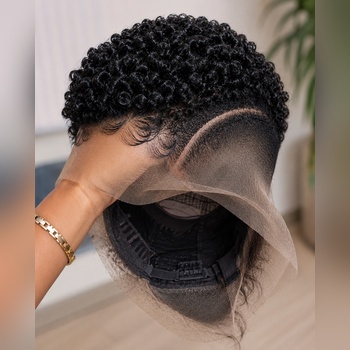
Three elongated lines keep the side from competing with the crown
The side detail is narrow and directional, which gives the eye a resting area beneath the red movement. Reproducing it requires consistent spacing and a clean transition into the darker side panel. Do not widen the lines simply to make them more visible in photos. A subtle line can be more elegant in person. Ask for a profile image before final approval and check that the motif sits above the ear without crowding the temple.
Color maintenance belongs in the purchase conversation
Red and copper shades can fade or shift depending on hair type, washing routine and heat exposure. A salon should explain that before taking a custom deposit. Recommend a realistic refresh schedule based on the actual material and processing used. Store the unit away from direct sunlight and avoid unnecessary high heat. If the client wants a long-term low-maintenance option, discuss whether a darker burgundy balance would age more gracefully than a very bright copper surface.
Wardrobe and makeup can change how the red reads
Burgundy may look cooler beside black clothing and warmer beside cream, gold or rust. That does not mean the wig color has changed; surrounding colors affect perception. For social-media content, show the unit against a neutral background at least once so buyers have a reliable reference. A salon can still create styled editorial photos afterward, but the neutral image should be the color anchor. This reduces confusion when clients save screenshots from different posts and assume each lighting setup represents a different shade.
Price the color process separately from the sculpting process
A red custom unit can require both chemical work and detailed molding. Those are separate skills and should appear separately in the quote. The client can then see why a burgundy-copper version costs more than a one-color brown unit with the same cap. If a color correction is needed later, it can also be booked without rebuilding the entire style. Clear service separation protects the salon’s labor and gives the buyer a transparent path for future maintenance.
Approving red before construction
For burgundy-copper, make color approval a formal step. Compare the chosen tone beside white or gray, then photograph it. After that, map the three side lines and decide how much crown height is appropriate. Red makes volume appear stronger, so a shape copied directly from a black reference may need slight scaling. The stylist should explain that adjustment before construction begins.
Remote approval for red tones
Burgundy-copper orders should be approved with two color images: neutral indoor light and daylight. Red tones shift dramatically between environments. After color approval, request a side-detail photo and a short clip of the crown. Keep those files with the invoice so any later color refresh has a reliable target.
Preserving burgundy-copper color
Red units deserve a color-preservation routine from day one. Limit unnecessary heat, avoid prolonged sun exposure and use products appropriate for processed color. If the copper reflection fades faster than the burgundy base, book a targeted color refresh instead of repeatedly recoloring the entire unit.
Service Cost for Burgundy-Copper Customization
| Option | Typical Range (USD) | Planning note |
|---|---|---|
| Premium Custom | $320–$520+ | High-grade hair, advanced color or detailing, fitting and precision shaping |
| Standard Custom | $220–$320 | Salon-built unit with controlled styling and moderate customization |
| Basic Human Hair | $150–$230 | Human-hair base with simplified finishing |
| Premium Synthetic | $95–$170 | Quality fiber with pre-shaped form and selected custom work |
| Basic Synthetic | $55–$95 | Entry interpretation with fewer custom stages |
These figures are planning ranges rather than fixed retail prices. Final cost depends on hair material, cap construction, color processing, labor, fitting and the complexity of the visible side work. Ask for a written breakdown before paying a non-refundable custom deposit.
Search Terms for the Burgundy-Copper Reference
burgundy copper wig · red copper loop wig · three side lines wig · burgundy sculpted crown · copper ribbon hair · diagonal part lace wig · red brown custom wig · salon molded loops
Final burgundy-copper standard
Burgundy-copper deserves two approvals—one for construction and one for color. Keeping those checkpoints separate prevents a beautiful red tone from distracting from structural mistakes.
Separating burgundy from copper
Before paying the balance, ask to see the inside cap and confirm the exact adjustment system, cap circumference and lace specification. The exterior reference is built around burgundy-copper ridges, but comfort depends on what is underneath. A cap that is too large can rotate and move the three elongated side lines out of position; one that is too tight can distort the front edge. Record the measurements on the invoice so a future remake starts from verified fit data rather than memory. If the seller cannot confirm a technical detail, leave it out of the public product description instead of guessing.
Recording the accepted red formula
If another stylist will maintain the unit later, give that person a short technical brief. Note the burgundy with copper-red palette, the direction of the part, the scale of burgundy-copper ridges and the location of the three elongated side lines. Include two or three unfiltered reference photographs. This is more useful than simply saying “make it like before,” because a sculpted wig can change quickly when a new stylist interprets the loops differently. A written brief also prevents accidental changes to the side design during a routine refresh.
Makeup-room lighting check
For social content, shoot one image that prioritizes construction rather than glamour. Use neutral light, keep the camera close enough to show the part and three elongated side lines, and include a second angle that reveals burgundy-copper ridges. Then capture a wider salon image for context. This combination gives buyers both proof and inspiration. Avoid filters that shift burgundy with copper-red, because the post may later be used as a color reference by a customer. Accurate images reduce repetitive questions and make the article’s search terms match what people can actually see.
Heat limits after color processing
Before wearing the unit for a long event, test it for at least an hour at home. Check pressure near the ears, movement at the nape and whether the sculpted top changes when the wearer turns the head. The three elongated side lines should remain in its intended position without over-tightening the cap. If adhesive will be used, follow the product instructions and do not make the event day the first fitting. A short wear test gives time to correct comfort or placement issues while the lace and styling are still easy to adjust.
Seasonal color refresh options
If this design is remade, protect its identity by deciding which elements are fixed and which can change. Keep the part direction, the relationship between burgundy-copper ridges and the side, and the recognizable three elongated side lines. Color within the burgundy with copper-red family can be adjusted for the client, and loop scale can be tuned for head size. Treat those as controlled variations rather than redesigning every feature at once. This approach creates a recognizable salon signature while still allowing each order to feel personal.
Client handoff notes for red hair
At collection, inspect the unit in ordinary light before leaving the salon. Look at the part from above, check the three elongated side lines from a true profile, and make sure burgundy-copper ridges remains separated rather than compressed. Confirm care instructions for the actual hair material and ask when the first maintenance visit should happen. Take one final photo of the finished unit on the wearer or a correctly sized head form. That image becomes the baseline for future refresh work and makes any later change in shape or color easier to diagnose.