
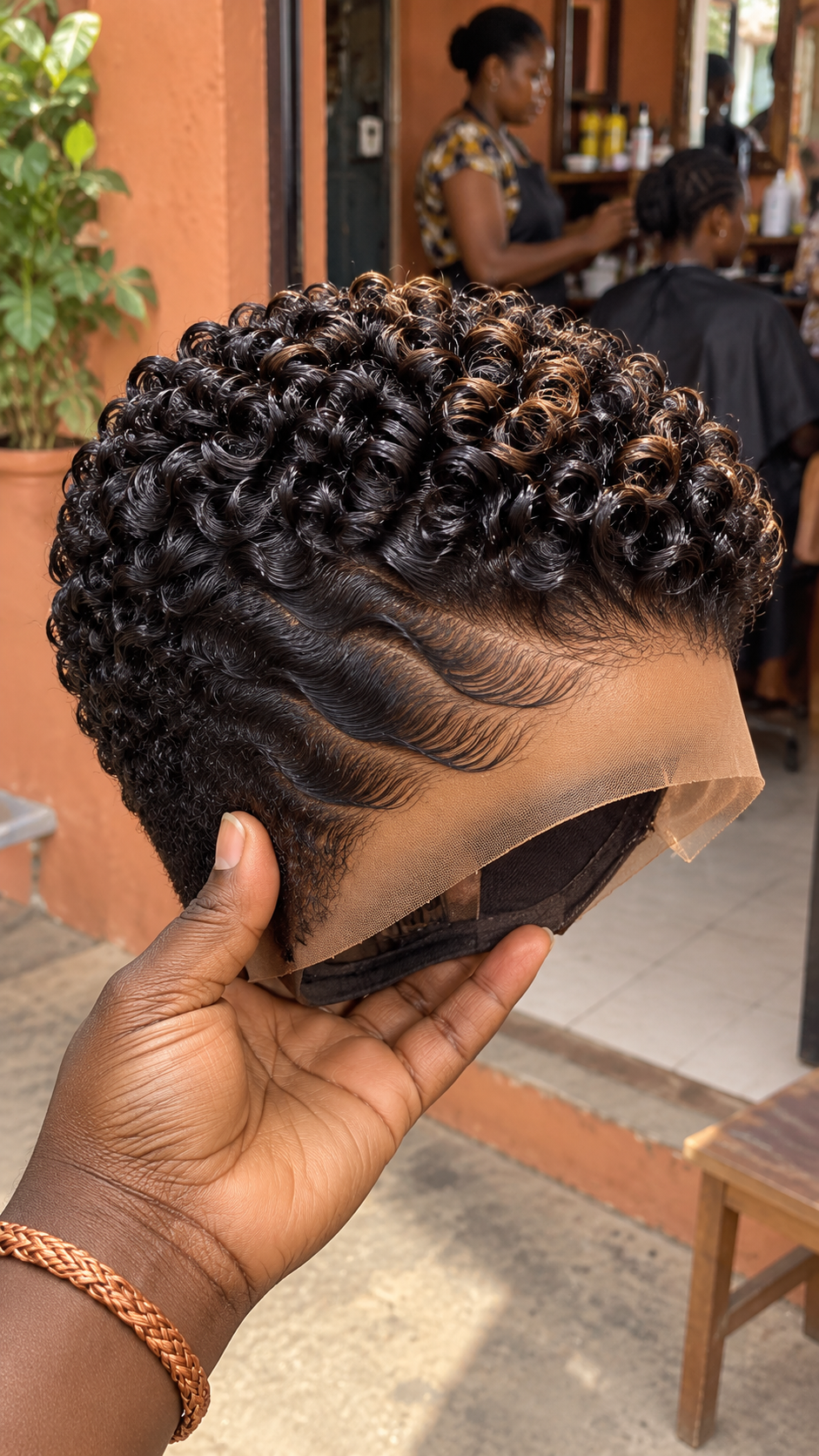
Fine caramel strands catch the light across the top of this short black wig. They follow the bends of individual curls, appearing on one rim and disappearing into the darker center of the next. Most of the hair stays black, so the warm color shows in small flashes when the wig turns. Below the fuller crown, three broad finger waves lie close to the visible temple. Their long curves give the side a distinct shape beneath the cluster of springy loops.
The black pixie wig with caramel highlights has a rounded crown and a close lower side. Some curls at the top show open circles, while others bend over neighboring sections and reveal only part of their shape. Near the temple, the generous loops give way to flatter ridges and then to shorter, tightly curled hair. The open spaces between the three waves make their path easy to follow. The finest hairs sit along the front edge, where the black softens into the visible tan lace.
A single hand supports the wig from underneath, exposing a section of the dark interior and the lace extending beyond the hairline. That angle shows the styling in detail and leaves the final fit to be assessed on the wearer. If you are drawn to this style, decide whether the caramel accents or the placement of the side waves matters most to you. Both can be tailored, and each requires a different conversation with the person who makes or fits the wig.


Caramel That Appears as the Curls Turn
Look at a curl near the upper right of the photograph. The caramel is concentrated along a few strands that wrap around its outer edge. The black hair remains visible inside the opening and beneath the warm strands. Other curls show only a brief touch of color near a bend. This distribution gives the top small points of contrast. If you order a similar wig, ask for fine ribbons of caramel on selected curls and show where you want the color to be most noticeable.
The placement can be tailored to the way you usually see yourself in a mirror. A few strands near the front of the crown will show when you look straight ahead. Accents concentrated farther back may become more visible in a profile or when someone sees you from slightly above. Ask your maker to photograph a sample in both positions. This is especially useful if you want the wig to look mostly black at work and show more warmth outdoors or when you turn your head.
Caramel can range from a muted brown to a honey shade with a stronger golden cast. The reference shows warm strands over black, but the amount of visible contrast changes with the light. Ask to compare the colors beside each other under indirect daylight, then check a more ordinary indoor view. If you are choosing from swatches, a small curled sample can show how much of the caramel remains visible after the strands turn inward. A flat swatch will show the shade, while a curl will show its position within the finished shape.
Also ask how the warm strands will be introduced. A maker might work with a preblended fiber, use separately colored sections or color suitable human hair as part of the service. Ask what adjustments are possible once the unit is styled and what care the selected fiber needs. If the sample looks brighter than you expected, discuss reducing the amount of visible caramel before changing the shade itself. A finer section of the same color may give you the softer contrast you want.
The Three Finger Waves Shape the Profile
The waves sit below the outer edge of the crown, with each ridge following a slightly different length. The top wave reaches farthest toward the forehead. The ones beneath it end progressively closer to the visible temple, leaving space around their tips. Fine strands spread out from the darker ridges along each bend. That helps the front feel light even though the curls above it are full. When showing the picture at a consultation, trace each wave to indicate which end you want the stylist to keep visible.
The warm areas between the waves come from the visible base beneath the styled hair. Describe the design as three separate waves with exposed spacing when you speak with a maker. That gives them a clearer request than asking for shaved lines, which might lead to a different side finish. If you prefer a more understated temple, ask whether the stylist can bring the lowest wave a little closer to the one above it. Keep enough distance between the ridges for their ends to be easy to see from the side.
During an in-person fitting, check the lowest bend in relation to your ear and the longest bend in relation to your brow. A cap held open can spread wider than it does on the head, so assess both positions once the wig is sitting comfortably. If you wear glasses, put them on and take them off a few times. The frame arm might touch the lowest ridge, or it might rest below it with room to spare. Tell the stylist which you prefer before they shorten or move the wave.
The front photograph mainly shows one side. Ask for a view of the opposite temple and the nape of a similar unit before placing an order. For a custom version, discuss whether the waves should appear on one side only and how short you want the lower hair behind the ears. These choices affect how the style looks with hoops, a high collar or a head covering. They also give the maker a clearer sense of where the rounded crown should begin to taper toward the back.
Where To Buy This Wig
Look for specialist wig boutiques, beauty supply stores with short styled units and custom wig makers who show finger wave temples and highlighted curls in their portfolios. Ask to see side views of their work. A shop may have a ready-made wig with the black and caramel blend you like, while a custom maker can control the width and final position of each wave. If a listing shows the right crown, check the base and lace coverage before assuming the temple can be adapted at a local salon.
Send the photo with a brief that describes a black base, scattered caramel strands through selected crown curls and three long waves on the featured side. State which side you want the waves on from your own perspective and mark it on the reference. Include the requested measurements and describe how high you want the crown to sit. If you want the lightest strands concentrated near the front or upper side, include that in the same message. Agreeing on those details early gives you specific points to review in the approval photographs.
Before paying, ask for a straight front view, both profiles, a rear view and a photograph of the complete interior. For an existing wig, request a video of the actual piece. Confirm its fiber, lace color, cap measurements, attachment components and whether the lace will be trimmed before delivery. For a custom order, ask when you can approve the color and side waves, which alterations are included and how the seller handles changes after fitting. Get the expected completion date and delivery cost in writing.
To get the look done locally, book a consultation with a short-hair salon or wig stylist whose work shows molded waves close to the temple. Send the reference and photos of any unit you intend to bring before booking the full appointment. Say whether you want a fitting, a full curl set or color work. If you want a related look on your own hair, ask a stylist who works with short curls and tapers to assess your crown length and temple density. They can explain how much hair is available for the long waves and whether the cut needs to be shaped first.
Cap Choices for an Exposed Temple
Tan lace extends across the front and visible temple in the reference. Only part of the inside is visible, so the photo gives a limited view of how the unit fastens and how far the lace continues. When comparing caps, ask the maker to show where the longest and shortest waves would sit on the proposed base. Have them point out nearby seams and show how the lace looks against a surface close to your skin tone. The exposed spaces between the waves make that area particularly important to the finished appearance.
A lace-front wig can suit the design when its usable lace reaches the temple and covers the area required for the waves. A frontal may offer more working space toward the ear, depending on its width and depth. A closure can be practical for a fixed style if the chosen placement supports the visible waves or if the maker can shape the side separately. Ask to see an example of the chosen construction with waves in a comparable position. Full lace may offer more flexibility if you expect to change the direction of the style or carry the detailing farther around the side.
If you want a glueless fit, check how the cap stays in position and which components can be adjusted. Follow the maker’s directions for measuring your circumference and any requested ear-to-ear or front-to-nape distances. Try the wig with the hair preparation you expect to use underneath it. Look down and turn to both sides while checking whether the lowest wave remains in place. If you feel pressure near the ear, ask the stylist to adjust the fit before trimming the lace or shortening any of the side detail.
An adhesive installation is another option for a compatible lace unit when you prefer additional hold along the front. Ask your stylist to show you the exact placement before the edge is secured or trimmed. Check the color of the lace at the temple as well as above the forehead. Ask which remover matches the adhesive and have the stylist demonstrate how to release the edge gently. If you take your wigs off at the end of most days, bring that up at the consultation so you can judge how the fitting and removal routine will work at home.
Choosing Curl Size and Density Together
The top looks full because several curls rise at an angle and overlap. Their strands need enough length to make the turn, even though the finished style sits well above the shoulders. When comparing listings, ask for the height of the finished crown as well as the listed hair length. If you want less lift, see whether the maker can angle some of the largest loops sideways. That may preserve the open shapes and keep a few warm strands facing outward while bringing the silhouette closer to the head.
Discuss density by area. The upper crown needs enough hair to hold visible loops and show the black beneath the highlights. Excessive density can cover the openings or place too many bright strands next to each other. Around the temple, the maker needs enough hair to form continuous ridges with room for the spaces between them. If you want a fuller version, ask where they plan to add the volume. More height toward the middle of the crown can leave the three waves readable from the side.
A useful approval set includes a profile at eye level and a view from slightly above. In profile, look at how far the crown rises and whether it hangs over the top finger wave. In the upper view, check where the caramel appears and how many curls show a visible opening. If the warm strands seem crowded in one spot, ask whether turning a curl can bring more black into view. A small change in curl direction may give you the balance you want without starting the color work again.
Price the Highlight Placement and the Side Set
These five tiers are illustrative USD budgeting ranges. Actual quotes vary with the fiber, cap construction, customization, supplier and location. Delivery, installation and later resets may be separate charges. Ask whether the total covers the caramel accents, the complete curl arrangement and the three temple waves. Those details can involve different services when a beauty supply store sells the unit and a local salon does the final shaping.
| Tier | Illustrative Price Range | Potential Scope |
|---|---|---|
| Budget | USD 20–50 | Ready-made synthetic pixie with a fixed warm blend and a simple temple finish. |
| Value | USD 50–115 | Pre-styled synthetic unit with scattered highlights, fuller curls or visible temple waves. |
| Mid | USD 95–200 | Short human-hair base with coloring, shaping and fitting potentially quoted separately. |
| Premium | USD 175–335 | Custom finish on a standard cap with planned caramel accents and tailored front waves. |
| Salon-Grade | USD 335–660+ | Made-to-measure cap with individual curl placement and temple work checked during fitting. |
If you mainly want the black-and-caramel blend, a ready-made unit with the right balance of colors may allow you to spend more of your budget on a comfortable fit. If the wave placement is central to your choice, ask the stylist to assess the proposed cap and price that detail before ordering. Get quotes for the same finished service and ask who can reset the waves after the first wash. Include that appointment in your budget if you expect to wear the wig frequently.
A Wear and Wash Routine for Two Curl Shapes
After each wear, check where the temple waves met your glasses or scarf and look at the brightest curls along the crown. Lift the unit by the sturdier areas of the cap. If a curl has turned, support it near its base and follow its existing bend with your fingers. Touch the affected curl on its own so you can preserve the placement of the caramel in nearby loops. At the temple, start with the smallest amount of product your stylist recommends. Residue can gather in the visible spaces between the waves.
For frequent wear, inspect the inside of the cap and the lace weekly. Choose a washing interval according to actual wear, perspiration, product buildup and the instructions for the fiber. Support the lace during cleaning and avoid rubbing the raised curls together. Blot excess moisture and let the wig dry on an appropriately sized stand. Leave the side waves clear of pressure. If adhesive was used, follow the compatible removal directions before cleaning the underside of the lace.
Ask for color care specific to the material. A human-hair wig with colored sections may need products chosen for its processing history, and a stylist can advise whether a wet reset suits the curls. Synthetic fiber has its own limits for heat, steam and styling products. Follow the maker’s directions before attempting a reset. If several curls open or the temple ridges start blending together, book a touch-up. A front photo and a profile from your first fitting will help the stylist restore both the wave spacing and the placement of the curls nearest your brow.
Between wears, store the wig away from prolonged direct sunlight on a stand that holds the cap without stretching it. Leave room beside the temple and above the crown. For travel, use a firm case with enough depth for the tallest curls. Support the interior lightly and keep the lace unfolded so the side rests without pressure. When you unpack, inspect the longest wave first and then look at the highlight placement in indirect light. A curl can turn inward in transit and hide a strand of caramel that was clearly visible at the fitting.
Putting the Look to an Everyday Test
The color gives you a way to wear a mostly black pixie with a little warmth around the crown. The short shape leaves space for earrings and keeps the hair clear of the shoulders. The side waves can be visible even when the caramel appears subtle indoors, which makes the profile a distinct part of the look. During a fitting, walk a few steps away from the mirror and then turn sideways. Check whether the curls give you the height you want and whether the little flashes of caramel show in the way you expected.
The main upkeep comes from preserving the raised curls and the flat temple waves together. Tight headwear can compress the crown, while a frame arm can disturb a single bend at the side. A fixed wave arrangement gives you fewer options for moving that detail to the opposite temple. Before taking the wig home, put it on yourself and check the three bends in profile. If the cap sits comfortably and the waves return to the position you chose, you can judge how easily the style will fit into your usual morning routine.
Search Terms
black pixie wig with caramel highlights · caramel ribbon curls on black hair · short wig with triple temple waves · highlighted curly crown pixie · black lace wig with layered finger waves · fine caramel strands on short ringlets · short black pixie with close curly sides · caramel accented curls with sculpted temple