
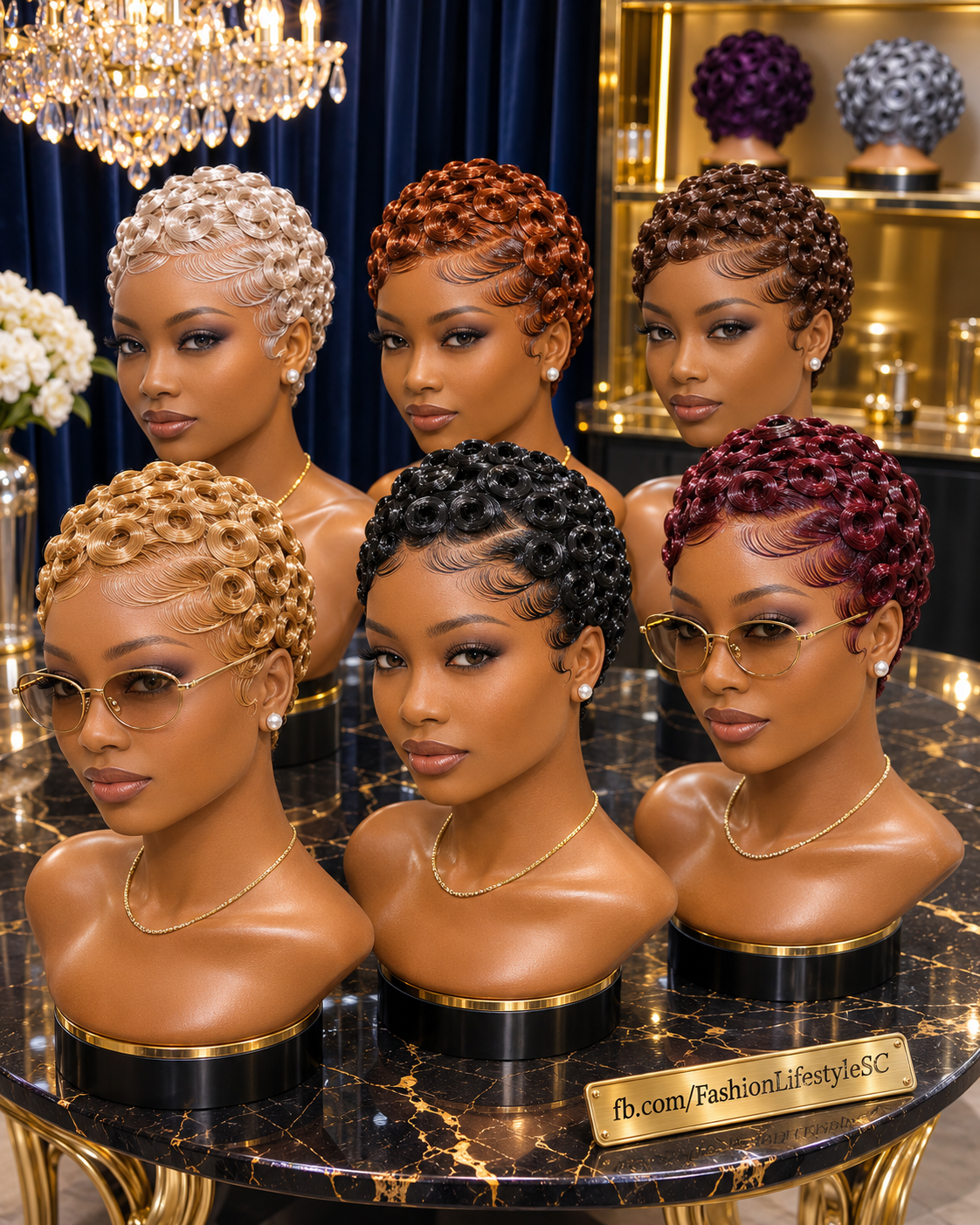
Round curls cover the crown of these short pixie wigs, while fine finger waves sweep across the forehead and turn down toward the temple. The crown and hairline give the style two distinct rhythms. The curls form glossy circles with visible centers, and the waves spread out in fine, parallel lines. Together they create a close-cropped look with the elegance of a vintage salon set.
In the foreground, golden blonde, black, and burgundy show the pattern particularly well. Pearl blonde, copper, and chocolate brown carry the same pairing of rounded curls and wide forehead waves. Purple and silver units appear farther back, where the view emphasizes their curled backs. The shades change what catches your eye first. On the golden wig, the waves stand out immediately. On the black wig, light draws a bright outline around the crown curls.
A finger wave pixie wig like this has enough detail to carry an evening look on its own. It also works with a simple neckline, small earrings, or fine frames because the haircut leaves the face and ears largely open. The most important thing to get right is the balance at the front. The waves need space to show, and the curl set needs to stay compact enough to follow the shape of the head.


What gives the crown its rosette shape
Look closely at the black wig in the foreground and you can see how each curl rolls around a small opening. Some loops sit almost flat, while others rise enough to catch the light on their outer edges. Those changes in height make the crown look full without adding much height to the cut. The circles continue toward the sides, where they sit closer together and follow the curve above the ear.
When you ask a stylist for rosette curls, show a close crop of this crown so they can see the scale you mean. The size of the loops changes the character of the whole cut. Larger circles make each curl a focal point and leave room for a fuller silhouette. Smaller loops create a finer pattern and can suit a closer crop. For this particular look, ask to see how the curl centers read from both conversational distance and up close.
The transition at the temple deserves the same attention as the crown. A curl that drops too far can cover the top of the wave, and a very dense side can make the wig look wider than you intended. During a fitting, have the stylist take a three-quarter photo at eye level. That view shows whether the curves carry the eye from the forehead into the crown and how much hair sits over the ear.
How the waves frame the forehead
The front waves run close to the forehead in broad arcs, then become smaller as they reach the temple. Fine ridges are visible within each sweep, particularly on the pale blonde and copper units. The forehead stays open under the wave pattern, and a narrow curl near the ear completes the line. This is the part of the design that gives the hair its vintage feel, even when the color is decidedly contemporary.
Decide how deep you want the first sweep to fall before the hairline is styled. If you prefer an open forehead, ask the stylist to keep the upper arc close to the front edge and carry most of the movement toward the temple. If you like a more prominent curve, agree on where it should sit relative to your brow. Have the stylist set the placement with the cap on your head so the curve follows your actual hairline.
Choose the direction of the sweep before ordering a preset wig. Send a straight-on reference with the preferred side marked, especially if you usually use mirrored selfies. Anyone who wears glasses regularly should bring their frames to the fitting. The temple detail can sit slightly above the glasses arm or be kept shorter in that area, giving you room to take your glasses on and off without catching the fine hairs.
Choosing a color for daylight and evening wear
Black gives the wig a strong outline, with bright reflections tracing the raised curls. Chocolate brown brings out more of the detail around the forehead under softer light. Both shades let you wear the style with understated accessories, but the shade you prefer may depend on when you plan to wear it. Ask for a short video in indirect daylight and one indoors so you can see how clearly the waves read in each setting.
Copper and burgundy are good choices when you want the color to contribute as much as the styling. Copper has an orange-brown warmth in the photograph, with clear reflections on the upper loops. Burgundy is deeper and shows a wine-red sheen around the curves. If you are shopping online, ask the seller to show the exact shade beside a neutral fabric. Warm display lighting can shift your impression of both colors, particularly on glossy hair.
Golden blonde and pearl blonde make the fine ridges at the front easy to follow. The golden shade adds warmth around the face, while the pearl shade gives the crown a paler, brighter appearance. When ordering either shade, request a close view of the front edge and the base beneath the part. If the seller offers several base tones, ask to see how they look against a skin tone close to yours under ordinary lighting.
The purple and silver wigs on the rear shelf suggest two additional color directions for the curled shape. The visible purple has a deep, cool cast, while silver catches more light around the outer loops. If either color interests you, request front and profile photos of the unit you would actually buy. The rear views in the display show the curl pattern well, and a front view will tell you how the hairline is styled in that shade.
Length and density for a close-cropped fit
Ask about finished length as well as the length listed for the hair. Once the strands are wrapped into circles, much of their length goes into making the loops. For a custom order, agree on how high the curls should sit above the crown and how close the sides should fit around the ears. Send a separate reference for the nape if you have a preference. The foreground wigs give a good view of the sides and front, with the lower back mostly out of view.
Density affects how clearly the circles show. A heavier crown can fill in the curl centers and make the head shape look rounder. Very light coverage can leave gaps between the loops, particularly where the hair turns toward the side. Tell the wig maker you want enough coverage to keep the base discreet and enough separation to see each curl. Ask them to show you the top in daylight after the unit has been set.
Also discuss how you will prepare your own hair under the wig. A close pixie follows the shape beneath it, so a bulky section at the crown or back can shift the finished outline. If you are booking a fitting, ask whether preparation is included and arrive with your hair arranged as instructed. When measuring at home, use the seller’s chart and take measurements with your hair in the same arrangement you expect to wear beneath the unit.
Cap choices for a visible hairline
A lace-front wig is worth considering if the exposed forehead edge is the main reason you like this style. Check the usable lace depth and where the lace stops near the ears. A closure can suit a fixed part and a more limited area of styling at the front. If you want the waves to reach across the forehead and down both temples, ask the seller to show where the closure ends before you choose that option.
A frontal can give a wig stylist more room to place the waves and set fine hairs at the temples. Full lace may make sense if you want more freedom to change the arrangement later and the maker offers that construction in a short cut. A preset synthetic pixie with a fixed front can also suit buyers who want a consistent shape each time they put it on. Check how the edge looks and feels once fitted, regardless of which construction you choose.
Measure for the cap using the brand’s directions and ask what attachment components are included. Adjustable straps help refine the fit, and some units also come with an elastic band, clips, or combs. Find out where those components sit and whether they can be removed or moved by a stylist. A close fit around the temples and ears matters here because even a small shift can change where the curved hairline lands.
Deciding between glueless and adhesive fitting
A glueless pixie wig can suit regular removal if the cap fits securely and the front sits comfortably in the position you want. During the fitting, turn your head, look down, and put on your glasses if you wear them. Ask the stylist to show you how to line up the front and ear tabs when you put the unit back on. That will help you keep the waves in the same position without reshaping them every time.
If you prefer an adhesive installation for an event, ask what products the stylist uses and how they plan to remove them from the lace afterward. Find out whether the appointment includes both fitting and styling, especially if you are bringing a wig that has yet to be cut. A short trial gives you a chance to adjust the depth of the waves or the temple detail before the final set and check how the front looks in photos.
How To Order This Style
Look for custom wig studios, lace-wig specialists, and beauty supply stores with short styles you can try in person. Online, search for a short wig with rosette curls and finger waves and review the seller’s own work. A stylist who regularly cuts pixie wigs can often advise you on whether a ready-made unit has enough hair to recreate the crown. Ask to see close examples of the hairlines and sides they have styled for clients.
For a custom order, send a crop of the front and crown, your preferred shade, cap measurements, and the direction you want the waves to follow. Explain how much forehead and ear you want to show. Ask for photos of the front, both profiles, the top, the nape, and the cap interior before dispatch. Confirm fiber type, the final price, deposit terms, delivery timing, and whether a custom piece can be adjusted after the first fitting.
If you want the look done on your own short hair, book a consultation with a salon experienced in finger waves and sculpted sets. Send the photo in advance and ask the stylist what they can achieve with your current length and hair texture. Discuss the crown and hairline separately so you can agree on the size of the loops and the depth of the waves. For an installation appointment, tell the salon which type of wig you are bringing and whether it still needs cutting, shaping, or color work.
Illustrative prices for a curled pixie wig
These USD ranges give you a way to compare buying and styling options. Final quotes vary with materials, color, customization, location, supplier, shipping, and installation. Ask whether the price covers the finished curl set and hairline, or whether it covers the wig base with styling billed separately. For a custom piece, confirm whether the quote includes a fitting and what the maker charges for a later refresh.
| Category | Illustrative Price Range | Potential Scope |
|---|---|---|
| Basic Synthetic | USD 25–60 | Preset short curls with a fixed hairline or parting arrangement. |
| Premium Synthetic | USD 60–135 | More detailed preset curls, a wider color choice, or additional cap adjustments. |
| Basic Human Hair | USD 100–230 | A short human hair unit that can be cut and set, with sculpted styling often quoted separately. |
| Standard Custom | USD 190–380 | Made-to-order crown curls, agreed wave placement, and selected fit options. |
| Premium Custom | USD 380–700+ | Individual fitting, detailed styling at the temples, and specialty color or lace work where quoted. |
Keeping the waves and curls intact between wears
After each wear, hold the wig by the cap and put it on a stand that supports its shape. Check the temple waves for displaced strands and look for any loops that were flattened by a scarf or glasses. Handle individual areas with your fingertips. Brushing through the crown can open the rings, and repeated layers of styling product at the front can leave the fine wave pattern stiff or cloudy.
Check the cap and front edge weekly if you wear the wig regularly. How often you wash it depends on wear, product buildup, fiber type, and the maker’s instructions. The inside of the cap or the front edge may need attention while the curls still look fresh. If you use an adhesive, follow the installer’s removal and lace-care directions. Ask the seller whether the wave set is intended to hold through washing or will need to be styled again afterward.
When the care instructions allow washing, use the cleanser and water temperature recommended for the fiber. Support the cap, keep the curls from rubbing together, and blot away excess water gently. Dry the wig in the position recommended by the maker and allow the cap to dry fully before storage. For a wig with delicate forehead waves, ask whether those sections should be put back into shape while damp or handled by a stylist after drying.
Human hair can generally be reset in individual sections using a method appropriate for its condition and color treatment. With synthetic hair, check the maker’s instructions before wetting, heating, or reshaping a curl. Use heat only if the fiber is rated for it and follow the specified temperature limits. A stylist can often refresh the waves at the forehead while keeping the crown intact. That saves a full reset when the rest of the wig still holds its shape.
For blonde, copper, and burgundy wigs, use color-care products compatible with the fiber and finish. Keep the wig out of prolonged direct sunlight during storage. When traveling, use a box with enough room above the crown to protect the raised loops and enough space in front to keep the forehead waves clear of the lid. If you wear the wig mainly for occasions, inspect the style a few days before each event so you have time to arrange a touch-up.
What to weigh before choosing this style
The appeal is in the amount of detail a short cut can carry. The crown catches the light, the temple waves frame the face, and the close shape leaves room for jewelry and eyewear. The main trade-off is handling. A tightly packed travel bag can flatten the curls, and the front may need occasional resetting if it rubs against frames or headwear. When comparing units, consider how often you want to wear yours and whether you would prefer a slightly shallower wave that is easier to refresh.
For an everyday version, ask for a cap you can seat comfortably by yourself and a front edge that follows the way you already wear your hair. For a special-occasion version, you may prefer the broader forehead arcs and clearly open rosettes seen in the photo. In either case, ask for a final fitting photo from the angle you like most. It will show whether the curl size, wave placement, and overall silhouette come together the way you pictured them.
Search Terms
vintage finger wave pixie wig · short rosette curl wig · black pixie with forehead waves · copper sculpted curl wig · burgundy finger wave pixie · pearl blonde rosette pixie · golden blonde curled wig · short wig with sculpted temple waves