
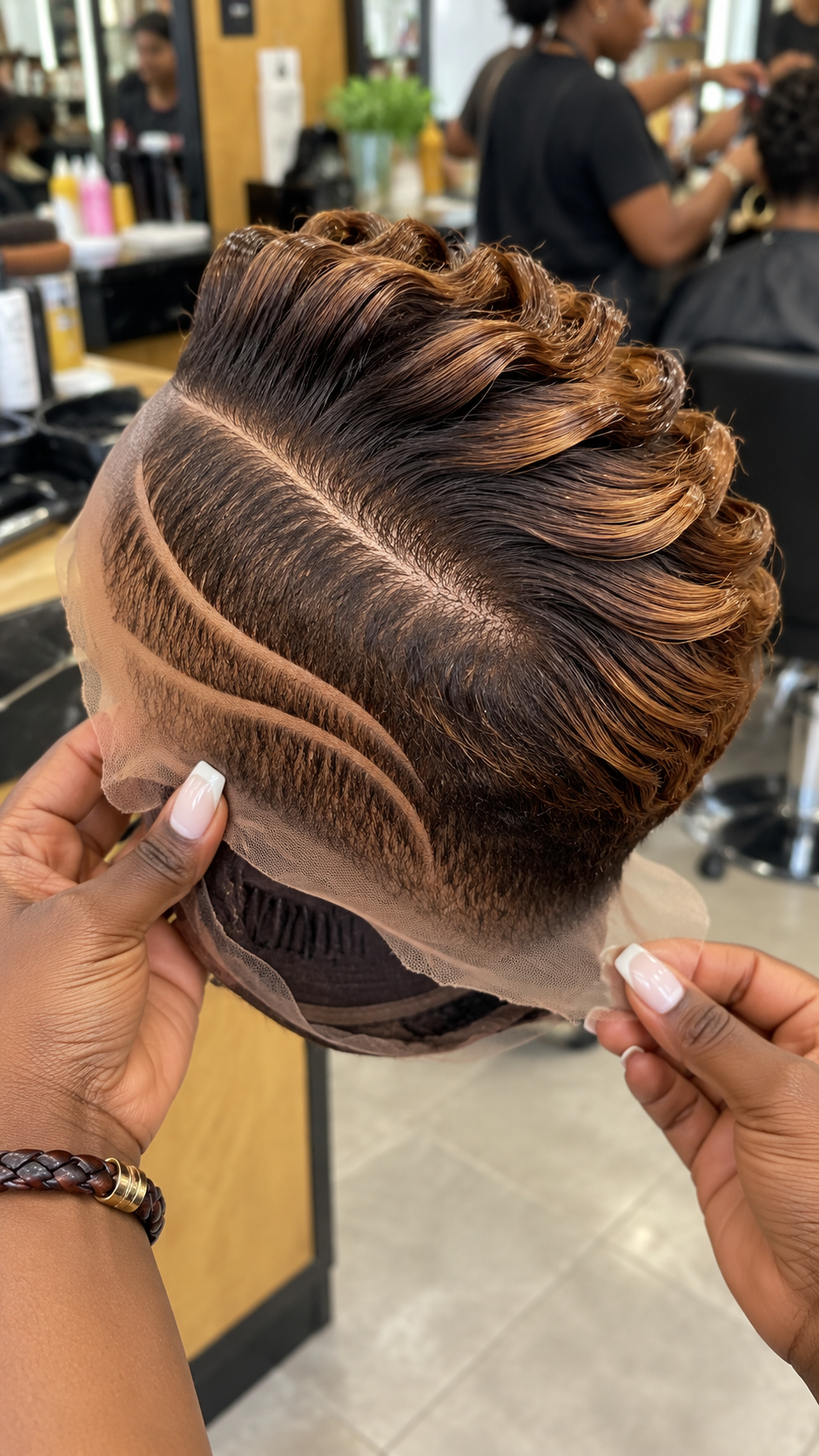
This espresso and caramel wig is built around contrast in two different forms: color contrast through the upper hair and structural contrast between the elevated crown and the closely shaped side. Deep brown provides the foundation, while warm caramel ribbons travel through the raised loops and make their direction easy to see. Instead of distributing the lighter color randomly, the placement follows the movement of the hairstyle, allowing each bend to become more visible.
The construction shown in the image is particularly useful for anyone considering a custom order because the wig is photographed before installation. The lace perimeter remains visible, part of the cap can be seen underneath, and the side work is exposed rather than hidden against a wearer’s skin. This gives buyers and stylists an opportunity to examine the relationship between the crown, side panel, parting and decorative lines before discussing customization.
What makes this unit especially distinctive is the way the caramel color participates in the shape. It is not simply a highlighted brown wig. The lighter sections travel across selected loops, creating a ribbon-like effect that becomes stronger as the hair curves backward.
Espresso Depth Gives the Caramel Sections More Impact
The darkest areas of the wig sit within an espresso to deep chocolate-brown family. This foundation is important because it gives the lighter caramel sections enough contrast to remain visible without making the crown look striped. The brown base occupies substantial portions of each section, while the brighter color appears selectively along the raised surfaces.
Under salon lighting, the highlighted areas range visually from warm caramel to golden toffee. Some sections appear brighter because they are positioned directly toward the light, while deeper folds naturally appear richer and darker. Anyone ordering a similar unit should therefore use the photograph as the primary color reference rather than relying on one shade name.
A useful request might describe the palette as an espresso-brown foundation with warm caramel-toffee accents concentrated through the sculpted crown. That is much more specific than simply requesting “brown and blonde.” The latter description could result in chunky blonde streaks, an ombré treatment or an entirely different color balance.
Ribbon Placement Follows the Direction of the Hair
The lighter sections have been positioned to reinforce the movement of the crown. At the front, several raised pieces begin with a darker base and become noticeably warmer across their upper surfaces. Moving toward the rear, caramel becomes more prominent through the bends and overlapping loops.
This directional placement creates continuity. The eye can follow individual sections from their base through the arch and into the next layer. If the same amount of caramel were scattered uniformly throughout the wig, much of this visual guidance would disappear.
For a custom recreation, the color map should be discussed before production. Ask whether the maker can maintain dark brown near the structural foundation while allowing the warmer ribbons to become visible across selected upper sections. If exact placement matters, provide the reference image and request progress photographs before final styling is completed.
The color does not need to be mathematically identical from one loop to another. In fact, slight variation helps the construction retain a handcrafted appearance. What matters is preserving the overall balance between the dark foundation and the warmer movement across the crown.
Broad Loops Build a Directional Crown
The upper hair is organized into large sculpted loops rather than conventional loose curls. Each section rises from the base, bends backward and joins the next stage of the crown. The front pieces stand taller, while the sections toward the rear become increasingly interlocked.
This arrangement gives the wig a recognizable profile without requiring excessive overall volume. Height is concentrated in the upper zone, while the lower perimeter remains close. The result is a strong silhouette that can be appreciated from the front, side and three-quarter angles.
Recreating this crown requires control over section size. Very thin pieces would produce a completely different pattern with many narrow curls. Oversized sections could make the crown heavy and reduce the number of visible transitions. The reference sits between those extremes, using substantial loops while retaining enough individual pieces to create rhythm across the top.
The rear sections also appear more compact than the front. This gradual change is important because it allows the crown to taper naturally rather than maintaining the same height from hairline to back.
The Side Panel Works as a Separate Design Zone
Beneath the sculpted crown is a closely shaped dark-brown side panel. Its lower height creates a strong division between the upper loops and the area that would sit around the temple and above the ear after installation.
The side is not visually empty. Two sweeping channels travel through it, turning the lower area into an intentional part of the hairstyle. Their direction echoes the backward movement of the crown, so the upper and lower portions feel related even though their lengths are dramatically different.
The upper channel is longer and follows a broad curve. A second line runs below it, creating a layered graphic effect. The spacing remains visible enough for both channels to be read independently.
When ordering, specify curved or sweeping double side lines rather than generic shaved lines. Straight horizontal bars would change the character of the wig. The photograph should be supplied so the maker can understand the angle, spacing and approximate length.
The Long Parting Creates a Visual Boundary
A prominent parting separates the raised crown from the close side. This line begins near the front and travels backward through much of the unit. It functions almost like a border between two styling techniques.
Because the parting is exposed, its placement will strongly influence the finished appearance. A shift in cap position can change where that division sits on the wearer’s head. Proper sizing therefore becomes especially important for this type of construction.
During an installation consultation, ask the stylist to position the unit completely before altering the lace. The crown direction, parting and side channels should all be checked together. Moving the wig to improve one area without checking the others could place the decorative side work too high, too low or too far toward the face.
A photograph taken from the wearer’s side before permanent attachment can help confirm that the intended proportions have been preserved.
What the Visible Lace Tells a Buyer
The image clearly shows lace extending around the front and side perimeter. It also reveals part of the internal cap construction. These are valuable visual details, but they should not be used to make unsupported claims about the exact lace grade.
The photograph does not establish that the material is HD lace, so a buyer should confirm the specification directly with the seller. Ask about lace type, available shade, coverage area and whether the material can be selected to suit the wearer.
The same principle applies to the hair itself. Appearance alone cannot reliably establish whether a unit is made from human hair, a premium synthetic fiber or another material. Confirm this before purchasing, especially if future heat styling or color adjustment is planned.
If ordering online, request photographs of the inside of the actual unit. Check the cap, adjustment straps, combs if supplied, seams and any other attachment components. A well-photographed interior can answer practical questions that a styled exterior image cannot.
Why Cap Position Matters More With Graphic Side Work
A wig without fixed side detailing can often tolerate small changes in positioning. This design is less forgiving because the curved channels have an intended relationship with the temple and ear area.
Before ordering, take the measurements requested by the wig maker carefully. Do not assume that a standard cap will automatically place the pattern correctly. Circumference, front-to-nape distance and ear-to-ear measurements can all influence the final position.
If the maker offers several cap sizes, provide actual measurements instead of choosing according to a general small, medium or large assumption. For a bespoke unit, ask whether the decorative side work is positioned after the cap measurements are established.
This is also worth discussing with the installer. The stylist should understand that the side pattern is part of the intended appearance and should not be hidden unnecessarily during fitting.
Choosing a Stylist for This Type of Wig
A conventional wig appointment may focus primarily on lace placement and hairline work. This piece benefits from a stylist who is also comfortable preserving pre-sculpted crowns and aligning graphic side details.
When booking, send the reference image before the appointment. Explain that the unit contains structured loops and a fixed side pattern. Ask whether the stylist has experience installing wigs with close side panels or similar sculpted construction.
The crown should not be aggressively brushed before installation. Separating the sections may destroy the ribbon effect and alter the direction of the loops. If the wig has moved slightly during shipping, the stylist should correct only the affected areas whenever possible.
A consultation can also determine whether additional customization is actually necessary. More alteration is not automatically better. If the lace, parting and side placement already suit the wearer, unnecessary cutting or restyling can introduce problems that were not present originally.
Ordering This Color Combination Without Losing Its Identity
Begin the order by separating the request into color, crown, side and construction. For color, specify a deep espresso or dark chocolate foundation with caramel-toffee ribbons. For the crown, request broad backward-moving sculpted loops. For the side, request a close panel with two sweeping curved channels.
Then discuss cap measurements and lace options separately. This prevents important construction details from becoming buried inside a general hairstyle description.
Ask for a color photograph before the crown is fully formed if the maker is creating the unit from scratch. Once the loops are completed, changing the highlight distribution may require significant restyling.
A second approval photograph should show the side. Confirm the length and direction of both curved lines and check the position of the long parting. If the seller provides only a frontal photograph, request the side angle before shipment.
Keeping Caramel Ribbons Visually Separated
The contrast between espresso and caramel depends on visible separation. Heavy product buildup can darken the lighter strands and cause neighboring sections to merge visually. Maintenance should therefore focus on preserving both shape and color clarity.
Do not saturate the crown with oil simply to increase shine. The photographed unit already gains visual richness from the way light travels across the curved hair. Excessive product may weigh down the loops and reduce the distinction between individual ribbons.
When cleaning becomes necessary, follow the recommendations for the confirmed fiber type. Avoid assuming that every wig can tolerate the same water temperature, shampoo, drying method or styling tool.
After cleaning, the sculpted arrangement may require professional restoration. If the loop pattern is an important reason for purchasing the unit, ask the maker or stylist for maintenance instructions before the first wash.
Storage Should Support the Crown Instead of Compressing It
This unit should be stored with enough clearance around the upper sections. A stand that supports the cap without pressing into the loops is preferable to placing the wig underneath clothing or other hairpieces.
Avoid resting the crown directly against a shelf. Repeated pressure can flatten the front arches and shift the caramel ribbons away from their intended positions. If the wig must be transported, use a container with enough vertical room for the crown.
Before packing, make sure the loops are positioned correctly. Light internal support may help maintain their form, but any packing method should be appropriate for the actual hair or fiber material.
After transportation, inspect the unit from the same side shown in the reference. This makes it easier to notice whether the upper sequence or curved side lines have shifted.
Wardrobe Colors That Complement Espresso and Caramel
The dark brown and warm caramel combination works naturally with cream, ivory, black, deep green, burgundy and muted gold clothing. These shades allow the lighter ribbons to remain visible without creating an overly busy palette around the face.
Chocolate clothing can create a tonal combination, while cream can emphasize the caramel sections. Deep green offers stronger contrast and can make the warm brown shades appear richer. Burgundy can also pair well when used as a supporting color rather than competing with the crown.
Jewelry can be chosen according to the visibility of the side design. If the double curves are meant to remain prominent, oversized pieces positioned directly over the temple area may conceal them. A smaller earring can leave more of the side construction exposed.
Premium Custom / Standard Custom / Basic Human Hair / Premium Synthetic / Basic Synthetic
| Option | Best Use | Important Questions Before Ordering |
|---|---|---|
| Premium Custom | For buyers wanting close control over ribbon placement, crown architecture and side-line positioning | Ask about custom measurements, color mapping, lace choices, hair source, side pattern placement and progress approval |
| Standard Custom | For buyers prioritizing the espresso and caramel appearance with selected personalization | Confirm cap size, available brown shades, highlight distribution and crown proportions |
| Basic Human Hair | For buyers who may want professional reshaping later | Verify hair authenticity, processing history, density, lace coverage and recommended heat limits |
| Premium Synthetic | For buyers who want a pre-shaped crown designed to retain its form | Confirm fiber composition, heat tolerance, color stability and care instructions |
| Basic Synthetic | For buyers seeking a lower-cost interpretation of the overall silhouette | Check cap construction, fiber appearance, lace type, loop durability and replacement expectations |
Pricing cannot be determined from the photograph alone. The final quote will depend on the confirmed hair or fiber material, cap construction, lace selection, color work, crown styling and the amount of customization required for the side design.
Final Inspection Before Lace Is Altered
Start with the color balance. The espresso foundation should remain substantial enough to frame the caramel ribbons. If the recreated wig contains far more blonde than the reference, the crown will have a different personality even if the loop pattern is similar.
Next, view the upper construction from the front, side and above. The loops should travel backward in an organized progression rather than standing as unrelated curls. Check that the caramel areas follow the movement of the sections.
Then inspect the side. Confirm the long division between the crown and lower panel, followed by the two sweeping channels beneath it. Their spacing and curvature should look intentional when the unit is positioned at its intended angle.
Finally, inspect the lace and cap before cutting, tinting or attaching anything permanently. Once the perimeter has been altered, returns or corrections may become more difficult. Confirm sizing, material specifications and construction with the seller first.
What Makes This Espresso-Caramel Version Stand Apart
The appeal of this wig comes from coordination rather than from one isolated element. The dark foundation establishes depth. Caramel ribbons reveal the direction of the sculpted crown. The long parting separates the elevated hair from the close side, and the double sweeping channels extend that movement into the lower portion.
For a wig business, this type of design also offers several useful points of customization without requiring the original concept to be abandoned. A client can discuss cap size, lace specification and exact brown-to-caramel balance while still preserving the core silhouette.
The most successful recreation will not simply copy the idea of “brown hair with highlights.” It should preserve the relationship between color and construction. The caramel needs to travel with the loops, the crown needs controlled elevation, and the side lines need to follow the profile. Those details are what turn the palette and shape into one coherent wig design.
Search Terms
Espresso caramel ribbon loop wig · dark chocolate sculpted crown wig · caramel toffee loop highlights · brown lace wig with curved side lines · espresso crown with caramel ribbons · double sweeping side detail wig · dark brown raised ribbon loops · caramel accent sculpted side panel wig