
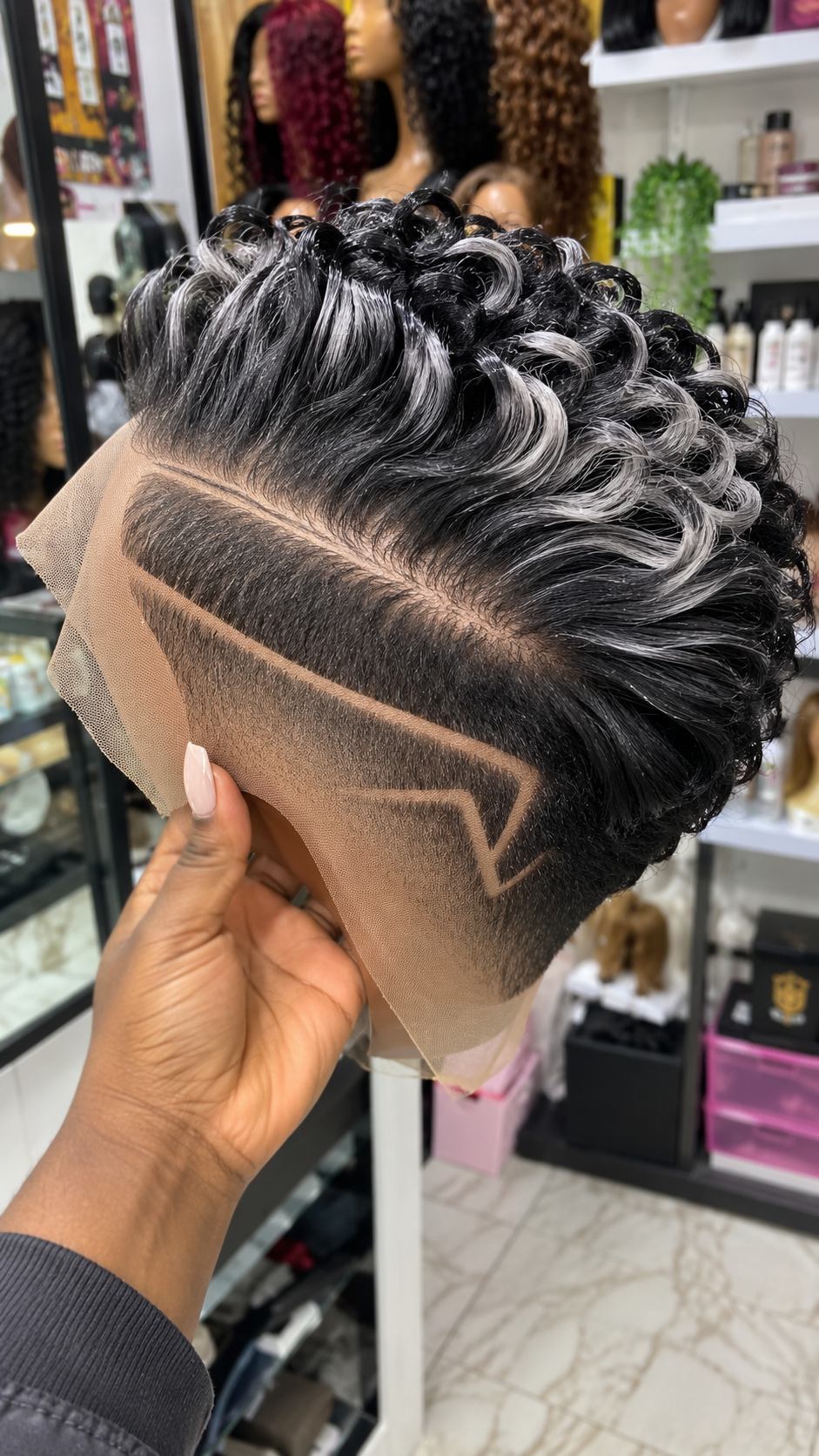
This black and icy silver wig immediately separates itself from ordinary curled units because its strongest details are arranged in distinct visual zones. The crown carries glossy black sculpted loops interrupted by selective silver sections, while the lower side uses closely packed dark hair as a canvas for a long carved channel that develops into a sharp angular motif near the temple area. The visible lace perimeter also makes the photograph especially useful as a custom-order reference because the styling, color placement and construction can all be examined before installation.
What makes this design interesting is the relationship between movement and geometry. The crown is rounded, elevated and filled with curved sections. Below it, the side decoration is much more graphic. A long line travels across the dark panel before turning into an angular shape with pointed corners. The contrast between those two ideas gives the unit its identity. Reproducing only the silver color or only the upper curls would not create the same result.
The photograph should therefore be treated as a complete design reference. Crown height, loop direction, silver distribution, side-panel density, line placement and lace position all contribute to the final appearance. Anyone ordering a similar piece should send the uncropped image to the wig maker rather than describing it only as a black wig with silver highlights.
Icy Silver Appears as an Accent Rather Than a Full Color Blend
The upper structure remains predominantly black. Silver is introduced selectively through individual loop sections, especially around the middle and outer crown. This limited placement is important because the light strands attract attention without replacing the dark foundation.
Several silver sections follow the exact curve of the black hair beside them. Instead of appearing as straight streaks laid over the surface, the pale strands bend with the sculpted movement. This makes the color feel integrated into the hairstyle. The eye follows each silver section through a loop and then back into the darker areas.
The shade appears visually close to icy silver, pearl grey or a pale metallic grey under the lighting in the photograph. An exact commercial color number cannot be established from an image alone. Salon lighting, camera processing and fiber reflectivity can all change the apparent shade. For a custom order, the reference image should be accompanied by a request for an actual color sample or an unfiltered photograph of the available silver fiber.
The amount of silver also deserves specific instructions. This reference does not show an equal black-and-silver split. Black remains dominant. Increasing the pale sections dramatically would produce a different overall effect and reduce the depth created by the darker crown.
The Crown Uses Repeated Loops to Build Forward-to-Back Motion
The upper hair is arranged in broad sculpted sections rather than tiny individual curls. Near the front, the strands rise from the root area and bend upward into open loops. As the pattern continues toward the rear, the loops become increasingly connected to a rounded crown shape.
This creates a clear direction of travel. The style begins with height and separation near the forward crown, then gradually moves backward and inward. The loops do not point randomly in every direction. Their coordinated placement is what allows a complicated surface to remain visually organized.
The silver strands are particularly useful for revealing this construction. Against the black base, they trace several of the bends and show how the hair turns. A stylist studying the photograph can use those light sections almost like directional markers when planning the crown.
Section size matters during recreation. If the hair is separated into very narrow groups, the crown could become a mass of tiny curls. If the groups are too wide, the loops may lose the layered appearance visible here. The reference sits between those extremes, using substantial sections while still leaving enough individual movement to create depth.
A Strong Diagonal Division Separates Crown From Side Panel
One of the most important structural details is the long exposed division beneath the upper styling. It begins toward the forward side and travels diagonally toward the rear. This line establishes a clear border between the sculpted crown and the close-set dark section below it.
The separation is not merely decorative. It controls the visual proportions of the wig. Everything above it belongs to the elevated loop structure, while everything below it becomes part of the graphic side treatment.
The dark panel underneath is intentionally substantial. It gives the carved design enough space to be seen clearly and provides contrast against the lighter exposed channels. Reducing this panel too aggressively could make the geometric work appear crowded.
When commissioning the style, include a side-view reference in the consultation. A front photograph alone would not communicate the width of this panel or the angle of the dividing line. These measurements influence where the angular motif will sit once the unit is worn.
The Side Motif Is More Than a Pair of Straight Lines
The most distinctive lower detail appears near the side of the unit. A long exposed channel begins beneath the dense dark panel and travels toward the rear. Instead of ending as a simple stripe, the design changes direction and forms a pointed angular shape.
This geometric turn is crucial. It introduces straight and sharply changing directions beneath a crown dominated by loops and curves. The result is a deliberate contrast between the rounded upper structure and the graphic lower section.
There is also a secondary narrow channel positioned beneath the main line. Together, the channels frame sections of dark hair and help the larger angular motif remain readable. The spacing between them should be preserved rather than compressed into one broad opening.
If requesting this from a barber, wig stylist or custom unit maker, avoid describing it simply as “two lines.” A more useful instruction is to request a long side channel with an angular pointed turn plus a secondary parallel channel. The photograph should still be the final reference because the exact angles and lengths are visual rather than standardized measurements.
Black Density Gives the Graphic Work Its Contrast
The carved pattern would have far less impact without the dense black field surrounding it. The side hair is closely arranged and visually compact, creating a nearly continuous dark surface. Against this background, every exposed channel becomes easier to recognize.
This is one reason the silver accent is concentrated primarily above. Keeping the side panel dark prevents two competing decorative ideas from occupying the same area. The crown receives the color contrast, while the lower side receives the geometric contrast.
That division also makes the wig easier to recognize from different viewing angles. From above, the silver loops become prominent. From the side, the dark panel and angular motif take over. From a three-quarter view, both elements can appear together without one completely hiding the other.
For a custom version, ask the stylist not to scatter silver strands throughout the carved side unless that change is intentional. Doing so would alter the strong black background that makes the line work visible.
The Lace Is Visible but Its Commercial Grade Must Be Confirmed
A broad lace perimeter can clearly be seen around the front and side of the unit. The mesh extends beyond the hair-bearing area because the wig is being displayed before final fitting and trimming. This gives an installer material to work with when positioning the unit on the wearer.
The photograph confirms lace construction, but it does not provide enough evidence to label the material as HD lace. Different mesh products can look similar in a bright photograph, particularly when they are stretched between fingers or photographed against a salon background. The actual lace specification should come from the seller or maker.
The visible lace also demonstrates why color matching matters. The correct lace shade should become less noticeable against the wearer after preparation and installation. A shade that works for one complexion may require a different approach for another.
Before ordering online, ask for an unfiltered close-up of the lace against skin and request the supplier’s actual lace description. If the unit is being made specifically for one wearer, discuss the lace shade before construction rather than trying to correct a major mismatch during installation.
Cap Details Should Be Verified Before Paying for Custom Work
The angle reveals part of the interior foundation, although it does not expose enough of the inside to identify every construction component. Because of that, buyers should not assume a particular cap system based only on the photograph.
Ask the maker what measurements are required and whether the unit includes adjustment hardware, combs or other internal attachment options. These details influence fit and can also affect where the decorative side section lands on the head.
This point is especially relevant for a wig with such precise side placement. If the unit rotates, sits too high or extends too far backward, the angular motif may no longer align with the intended temple and side area. Proper sizing therefore supports the visual design as well as comfort.
For custom production, provide the measurements requested by the professional rather than guessing a generic cap size. If the seller offers several standardized sizes, compare your measurements with the seller’s own chart because sizing systems can differ between manufacturers.
Commissioning the Silver Sections Without Overdoing Them
Color instructions for this piece should begin with the phrase “predominantly black foundation.” That establishes the correct hierarchy before any discussion of silver. The pale shade can then be described as selective icy silver accents following individual crown loops.
Ask the stylist to show the color placement before the final setting stage whenever possible. At that point it may still be easier to correct an accent that is too broad or positioned in the wrong section.
The silver should contribute to movement rather than create a uniform cap of pale hair. Some loops in the photograph remain entirely black, some carry silver along part of their surface, and others display a more noticeable pale section. That variation gives the crown visual depth.
A good approval photograph should include the top and side together. This allows the buyer to check whether the silver placement works with the crown direction while also confirming that the lower graphic panel has remained predominantly dark.
Questions to Ask the Wig Stylist Before Booking
Begin by showing the complete reference and asking whether the stylist creates sculpted loop work on wigs rather than only installing pre-styled units. The crown requires controlled sectioning and setting, so experience with structured styling is valuable.
Next, discuss whether the geometric side work is created during construction or completed after the main unit is assembled. The answer may vary by maker, but the professional should understand that the angular pattern is a central requirement rather than an optional finishing detail.
Color should be addressed separately. Ask which silver or grey shades are available and whether the accent can be restricted to selected upper loops. If the supplier uses color numbers, request a photograph or swatch instead of relying only on the number.
Finally, confirm what the quoted service includes. Construction, color work, styling, lace preparation and installation may be priced separately. A lower initial quote can become significantly more expensive if these services are added later.
Approval Photos Should Include the Decorated Side
Do not approve this unit from a single frontal photograph. The side contains too much of the design to remain unseen. Request at least one clear photograph showing the entire angular motif from beginning to end.
Check the crown next. Look for broad black loops with selective icy silver accents and make sure the pale sections follow the direction of the styling. The crown should maintain its backward movement instead of becoming a collection of unrelated curls.
Inspect the diagonal separation beneath the crown and the density of the panel below it. The exposed line should remain readable, and the panel should provide enough dark space for the geometric design.
Also request an interior photograph. This will not guarantee fit, but it allows you to verify that the agreed cap components are present before shipping or installation.
Keeping the Sculpted Crown Intact Between Appointments
Storage should protect the height and shape of the upper loops. Avoid placing the wig beneath clothing, other wigs or packaging that presses directly onto the crown. A properly sized stand can help support the cap while leaving the styled sections unobstructed.
Do not repeatedly comb through the loop structure as though it were loose everyday hair. The appearance depends on the strands remaining grouped into controlled sections. Pulling them apart can disturb both the loop shape and the placement of the silver accents.
Product and heat recommendations depend on the actual fiber used to make the wig. The photograph alone cannot confirm whether the hair is human hair, heat-resistant synthetic fiber or another material. Ask the supplier before applying heat or chemical products.
The lace should also be handled from the foundation whenever possible. Repeatedly lifting the entire unit by the loose mesh can place unnecessary tension on the perimeter. During storage and transport, keep the lace protected from sharp accessories and rough surfaces.
Premium Custom / Standard Custom / Basic Human Hair / Premium Synthetic / Basic Synthetic
| Wig Category | Estimated Price Range | What May Be Included |
|---|---|---|
| Premium Custom | $480–$1,000+ | Personal measurements, advanced loop setting, selective silver placement, lace construction and precision angular side work |
| Standard Custom | $300–$520 | Custom styling, black and silver color placement, sculpted crown and detailed side channels |
| Basic Human Hair | $190–$340 | Human-hair foundation with specialty crown styling and side detailing potentially priced separately |
| Premium Synthetic | $120–$240 | Higher-grade synthetic fiber with pre-shaped crown work and limited custom line detailing |
| Basic Synthetic | $65–$140 | Entry-level fiber with fewer customization options and simplified construction |
These ranges are planning estimates and are not the confirmed selling price of the wig shown in the photograph. Final pricing can change according to fiber quality, lace material, cap construction, color work, styling labor, customization, location and installation fees. Always request a written quote describing exactly what is included.
A Practical Order Brief for This Exact Look
When contacting a salon or custom wig maker, send this photograph first and describe the unit as a predominantly black lace wig with selective icy silver crown accents. Specify that the upper hair must be arranged into broad elevated loops that travel backward rather than being converted into small uniform curls.
For the lower section, point out the long diagonal division beneath the crown and the dense black side panel. Then identify the signature detail: the exposed side channel that develops into a sharp angular motif, accompanied by a narrower secondary channel. This should be discussed separately from the crown styling so neither requirement gets overlooked.
Confirm the lace type directly with the maker instead of assuming HD lace from the image. Ask about lace shade, cap measurements, interior attachment options, production time, deposit policy and whether installation is included. If the unit will be shipped, request final approval photographs before dispatch.
The strongest version of this design will preserve its contrast rather than exaggerate any single element. Black provides the foundation, icy silver reveals selected crown movements, broad loops create height, the diagonal division organizes the side, and the angular channels introduce a sharp graphic signature below. Together those details make the wig recognizable from more than one viewing angle and provide a precise visual brief for anyone planning a custom order.
Search Terms
black icy silver loop wig · silver accent sculpted crown wig · angular side design lace wig · black wig with geometric side lines · icy grey ribbon loop crown · diagonal side panel lace unit · pointed side channel wig design · black silver looped crown wig