
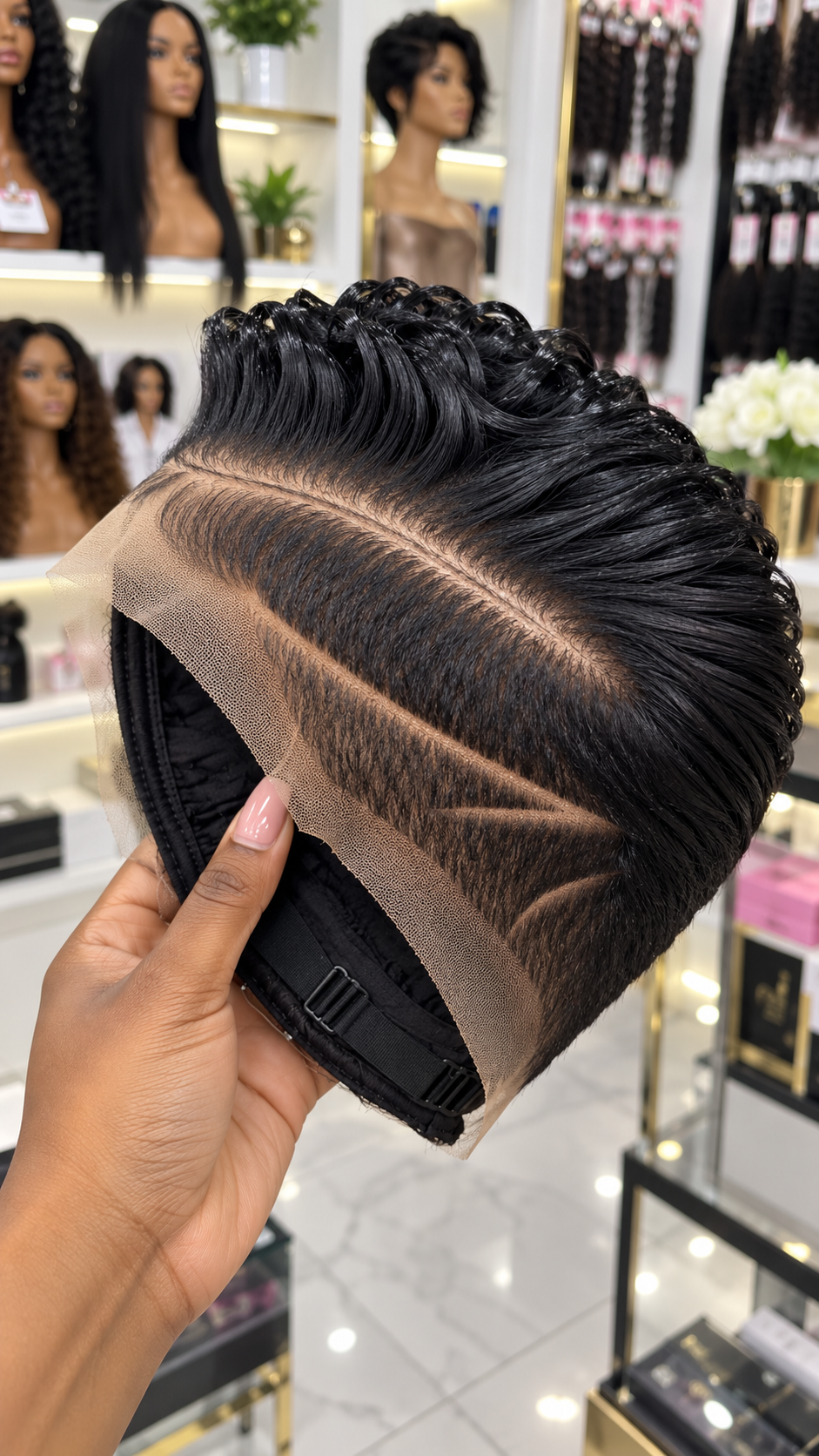
This silver-black reference is built around controlled contrast. Pale strands reveal the movement of the loops, while the angular side motif adds a second graphic layer. Because both color and geometry are highly visible, the order process needs more checkpoints than a basic ready-made wig.
Silver should behave like a highlight, not a second hairstyle
The pale strands in this reference are effective because they are subordinate to the black structure. They appear inside selected ribbons and help trace the movement of the crown. A recreation should therefore begin with a placement map: which loops receive silver, how wide each light section is, and where the highlight disappears into the back. If the maker distributes silver evenly through the entire top, the graphic effect will be lost. Ask for a color-placement photo before the final mold is set. That is the moment when corrections are easiest.
The angular side motif deserves its own template
The geometric side area is too specific to leave to improvisation. Before cutting, ventilating or shaping that section, the stylist should sketch the line direction on a mannequin head or use a removable guide. The upper line, lower line and pointed meeting area need consistent spacing. This is closer to graphic design than ordinary trimming. A client ordering remotely should send the reference with the side motif cropped and enlarged, then request an approval image taken straight on. A three-quarter photo can hide unequal spacing.
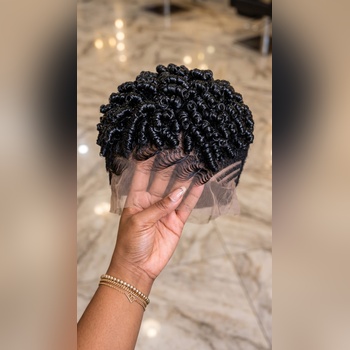
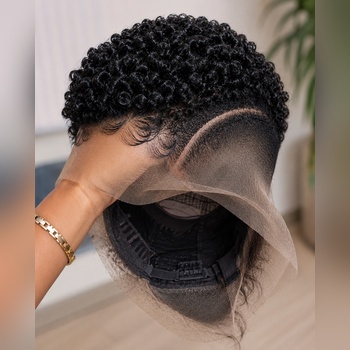
Cool silver changes under warm salon bulbs
Color approval for silver is tricky because yellow lighting can make a cool gray look beige or champagne. Ask the maker to photograph the unit near a window or under neutral white light. If the silver is created on human hair, ask whether it has been pre-lightened and toned; heavily processed pale strands may need gentler care than the black base. If the unit uses synthetic fiber, request the exact swatch name. The business listing should describe the visible tone as silver or cool gray only after checking it outside warm decorative lighting.
A pointed side design changes how the unit frames the temple
Unlike a plain close side, this angular motif draws the eye toward the temple. That means the fitting has to respect the wearer’s face shape and ear position. If the unit sits too low, the point can crowd the eyebrow area; too high, and the motif may disappear into the crown. During fitting, look at the wearer from profile and front view while the head is level. The goal is not to force the design into a fixed position but to keep its proportions readable on the individual head.
Refresh pale ribbons separately from the black base
When the unit begins to lose polish, treat the silver and black areas as two maintenance zones. Pale processed hair can react differently to heat and product buildup. Use minimal product, clean residue carefully and avoid dark tinted sprays near the silver pieces. If the highlighted ribbons need reshaping, isolate them rather than heating the entire crown. This selective approach protects color clarity and keeps the silver from becoming dull. A salon can offer a targeted refresh appointment instead of a full rebuild, which is easier for the client to budget.
Photograph the geometry before shipping
For a high-detail custom order, the final proof should include one image where the side motif fills most of the frame, one top view showing the diagonal part and one neutral-light color shot. Add a short rotation video so the customer can see how the silver placement moves around the crown. This documentation is useful for the seller too: it records what was shipped and creates original content for future marketing. The next listing can then describe this exact silver-black configuration rather than recycling copy from a different wig.
Consultation for silver geometry
For this silver version, include a zoomed side-detail reference. Agree on the exact number and direction of angular lines, then choose the silver tone under neutral light. Only after those two decisions are recorded should the maker finalize loop placement. This prevents a common custom-order problem where the color is correct but the geometric side has been improvised.
Remote approval for silver contrast
A remote silver order needs an extra color checkpoint. Request a close-up where black and silver appear together under neutral light. Ask the maker to send the angular side motif before final finishing so spacing can still be corrected. The final rotation video should show whether the silver ribbons remain selective around the crown.
Protecting pale accent ribbons
Silver accents need gentler handling because pale processed strands may be more fragile than the dark base. Keep dark tinted sprays away from them, use low-residue products and refresh the highlighted ribbons individually. If yellowing or dullness appears, ask a professional about the correct toning method for the actual hair type.
Budget Levels for Silver and Geometric Detail
| Option | Typical Range (USD) | Planning note |
|---|---|---|
| Premium Custom | $320–$520+ | High-grade hair, advanced color or detailing, fitting and precision shaping |
| Standard Custom | $220–$320 | Salon-built unit with controlled styling and moderate customization |
| Basic Human Hair | $150–$230 | Human-hair base with simplified finishing |
| Premium Synthetic | $95–$170 | Quality fiber with pre-shaped form and selected custom work |
| Basic Synthetic | $55–$95 | Entry interpretation with fewer custom stages |
These figures are planning ranges rather than fixed retail prices. Final cost depends on hair material, cap construction, color processing, labor, fitting and the complexity of the visible side work. Ask for a written breakdown before paying a non-refundable custom deposit.
Search Terms for the Silver-Black Reference
black silver ribbon wig · silver highlight loop wig · angular side line wig · diagonal part sculpted wig · geometric side panel wig · cool silver accent hair · lace edge custom wig · salon ribbon crest
Final silver-unit standard
For the silver version, success means the pale ribbons support the architecture while the angular side remains crisp. Neither element should overpower the other.
Silver swatch approval
Before paying the balance, ask to see the inside cap and confirm the exact adjustment system, cap circumference and lace specification. The exterior reference is built around silver-accented ribbon loops, but comfort depends on what is underneath. A cap that is too large can rotate and move the angular pointed line motif out of position; one that is too tight can distort the front edge. Record the measurements on the invoice so a future remake starts from verified fit data rather than memory. If the seller cannot confirm a technical detail, leave it out of the public product description instead of guessing.
Geometry notes for the client file
If another stylist will maintain the unit later, give that person a short technical brief. Note the black with cool silver palette, the direction of the part, the scale of silver-accented ribbon loops and the location of the angular pointed line motif. Include two or three unfiltered reference photographs. This is more useful than simply saying “make it like before,” because a sculpted wig can change quickly when a new stylist interprets the loops differently. A written brief also prevents accidental changes to the side design during a routine refresh.
Lighting test for pale ribbons
For social content, shoot one image that prioritizes construction rather than glamour. Use neutral light, keep the camera close enough to show the part and angular pointed line motif, and include a second angle that reveals silver-accented ribbon loops. Then capture a wider salon image for context. This combination gives buyers both proof and inspiration. Avoid filters that shift black with cool silver, because the post may later be used as a color reference by a customer. Accurate images reduce repetitive questions and make the article’s search terms match what people can actually see.
Travel storage for this unit
Before wearing the unit for a long event, test it for at least an hour at home. Check pressure near the ears, movement at the nape and whether the sculpted top changes when the wearer turns the head. The angular pointed line motif should remain in its intended position without over-tightening the cap. If adhesive will be used, follow the product instructions and do not make the event day the first fitting. A short wear test gives time to correct comfort or placement issues while the lace and styling are still easy to adjust.
When a toner refresh makes sense
If this design is remade, protect its identity by deciding which elements are fixed and which can change. Keep the part direction, the relationship between silver-accented ribbon loops and the side, and the recognizable angular pointed line motif. Color within the black with cool silver family can be adjusted for the client, and loop scale can be tuned for head size. Treat those as controlled variations rather than redesigning every feature at once. This approach creates a recognizable salon signature while still allowing each order to feel personal.
Shipping-day inspection
At collection, inspect the unit in ordinary light before leaving the salon. Look at the part from above, check the angular pointed line motif from a true profile, and make sure silver-accented ribbon loops remains separated rather than compressed. Confirm care instructions for the actual hair material and ask when the first maintenance visit should happen. Take one final photo of the finished unit on the wearer or a correctly sized head form. That image becomes the baseline for future refresh work and makes any later change in shape or color easier to diagnose.