
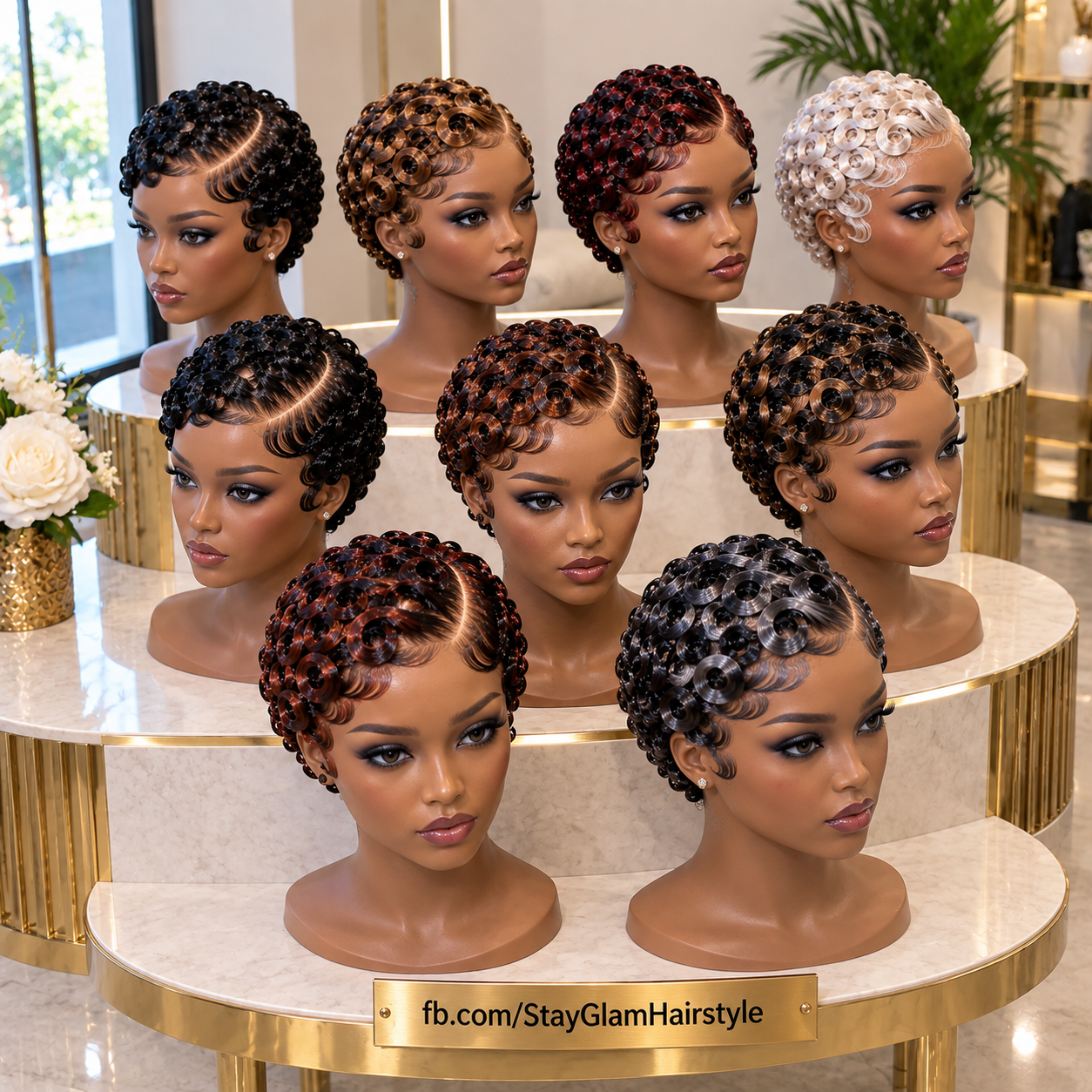
A carefully shaped pixie wig can completely change the way a compact hairstyle looks, especially when the design combines glossy ring curls, sculpted side sections and a polished hairline. This collection presents several interpretations of the same distinctive silhouette, giving buyers a useful way to compare color, curl placement and side detailing before choosing a custom wig. The overall look is compact but full of visual detail, with closely arranged circular curls creating volume across the crown while the front and temple areas remain carefully shaped.
The collection includes deep natural black, warm brown, copper-brown, burgundy red and pale silver-blonde variations. Although the colors differ, the wigs share a recognizable construction language. Rounded curls sit densely across the upper section, the sides remain closer to the head, and sweeping sculpted strands frame the forehead and temples. Some pieces also show pronounced diagonal parting details that add another layer of definition to the silhouette.
For wig buyers who prefer a hairstyle that already carries a strong salon-inspired shape, this type of design can be particularly appealing. Instead of purchasing a basic unit and trying to recreate every curl and side detail at home, a buyer can ask a wig stylist to prepare the curl arrangement, color placement and finishing work before collection or delivery.
The Ring Curl Pattern Creates The Signature Shape
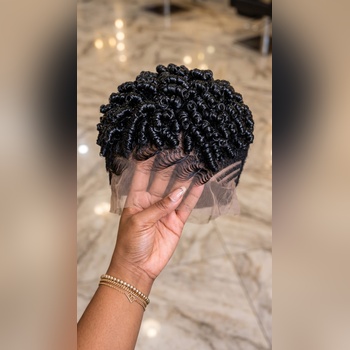
The most noticeable element in this collection is the repeated ring curl formation. These are not loose waves or large flowing curls. The hair is arranged into numerous compact circular loops that sit closely together across the crown. Because the curls are individually visible, the upper section has a dimensional appearance without requiring long hair.
From the front, the curls form a rounded crown with enough height to separate the style visually from the closely shaped sides. From an angled view, individual loops remain visible rather than blending into one solid mass of hair. That distinction is important when discussing the style with a wig maker because curl diameter, density and direction determine whether the finished unit resembles the reference.
A stylist recreating this design should therefore receive close-up reference photographs rather than only a written request for a curly pixie. The phrase “curly pixie” covers many different hairstyles, while this particular look depends on small polished loops arranged in a deliberate pattern. Showing the stylist the exact curl scale can prevent the finished wig from becoming too fluffy, too loose or too long.
Side Parting Gives The Collection Its Graphic Detail
The side work is equally important. Several wigs in the display feature a sweeping division between the fuller curled crown and the closely shaped temple section. The parting travels diagonally through the style, producing a clear visual boundary. On some pieces, additional parallel lines appear near the temple area, reinforcing the sculpted effect.
This detail makes the hairstyle especially attractive from three-quarter angles. Instead of the entire design being concentrated on the crown, the eye follows the parting toward the side of the head. The curls, hairline work and side pattern therefore function together rather than as separate decorations.
If ordering a custom version, buyers should specify whether they want a single sweeping division, multiple parallel side lines or a simpler side section. These details can significantly change the final appearance even when the curl pattern remains identical.
Black Ring Curls Offer A Deep Glossy Finish
The dark variations in the collection emphasize shine and curl separation. Under salon lighting, the individual loops reflect light along their curved surfaces, making the circular construction especially easy to see. The darker color also creates strong contrast against the visible parting and sculpted forehead details.
This option works well for buyers who want the hairstyle itself to provide most of the visual interest. Because the color remains deep and consistent, attention naturally moves toward the ring pattern, side division and directional hairline work.
When discussing this version with a stylist, asking for a rich natural black or soft black tone may be more useful than relying on a single generic color label. Actual wig fibers and human hair can photograph differently depending on lighting, so color swatches should ideally be checked before an order is finalized.
Warm Brown And Copper Tones Reveal More Curl Dimension
The brown and copper-toned pieces create a noticeably different effect. Their lighter surfaces reveal more variation between the inner and outer portions of each curl. This can make the loop structure appear even more dimensional in photographs.
Some pieces lean toward deep chocolate brown while others introduce brighter copper or caramel-like warmth. These colors pair particularly well with the sculpted structure because highlights naturally appear along the curved hair strands. Buyers who want visible dimension without moving into very light blonde territory may find these warm shades useful references.
A custom color consultation is worthwhile for this type of wig. Instead of requesting “brown” alone, show the stylist the desired balance between dark roots, warm mid-tones and brighter curled sections. A controlled transition can preserve depth around the base while allowing the upper loops to catch more light.
Burgundy Adds A Rich Red Alternative
The burgundy pieces introduce a deeper red family without changing the essential construction of the hairstyle. The color sits between dark wine and cherry-burgundy depending on the lighting, giving the curls a saturated appearance while maintaining enough depth for the ring pattern to remain visible.
This is a useful example of how the same haircut-inspired wig structure can feel different through color alone. The crown still contains compact loops, the side remains closely shaped and the front retains its sculpted strands, yet the burgundy finish creates a stronger color statement.
Anyone ordering this version should request a physical or photographed color sample whenever possible. Burgundy shades can range from purple-based wine tones to warmer red-brown shades, and salon lighting can alter their appearance considerably.
Silver Blonde Creates The Brightest Contrast
The pale silver-blonde variation stands apart because its light color makes every curl immediately visible. The circular strands form a bright crown while the shaped sections around the hairline maintain the compact silhouette. This lighter shade also makes the direction of the styling particularly easy to study.
For a custom order, the buyer should clarify whether the target shade is pearl silver, icy blonde, pale platinum or a slightly warmer champagne tone. These shades may appear similar in a photograph but can look very different in daylight. A stylist can also advise whether the requested color is more practical in human hair, synthetic fiber or another available construction.
The Hairline Work Is Part Of The Design
The forehead and temple areas should not be treated as an afterthought. Across the collection, carefully directed strands curve along the front and sides, connecting the ring curls to the closer side sections. These sweeping details help frame the face and create continuity between the crown and temple area.
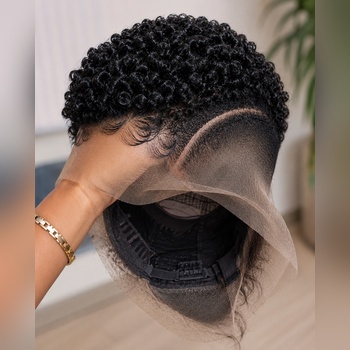
When commissioning a similar wig, buyers can ask the stylist how the front shaping will be prepared and whether additional customization will be required after fitting. The amount of finishing needed depends on the actual wig construction, the wearer’s head shape and the stylist’s method. The display photograph alone does not confirm a specific lace specification, so buyers should ask the seller directly about lace type, cap construction and attachment method before paying.
Choosing Human Hair Or Synthetic Fiber
The best material depends on budget, expected wear and how much restyling the buyer wants to perform. Human hair generally provides greater flexibility for professional heat styling and future adjustments, but the quality of human hair varies significantly between suppliers. A high-quality synthetic unit can provide a more accessible option and may hold a pre-shaped curl pattern well, although heat limitations depend on the specific fiber.
For this hairstyle, curl retention matters because the small circular loops create most of the visual identity. Before ordering, ask whether the curls arrive fully styled, whether they can be reshaped, what products the seller recommends and how the unit should be stored between wears.
Buyers should also confirm cap size. A beautifully styled unit can still be uncomfortable if the circumference, ear placement or internal adjustment system does not suit the wearer. Request the seller’s measuring instructions and compare the measurements with the available cap options rather than assuming one standard size will fit everyone.
Premium Custom, Standard Custom And Ready-Made Price Planning
Prices vary by country, stylist, material, coloring work and the amount of customization required. The figures below should therefore be treated as planning ranges rather than fixed retail prices. Always request a written quote from the salon, barber or wig stylist who will actually produce the unit.
| Option | Typical Planning Range | What To Ask About |
|---|---|---|
| Premium Custom | $350–$750+ | Human hair quality, custom coloring, curl formation, cap measurements, side detailing and fitting |
| Standard Custom | $220–$450 | Hair grade, selected color, pre-styled ring curls, cap construction and finishing |
| Basic Human Hair | $140–$300 | Density, processing history, curl preparation, available colors and customization costs |
| Premium Synthetic | $80–$180 | Fiber quality, heat tolerance, curl retention, cap fit and available color combinations |
| Basic Synthetic | $45–$100 | Fiber finish, preset styling, cap sizing, maintenance instructions and replacement expectations |
What To Show Your Wig Stylist Before Ordering
Start with the reference image and identify the exact variation you prefer. Point out the crown color, curl diameter, amount of height, side parting direction and any parallel line details you want recreated. If you prefer the burgundy version, for example, do not simply request a red curly wig. Specify that you want compact circular curls, a closely shaped side area, a sweeping parting and the same deep wine-red color family shown in the reference.
Next, provide your head measurements according to the stylist’s instructions. Ask whether an in-person fitting is recommended and whether the price includes final shaping. If the unit will be shipped, request photographs or a video of the completed wig before dispatch so that major differences can be discussed before delivery.
Color should also be confirmed separately. Screens can alter warmth and brightness, so a copper-brown shade seen online may look more golden or more reddish in person. Professional sellers may be able to provide fiber swatches, numbered shades or photographs taken in natural daylight.
A Practical Custom Order Checklist
- Choose the exact color variation from the reference collection.
- Send clear front, side and three-quarter reference images to the wig stylist.
- Confirm the desired compact ring curl size and crown height.
- Specify the direction of the sweeping side part and any parallel side details.
- Ask what hair or fiber type will be used.
- Provide accurate head measurements using the seller’s measuring guide.
- Confirm cap construction, adjustment system and attachment options directly with the seller.
- Request the total price including coloring, styling, fitting and shipping.
- Ask for maintenance instructions before receiving the finished unit.
- Where possible, request final photographs before collection or dispatch.
Salon Maintenance For Preserving The Circular Curls
The tight loop arrangement needs careful handling if the wig is expected to retain its original appearance. Constant brushing can disturb the individual rings, so maintenance should follow the instructions provided for the specific hair or fiber used. Rather than applying random products, ask the stylist which lightweight finishing product is compatible with the unit and how frequently it should be cleaned.
Storage is equally important. A wig stand or appropriately sized mannequin head can help preserve the crown shape when the unit is not being worn. Avoid crushing the curls beneath other items, and keep the wig away from excessive heat unless the seller confirms that the material can tolerate it.
For human-hair versions, periodic professional reshaping may help restore curl placement after repeated wear. Synthetic versions may require a different maintenance routine, especially if the fiber has limited heat tolerance. Never assume that a curling iron or hot tool is safe without checking the manufacturer’s instructions.
Who May Prefer This Pixie Wig Collection
This collection can suit buyers who enjoy a compact hairstyle with visible salon detailing rather than a plain cropped silhouette. The curls create fullness at the crown, while the sculpted sides keep the overall profile controlled. It can also appeal to customers who want multiple color possibilities without changing the fundamental hairstyle every time.
A deep natural black version keeps attention on the shape. Warm chocolate and copper shades emphasize the dimensional curl pattern. Burgundy provides a richer red direction, while silver-blonde creates the highest visual contrast. Because the basic structure remains recognizable across the collection, a salon could also offer several color versions of the same core design.
How Wig Sellers Can Present This Style More Clearly
For wig businesses, detailed photography can reduce uncertainty before a customer orders. Photograph the unit from the front, both sides, back and slightly above the crown. Include close-ups of the ring curls and side parting. If the wig has a particular cap or attachment system, photograph that separately rather than expecting customers to infer construction from a styled mannequin image.
Product descriptions should distinguish visible styling from technical specifications. Color, curl pattern and side design can be described from photographs, while material, lace type, cap size and hair origin should come from verified product information. This distinction helps customers understand exactly what they are buying and reduces the risk of promising features that the product does not actually include.
Questions To Ask Before Booking A Wig Appointment
Before booking, ask whether the stylist has previously created compact ring-curl pixie units. Request examples of similar work rather than relying only on photographs of long wigs. Confirm whether coloring and curl setting are completed before the appointment or during the fitting. You should also ask how much time is allocated for adjustments and whether later maintenance appointments are available.
If the side design is especially important, mention it during the initial consultation. A stylist may need to discuss how the visual effect will be incorporated into the wig construction. The reference shows highly sculpted side areas, so this element should be agreed upon before production rather than requested after the entire unit has already been completed.
Search Terms
Ring Curl Pixie Wig · Sculpted Side Part Pixie Wig · Burgundy Ring Curl Wig · Copper Brown Pixie Wig · Silver Blonde Curl Pixie Wig · Natural Black Ring Curl Wig · Side Detail Curly Pixie Wig · Glossy Loop Curl Wig
Final Buying Notes For This Ring Curl Collection
The strength of this collection comes from the combination of compact circular curls, carefully directed front strands, distinctive side divisions and multiple wearable color families. The hairstyle does not depend on extreme length or oversized volume. Instead, its character comes from controlled placement and repetition: every ring contributes to the rounded crown, while the sculpted side work gives the silhouette its recognizable profile.
For the closest custom result, choose one reference variation first and build the order around it. Confirm the color with the stylist, discuss curl size, decide how much crown height you want and show exactly which side details should be reproduced. Then verify the technical information that cannot be determined from a photograph, including hair material, cap size, attachment method and any lace specification offered by the seller.
A consultation with a wig stylist, barber or salon professional is the safest way to translate this visual reference into a wearable unit. Bring the reference image to the appointment, request a complete quote before production begins and ask for care instructions suited to the actual material. With those details agreed upon in advance, the finished wig can preserve the most recognizable elements of the collection: glossy ring curls, a sculpted crown, precise side separation and a color selected specifically for the wearer.