
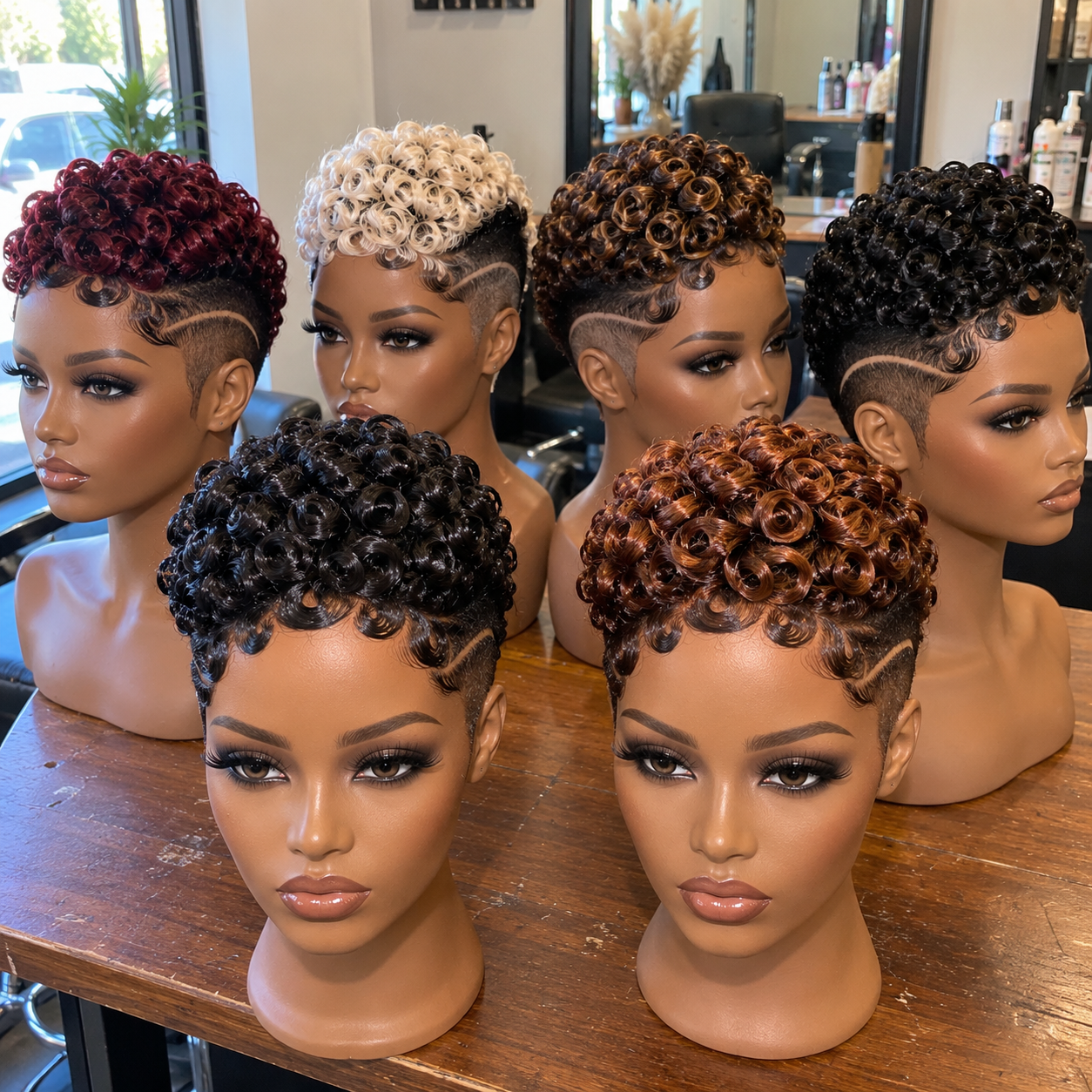
A carefully designed curly pixie wig can bring together several salon-inspired details in one compact hairstyle: glossy loop curls, sweeping hairline work, tapered side sections, carved accents and carefully selected color. The collection shown here demonstrates how much variety can be created while keeping the same recognizable pixie concept. Instead of relying on one color or one curl arrangement, the display includes deep natural black, burgundy, creamy platinum, warm copper, caramel-brown and darker brown combinations. Each option keeps the curls as the focal point while changing the way the front, sides and color placement frame the face.
For wig buyers, this type of collection is especially useful because the differences can be compared side by side. Someone who wants a darker everyday option can look toward the natural black versions, while clients interested in warmer color can explore copper or brown shades. Burgundy creates a richer statement, while the pale platinum option gives the curl pattern a completely different visual character. The result is not simply a group of identical wigs in different colors. The curl placement, side detailing and front styling work together to give each version its own identity.
Why The Loop Curl Pattern Creates So Much Visual Impact
The most noticeable element across the collection is the compact loop-curl formation. The curls sit close together and create a rounded crown rather than falling downward like longer curly hair. Their circular shape catches light around each individual loop, making the hairstyle appear dimensional even when the overall length remains compact. This structure also allows the stylist to control the silhouette more precisely because the curls can be positioned toward the front, crown or side without requiring long strands.
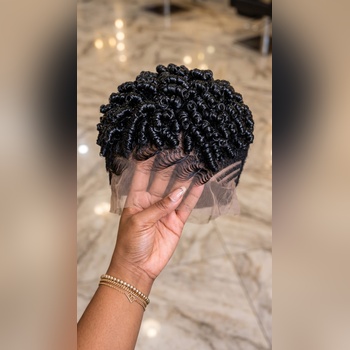
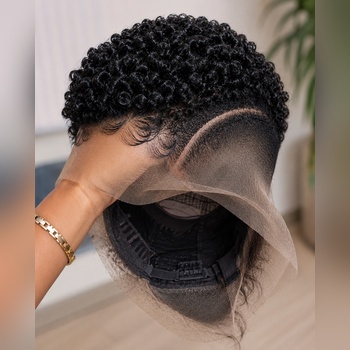
Density matters with this curl pattern. Too few curls can expose gaps and weaken the rounded silhouette, while excessive bulk can hide the carefully styled perimeter. The examples shown balance a full crown with visible side work. That balance is important for anyone ordering a custom version: the goal should not simply be maximum volume. The crown, temple and side details need enough separation to remain visually readable.
The Side Designs Change The Personality Of Each Wig
One of the strongest details visible in this collection is the contrast between the curled crown and the closely styled side sections. Several pieces include sweeping carved lines or tapered sections that create a barber-inspired effect. On some wigs the side detail follows a curved path, while others use a sharper directional line. These elements make the silhouette more interesting when the wig is viewed from a three-quarter angle.
A buyer requesting this type of customization should show the stylist the exact side design they prefer rather than asking only for a “pixie wig.” The placement, width and direction of the side lines can significantly change the final appearance. A subtle single curve produces a different result from multiple parallel lines. The stylist should also consider how the design connects visually with the front hairline and the beginning of the curls.
Natural Black For A Versatile Everyday Option
The dark versions provide a strong reference for clients who want the curl structure to remain the main attraction. Natural black gives the loops a glossy appearance while keeping the overall palette understated. Because the color is consistent across the crown, attention naturally moves toward the circular curl pattern, side shaping and sculpted front sections.
This option can work particularly well for buyers who regularly change clothing colors or accessories and want a wig that coordinates easily. The darker base also creates strong visual contrast between the hair and the scalp-inspired areas of the side design. When ordering, ask the stylist to show the color in natural daylight as well as indoor lighting because very dark brown and natural black can look similar under warm salon lights.
Burgundy Brings Depth Without Losing The Curl Detail
The burgundy pieces introduce a deeper red family without overwhelming the hairstyle. Because the curls are compact, the color appears in concentrated highlights around each loop. Under brighter light, the red tones become more visible; in lower light, the color can appear deeper and closer to wine or dark cherry.
Clients considering burgundy should decide whether they want an all-over wine tone, a darker root area, or subtle tonal variation through the curls. Those decisions are best made before the wig is customized. Color photographs can be useful, but asking for an actual swatch is even better because phone screens can change the appearance of red shades considerably.
Platinum Curls Create A High-Contrast Alternative
The pale platinum option immediately stands apart from the darker pieces. Light color makes every curl edge easier to see, so the circular pattern becomes especially prominent. It also increases contrast between the curled crown and the darker or closely styled areas beneath it. For buyers who want the construction of the hairstyle to be noticed from a distance, this can be an effective direction.
When ordering a pale shade, ask how the color has been produced and what maintenance the fiber or hair requires. Human-hair and synthetic versions may react differently to heat, washing and toning products. The image alone cannot establish the exact fiber type, so this should always be confirmed directly with the seller before purchasing.
Copper And Caramel Brown Add Warmth To The Collection
The warm brown and copper versions show another side of the same curl concept. Copper reflects warm light strongly, while caramel and medium brown tones create softer tonal separation through the loops. These colors are useful for clients who want something brighter than natural black but do not want the intensity of burgundy or the high contrast of platinum.
A custom color request should include photographs taken under more than one lighting condition whenever possible. Ask whether the seller describes the shade as copper, auburn, caramel, chestnut or another brown family. Similar marketing names can represent noticeably different colors between suppliers.
Hairline Styling Is Central To The Finished Look
The front sections visible in the collection use sculpted, curved hair placement to connect the curls with the temple area. This detail is important because a compact pixie shape leaves the forehead and sides highly visible. Unlike a longer wig that can partially cover the perimeter, this style depends on deliberate hairline work as part of the design.
When discussing customization with a wig stylist, specify whether you prefer a restrained front curve or more dramatic sweeping sections. The direction of these sections should complement the side design rather than compete with it. Buyers should also request photographs of the actual finished unit before shipment whenever the seller offers custom work.
What To Ask A Wig Stylist Before Ordering
Start with the visible design rather than assuming every seller uses the same construction. Send reference photographs and identify the exact color, curl size, crown density and side pattern you want. Ask whether the displayed wig is available as shown or whether it must be recreated as a custom order. If it is custom, request an estimated production time before paying.
Next, confirm the material. Ask whether the unit uses human hair, heat-friendly synthetic fiber, standard synthetic fiber or a blend. Do not rely on appearance alone. High-quality synthetic fibers can photograph very convincingly, while human hair requires its own maintenance routine. The correct choice depends on budget, styling expectations and how often the wig will be worn.
Finally, discuss fit. Ask for the available cap sizes and follow the seller’s measurement guide. Circumference, front-to-nape and ear-to-ear measurements can matter depending on the construction. A beautiful curl pattern cannot compensate for a unit that does not fit correctly.
How To Order This Style From A Salon Or Wig Maker
- Choose the exact color family you want: natural black, burgundy, platinum, copper, caramel brown or another custom shade.
- Select the curl arrangement and show the seller a close reference of the compact loop pattern.
- Choose the side design, including whether you want a single curve, parallel lines or another carved detail.
- Send accurate head measurements using the seller’s required method.
- Confirm whether the wig is human hair, synthetic or another material before payment.
- Ask whether the displayed price includes custom coloring, curl setting and side detailing.
- Request the estimated completion date and shipping method.
- For a custom unit, ask for final photographs or a video before dispatch when that service is available.
Price Guide For A Custom Curly Pixie Wig
Actual prices vary considerably by country, hair source, cap construction, color work and the amount of hand customization required. The figures below are general planning ranges rather than prices for the exact wigs pictured.
| Wig Category | Typical Planning Range | What May Be Included |
|---|---|---|
| Premium Custom | $300–$650+ | Higher-grade hair, custom color, detailed curl setting and extensive hand styling |
| Standard Custom | $180–$350 | Custom curl arrangement, color selection and personalized side work |
| Basic Human Hair | $120–$250 | Human-hair base with simpler customization and finishing |
| Premium Synthetic | $80–$180 | Higher-quality synthetic fiber with pre-set curls and selected customization |
| Basic Synthetic | $45–$100 | Entry-level fiber with limited custom work |
Keeping Compact Loop Curls In Good Condition
Maintenance should focus on protecting the curl formation rather than repeatedly combing through it. These loops are intentionally arranged, so aggressive brushing can separate them and change the crown shape. Follow the fiber manufacturer’s instructions and use products suitable for the confirmed material. Human hair and synthetic fiber should not automatically receive the same products or heat settings.
When the wig is not being worn, store it on a suitable wig stand or mannequin head so the crown is not compressed. Avoid placing heavy items on top of the curls. If the loops become displaced, a professional wig stylist can often reset them more accurately than attempting major reshaping at home.
For colored units, pay additional attention to product buildup and unnecessary washing. Burgundy, copper and pale shades can all require different maintenance depending on how the color was created. Ask the seller for specific washing intervals and product recommendations when purchasing the unit.
Choosing The Right Version For Your Client Or Inventory
Salon owners and wig sellers can use a collection like this to offer several visual choices without abandoning a recognizable signature shape. Natural black provides an easy foundation, warm brown and copper expand the everyday color range, burgundy adds richer color, and platinum creates a brighter alternative. Offering several shades can also help clients understand how dramatically color changes the appearance of the same basic curl structure.
For personal buyers, choose according to the elements you are most likely to enjoy repeatedly rather than selecting color alone. Look at the crown height, curl diameter, side pattern and front styling. Save close-up reference images of the exact version you prefer and use those references during consultation.
Search Terms
Curly Pixie Wig Collection · Natural Black Loop Curl Wig · Burgundy Curly Pixie Wig · Platinum Loop Curl Pixie · Copper Curly Pixie Wig · Caramel Brown Pixie Wig · Sculpted Side Design Wig · Finger Wave Hairline Pixie Wig
Final Buying Notes
This collection succeeds because the color choices do not replace the underlying hairstyle design. The compact loop curls remain recognizable across natural black, burgundy, platinum, copper and brown variations, while sculpted sides and carefully placed front curves give the wigs their salon-inspired identity. Buyers who want a close recreation should therefore discuss every visible component separately: color, curl diameter, crown density, side pattern, front styling and cap fit.
Before ordering, contact a professional wig stylist, barber-wig specialist or salon that can reproduce this level of detailed side work. Ask for examples of previous pixie units, confirm the material and cap construction, provide measurements and obtain a written quote for customization. If possible, request photographs of the completed unit from several angles before collection or shipment. Taking these steps gives the stylist a much clearer brief and gives the buyer a better opportunity to receive a wig that matches the selected reference rather than a generic curly pixie.