
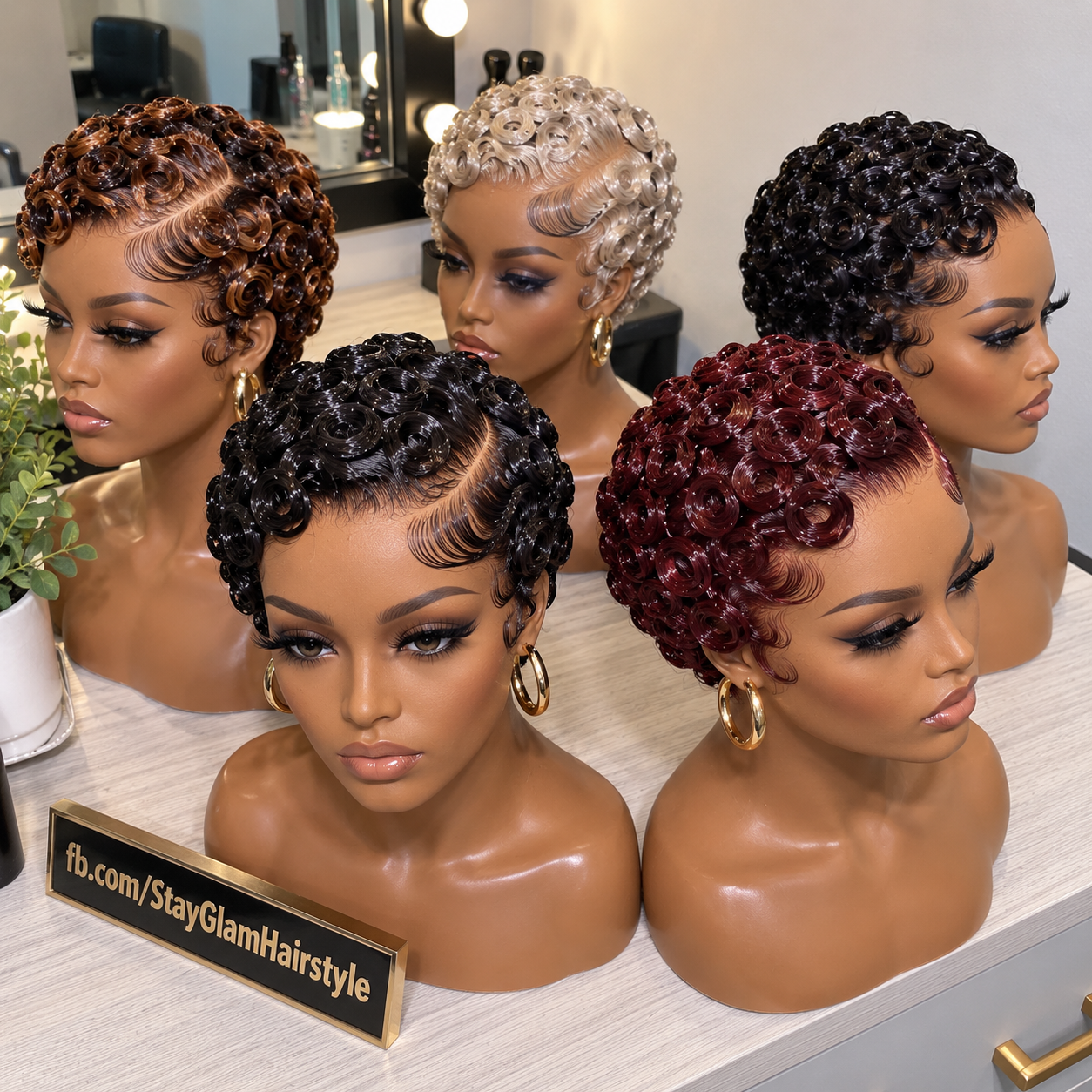
A carefully shaped finger curl pixie can turn a compact hairstyle into a highly detailed statement piece, and this collection shows exactly why the look continues to attract attention. The wigs displayed here combine glossy sculpted curls, carefully arranged front waves and several wearable color choices. Instead of relying on excessive length or oversized volume, the design gets its personality from curl placement, directional styling and the way each front section follows the face.
The collection includes deep natural black and espresso shades alongside rich copper brown, wine burgundy and pearl silver. Although every color creates a different mood, the construction remains consistent: compact curls cover the crown while the front and temple areas are shaped into sweeping finger-wave details. This consistency makes the collection particularly useful for wig sellers who want to offer one recognizable silhouette in several color options.
The Curl Pattern That Gives This Pixie Its Signature Shape
The most noticeable element is the collection of small circular curls across the crown. These curls sit close enough together to create fullness without turning the hairstyle into a large rounded mass. Individual loops remain visible, which gives the surface dimension when light hits the hair. The glossy fiber or hair finish also helps separate one curl from another visually.
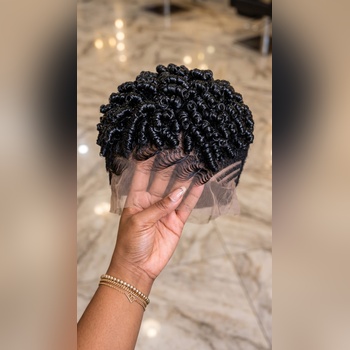
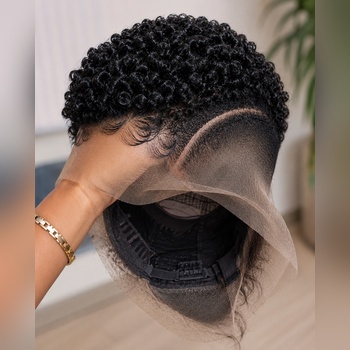
At the front, the curl pattern changes direction. Rather than continuing the same circular structure all the way to the forehead, the hair is arranged into broader sweeping sections. These sections curve around the hairline and temple area, creating a deliberate transition between the crown and the face. This contrast is important because it keeps the style from appearing repetitive.
From a wig-styling perspective, maintaining that distinction between the crown curls and front waves is essential. If every section is curled identically, much of the personality seen in the reference design disappears. A stylist recreating the look should therefore map the crown and perimeter separately before setting the hair.
Espresso and Natural Black Options for Everyday Wear
The darker wigs in the collection provide the most versatile interpretation of the design. Natural black and deep espresso tones allow the sculpted curl pattern to remain the main focus. Under salon lighting, the dark curls catch small highlights along their curved surfaces, making the individual loops visible without needing additional color contrast.
These darker versions can work especially well for customers who want an expressive pixie silhouette while keeping the color understated. They can also be useful as a starting point for custom orders because a stylist can discuss alternative front-wave placement, side detailing or subtle color additions without changing the central curl structure.
For sellers photographing this type of wig, directional lighting is helpful. Light coming slightly from the front or side can reveal the circular curl pattern much better than flat overhead lighting. Customers shopping online need to see the separation between curls, the front wave structure and the overall density before ordering.
Why Burgundy Creates a Completely Different Impression
The burgundy option introduces a deeper red tone without losing the compact character of the hairstyle. Because burgundy reflects light differently from dark brown or natural black, the circular curls become more noticeable. Highlights appear along the outer edges of the loops while deeper red shadows remain between them.
This is particularly attractive for customers who want color but prefer something richer than a very bright red. Wine, cherry and burgundy families can all work with this silhouette, although the exact shade should always be confirmed before a custom wig is produced.
Color photographs should also be checked under neutral light before ordering. Burgundy can appear brighter, darker or more purple depending on salon lighting and camera processing. A seller offering custom color should provide a recent daylight or neutral-light photograph whenever possible.
Pearl Silver Gives the Curl Work Maximum Visibility
The lightest wig in the group uses a pearl silver or pale platinum appearance. On this version, almost every loop can be seen individually because the light color creates strong visual separation between the curl ridges and the spaces underneath them. The front wave also becomes particularly prominent.
Light silver shades can require more maintenance than deeper colors. Product buildup, excessive oil and repeated exposure to high heat can affect the appearance of pale fibers or processed human hair. Customers choosing this color should ask the seller for care instructions specific to the material used in the wig.
It is also worth confirming whether the silver shade is uniform or intentionally blended. Product photographs can make subtle tonal differences difficult to judge, especially when photographed under warm salon lights.
Copper Brown Adds Warmth Without Hiding the Curl Detail
The copper-brown version sits between the darker and lighter options. Its warm brown base gives the curls visible dimension while remaining easy to coordinate with many wardrobes and makeup palettes. The result is especially attractive when the crown contains several slightly different brown reflections rather than appearing completely flat.
For a custom order, terms such as copper brown, cinnamon brown, warm chestnut or caramel brown should not automatically be treated as identical. A color reference should be supplied to the stylist because naming conventions vary among wig vendors and hair manufacturers.
Front Wave Placement Matters as Much as the Curls
One reason this pixie design looks distinctive is the relationship between the crown and the hairline. The front is not simply brushed downward. Hair is guided into long curved sections that frame the forehead and temples. On several pieces, the waves extend farther toward one side, creating an asymmetrical appearance.
This type of styling should be discussed during customization. Customers may prefer a stronger forehead sweep, a smaller temple curl or a more open hairline. A stylist can adjust those details while preserving the compact circular crown.
The front section is also one of the first areas that can lose its shape after repeated handling. Owners should avoid constantly brushing through sculpted sections. When restyling becomes necessary, it is usually better to have a wig stylist reset the pattern rather than repeatedly applying heavy styling products at home.
Choosing the Right Color From This Collection
Color selection should be based on more than popularity. Deep espresso emphasizes shine and silhouette. Burgundy emphasizes richness and contrast. Copper brown adds warmth. Pearl silver makes the individual curl construction extremely visible. Natural black keeps attention on the shape rather than the color.
Customers who are uncertain can ask a seller to photograph two or three colors from the same angle. Comparing identical styles is far easier when lighting, distance and camera settings remain consistent.
Another useful option is to order a darker base with warmer accents rather than switching to a completely different color. This can retain the depth associated with dark hair while introducing extra movement through strategically placed brown or copper tones.
Human Hair or Synthetic: What Should Buyers Consider?
The photograph alone does not confirm the exact hair material, so buyers should ask before purchasing. Human-hair versions generally provide greater flexibility for professional restyling and color work, but they can also require more maintenance and cost considerably more. High-quality synthetic versions can preserve a preset curl pattern well and may suit customers who want a ready-shaped piece.
Heat resistance should never be assumed with synthetic hair. Customers should ask for the manufacturer’s temperature guidance before using heated tools. Human hair also benefits from conservative heat use because repeated high temperatures can weaken processed strands and reduce shine.
Regardless of material, this particular hairstyle depends heavily on curl placement. A less expensive wig with carefully constructed curls can sometimes photograph more attractively than a higher-priced unit that has not been shaped correctly. Construction quality and stylist skill therefore matter alongside the fiber itself.
What to Ask a Wig Stylist Before Ordering
Show the stylist clear reference photographs from the front, side and crown whenever possible. Explain that the crown should contain compact circular curls while the front should have sculpted directional waves. If a particular color is required, provide a visual reference rather than relying only on a color name.
Ask whether the unit arrives pre-styled or needs final salon work after delivery. Also confirm cap size, adjustment method, hair material, color, processing time and return conditions. These details are particularly important for custom units because personalized wigs may have different return policies from ready-to-ship stock.
Estimated Price Guide for a Custom Pixie Wig
| Wig Category | Typical Estimated Range | What May Be Included |
|---|---|---|
| Premium Custom | $280–$550+ | Higher-grade hair, extensive hand styling, customized color and detailed curl placement |
| Standard Custom | $180–$320 | Custom color selection, sculpted crown curls and professional finishing |
| Basic Human Hair | $120–$220 | Human-hair base with simpler customization and salon styling |
| Premium Synthetic | $70–$150 | Higher-quality synthetic fiber with a preset curl pattern |
| Basic Synthetic | $35–$85 | Entry-level fiber with limited customization |
These ranges are general planning estimates rather than prices for the exact wigs shown. Actual pricing depends on the seller, country, hair material, cap construction, customization level and stylist labor.
A Practical Ordering Process
- Choose the color family you want: natural black, espresso, copper brown, burgundy or pearl silver.
- Send the stylist the exact reference image and point out the circular crown curls and sweeping front wave.
- Confirm whether the wig will arrive fully styled or require a salon appointment.
- Ask for the hair material, cap measurements and adjustment options.
- Request current photographs or a video of the finished unit before shipping when ordering custom work.
- Confirm processing time, shipping cost and custom-order return conditions in writing.
Keeping the Circular Curls in Shape
This hairstyle should be stored carefully because the curl pattern is its most important visual element. A mannequin head or appropriately sized wig stand can help prevent the crown from being crushed. Avoid placing heavy objects on the wig or storing it tightly inside a small bag for long periods.
Use only products recommended for the actual hair material. Heavy oils can cause compact curls to separate or collect residue. If the wig becomes flattened, a professional stylist can usually restore the pattern more accurately than aggressive brushing.
When traveling, protect the crown with enough space around the curls. The front waves should also remain free from friction because repeated rubbing can disturb their direction.
Search Terms
Finger Curl Pixie Wig · Espresso Curl Pixie Wig · Burgundy Sculpted Curl Wig · Pearl Silver Pixie Wig · Copper Brown Curl Wig · Side Part Pixie Wig · Sculpted Hairline Curl Wig · Circular Curl Pixie Wig
Why This Collection Works So Well for Wig Sellers
From a business perspective, this design offers a useful balance between consistency and variety. A seller can maintain the same recognizable silhouette while presenting customers with several colors. That makes comparison easier and allows customers to focus on the shade that best fits their preference rather than trying to compare completely different hairstyles.
The compact shape is also well suited to product photography. Front, three-quarter and side photographs can clearly show the crown curls, hairline waves and color. Sellers should include multiple angles rather than relying on one front-facing image because much of the craftsmanship is visible around the sides and temples.
For buyers, the most important step is to order from a stylist or wig vendor capable of reproducing the curl placement rather than simply matching the color. The circular crown, sweeping front wave and compact proportions work together as one design. When those elements are recreated carefully, this pixie wig can offer a polished salon-inspired appearance in colors ranging from understated espresso to dramatic burgundy and luminous pearl silver.