
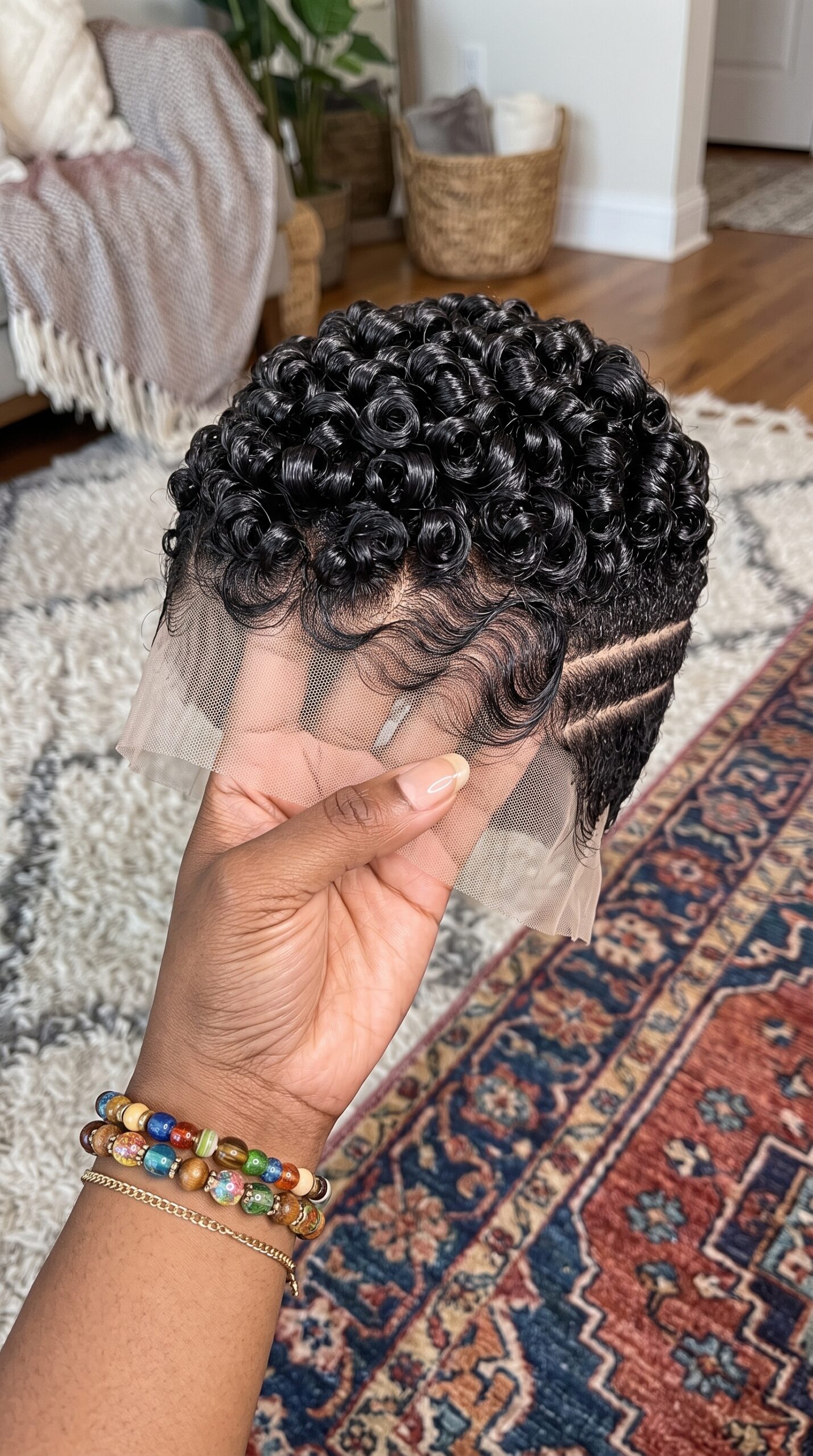
The curls are not the hardest part of a black loop curl pixie wig to judge. Look lower. This style combines compact glossy ringlets across the crown with a very close tapered side, parallel carved lines, molded temple waves, and an extended lace perimeter. Each detail can look impressive on its own, but the complete wig only works when those different sections connect naturally.
That transition becomes especially important on a cropped unit because there is almost no extra length available to hide construction. Your eye can move directly from the circular crown curls into the flatter side section, then toward the carved design and lace. A beautiful top view can therefore hide problems that become obvious the moment the wig is turned sideways.
Before paying for a pixie like this, inspect the relationship between the curls and the lower foundation rather than judging only curl shine or density. A strong unit should look like one intentionally constructed haircut translated into wig form, not like a curly top placed above an unrelated side panel.
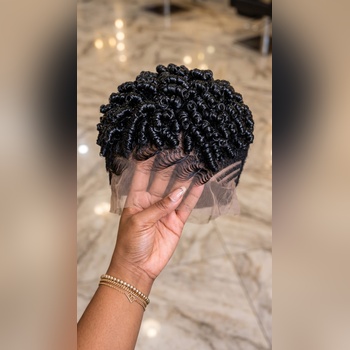
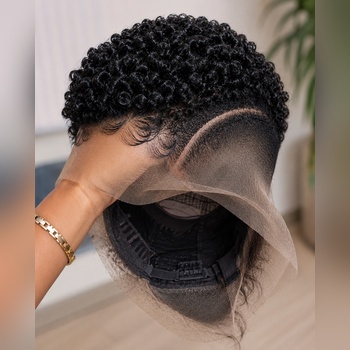
Where To Buy A Black Loop Curl Pixie Wig
Custom wig makers. A custom maker is often one of the best options when you want this exact combination of compact ringlets, tapered sides, molded front waves, and carved detailing. Send a clear side-view reference and describe each feature separately rather than simply requesting a black curly pixie.
Instagram and TikTok sellers. Social sellers can be useful for finding specialists in highly styled cropped units. Do not rely only on the most flattering finished video. Ask for a slow rotation of the actual wig showing the crown, both sides, back, lace, and interior cap.
Etsy. Independent makers may offer more flexibility with curl size, cap measurements, side detailing, and lace construction. Confirm whether the photographed design is made to order or whether you will receive the exact unit shown.
Marketplaces like Amazon, AliExpress, and Temu. Budget pixie listings can look similar in promotional images while differing significantly in real life. Compare buyer photographs carefully and concentrate on side views where crown height, taper, and carved lines are easier to evaluate.
Local beauty supply shops and salons. Local shopping gives you the chance to inspect the silhouette before purchasing. Hold the wig at head level and check whether the crown gradually reduces toward the side instead of ending suddenly.
Vendors and wholesalers direct. If you buy multiple units, direct vendors can be useful, but ask exactly what arrives finished. Some suppliers provide the basic wig while expecting a local stylist to create the final molded waves or side detailing.
Regionally. Wig makers in Lagos, Accra, Atlanta, London, and major South African hair markets often work with short sculpted units. Use photographs instead of depending only on names such as “pixie,” because that term can describe many completely different constructions.
Vet the seller. Favor sellers willing to show the real unit without filters. A side angle should reveal whether the loop curls become progressively shorter and flatter as they approach the lower section.
Red flags. Be cautious if every photograph is taken from above, if one side is consistently hidden, or if the carved pattern changes between photographs that supposedly show the same wig.
When you order, send. Provide your measurements, preferred cap size, reference photographs, desired curl size, side length, and whether you want the carved-line pattern reproduced or simplified.
Contact / order inquiries: Ask the seller for their current official WhatsApp, website, or social-media ordering contact and confirm the final specifications in writing before payment.
How Much It Costs
Premium custom human hair. A detailed human-hair pixie with a sculpted crown, lace construction, precise taper, and hand-finished side work can commonly fall around $220–$430 depending on hair quality and customization.
Standard custom human hair. Around $170–$300 may cover many well-made cropped units. At this level, compare lace quality, curl consistency, and the amount of finishing included.
Basic human hair. Around $150–$230 may buy a simpler version with convincing curls but less refined perimeter work or side detailing.
Good synthetic. Approximately $60–$150 can buy a strong preset pixie. Synthetic fiber may hold the circular curl pattern very well, although restyling flexibility can be more limited.
Basic synthetic. Around $25–$70 is common for budget units. At this level, the silhouette may be more generic and the side construction less precise.
What the price may include or exclude. Ask whether crown styling, lace customization, molded temple waves, carved side work, adjustable straps, and cap-size adjustments are included.
Shipping and duty. International shipping, customs charges, and local taxes can increase the final price. Compare the delivered cost rather than only the advertised unit price.
Ongoing costs. Sculpted curls and molded front sections may eventually need professional resetting, particularly after washing or repeated wear.
First-year total. Include styling products, possible lace maintenance, and any professional refreshing appointments when calculating the real ownership cost.
Cost per wear. A more expensive unit that maintains its shape for many wears can offer better value than a cheaper wig that quickly loses the crown structure.
What a very low price may signal. It can indicate synthetic fiber, heavier lace, simplified cap construction, lower-quality finishing, or side detailing that is less carefully executed.
Deposit structure. Custom makers may request around 30–50% upfront, with the balance due before shipment. Keep the agreed specifications and reference images in the order conversation.
Shipping, Delivery, And What To Expect After Ordering
A compact sculpted pixie can arrive slightly compressed because the crown is vulnerable to pressure during shipping. This does not automatically mean the unit is damaged. The important question is whether the original circular pattern remains visible underneath the compression.
Use your fingers for small corrections rather than brushing directly through the crown. A conventional brush can quickly turn individually separated loop curls into a single fluffy mass.
Inspect the lace and cap before making permanent adjustments. Check the size, hairline position, side-design placement, and overall silhouette while the lace remains uncut.
The Curl-To-Fade Transition Is The Real Construction Test
The upper section carries a large amount of visual texture. Small glossy loops sit close together and create a rounded crown. The lower side does the opposite: it remains compact, flat, and intentionally understated.
The difficult part is connecting those two extremes. If the large curls continue too far down, the wig can become excessively round. If they stop suddenly above an extremely flat side, the design can appear disconnected.
Look for a gradual reduction in length. Hair immediately beneath the main curls should begin becoming shorter and flatter before reaching the lowest tapered area.
This gradual transition is one of the details that separates a convincing tapered curly pixie wig from a unit that only photographs well from above.
Small Loop Curls Need Controlled Density
More hair is not automatically better. Circular curls need enough density to cover the crown and maintain their shape, but excessive density can make the unit bulky.
There should also be small natural spaces between individual loops. A completely packed surface with no separation can make the crown look artificial, especially when every curl has exactly the same diameter.
Check whether curl sizes vary slightly and whether the pattern follows the head rather than repeating mechanically in identical rows.
The Front Molded Waves Should Belong To The Crown
The lace area includes carefully shaped waves that extend from the curl foundation toward the temple. These details soften the front and create movement around the hairline.
The important question is whether the molded waves visually belong to the curls growing immediately above them. If the front waves appear extremely flat while the crown begins abruptly with large ringlets, the two sections can look unrelated.
A convincing unit should show some continuity in direction even though the textures are intentionally different.
Carved Parallel Lines Need Enough Surrounding Hair
The side section uses several narrow parallel lines as a decorative accent. These lines only work when there is enough closely cropped hair surrounding them.
If the side density is too low, the pattern can begin exposing lace or cap material. If the surrounding section is too long, the lines may disappear beneath the hair.
This is another reason to ask for a side video before purchasing. Decorative patterns are difficult to evaluate from a front-facing product photograph.
The Side Pattern Should Follow The Head Shape
A good carved pattern usually follows the direction of the taper and natural contour of the head. Lines that sit randomly inside the side area can look detached from the rest of the haircut.
In this type of pixie, the lines sweep backward and gradually follow the movement established by the crown. That makes them feel like part of the complete design rather than an additional decoration placed afterward.
If you prefer something less noticeable, ask the maker to reduce the number of lines while preserving the same crown and side proportions.
Black Hair Makes Shape More Important Than Color
Because the wig remains predominantly black, the hairstyle cannot depend on contrasting color to create dimension. Shape, shine, density, and direction have to do the work.
Glossy loop curls reflect light across their curved surfaces, while the flatter side absorbs more of that light. This naturally emphasizes the difference between crown and taper.
Jet black produces stronger visual contrast, while natural black or 1B may appear slightly softer under daylight. Confirm the actual shade when ordering if color depth matters.
Lace Amount Changes The Installation Work
The visible lace extends well beyond the final hairline because the unit has not yet been installed. Extra lace gives the installer room to position and customize the perimeter.
Do not judge the finished hairline by the outer factory edge of the mesh. The important area is where the ventilated hairs begin.
Ask the seller whether the lace is intended primarily for the front or extends significantly around the side. More lace can provide additional installation flexibility, but it also creates more material that needs careful trimming and blending.
Cap Fit Changes Where The Side Design Lands
Fit is especially important when a wig contains a fixed carved pattern. If the cap is too large or too small, the entire design can sit higher or lower than intended.
That means cap size affects more than comfort. It affects the visual position of the crown, temple waves, carved side lines, and lace perimeter.
Follow the maker’s measurement guide rather than assuming that every medium cap has the same dimensions.
Human Hair And Synthetic Versions Behave Differently
A human hair loop curl pixie wig can generally be washed and professionally restyled. This gives the wearer more flexibility over time, but the sculpted loops may need rebuilding after washing.
A synthetic version may hold the original loop pattern for longer because the curls can be permanently set into the fiber. The trade-off is reduced flexibility if you later want to substantially change the style.
Neither option is automatically better. The right choice depends on whether you value preset shape retention or future restyling freedom.
Ask To See The Wig After A Wash
A highly polished new wig can look impressive because of setting products, serum, or fresh salon styling. The more useful test is what the hair looks like after cleansing.
For human hair, ask whether the natural curl structure supports this design or whether every loop must be rebuilt manually after washing.
If the entire crown depends on professional resetting, that is not necessarily a flaw, but you should know before buying because it affects maintenance cost and convenience.
How To Find A Stylist For Installation
Search locally for a pixie wig specialist, lace wig installer, Black hair wig stylist, or salon with examples of cropped custom units.
Send the reference photograph before booking. Explain that the crown is already sculpted and that the side pattern and molded temple waves need to remain in their intended positions.
Ask whether the appointment includes natural-hair preparation, lace trimming, cap adjustment, installation, hairline finishing, and minor curl refreshing.
Before You Pay
- Can you show the actual wig from both side angles as well as from above?
- Does the crown gradually transition into the tapered side, or does the length change abruptly?
- Are the carved parallel lines created in the actual hair construction?
- Can the molded temple waves be restored after washing?
- What cap size and lace construction does this exact unit use?
Trimming The Lace
Do not trim the lace until the unit is sitting exactly where the side pattern and crown were designed to sit. Moving the wig after cutting can change the relationship between the hairline and the carved side section.
Start conservatively. Cut small areas at a time and repeatedly check the position around the forehead and temple.
Avoid cutting directly through the molded wave hairs. Follow the actual ventilated hairline rather than the rectangular outer edge of the factory lace.
If you are unsure, a professional first installation can be useful because a cropped unit leaves very little room to hide an incorrectly trimmed perimeter.
Search Terms
black loop curl pixie wig · jet black sculpted ringlet pixie wig · black curly pixie wig with carved side lines · tapered loop curl lace front pixie wig · black pixie wig with molded temple waves · carved side design curly pixie wig · glossy black ringlet pixie lace wig · black tapered pixie wig with finger wave edges
Final Thoughts
A black sculpted loop curl pixie wig is much more than a collection of attractive ringlets. The success of the style depends on how the crown, taper, molded waves, carved side detail, lace, and cap all work together.
The crown may attract attention first, but the side view tells you far more about construction quality. A gradual curl-to-fade transition makes the wig appear like one complete hairstyle, while an abrupt change can expose the fact that different sections were built without enough connection.
Before ordering, ask for unfiltered side views, verify cap measurements, inspect the lace construction, and confirm how the molded curls should be maintained after washing. With careful selection and proper maintenance, this type of compact black pixie can provide a highly detailed salon-inspired look without requiring the wearer to permanently cut or shape her natural hair.