
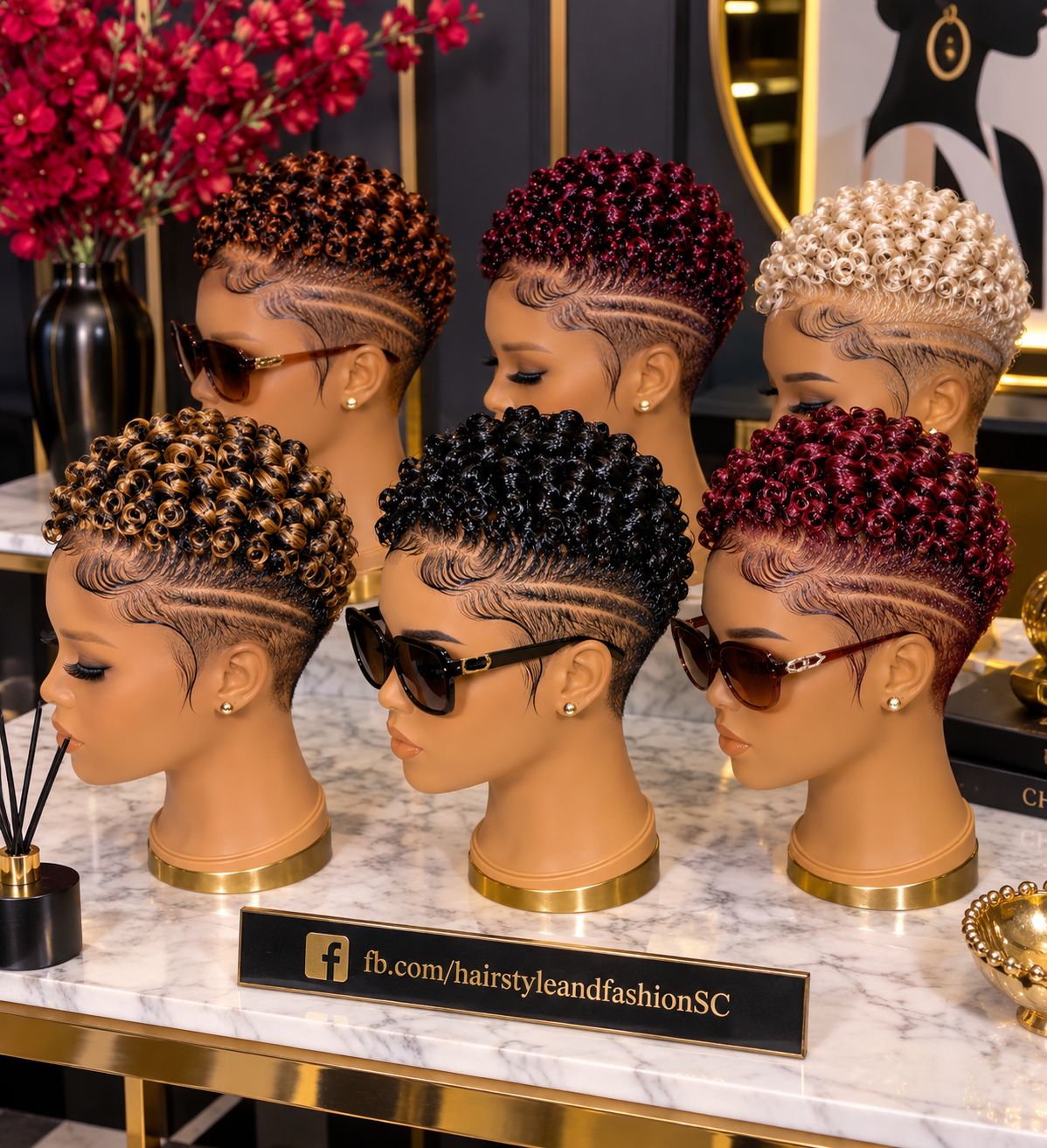
This ring curl pixie wig collection combines compact circular curls with closely fitted sides, flowing temple waves and narrow double-line details positioned above the ear. The same sculpted construction appears in glossy jet black, copper brown, deep burgundy and champagne blonde, allowing the color to change while the recognizable pixie structure remains consistent.
The crown carries most of the volume, with dozens of small ring curls packed closely together. Below them, the hair becomes progressively flatter around the temples and sides. Fine strands are shaped into sweeping waves that travel from the front hairline toward the side, where two narrow parallel lines create a precise barber-inspired accent.
Compact Ring Curls Across the Crown
The top is built from small glossy ring curls rather than loose spirals. Each curl retains a recognizable circular shape while sitting close enough to neighboring curls to create a dense rounded crown.
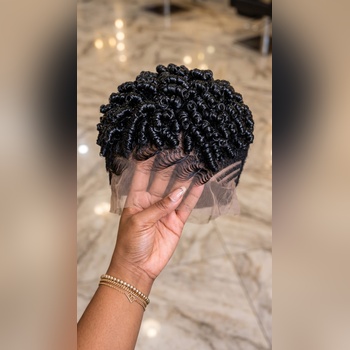
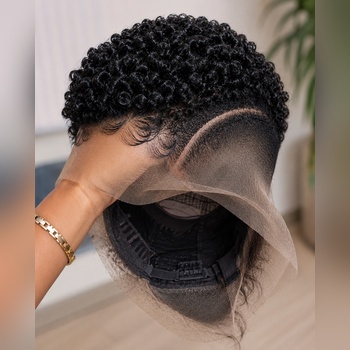
The curl size is important to the overall silhouette. Larger curls would produce a looser shape and greater outward volume, while the miniature loops visible here keep the hairstyle compact and controlled.
The rings are not positioned in perfectly identical rows. Slight variations in direction and placement help the crown appear more natural while still maintaining a carefully styled structure.
Sculpted Frontal Waves
Along the front edge, selected strands transition from circular curls into sculpted finger-wave-inspired sections. These waves sweep across the forehead and continue toward the temple, creating a visible connection between the fuller crown and the closely fitted side.
The waves are broader and more intentional than conventional wispy baby hairs. Their repeated curved shape becomes an important part of the hairstyle rather than simply a finishing detail around the lace.
For a custom recreation, the frontal area should retain enough length for these strands to be molded. Cutting the hairline too close can remove the flowing pattern that gives the pixie much of its character.
Double Parallel Side-Line Design
Two narrow exposed lines run through the fitted side above the ear. The double side-line detail follows a gently sweeping direction that complements the frontal wave pattern rather than cutting straight across the head.
The small spacing between the two lines helps them read as one coordinated design. Hair remains visible between the lines, preserving clear separation and preventing them from merging into one larger exposed section.
When commissioning a custom unit, send a clear side-view reference so the stylist can match the direction, spacing and placement relative to the temple.
Closely Fitted Side Structure
The lower side remains considerably flatter than the crown. This contrast is essential because it allows the curls to appear fuller without making the entire wig bulky.
The fitted area follows the shape of the head and gradually transitions toward the nape. The temple waves and side lines sit within this lower-density section, which keeps those details visible from profile and three-quarter angles.
Too much hair in this area can hide the precision work, so density needs to be planned during construction rather than corrected only after the unit is finished.
Jet Black Ring Curl Pixie
The jet black variation places the greatest emphasis on shine and curl structure. Reflections travel around the outer surface of each small loop while deeper shadows remain between the curls.
The dark color also creates strong contrast around the temple waves and double-line design. Because no lighter shade competes with the structure, the eye is drawn directly toward the sculpted details.
For someone wanting the same hairstyle with a classic color, jet black provides a dramatic appearance while remaining highly versatile.
Copper Brown Ring Curl Pixie
The copper versions introduce warm brown, bronze and ginger reflections across the compact crown. Each curl catches the light differently, creating visible depth without requiring large contrasting streaks.
A copper brown ring curl pixie can range from medium warm brown to brighter ginger-copper depending on preference. Keeping slightly deeper roots can add additional depth around the front and side.
When ordering this shade, specify whether you prefer a stronger orange-copper result or a deeper brown-based copper so the stylist does not interpret the color too broadly.
Deep Burgundy Ring Curl Pixie
The burgundy version gives the crown a rich wine-red appearance. In softer lighting, the shade remains dark, while stronger light reveals cherry and ruby reflections across the small curls.
This deep burgundy curly pixie works especially well with the ring pattern because each circular section creates its own highlight and shadow. The result is dimensional even without additional color variation.
For a darker finish, request deep burgundy, wine red or black cherry rather than a bright primary red.
Champagne Blonde Ring Curl Pixie
The champagne blonde version makes the ring construction particularly easy to see. Pale strands reflect more light, allowing individual curls to remain visible even where they overlap densely.
A champagne blonde ring curl pixie requires careful processing when created from human hair. The hair needs enough strength and flexibility to maintain the small circular curls after lightening and toning.
For this reason, hair quality is especially important when choosing a custom blonde version. Excessively processed strands may become difficult to reshape after washing.
Warm Brown and Bronze Variations
Some versions sit between copper and deeper natural brown, creating a warm bronze-brown crown. These shades provide less brightness than blonde but more visible dimension than solid black.
The warmth appears primarily along the outer surface of the curls, while darker spaces remain between them. This preserves the compact visual depth of the crown.
Warm brown is a useful option for someone who likes the dimensional effect of copper but prefers a more understated result.
Tapered Nape and Compact Back
The rear section should remain fitted and controlled so the crown retains the recognizable pixie silhouette. Longer or bulkier hair around the nape can make the hairstyle look substantially heavier.
A compact tapered back also improves the transition from the dense crown into the lower side sections. The curls remain concentrated through the upper portion while the neckline stays close to the cap.
This balance is particularly important when the wig is viewed from behind or from a three-quarter angle.
Lace Construction for the Sculpted Hairline
A fine lace foundation can help reproduce the exposed frontal and temple areas. HD lace or transparent lace may work well depending on the wearer’s complexion and the wig maker’s preferred construction.
The frontal hairs need directional ventilation because they are styled into sweeping curves rather than simply falling forward. Small knots and controlled density can also make the visible areas around the hairline appear more natural.
When ordering a custom unit, confirm that the lace extends sufficiently around the temple to accommodate the sculpted waves and closely fitted side.
Glueless Wear&Go Option
This style can be constructed as a glueless Wear&Go pixie wig using an internal elastic band, adjustable straps and a properly fitted cap.
Accurate sizing is particularly important because the side lines need to remain positioned correctly above the ear. If the unit shifts, the design can sit too far forward or backward and lose its intended alignment.
Providing accurate circumference, front-to-nape and ear-to-ear measurements can help a custom wig maker build the unit more precisely.
Where to Get This Hairstyle Made
Look for a custom pixie wig maker, lace specialist or stylist experienced with sculpted cropped wigs. This hairstyle requires experience with several techniques at once: ring curl setting, detailed frontal waves, density reduction through the sides and precision line work.
A stylist who also works with barber-inspired wig designs may be especially useful because the lower section has the appearance of a professionally shaped cropped haircut.
Before booking, review side-view and three-quarter photographs from the stylist’s portfolio rather than judging only from frontal images.
How to Book the Right Wig Appointment
When contacting a stylist, describe the style as a compact ring curl pixie with sculpted frontal waves, closely fitted sides and double parallel temple lines. Specify the exact color you want before requesting the final price.
Send clear reference photographs before paying a deposit. Ask whether the quoted cost includes the wig, color work, lace customization, curl setting, side detailing and final fitting.
If ordering remotely, request finished photographs or a short video from several angles before shipment so the curl density and side structure can be checked.
Where to Buy a Similar Wig
Custom wig boutiques and independent lace wig makers are the most practical places to search for this exact combination of ring curls and side detailing. A standard curly pixie may provide a suitable base, but additional customization will normally be necessary.
When purchasing a base unit, choose one with enough crown length for the curls, moderate density and sufficient lace around the temple. An extremely dense unit can be difficult to reduce enough for the precision side pattern.
Ask the seller for photographs of the cap, lace and side construction before purchasing an expensive unit intended for customization.
How Much It Costs
| Wig Type | Estimated Price | Typical Features |
|---|---|---|
| Premium Custom | $425–$875+ | Premium human hair, HD lace, custom glueless cap, hand-set ring curls, sculpted frontal waves, tapered sides and double-line detailing |
| Standard Custom | $275–$525 | Human hair, lace front, professional color, compact ring curls, fitted sides and custom line work |
| Basic Human Hair | $175–$325 | Human-hair pixie base, standard lace, basic curl setting and simplified temple detailing |
| Premium Synthetic | $100–$215 | Heat-friendly fiber, lace front, pre-shaped ring curls and cropped side construction |
| Basic Synthetic | $55–$135 | Standard cap, fixed compact curls and limited side customization |
Prices vary according to hair quality, lace area, cap construction and color. Champagne blonde, copper and burgundy human-hair versions may involve additional coloring charges, while detailed ventilation around the temple can increase labor costs.
Maintaining the Ring Curl Crown
Avoid pulling a conventional brush through the crown because it can open the circular curls and quickly change the silhouette.
Use the fingers to reposition individual rings. A small amount of lightweight styling foam can help restore curls that begin to loosen without making the crown excessively stiff.
After washing a human-hair version, some sections may need to be reset individually to recreate the compact ring pattern.
Maintaining the Sculpted Temple Waves
The fine temple sections should be treated separately from the curls. Use a small styling brush and minimal product to guide the strands into their original sweeping direction.
Heavy gel can cause the individual wave sections to merge and may leave visible residue around the hairline. A lighter application generally preserves more strand detail.
Avoid repeatedly pulling the fine hairs away from the lace because this area can be more delicate than the denser crown.
Keeping the Double Lines Visible
The lower side should remain close to the cap so the double lines stay clearly visible. If nearby strands begin falling across them, redirect the hair gently before considering additional trimming.
Product buildup can also reduce contrast inside the exposed lines. Keep this area relatively free of heavy oils and creams.
Periodic professional maintenance can restore the side structure when the wig begins to grow out visually or lose its original arrangement.
Color Care for Black, Copper, Burgundy and Blonde
Jet black generally requires less tonal maintenance, while copper and burgundy can gradually lose saturation. Champagne blonde may begin to show warmer undertones after repeated washing.
Use products formulated for color-treated hair and avoid unnecessary exposure to very hot water or repeated high-temperature styling.
Professional color refreshing can restore the intended shade while giving the stylist an opportunity to reset the ring curls and frontal wave pattern at the same appointment.
Storage Between Wears
Store the wig upright on a correctly sized stand so the crown is not compressed. Do not place heavy items over the curls because multiple rings can flatten simultaneously.
Before storage, return displaced curls to position and check that the temple waves are not folded beneath the lace. Keeping the side lines uncovered also helps preserve the visual structure.
A Precision Pixie Built Around Curls and Temple Detail
The defining combination in this collection is the compact ring curl crown, sweeping frontal waves, close tapered sides and double temple lines. The colors vary, but these structural elements give every version the same recognizable pixie identity.
Jet black emphasizes gloss, copper and warm brown add depth, burgundy introduces rich red dimension, and champagne blonde makes every small curl highly visible. Preserving the curl scale and sculpted side work is essential for recreating the look accurately.
Search Terms
jet black ring curl pixie with double temple lines · copper brown mini ring curl pixie with sculpted side waves · deep burgundy ring curl pixie with parallel side lines · champagne blonde compact curl pixie with temple detailing · warm bronze ring curl pixie with fitted tapered sides · black glossy pixie curls with sweeping frontal waves · burgundy mini curls with double curved temple lines · copper ring curl pixie with sculpted side hair design