
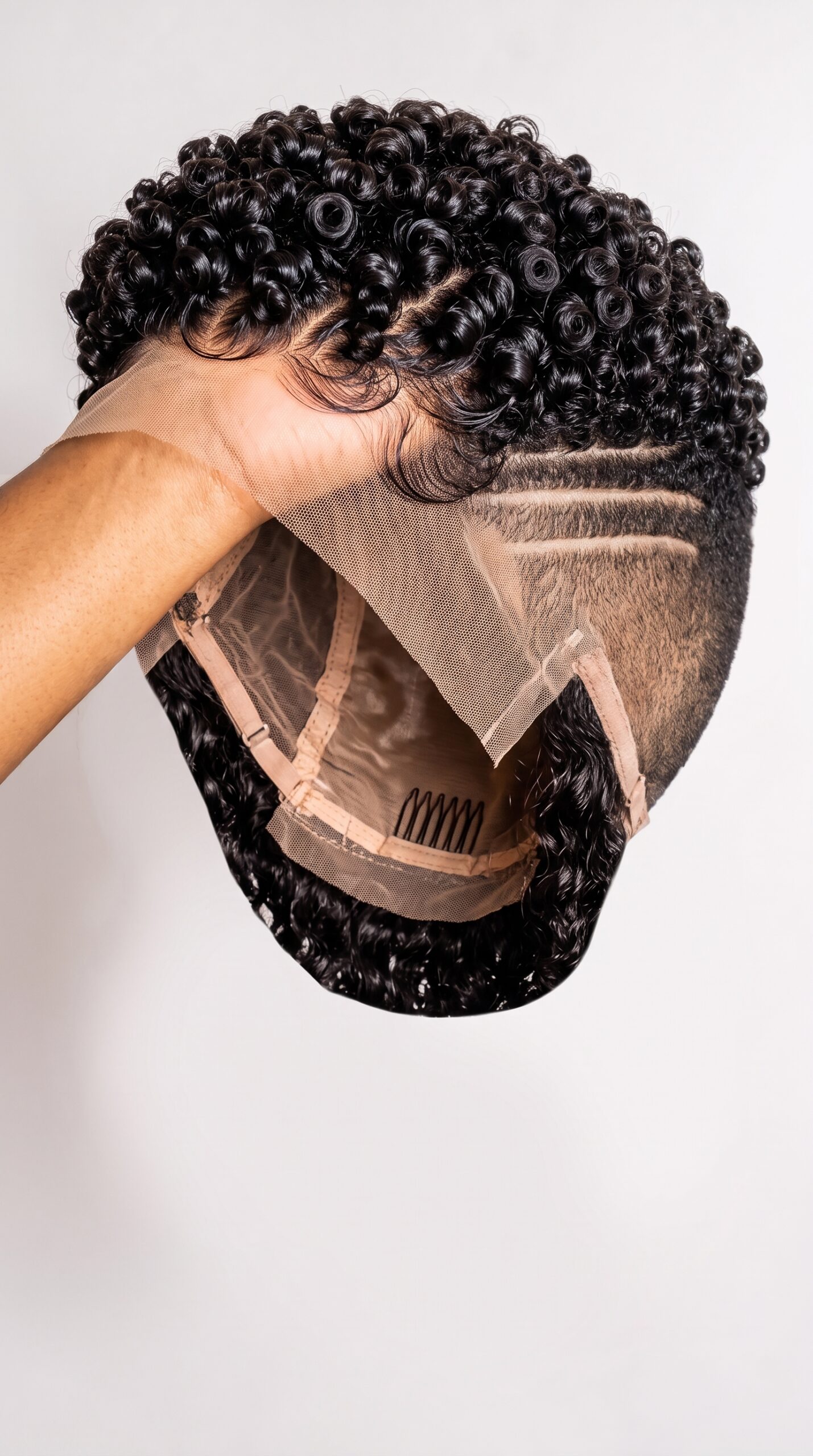
Turned inside out, the security in this cap comes down to one comb and a back strap. For a lot of people that is plenty. For some it is the reason the wig will not stay on.
This black curly pixie wig has been folded back to show the interior: a single comb sewn near the crown, an adjustable strap across the nape, sheer lace at the front, and tight glossy curls with a carved side visible around the edges. The security setup is modest, and whether it works depends entirely on what is under the wig, which the listing never asks about.
Where To Buy A Wig Like This
Cap security is rarely described and is the difference between a wig you can trust and one you are always touching. Where you buy decides whether you can change it.
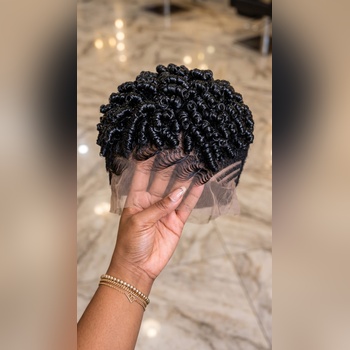
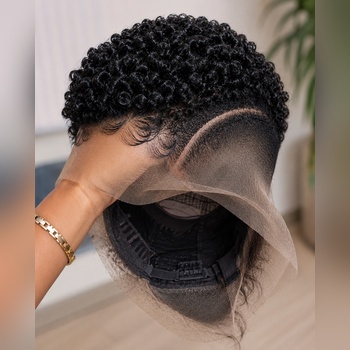
Custom makers and lace studios. The route that can add combs, a different strap, or an elastic band to suit your head. One or two people working to order over WhatsApp or direct message, four to six weeks, deposit up front. Worth it if you have little or no hair of your own, because the standard single-comb setup assumes hair to grip and you may not have it.
Instagram and TikTok sellers. The widest choice. Search the terms below plus your city, and look for interior shots, since most sellers only photograph the outside. A maker who shows the cap is telling you what security you are actually getting.
Etsy. Workable for made-to-order, usually silent on cap security. Ask how many combs and what kind of strap before ordering, and read buyer photographs for interior views.
Marketplaces such as Amazon, AliExpress and Temu. Cheap synthetic pieces here vary wildly in cap security and rarely describe it. Assume a single comb and a basic strap unless stated, and assume you cannot change it.
Local beauty supply shops and salons. The one place you can try the piece on and feel whether it holds before paying, which on this specific issue is worth more than any description. Prices run about a third above online. Some salons add extra combs or a band for you.
Vendor or wholesale direct. Minimums of five to ten identical units, relevant only for resale.
Regional note. Independent makers of short units are concentrated in Nigeria, Ghana, South Africa, the United States and the United Kingdom, with the busiest Instagram communities in Lagos, Accra, Atlanta and London. Buyers with medical hair loss are often better served by specialist medical-wig suppliers, who build security for scalps with no hair to grip, though at higher prices.
Vetting a seller. Continuous posting history rather than a burst. Interior photographs on request. A specific answer to how many combs and what strap. A willingness to add security if you ask. Returns position in writing.
Red flags. Never showing the inside of any cap. The same image across several shops. No answer on security. A refusal to add combs. Payment only by irreversible transfer.
What to send when you enquire. A reference photograph, your head circumference, your crown-to-nape measurement, and crucially how much of your own hair you have to grip, since that decides how much security the cap needs. Add your deadline.
Paying safely. Thirty to fifty percent deposit, balance before shipping. Ask for an interior photograph of the finished cap before releasing the balance, so you can see the security you are getting rather than assume it.
Contact / Order Inquiries: WhatsApp is where most independent makers take orders. [WhatsApp: +XX XXX XXX XX XX] — tell them how much of your own hair you have and ask what security they recommend for it.
Why The Standard Setup Assumes Hair
A comb works by gripping hair. It is pushed into your own hair and the teeth hold against it. A single comb near the crown plus a strap that tightens the circumference is enough to hold a light short unit on a head with a normal amount of hair, because the comb has something to bite and the strap does the rest.
Take the hair away and the comb has nothing to grip. On a shaved head, a very short natural cut, or a scalp with medical hair loss, the teeth slide against skin and the wig is held by the strap alone. A strap alone lets the piece rotate and lift, which is exactly the complaint people with little hair have about standard caps.
The listing photograph never shows this, because it is taken on a canvas block that grips everything.
What To Add If You Have Little Hair
Several options, in rough order of how much they help.
Silicone or velvet strips sewn inside the cap. These grip skin rather than hair, and they are the single most effective change for a bald or near-bald head. Many makers will add them on request.
An adjustable elastic band across the crown. This holds by tension against the whole head rather than gripping, and it does not rely on hair.
More combs. Additional combs help only if there is hair to grip, so on a truly bald head they add little. On a very short cut they can help.
Wig grip band worn under the piece. A separate velvet band that sits on the skin and gives the combs something to hold. Bought separately, works with any cap.
Adhesive or tape at the lace. Holds the front but not the body of the wig, and involves product on the skin. A last resort for daily wear rather than a base solution.
If you have little or no hair, say so before ordering and ask for silicone strips or a band built in. It is far easier than modifying the cap afterwards.
Judging Cap Security Before Buying
Count the combs in any interior photograph, and note where they sit. Crown and nape combs do the most work; a single crown comb is the minimum.
Look at the strap. It should be a real adjustable strap with functional hooks, not a token loop. A strap that only tightens by half an inch does little on a head outside the average.
Check whether the cap has any skin-gripping surface at all. On a standard cap it will not, which is fine if you have hair and a problem if you do not.
How Much It Costs
Security additions are cheap in materials and priced modestly.
The unit itself
Human hair black curly pixie wig, standard single comb and adjustable strap, carved side, sheer lace, glueless cap: $240–$500
The same curly pixie wig with silicone strips or a built-in band added for grip on little hair: $260–$540
Human hair pixie wig, basic cap, single comb: $170–$350
Quality synthetic curly pixie wig, standard security: $70–$150
Basic synthetic short curly wig: $25–$60
What is usually included, and what is not
Included in most quotes: cap, hair, standard knotting, standard lace, one comb and a strap.
Charged separately by many makers: silicone or velvet grip strips ($15–$35), an extra comb or two ($5–$15 each), an elastic crown band ($10–$25), HD or fine lace over standard ($20–$50), bleached knots across the full lace ($15–$40), pre-trimmed lace ($25–$50), rush build ($40–$100).
Ask which security is inside the number. It is a cheap upgrade and the one that decides whether the wig stays on if you have little hair.
Shipping and duty
Tracked international shipping on a single short unit generally runs $25–$60. Import charges vary by country on declared value; allow ten to thirty percent of the item price and check your own rates.
The costs that come after
Canvas block and stand: $25–$60 once
Satin cover: $5–$15
Wig grip band, if not built in: $10–$25 once
Colour-safe wash products: $20–$40 per year
Professional first lace trim: $30–$80 once
Professional reset of the curls: $40–$90 per visit, two to four times a year
First year, all in
A mid-range human hair version at $340, plus $45 shipping, plus roughly $55 duty, plus $50 of storage kit, plus $20 grip band, plus $40 in wash products, plus one $50 trim and two $60 resets, comes to around $720 across twelve months.
The synthetic equivalent at $120 with no resets comes to around $175.
Cost per wear
Worn three times a week over a year, the human hair piece lands near $4.60 per wear and carries into a second year. The synthetic sits near $1.15 per wear but tires inside twelve months.
What an unusually low price means
The security of a cheap unit is usually a single comb and a thin strap with no skin grip, which is not a fault at the price but is a problem if you have little hair. Below about $130 for human hair, expect the most basic cap and assume you will be adding grip yourself.
Deposit structure
Thirty to fifty percent up front, balance before shipping. If you asked for added grip, have the interior photograph confirm it before releasing the balance.
Before You Pay
How many combs does the cap have, and where are they?
Is the strap fully adjustable with functional hooks?
Does the cap have any skin-gripping surface?
Can you add silicone strips or a band if I have little hair?
Will the interior photograph show the security before I pay the balance?
Trimming The Lace
Work along your own hairline with short angled cuts, leaving a margin rather than trimming flush.
Security note rather than a trimming one: if you are relying on lace adhesive at the front because you have little hair, the front lace has to be trimmed cleanly for the adhesive to hold, so this cut matters more than usual. Have it done by someone experienced.
Search Terms
glueless curly pixie wig · black curly pixie wig human hair · wig for little hair · silicone grip wig cap · pixie wig with combs and strap · secure cap short wig · curly pixie wig for bald head where to buy
Final Thoughts
The security in a standard cap is designed around a head with hair on it. One comb, one strap, and your own hair doing quiet work you never notice. Take the hair away and that quiet work stops, and the same cap that holds fine for most people will not hold for you.
If you have little or no hair, this is the first thing to ask about, before curl or colour or carving. Ask how many combs, ask whether the strap really adjusts, and ask for silicone grip to be added. It is a cheap change to request before the build and a difficult one to make after.