
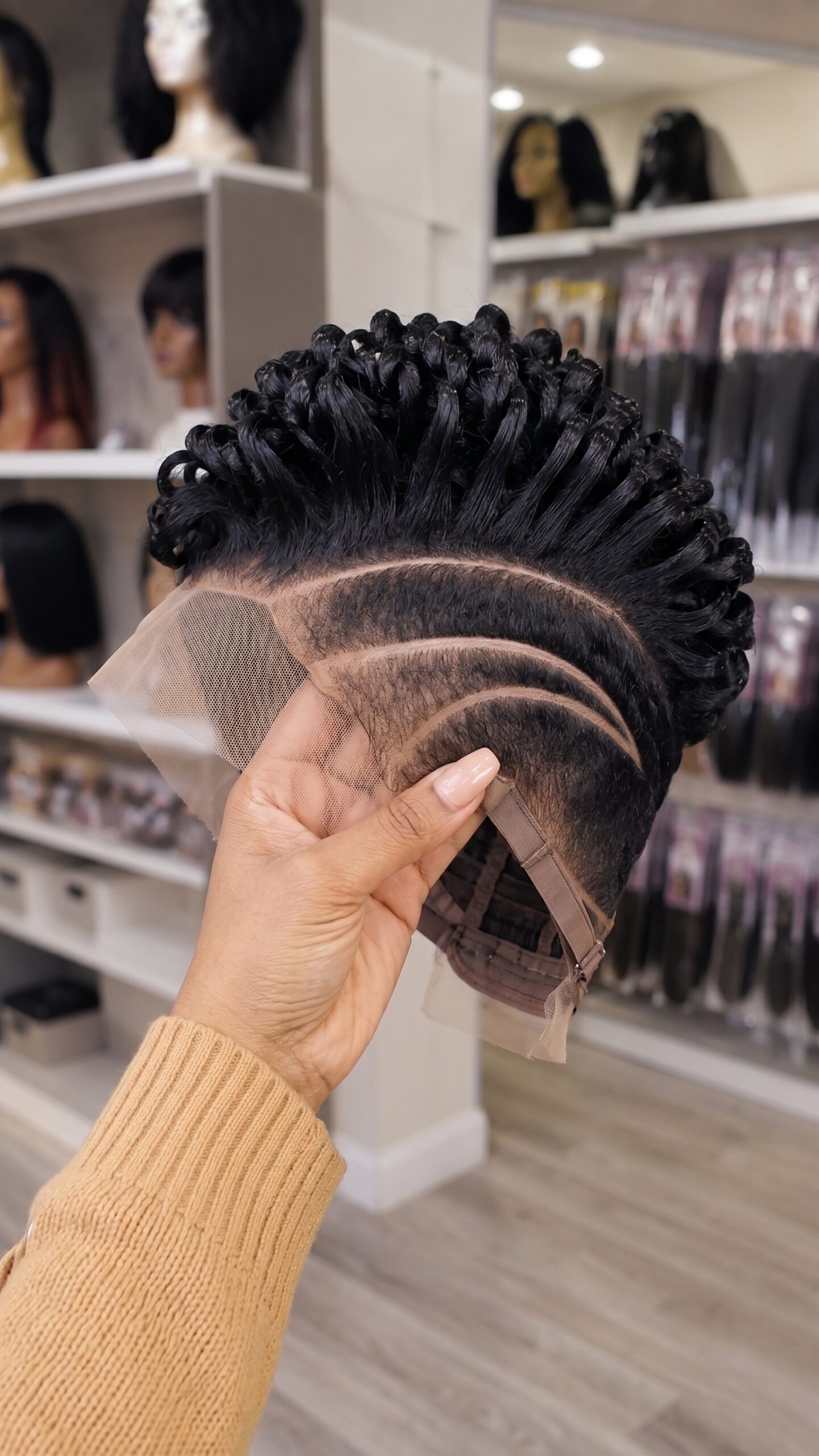
More lace is not more hairline; it is more room to style, and that is a different thing entirely. Buyers see a big, generous lace like the one on this unit and assume it means a better or more realistic hairline, but the amount of lace does not change how real the front looks, it changes how many ways you can wear it. A large lace that reaches from ear to ear is a frontal; a small one is a closure; and the choice between them is really a choice about styling versatility versus ease. Understanding what the lace size actually gives you keeps you from paying for coverage you will not use, or wishing you had more.
The trade is straightforward. A large lace, a frontal, lets you part anywhere across the front and pull the hair back off your face, because there is convincing scalp wherever you want to expose it. That is real versatility: side parts, middle parts, hair swept back, all convincing. But a big lace is also more to melt to your skin, more to maintain, and more that can lift at the edges, so it asks for more work to keep looking right. A small lace, a closure, covers only a set area, so it limits where you can part and how far back you can style, but it is far easier to lay, blend, and maintain because there is less of it.
So the lace size is a decision to match to how you actually style. If you want to change your parting and wear the hair off your face, a larger lace earns its extra upkeep. If you wear one simple style and want the easiest possible install, a smaller lace serves you better. Do not judge the lace by how impressive its size looks in the hand; judge it by whether that much styling freedom is what you need.
Where To Buy A Pixie Wig With The Right Amount Of Lace
Custom makers can build the lace size to suit your styling, so tell them how you part and wear it and ask whether a frontal or a closure fits. A maker who asks how you style is sizing the lace to you; one who defaults to the biggest lace may be giving you upkeep you do not need.
Instagram and TikTok sellers often show big laces because they look impressive, so ask what size the lace actually is and whether it suits how you want to part. A pixie wig with a huge lace is not automatically better; it is more versatile and more work, so match it to your styling, not the photo.
Etsy works with makers who specify frontal or closure and describe the parting range, with worn photos. The risk is assuming a big lace means a better hairline. Read reviews for how people styled it, and choose the size for your parting habits.
Marketplaces like Amazon, AliExpress, and Temu sell both frontals and closures at a range of prices, and a closure is often the cheaper, lower-maintenance choice for a simple style. If you wear one look, a smaller lace saves money and effort. Judge the size against how you style, not by how much lace you get.
Local beauty supply shops and salons let you see how far a lace extends and imagine your partings, and a stylist can advise frontal versus closure for your habits. You pay a premium in-store, but sizing the lace to your styling is worth the guidance.
Vendors and wholesalers direct ship standard lace sizes, so specify frontal or closure for your needs. For a simple style, a closure is enough; for versatility, a frontal.
Regionally, both frontals and closures on short units come from Lagos, Accra, Atlanta, London, and across South Africa, easy to compare worn on video.
Vet the seller the usual way: check the account age, look for real buyer photos, time a plain question for a genuine reply, and ask the lace size and what parting it allows. A seller clear on frontal versus closure understands what the lace does.
Red flags: a big lace sold as if it means a better hairline, no clarity on frontal versus closure, and pressure toward the largest lace regardless of how you style.
When you order, send your measurements and say how you part and wear the hair, and ask whether a frontal or closure suits you. That sizes the lace to your styling rather than to a sales pitch.
Contact / order inquiries: WhatsApp [WhatsApp: +XX XXX XXX XX XX].
How Much It Costs
The amount of lace affects both the price and the upkeep, so a frontal and a closure are different spends for different needs.
Tiered pricing. Human hair, full build with an ear-to-ear frontal, glueless with a fine lace, in black: roughly $190 to $410, with the larger lace adding to the cost. Human hair with a closure-sized lace: about $140 to $310, less lace and less cost. Human hair, basic cap: around $70 to $170. Good synthetic: $60 to $140. Basic synthetic: $25 to $60.
What that includes and excludes. The price covers the unit and its lace. It excludes shipping, any customs, and the melting and maintenance products a larger lace needs more of, which sit on top.
Shipping and duty. These sit outside the price and change with where you live, so plan a realistic band and confirm your own country’s import rate.
Ongoing costs. A frontal’s larger lace needs more product to melt and more upkeep to keep the wider edge down, while a closure needs less of both. So the bigger lace carries a little more ongoing cost and effort, which is the price of its versatility.
First-year total. A human unit plus shipping plus any customs plus install products tends to land between a low three-figure sum and roughly double the sticker, with a frontal costing slightly more to run than a closure.
Cost per wear. If you use a frontal’s versatility, it is worth the extra; if you wear one style, a closure gives the same look for less money and effort per wear. Pay for lace you will use, not lace that looks impressive.
What a very low price signals. A cheap big lace may be low grade and hard to melt, so a large lace is only worth it if the lace quality is good. Judge the grade, not just the size.
Deposit structure. For custom work, thirty to fifty percent down with the balance before shipping is standard, and use a method you can dispute.
Shipping, Delivery, And What To Expect After Ordering
A unit arrives with its lace uncut and often generously sized, which is normal and not a sign of a better hairline, just more to trim and lay. Ask that it ship protected, choose a tracked service, and confirm your country’s import charge before it lands. When it arrives, decide your parting and how far back you will style before you trim, so you keep the lace you need and remove the rest. What you unbox is the full lace size, and how much you use depends on how you style, not on how much came.
A Frontal Buys Parting Freedom
The whole point of a larger lace is where it lets you part. A frontal gives convincing scalp across the front, so you can part left, right, or centre and pull the hair back off your face, all looking real. This is genuine versatility for anyone who likes to change their look. If you value being able to restyle the parting, the frontal’s extra upkeep is a fair trade for that freedom.
A Closure Is Easier To Live With
A smaller closure covers a set area, so it fixes your parting more, but it is far easier to melt, blend, and maintain because there is less lace. For a simple, consistent style, a closure gives the same clean front with less work and less that can lift. If you wear one look and want the easiest install, less lace is the smarter, lower-effort choice.
Size Is Not Realism
The key thing to hold onto is that a bigger lace does not make a more realistic hairline; the realism comes from the knots and the hairline quality, not the amount of lace. A huge lace with poor knots looks worse than a small one with great knots. So judge the front on its knot and hairline quality, and choose the lace size purely for the styling range you want, keeping the two questions separate.
Before You Pay
- Do I want to change my parting, or wear one consistent style?
- Is a frontal’s versatility worth its extra upkeep for me?
- Would a closure give my look with less work and cost?
- Am I judging the hairline on knot quality, not lace size?
- Is the lace grade good, since a big cheap lace is hard to melt?
Trimming The Lace
The lace comes off the front the usual way, and with a large lace there is simply more to remove, so trim only what you need for your parting and hairline and cut the rest away. Trim in small offset steps and leave a shallow margin rather than cutting flush, in daylight. If this is your first frontal, let a stylist make the first pass, since a bigger lace is more to lay well, and learning it once makes future installs easier.
Search Terms
frontal pixie wig · black curl short lace wig · big lace pixie unit · loop curl short wig · carved side pixie lace · ear to ear frontal pixie · black glossy curl pixie wig · short curl frontal wig
Final Thoughts
This unit’s big lace looks impressive in the hand, but its size does not make the hairline more real, it makes the styling more versatile. A large frontal lets you part anywhere and wear the hair off your face, at the cost of more melting and upkeep; a smaller closure fixes your parting more but is far easier to lay and maintain. The lace size is a versatility-versus-ease choice, not a realism one.
Buy the amount of lace you will actually use: a frontal if you change your parting and style off the face, a closure if you wear one simple look and want the easiest install. Judge the hairline on its knots and quality, which is where realism lives, and let the lace size be purely about how you like to style. A pixie wig with the right amount of lace gives you exactly the freedom you need and no more upkeep than you want. More lace is not better; the right amount of lace is.