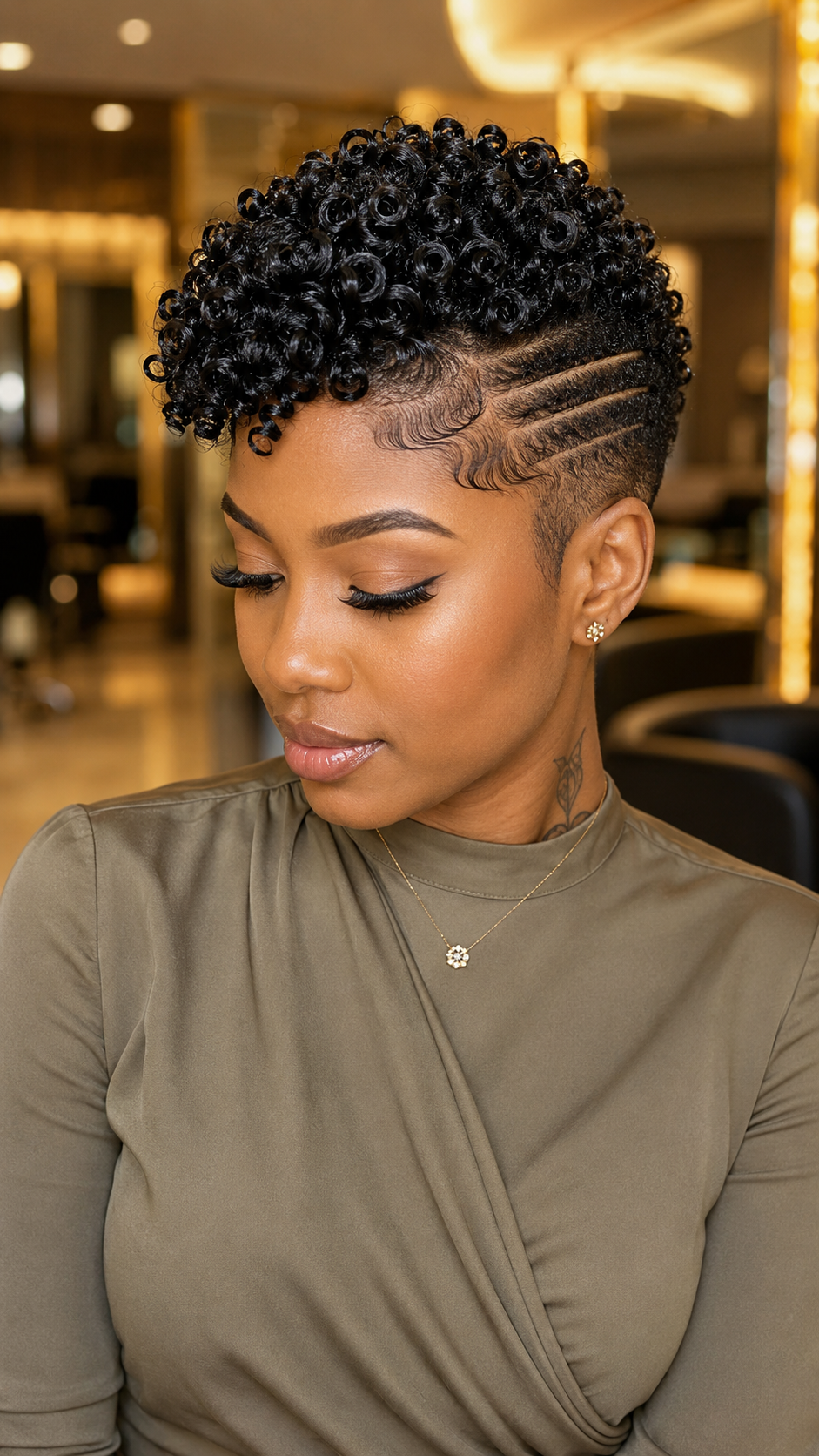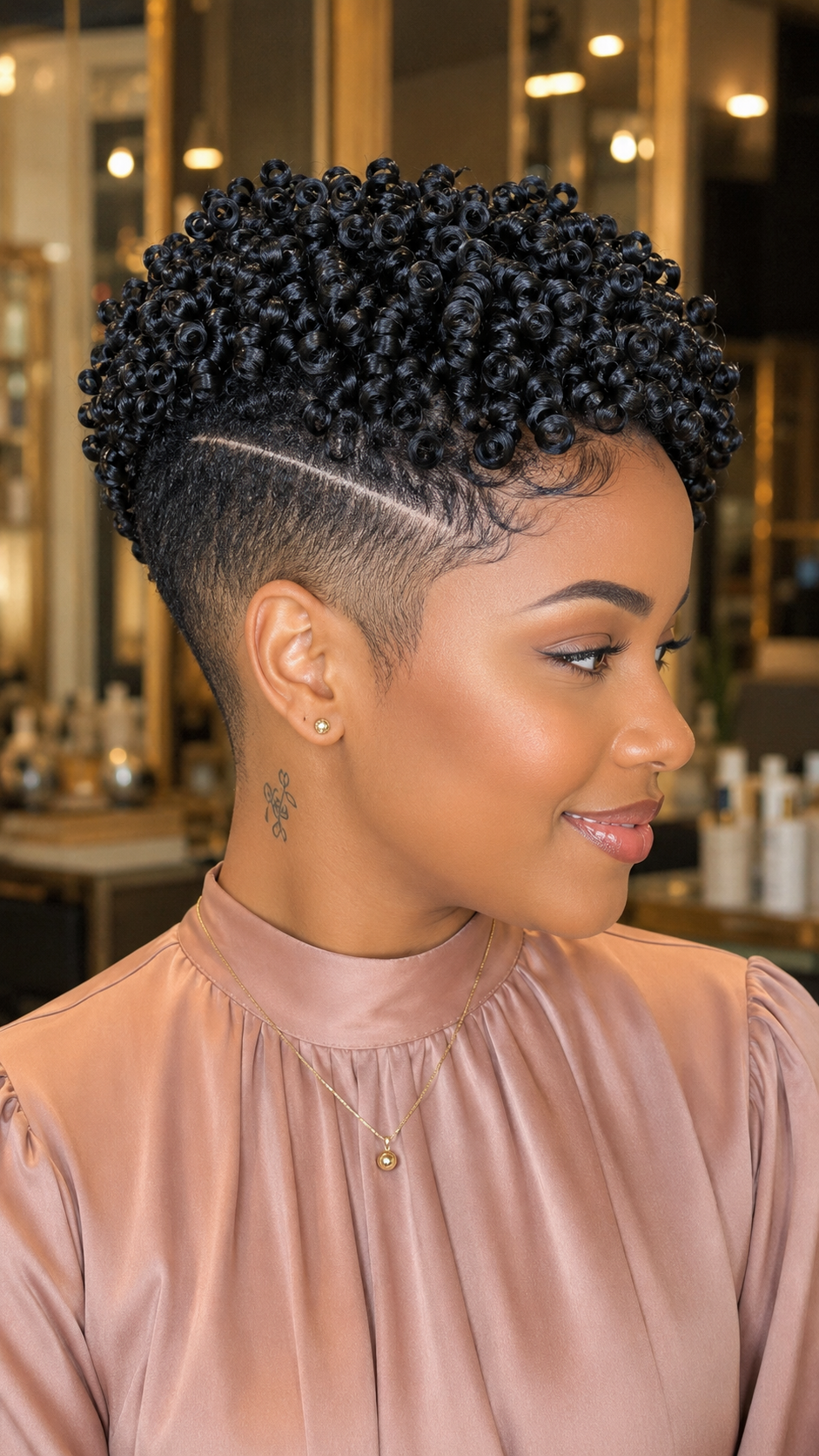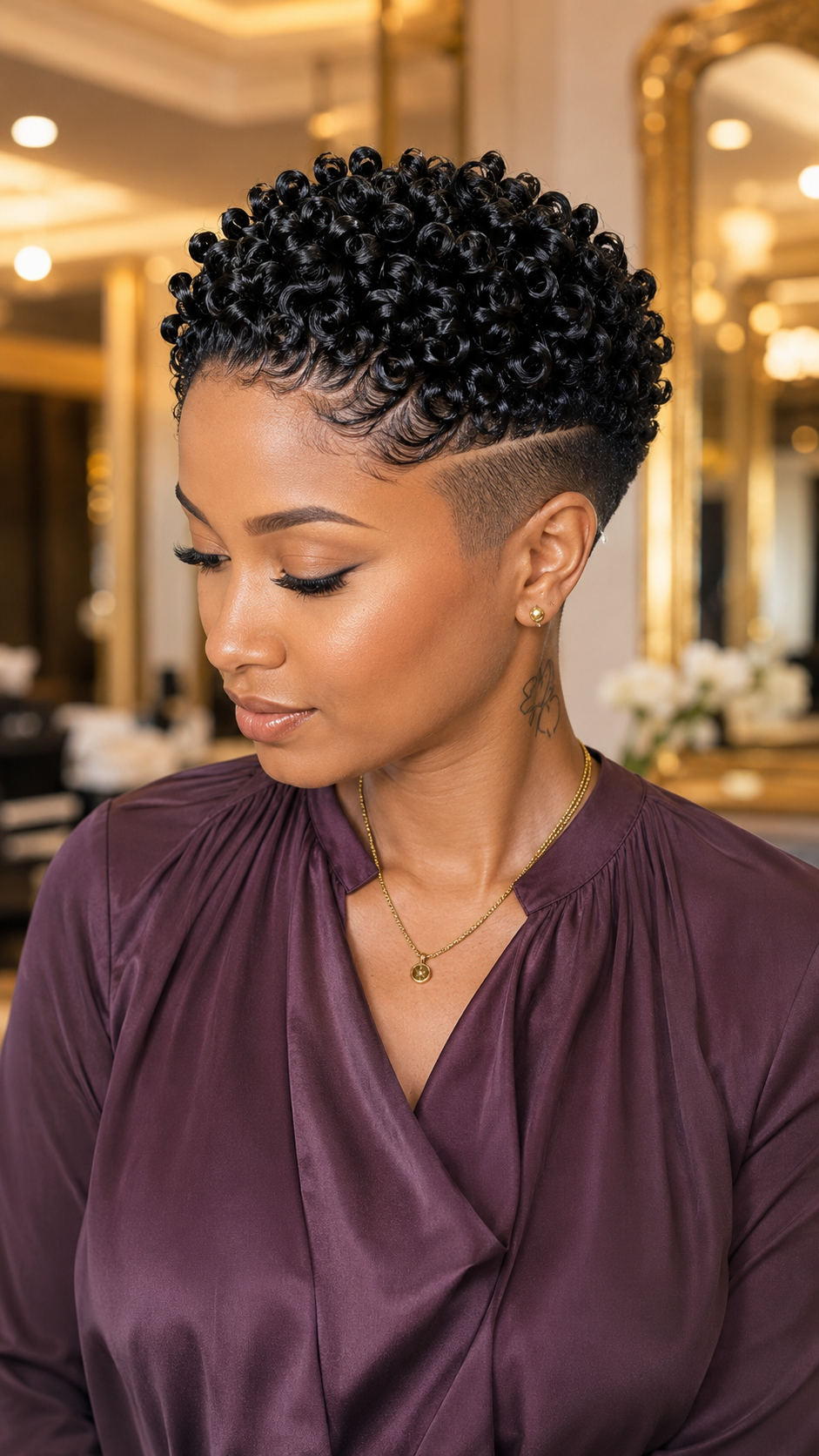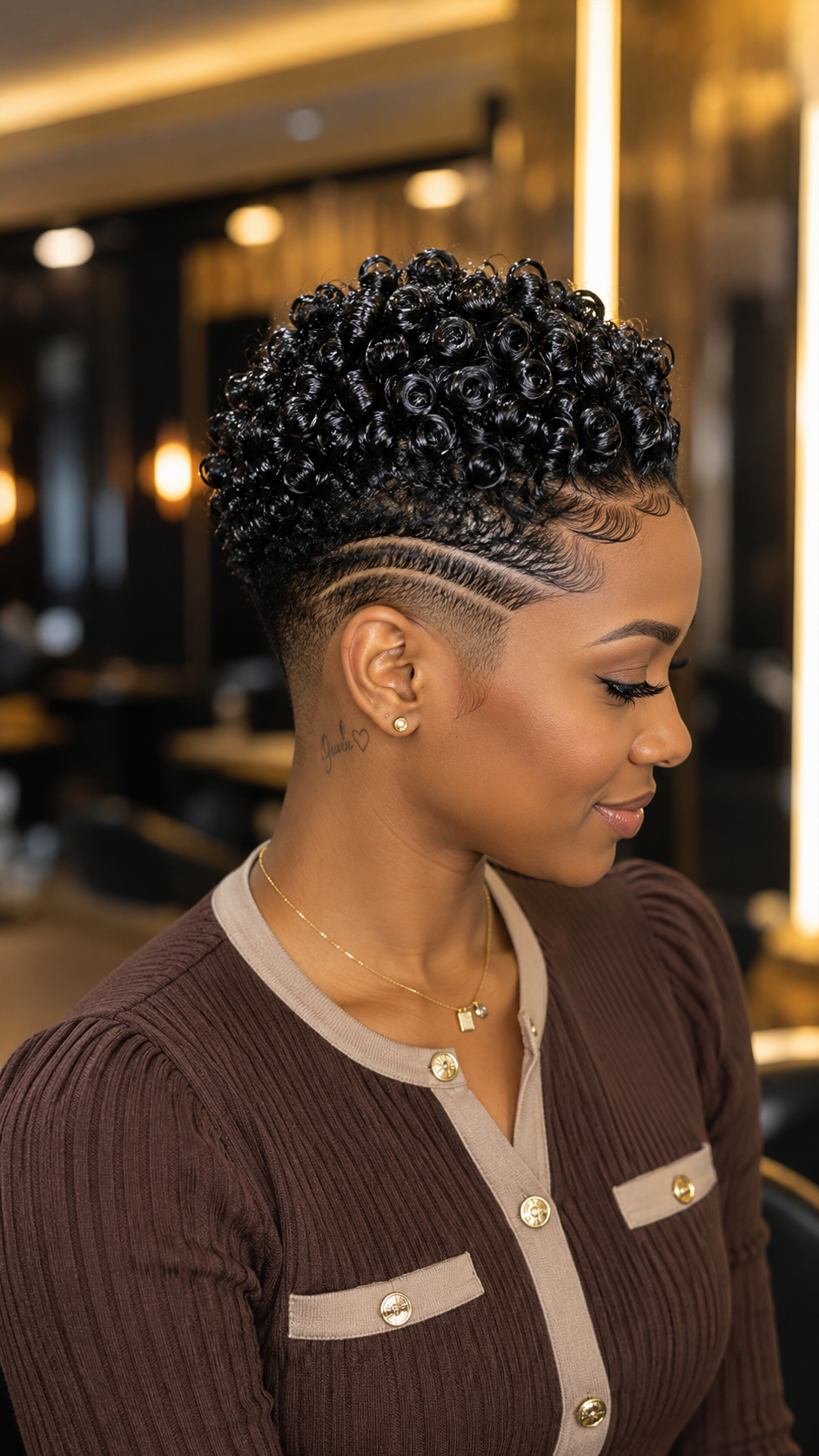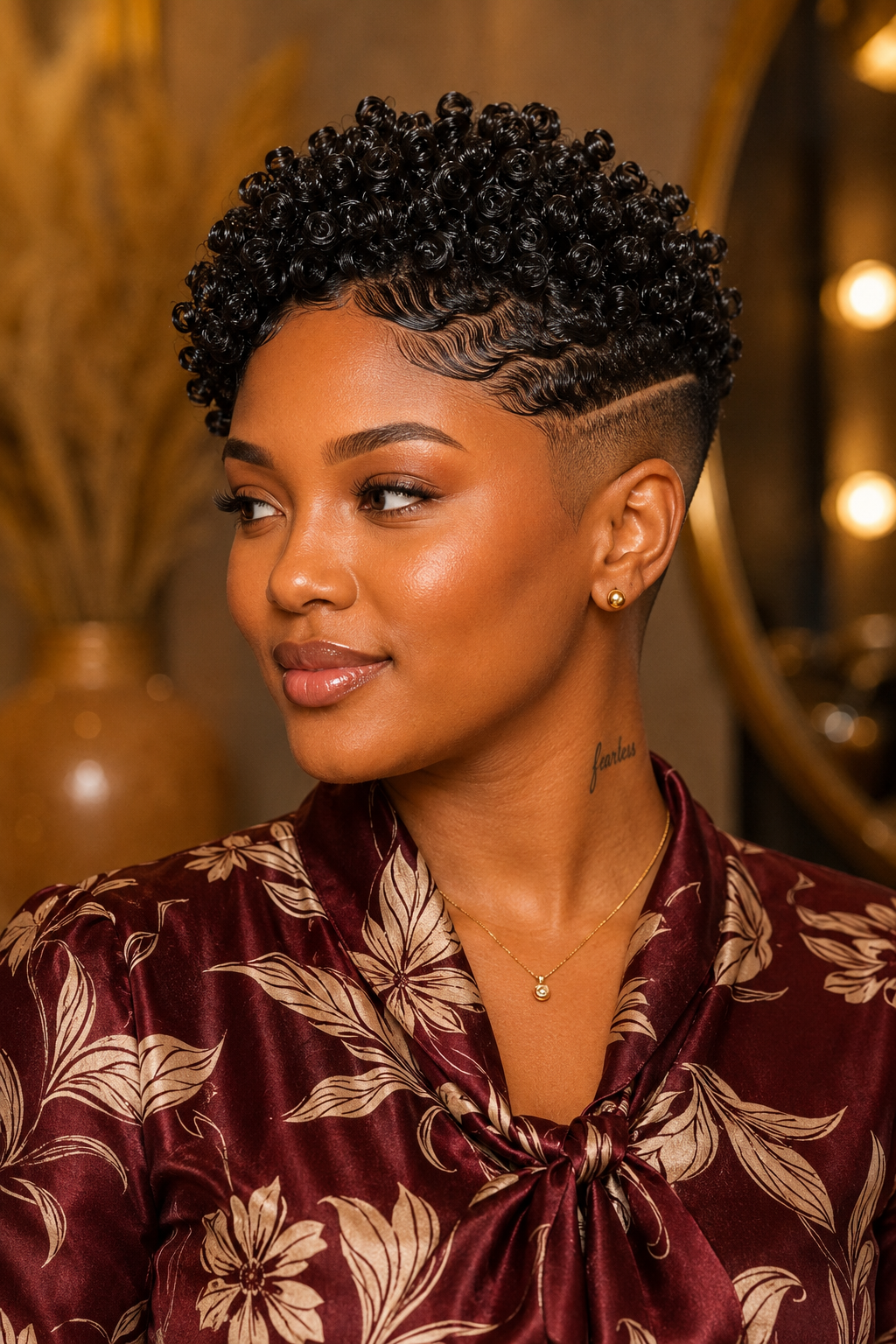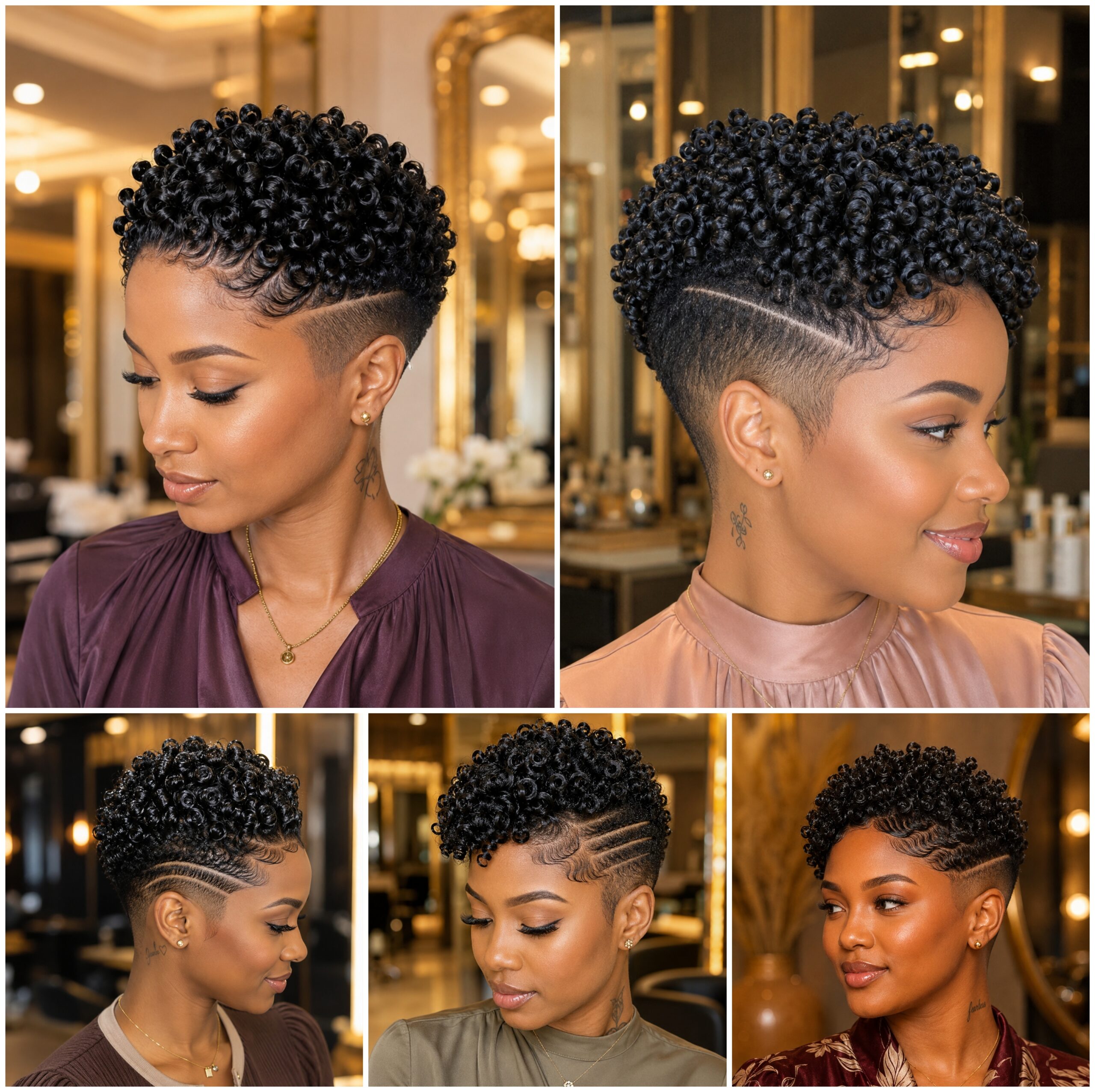
A softly curled crown paired with gradually shortened sides creates a compact natural hairstyle that keeps fullness through the top while giving the edges a more refined profile. Carefully shaped waves along the front hairline add a softer contrast against the tighter curls and help frame the face without making the overall cut feel too rigid.
Moisture is essential for keeping both the curls and front waves flexible. Lightweight leave-in conditioner, curl foam, or styling cream can be applied to damp hair before shaping. Heavy products should be used sparingly so the crown retains bounce and the hairline detail stays neat rather than weighed down.
Shaping the Curly Crown
The top can be kept rounded for an even silhouette or left slightly higher through the center and front for added height. Finger styling or light coil formation can help encourage a more consistent pattern while preserving natural movement.
Smaller sections create tighter curls with more separation, while larger sections produce additional fullness. A stylist can combine both sizes to keep the crown balanced without making the top appear overly uniform.
Natural shrinkage should be considered before the final trim. Tightly curled hair may look noticeably shorter once dry, so preserving a little extra length initially can help maintain the intended shape.
Creating the Front Wave Pattern
The hairline can be shaped into small flowing curves using styling foam or edge control. A fine comb or edge brush helps guide each section while the fingers hold the wave in place.
Keeping the waves narrow usually produces a softer result that blends naturally into the rest of the hairstyle. Oversized patterns can dominate the front, especially when the crown itself is compact.
A satin scarf can be tied around the front for several minutes after styling to help the pattern set and reduce movement while the product dries.
Choosing a Low Taper
A low taper keeps more density through the upper sides while shortening the hair around the temples, ears, and neckline. This creates a gradual transition that supports the fuller crown rather than competing with it.
The lowest sections can be taken closer to the skin when stronger contrast is preferred. A softer blend may be better for women who want a less noticeable grow-out period between appointments.
Keeping the taper low also allows the front wave pattern to remain visually connected to the rest of the hairstyle.
Balancing the Hairline and Sides
The barber should work with the natural hairline rather than pushing it back excessively for the sake of creating a sharper outline. Preserving the existing shape helps the front detail look more natural and reduces unnecessary stress on delicate edges.
A softly curved temple shape often works well with waved styling at the front. The transition from hairline to tapered side should remain gradual so the entire profile feels cohesive.
Women with fragile edges may prefer lighter styling products and minimal brushing in this area.
Finding the Right Stylist or Barber
Look for an Afro hair salon, natural hair studio, curl specialist, or barber experienced with women’s tapered cuts and detailed edge styling. Helpful searches include curly taper stylist near me, women’s Afro barber near me, finger wave hairline stylist, and natural hair salon for short curls.
Review recent portfolio photographs before booking. Look for examples showing similar curl density and pay attention to both the taper transition and the quality of the front hairline work.
Appointments can often be arranged through Instagram, WhatsApp, salon websites, or online booking platforms. Send a clear reference photograph beforehand and mention the preferred crown height, taper depth, and front wave pattern.
Ask whether washing, conditioning, curl styling, cutting, tapering, and edge work are included in the quoted service.
Wig Options for a Similar Shape
A removable alternative can be found through custom wig makers, beauty supply stores, and online retailers specializing in short natural units. Useful searches include curly pixie wig for Black women, short tapered Afro wig, finger curl lace wig, and natural curl pixie wig.
Human-hair units provide more flexibility for adjusting the crown and shaping the front section. Quality synthetic wigs can be practical when maintaining a consistent curl pattern with less daily styling is preferred.
Before ordering, check cap measurements, crown density, curl size, side length, lace shade, and hairline construction. A realistic front lace area is especially important when trying to recreate a waved hairline.
For custom orders, provide clear front, side, and back reference photographs so the maker can understand the intended proportions.
Maintaining the Shape
Refresh the crown with a fine water mist followed by leave-in conditioner or curl foam whenever the curls begin to lose form. Individual sections can be reshaped with the fingers instead of restyling the entire top.
The front waves may need more frequent attention than the crown. A small amount of styling product can restore sections that become disturbed after sleeping or washing.
A satin bonnet, scarf, or pillowcase can help reduce friction and preserve moisture overnight. Heavy oils and thick creams should be used sparingly so the curls remain lively and light.
The tapered areas will gradually soften as the hair grows. Periodic barber touch-ups can refresh the temples, neckline, and side blend while leaving most of the crown untouched.
Soft curls, gently shortened sides, and flowing detail around the hairline create a balanced look that combines natural volume with precise styling. Consistent moisture care and occasional maintenance help preserve both the curl pattern and the neat front finish.