
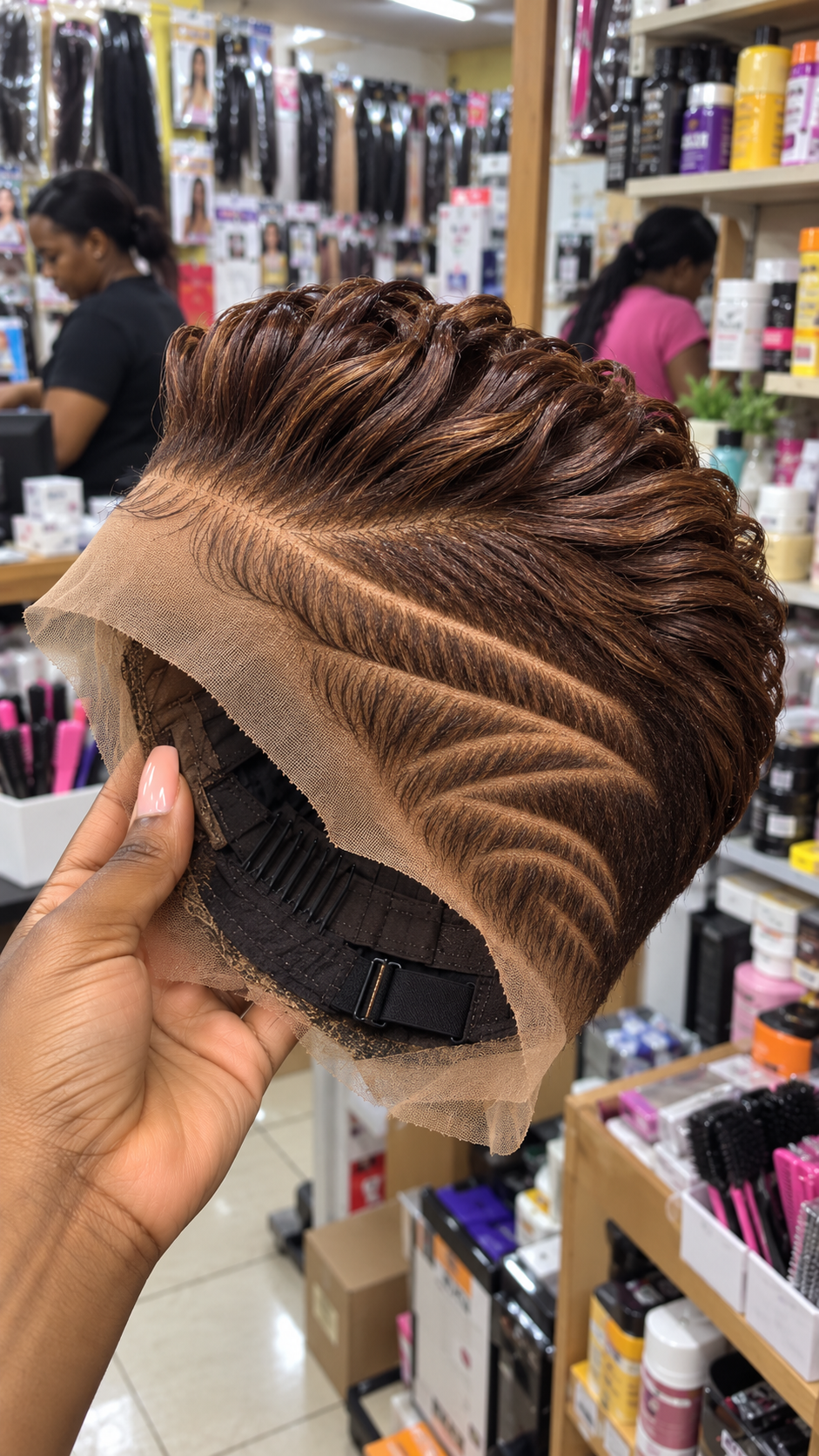
Rich chestnut hair moves away from the forehead in lifted, overlapping sections, giving this short pixie a flowing shape. Fine caramel streaks follow the longer strands through the top, while the closely styled side introduces a striking featherlike pattern. The result brings together the fullness of a swept crown and the detail of a carefully arranged temple.
What makes this hairstyle memorable is its direction. The front rises gently before traveling backward, and the upper sections continue that movement toward the rear. Below them, a long diagonal division separates the fuller hair from the short side. Smaller curved channels then fan across the temple, adding detail without competing with the crown.
This is an appealing reference for women who enjoy short hair with visible movement and warm color. The balance between the swept top and patterned side is the essential feature. Keeping those areas in proportion will matter more than choosing the longest available unit or adding extra highlights.
The Beauty of a Swept Chestnut Crown
The upper hair forms elongated bends and loose loops rather than tight circular curls. Individual sections overlap, creating a layered appearance with height across the front and crown. The shape has enough separation to reveal the direction of the hair, but it still reads as one continuous sweep.
When requesting a similar finish, describe the movement as lifted at the front and brushed backward through the top. Ask the stylist to preserve the longer curved sections instead of breaking them into small ringlets. That distinction helps communicate the character of this particular pixie.
The rear appears rounded and fuller than the lower side. A recreation should account for that transition so the crown does not finish abruptly above a very close temple. Ask for a profile view during the appointment, allowing you to assess the height, backward movement, and overall balance before the final setting products are applied.
Caramel Streaks Through a Brown Foundation
The dominant shade is a deep, warm brown, with lighter caramel strands running through selected upper sections. These accents emphasize the bends in the hair and create contrast between neighboring layers. The darker foundation remains visible throughout, keeping the color rich rather than uniformly golden.
A custom order should specify restrained highlight placement through the longer top. Ask for lighter strands that follow the sweep, with enough brown between them to maintain depth. Large pale patches or bright ends would change the appearance considerably.
Color can look different under shop lighting, daylight, and a phone camera. Request an unfiltered video near a window before approving a finished unit. If you prefer a cooler brown or stronger caramel contrast, explain that as a customization rather than assuming the photographed shade will translate exactly to every setting.
A Featherlike Pattern Along the Temple
The visible side contains a long diagonal channel with smaller curved divisions beneath it. Short hair lies between these lines, creating a layered pattern that resembles the direction of a feather. The detail follows the shape of the head and becomes narrower toward the lower side.
This area needs careful workmanship because its lines remain exposed. Uneven spacing, excessive thinning, or a misplaced channel could distract from the sweep above. A wig specialist should assess the construction before cutting or removing hair around the temple.
For an adaptation on natural hair, consult a barber or stylist experienced in short decorative cuts. Show the side detail separately from the crown and agree on its placement before cutting begins. Your natural growth direction and preferred maintenance routine will influence how closely the design can be recreated.
Choosing Length and Fullness for the Shape
The top needs enough usable length to bend backward and form those overlapping sections. The sides require much less bulk so the exposed pattern remains readable. Choosing a unit solely by an advertised length or density number may overlook that difference.
Ask the maker to explain where the longer hair will sit and how the fullness will be distributed. A unit that is dense everywhere could become bulky around the ears, while one with insufficient hair at the front may struggle to hold the raised sweep.
The exact strand length cannot be measured reliably from this image. Request a recommendation based on the finished silhouette and chosen fiber. A fitted photograph or progress video will provide more useful information than a length label alone, especially when the hair is being cut and styled specifically for you.
What the Visible Lace Reveals
Tan lace extends beyond the hairline and around the visible side. Inside the unit, dark fabric sections, stitching, and an adjustable strap can be seen. These visible details make cap fit and lace preparation relevant parts of the finished result.
The photograph does not establish the lace grade or the complete construction. Ask the supplier for lace dimensions and interior views of the entire cap. Pay particular attention to whether the lace area supports the long diagonal division and smaller temple channels.
A frontal construction may provide space for this arrangement, depending on its dimensions. A closure offers a more limited area and may require a different placement of the exposed detail. Full-lace construction is another option to discuss when additional styling freedom is needed. Select the construction around the intended hairstyle and fit.
Getting a Comfortable Installation
The adjustable strap shown inside the wig can help refine the fit, but it does not establish that the unit is suitable for glueless wear. Cap size, depth, band placement, and the position of the lace all affect how securely it sits.
If you want to remove the wig each evening, ask for a fitting designed around that routine. Give the seller your measurements and explain that the patterned side needs to remain in position without constant pulling or adjustment. A fitting appointment can help identify whether alterations are needed.
For an adhesive installation, book a stylist who can prepare the lace and preserve the fine hairs at the front. Ask for removal instructions specific to the products used. Follow those directions carefully, supporting the lace during removal rather than pulling against the hairline or the delicate side sections.
How To Order This Style
Contact a custom wig studio, beauty supplier, or short-hair specialist by phone, direct message, or WhatsApp. Send the reference and explain which details matter most: the chestnut base, fine caramel streaks, backward sweep, and featherlike temple pattern.
Ask whether the business is offering an existing unit, making a new one, or styling a base wig supplied by you. Those services can involve different costs and timelines. A salon that accepts customer-supplied units should approve the fiber and construction before you purchase the base.
Request current examples of similar work. Close side designs and sculpted short tops require different skills from trimming a long wig. A useful portfolio should show the hair from several angles, including fitted views that reveal how the side pattern sits beside the face.
Before paying, obtain a written description of the order, the total quote, estimated completion time, and any customization restrictions. Confirm whether lace preparation, cutting, coloring, fitting, and the final set are included. Agree on an approval video before dispatch so any differences can be discussed while the maker still has the unit.
Comparing Fiber Options
The image alone cannot confirm whether this wig uses human hair, synthetic fiber, or a blend. Ask for that information in writing, along with care instructions. A glossy surface and visible individual strands do not establish the material.
A synthetic version may suit someone who wants a preset shape, provided the fiber and styling method support this design. Ask how the sweep behaves after washing and whether the maker offers a reset service. Heat-friendly fiber still requires its own temperature limits.
A human-hair version may allow different styling approaches, but maintaining this arrangement can involve regular setting and finishing. Discuss the work needed after washing before ordering. The better choice is the one that fits your wearing routine, available styling time, and willingness to book maintenance appointments.
Planning the Price of a Custom Pixie
A detailed order includes more than the base unit. Highlight placement, close cutting, temple work, lace preparation, and the final sweep may each require additional labor. Ask for those items separately so you can see what the quoted amount covers.
The table below provides illustrative planning bands in USD, rather than verified offers for the photographed wig. They are examples for organizing a consultation budget. Actual quotes depend on the supplier, materials, location, construction, and services included.
| Tier | Illustrative Price Range | Potential Scope |
|---|---|---|
| Budget | $30–$75 | Ready-made short synthetic unit offering a simpler brown swept style. |
| Value | $75–$160 | More detailed ready-styled unit, potentially including a lace area and minor adjustments. |
| Mid | $160–$320 | Selected construction and fiber options with some custom cutting, highlighting, or setting. |
| Premium | $320–$580 | More extensive customization of fit, color placement, hairline, and patterned side. |
| Salon-Grade | $580–$950+ | Bespoke unit with specialist finishing and an agreed package of consultation or fitting services. |
Allow separately for delivery, import charges where applicable, installation, and later resets. Compare complete quotes rather than the unit price alone. A higher-priced package should identify the materials and workmanship that account for the difference.
A Practical Routine Between Wears
Start by handling the wig from its cap. Lifting it by the top can disturb the longer sections, while pulling the lace can place strain on the front and sides. Use a stand that supports the unit without stretching it.
Before wearing it, inspect the sweep and gently guide any displaced section along its existing direction. Work with your fingertips and avoid repeatedly separating the longer strands. Brushing through the entire top may loosen the arrangement and require a fresh set.
Check the close side as well. Fine residue can become noticeable along exposed channels, particularly where products collect near the lace. Use only cleaning methods approved for the unit, and avoid scraping between the sections. If the design begins to lose clarity, a professional touch-up may be more effective than adding gel.
Washing Without Losing the Design
Follow the supplier’s instructions for the confirmed fiber and construction. Washing can relax a sculpted arrangement, so establish how it will be restored before the first wash. Take clear reference photographs of the front, profile, crown, and rear while the style is intact.
Review the wig weekly for residue, odor, or buildup around the cap. Regular wear may call for washing after roughly a couple of weeks, while occasional wear may allow a longer interval. Perspiration, styling products, and the manufacturer’s directions should determine the schedule.
Handle the highlighted top gently during cleaning and avoid rubbing the strands together. Follow the recommended conditioning and drying method, keeping products away from areas where the maker advises against their use. Do not apply heat until the material and permitted temperature have been confirmed.
Ask the original stylist whether they offer maintenance appointments. A reset may include arranging the upper sweep, restoring separation between sections, and tidying the fine front hairs. Agree on the service needed before anyone trims the temple, since removing hair can alter the existing pattern.
Wearing the Look From Day to Evening
The chestnut shade works beautifully with cream, warm brown, olive, and gold clothing. Simple earrings leave the exposed side visible, while a clear neckline gives the rounded rear room to sit comfortably. The hairstyle already contains plenty of detail, so accessories can remain restrained.
For everyday wear, the short lower sections stay away from collars and shoulders. The fuller top offers a dressed appearance without long hair around the face. A slightly reduced front height can be requested if you prefer a quieter version for work.
The main practical limitation is pressure on the set. Firm headrests, close-fitting hats, and crowded storage can flatten the upper sweep. During travel, allow space around the crown and carry the unit in a structured container when possible. Give yourself time to check the arrangement before putting it on.
Making the Reference Work for You
A successful version should feel proportionate when worn. Assess the front height beside your forehead, the position of the diagonal division, and the way the shorter side sits around your ear. A fitting view will help with those decisions more than an in-hand image alone.
You can request a subtler highlight contrast or a lower crown while keeping the main character of the style. Discuss those adjustments before coloring and cutting begin. Keep the layered sweep and featherlike temple as the central reference points, and let the final measurements follow your fit.
This hairstyle rewards careful preparation: a suitable base unit, an experienced short-hair stylist, and a realistic maintenance plan. With those elements agreed in advance, the warm brown layers and sculpted side can become a distinctive short look that feels comfortable as well as expressive.
Search Terms
chestnut swept pixie wig · brown short wig with caramel streaks · feathered temple pixie hairstyle · swept back lace pixie · short brown hair with curved side lines · lifted chestnut crown hairstyle · layered pixie with patterned temple · caramel highlighted swept short hair