
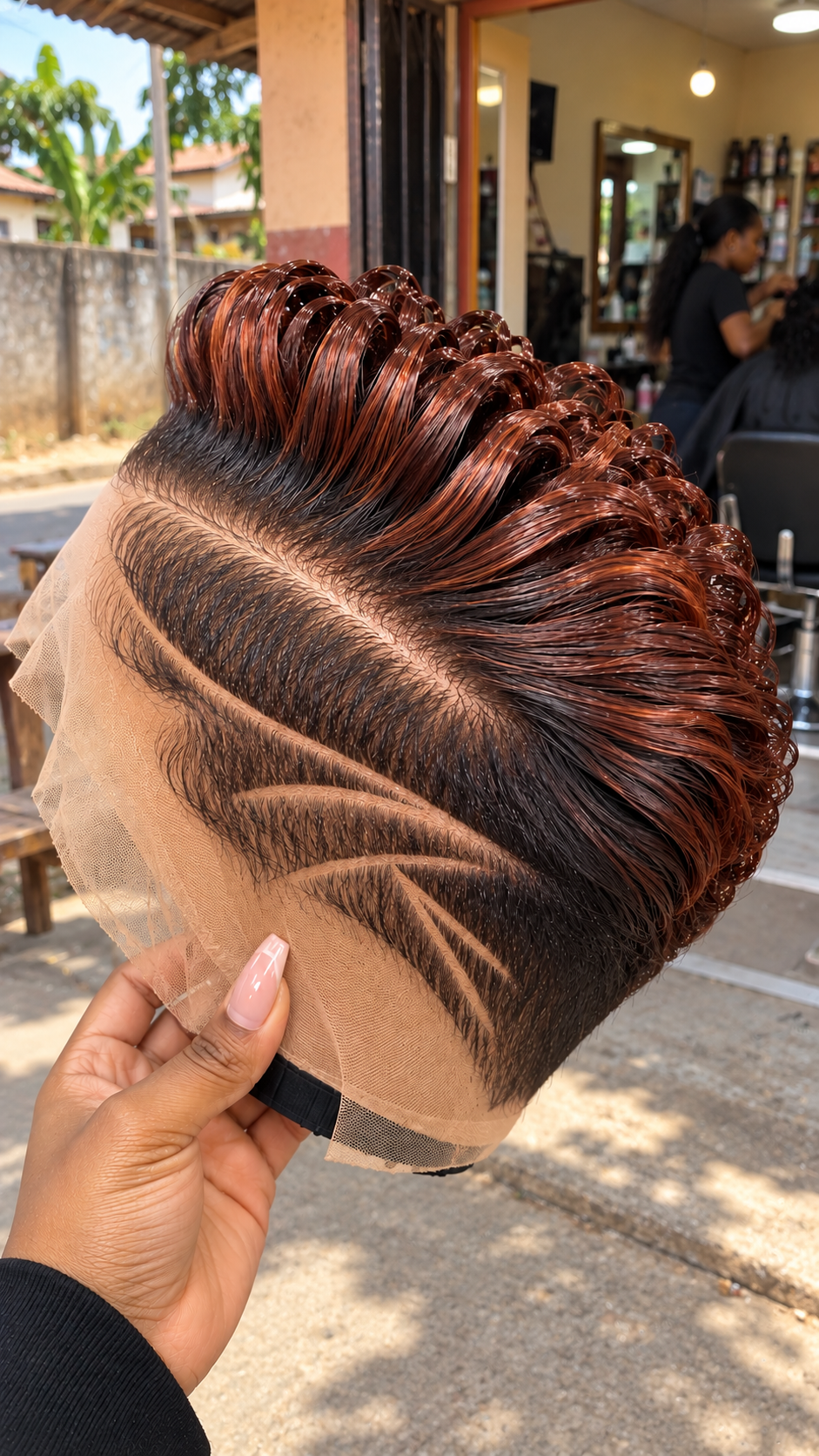
Copper catches the light across the top of this wig, but the dark side design gives the hairstyle its identity. Raised waves travel backward in curved sections, revealing darker roots beneath their reddish-brown lengths. Below them, closely laid black hair is divided by pale channels that form an angular, branching pattern. The combination creates a striking pixie silhouette with movement above and deliberate geometry along the visible side.
This is a particularly useful reference for anyone who wants a statement hairstyle without relying on long hair. The interest comes from contrast: copper against black, raised waves against a close side, and flowing strands beside sharp-looking lines. Each element contributes to the overall result. Removing the dark base, flattening the top, or simplifying the side pattern would produce a noticeably different wig.
The unit is shown in one hand outside a salon, with untrimmed tan lace extending around the visible perimeter. A small section of black interior material is also visible near the lower edge. It is a pre-fitting photograph rather than a demonstration of how the wig sits on a wearer. That distinction matters when discussing size, hairline placement, attachment, and the final position of the side design.
The Copper Placement Creates the First Impression
The color is concentrated through the longer upper sections. Warm copper and reddish-brown reflections follow the curves of the waves, while the roots and lower side remain much darker. This placement gives the top depth rather than making it appear like a solid block of orange. The darker areas between the raised sections help separate one wave from the next.


At the front of the upper section, black roots transition into copper along the lifted strands. Farther back, the warm color continues through overlapping curved sections. The photograph supports a description of dark-rooted copper waves, but it does not establish a particular dye formula, processing method, or fiber composition. Those details must come from the maker or seller.
When requesting this color arrangement, explain that the dark foundation is part of the look. Asking only for a copper pixie could lead to a unit colored evenly from root to tip. Instead, identify the areas that should stay dark: the roots, the close side, and the spaces beneath the upper waves. Then describe the copper as an accent carried through the longer sections.
Ask for neutral daylight footage before approving the shade. This photograph was taken in bright outdoor light, which makes the copper especially noticeable along reflective strands. An indoor image may appear darker or browner. Comparing the unit under both conditions gives a better understanding of the color you will actually wear.
The Top Is Built From Sweeping Loops
The upper hair forms elongated, open curves rather than small, repeated pin curls. Several sections rise from the darker base, arch over, and travel backward. Their openings vary in size, and neighboring strands overlap. This creates a ridged surface with a clear direction of movement across the head.
The tallest visible sections sit toward the upper front and middle, while the rearward sections follow the rounded outline. The wig is held at an angle, so the photograph cannot establish its exact height on a wearer. Nevertheless, the relative relationship is clear: the top has substantially more length and lift than the close side beneath it.
This distinction should guide a custom order. A maker who substitutes tight circular curls may retain the color but lose the movement that makes the reference appealing. Ask for swept-back, elongated waves with visible openings and a dark foundation. If you want less height, discuss that adjustment explicitly instead of requesting a generally smaller wig.
The strands have a wet-looking, reflective appearance, but the image does not reveal whether that comes from products, fiber characteristics, lighting, or a combination. Avoid selecting a unit based on shine alone. The shape, spacing, and direction of the upper sections are more reliable visual details to communicate.
The Branching Side Pattern Deserves Its Own Reference
The visible side contains a prominent pale channel beneath the longer top, followed by additional curved and diagonal channels through the darker hair below. These lines intersect or approach one another to create a branching arrangement. The pattern is more complex than a single straight side part or two parallel decorative lines.
The upper channel separates the longer copper-accented section from the close black side. Beneath it, a broader curved division crosses the side, with shorter diagonal branches extending through the lower area. Because perspective affects how the channels appear, it is better to send a close crop of the pattern than to rely only on a verbal line count.
The photograph does not establish how the channels were produced. They may involve cutting, hair placement, exposed construction, or another technique. Calling them shaved into the wearer’s own hair would be inaccurate because this is a detached wig. Describe the visible result as a carved-looking side design until the maker explains its construction.
Also ask whether the opposite side has the same pattern. This image provides a detailed view of one side, not a complete survey of the unit. A symmetrical design should never be assumed. You may prefer the opposite side to remain simpler, but that needs to be agreed before a custom piece is finished.
Choose Your Viewing Side Before Commissioning the Wig
A decorative side becomes part of how the hairstyle is presented. Consider which side you usually show in photographs, where you prefer volume around your face, and whether you want the pattern visible during ordinary wear. The reference should be oriented clearly so that the maker understands the intended placement.
Do not rely on a mirrored phone image to communicate left and right. Ask the seller to identify the wearer’s side in writing and provide a front-facing reference if necessary. A pattern reproduced on the opposite side may still look attractive, but it will not match the order if you had a particular orientation in mind.
The relationship with the ear also needs attention. The detached wig does not show exactly where the lower branches will sit once fitted. Ask the maker or stylist to assess the design against your measurements and the intended cap position. A visually striking pattern should still allow comfortable placement around the ear.
If the hairstyle is being adapted to a different cap size, discuss how the pattern will scale. Enlarging every channel mechanically could make the design too broad, while compressing the entire arrangement could remove the spaces that make it readable. The maker should preserve the overall proportions rather than merely copy isolated lines.
How To Order This Style
Look for a wig maker who can show experience with fitted pixie units, sculpted upper waves, and decorative side work. These are related skills, but a portfolio may demonstrate one more clearly than another. Ask to see complete examples from several angles rather than judging solely from dramatic close-ups.
A local wig studio can be useful when the side design needs to be positioned carefully on your head. Send the reference before booking and explain that you want a dark-rooted copper top with a close black side and branching channels. Ask whether the studio can provide the complete unit or only customize a wig you supply.
Online commissioning is another option if the maker offers clear measurements, detailed specifications, and approval stages. Confirm whether the displayed photograph is the maker’s own work or an inspiration reference. Then ask what aspects can be reproduced closely and which depend on the proposed base construction.
No verified seller, shop address, or current stock listing can be established from this photograph. The salon setting does not identify a business location. Obtain the supplier’s city, country, shipping coverage, and collection arrangements directly before paying or planning a visit. For local searches, combine your city with phrases such as “custom pixie wig maker” or “wig side design stylist.”
Budgeting for Color, Waves, and Side Detailing
The following USD figures are illustrative planning ranges, not verified current prices for the photographed unit. They represent possible purchasing categories for a comparable look. The material in the image is unconfirmed, so human hair and synthetic options appear as shopping routes rather than descriptions of this particular wig.
| Purchase Category | Illustrative USD Range | Work to Clarify in the Quote |
|---|---|---|
| Premium Custom | $520–$1,100+ | Individually specified construction, copper placement, sculpted upper waves, branching side design, and fitting support. |
| Standard Custom | $260–$540 | An existing base adapted toward the reference, with agreed limits on color processing, pattern detail, and revisions. |
| Basic Human Hair | $130–$300 | Verified composition, processing history where available, lace coverage, and whether the decorative styling is included. |
| Premium Synthetic | $80–$190 | Available color placement, fiber restrictions, preset wave arrangement, and feasibility of the side pattern. |
| Basic Synthetic | $30–$85 | Actual product appearance, perimeter construction, fit options, and how closely the design resembles the reference. |
This hairstyle combines several kinds of work, so an itemized quote is particularly helpful. The base unit, upper cut, color placement, wave setting, and side detailing may be priced separately. Ask whether the quoted amount covers the completed appearance or only the starting wig. A basic copper-accented unit may still require substantial customization.
The side pattern can be a major source of labor. A maker may need to plan the channels around the cap construction and the remaining hair coverage. Ask how the design is achieved and whether later alterations are possible. A more detailed pattern should come with an explanation of the work involved rather than an unexplained surcharge.
Include shipping, applicable taxes, fitting, and future resets in the comparison. A finished custom piece may have a higher initial price but include services that another offer excludes. Conversely, an existing unit may be sufficient if its shape and pattern already suit your needs. Compare the complete result you will receive.
Confirm the Lace Before Planning Installation
Tan mesh extends beyond the hair-bearing perimeter in this photograph. It is visible across the lower front edge and along the near side, showing that the unit has not been presented as a fully fitted finished installation. The mesh appearance alone does not establish a particular lace grade or how it will blend on the wearer.
Ask for the lace specifications, coverage area, and a close photograph without heavy shadow. Clarify whether it arrives untrimmed, whether any tinting or other preparation is included, and who is expected to perform the final customization. The appropriate plan depends on the actual product rather than the general label “lace wig.”
A small black section is visible near the lower edge, but the complete inside is not shown. Request an underside view that identifies any band, straps, combs, or other attachment components. Do not assume that visible black material proves an adjustable system or guarantees secure wear without adhesive.
If the seller advertises glueless use, ask what provides the hold and how the cap measurements support it. If adhesive is part of the intended method, discuss that with the fitter before trimming. The photograph cannot demonstrate wear security because the wig is being supported by a hand rather than worn.
Protect the Pattern During the First Fitting
The initial fitting should establish position before anyone alters the side. The upper waves, pale channels, and lower perimeter need to sit together as one arrangement. Moving the wig to improve one detail may affect another, so assess the front and both profiles before deciding that additional cutting is necessary.
Bring the reference and identify the parts you want preserved. In particular, explain that the branching design is intentional. A stylist unfamiliar with the order should not simplify the channels or remove nearby hair merely because the area differs from a conventional pixie cut.
Check how the lower edge sits around the ear and toward the back. Since the image does not show the unit on a wearer, its final relationship with those areas remains unknown. The fitter should distinguish between a placement issue, a cap-size issue, and a styling adjustment rather than addressing every concern by cutting hair.
Any lace trimming should follow that assessment. Cutting and side carving can be difficult to reverse, especially when the remaining hair is already close to the cap. Ask the stylist to explain the intended changes and confirm that the design will retain sufficient coverage afterward.
Ask for Approval Footage That Shows the Whole Unit
A close side photograph is valuable for the pattern, but it is not enough to approve the entire wig. Request a slow turn showing the front, opposite side, back, top, and underside. The camera should remain far enough away to show the full silhouette before moving closer to individual details.
For the upper section, look at how the waves progress from front to back. Ask whether the lift and spacing match the agreed reference. A unit may show beautiful copper strands in a close crop while having a different overall height or an unexpectedly bulky rear outline.
For the decorated side, request footage under consistent lighting. Strong reflections can make the pale channels appear wider or narrower, while shadows may obscure some branches. An additional neutral-light view helps you assess the actual arrangement rather than approving a lighting effect.
Finally, confirm the opposite side and nape. Neither should be invented from the visible reference. The maker should explain how those areas have been completed and obtain approval if their treatment was not previously specified. This is especially important for a commission intended to look balanced from every angle.
Preserve the Copper Without Changing the Dark Base
Color care should begin with confirmed material information. If the wig is human hair, ask what processing has already been performed and which products are recommended. If it is synthetic or blended, follow the supplied restrictions. Do not attempt additional coloring based only on the appearance of the strands.
The dark roots and close black side are part of the design. Applying a color treatment across the entire unit could reduce the contrast that makes the top stand out. If the copper needs refreshing later, discuss targeted work with a stylist who understands the original placement.
Ask the maker how the color should look after washing and whether any transfer precautions apply to the actual product. These are supplier-specific questions rather than facts that can be determined from this image. Written guidance is more useful than assuming all copper shades behave in the same way.
Keep a neutral-light photograph of the approved unit for future appointments. It gives a colorist or wig stylist a reference for the intended relationship between dark roots and warm lengths. A highly reflective outdoor photograph can remain useful for inspiration, but it may not be the clearest record of the shade.
Maintain the Raised Waves With Deliberate Handling
The upper sections depend on their curved arrangement. Repeated brushing or pulling can turn the sculpted waves into a different hairstyle. Ask the maker whether the set is intended to remain in place between washes and how minor displacement should be corrected.
Handle the unit with support beneath the cap rather than lifting it by the copper sections. When putting it on, avoid gripping the raised loops or the delicate hair beside the channels. The photograph shows the wig supported from below, but your fitter should demonstrate a method appropriate to the finished unit.
Before washing, establish whether a professional reset is required. The upper waves and close side may need separate attention. Do not apply heat to unidentified fibers, and do not assume that a technique suitable for another pixie wig will preserve this particular pattern.
For storage, allow enough clearance around the lifted top. Tight packaging can compress the open curves, while pressure along the side can disturb the close hair around the channels. Ask the maker how the wig should be supported and packed if you plan to travel with it.
Decide What You Want From the Finished Look
This reference is a strong choice for someone who wants visible color and a decorative side without a long silhouette. Its appeal depends on a specific balance: warm upper waves, dark foundations, and an intricate pattern that remains readable. Those priorities should guide the purchase more than a broad category name.
If daily wear is your goal, consider the availability of fitting and maintenance support. Ask how much attention the wave arrangement requires and whether a local stylist can recreate it. If the wig is intended for occasional use, plan storage and preparation so that the shape is ready when needed.
Before paying, bring the important details into one written agreement: material, cap measurements, lace coverage, copper placement, pattern orientation, opposite-side treatment, total cost, completion time, and revision terms. Each detail helps translate the photograph into a product that can be reviewed fairly.
The most successful version will preserve the energy of the copper waves while keeping the side design in proportion to the wearer. Choose a supplier who can explain both the appearance and the construction, then allow the fitting process to complete the look. That gives this bold pixie its best chance of being as enjoyable to wear as it is to admire.
Search Terms
copper wave pixie lace wig · dark rooted swept back wig · branching side design pixie · black sides with copper loops · untrimmed tan lace perimeter · sculpted ridge wave wig · angular channel wig design · reddish copper top with dark roots