
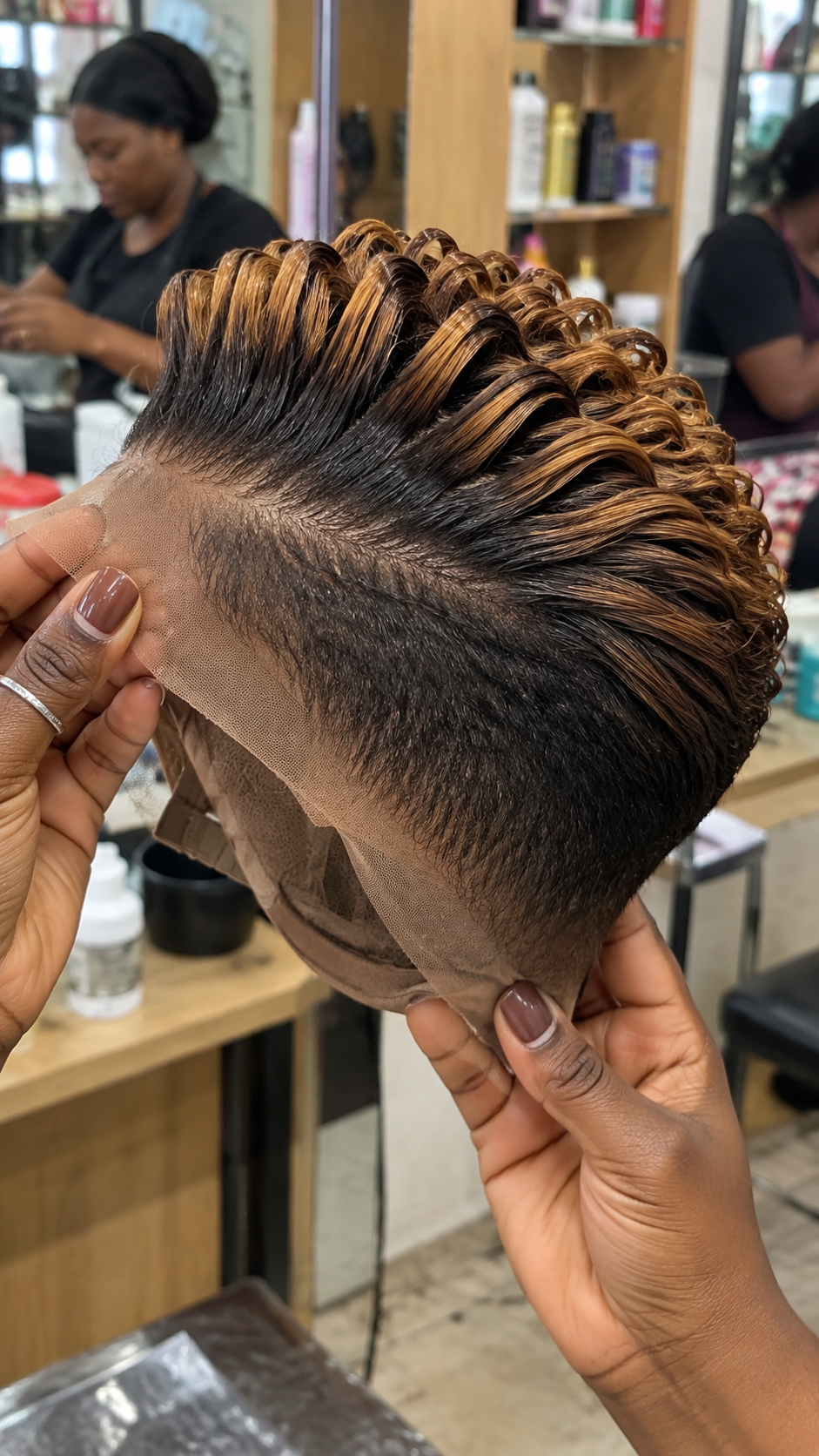
A rich espresso base paired with flowing caramel ribbons gives this sculpted pixie wig a striking sense of depth before the styling details are even considered. Instead of relying on one flat shade, the color placement follows the direction of the hair, allowing every raised loop across the crown to reveal a different balance of dark brown and warm caramel. The result is especially attractive from side and three-quarter angles, where the contrast between the darker foundation and the brighter upper strands becomes much easier to see.
The construction shown in this style is equally important. The crown is arranged into controlled, elongated loops that travel backward rather than standing vertically. This creates height without turning the silhouette into an oversized shape. Near the perimeter, the hair becomes much closer to the base, producing a tapered appearance that keeps attention on the sculpted upper section. A visible lace front extends beyond the hairline in the photographed piece, giving a stylist room for fitting, trimming and customization during installation.
The Color Placement Creates Movement Before Styling Begins
Caramel highlights can easily dominate a compact hairstyle when they are applied too heavily. Here, the brighter shade is distributed in ribbons rather than covering the entire surface. Dark espresso remains visible between the highlighted sections, so the loops keep their individual shape instead of merging into one block of color.
The front portion carries stronger caramel illumination, while several darker sections remain underneath. Moving toward the crown, the tones alternate through the sculpted strands. This creates a layered visual effect: one loop may appear predominantly caramel from above, while the strand beneath it remains deep brown. The back portion then gathers those colors into tighter curved sections.
This type of placement is useful for anyone who wants noticeable color without committing to an all-blonde appearance. It also photographs particularly well because light catches the caramel surface while the darker foundation produces natural-looking shadow between each loop.
Why the Crown Structure Matters
The most recognizable element of this wig is the directional crown. Rather than using tiny uniform curls across the entire head, the stylist has created broad ribbon-like sections. Each piece rises from the base, bends backward and joins the next section in a repeating flow.
That direction gives the hairstyle an intentional profile. The front has enough lift to frame the forehead, the center maintains volume, and the rear gradually transitions into tighter loops. This progression prevents the crown from looking identical from front to back. It also means that a wearer can turn her head and reveal another part of the styling rather than presenting the same silhouette from every angle.
For wig makers, this is an important detail to discuss with a stylist before ordering a custom version. Simply requesting “curls on top” would not accurately describe what is happening here. A better consultation would mention sculpted ribbon loops, backward crown direction, compact side density and a tapered lower profile.
The Dark Foundation Is Doing More Work Than It Seems
Although the caramel sections attract immediate attention, the deep espresso foundation gives the design its structure. The darker hair around the lower side provides visual weight and creates a strong transition into the raised crown. It also makes the highlighted strands appear brighter without requiring an extremely pale blonde.
This contrast can be especially useful when coordinating the wig with different wardrobes. Neutral outfits allow the caramel to become the focal point, while brown, cream, olive, rust and black clothing can connect naturally with different tones already present in the hair. Gold jewelry can also complement the warmer ribbons without requiring the entire look to become overly coordinated.
The color combination is therefore more versatile than a single bright shade. It has enough warmth to stand out in photographs while retaining a dark base that can work with everyday styling.
What the Visible Lace Tells a Buyer
The photograph clearly shows lace extending around the front perimeter. That is useful because a buyer can see that the piece is intended to be fitted and customized rather than judging it only after installation. The lace should normally be assessed against the wearer’s complexion before trimming. Tinting, foundation products or professional lace-color adjustments may be appropriate depending on the individual wearer and the actual material used in the wig.
It is important not to assume a particular lace grade simply from a photograph. Buyers should ask the seller what lace material is used, how far the lace extends, whether the unit arrives pre-cut, and whether any additional customization is required. Asking these questions before payment is much safer than relying on marketing terminology alone.
A professional wig stylist can also check the perimeter density before installation. Because this design includes a substantial dark section near the side, careful fitting helps preserve the intended proportions of the hairstyle once the excess lace has been removed.
Who Should Customize the Piece?
A wig with this much sculpted work deserves more than a rushed installation. If purchased as a finished unit, consider taking it to a wig stylist who has experience with lace fitting and precision pixie shaping. If the unit needs additional cutting around the perimeter, a stylist can position it correctly before deciding where the lace should be trimmed.
A barber may also be useful when the wearer wants the lower profile adjusted after fitting, particularly when recreating a close-cut visual effect around the sides. However, the barber and wig stylist should understand that the crown loops are part of the design and should not be treated like ordinary loose hair.
For a completely custom order, provide reference photographs from more than one angle whenever possible. Mention the espresso foundation, caramel ribbon placement, backward loop direction and compact overall proportions. Clear visual references reduce the chance of receiving a unit with generic curls or highlights placed randomly throughout the hair.
Ordering Without Losing the Original Character
When contacting a salon, wig maker or online seller, begin by confirming whether the photographed design is available as an existing unit or must be recreated. If it is custom work, ask whether the maker can reproduce the color distribution rather than merely offering a similar brown-and-blonde combination.
Next, provide accurate head measurements according to the seller’s measurement guide. Cap size matters even more on sculpted styles because an incorrect fit can change where the crown sits and how the side profile appears. A crown positioned too far forward or backward can make the entire design look different from the reference.
Then confirm the hair material, cap construction, lace type, density, color formula and expected processing time in writing. If human hair is important to you, do not assume it from appearance alone. Ask directly. The same applies to heat styling: confirm the safe temperature range before using heated tools on any purchased unit.
Finally, request photographs or a video of the completed wig before shipment when ordering custom work. Check the color placement, crown direction, perimeter and overall proportions before approving the finished piece.
Maintaining Sculpted Ribbon Loops
This design should not be treated like a loose curly wig. Brushing through the crown can separate the loops and remove the deliberate direction that gives the hairstyle its identity. Instead, maintenance should focus on protecting the existing form.
After wearing, place the wig on an appropriately sized stand so the crown is not crushed. Avoid storing it underneath clothing, inside an overfilled drawer or beneath heavier wigs. If the loops become slightly displaced, reshaping individual sections is preferable to combing through the entire crown.
Product buildup is another consideration. The glossy surface of the photographed hair gives the loops strong separation, but repeatedly applying heavy oils or holding products can make compact styles appear weighed down. Follow the care instructions supplied for the actual fiber or hair type. A human-hair unit and a synthetic unit may require completely different washing temperatures, products and styling methods.
If the piece needs a major refresh, returning it to an experienced wig stylist is often safer than attempting to reconstruct every loop at home. The direction and spacing of the sections are what make this particular design distinctive.
How to Compare Prices for This Type of Custom Wig
Prices can vary significantly because the final cost depends on hair material, cap construction, lace, coloring work, hand customization and the amount of styling required. A photograph cannot establish the actual price of a unit, so the ranges below should be treated only as general shopping categories rather than quotes for the pictured wig.
| Wig Category | Typical Position | What to Confirm Before Buying |
|---|---|---|
| Premium Custom | Highest price range | Hair origin, lace specification, custom color work, cap measurements and hand styling |
| Standard Custom | Upper-mid price range | Color matching, crown shaping, cap construction and included customization |
| Basic Human Hair | Mid-range depending on quality | Human-hair verification, density, processing history and heat-styling limits |
| Premium Synthetic | Accessible alternative | Fiber quality, heat resistance, shine level and ability to retain sculpted loops |
| Basic Synthetic | Entry price range | Fiber durability, cap comfort, color accuracy and expected lifespan |
Instead of choosing solely by the lowest advertised price, compare what is actually included. A cheaper unit that requires recoloring, restyling, lace work and additional fitting may eventually cost more than a properly customized piece purchased from the beginning.
Questions Worth Asking Before Booking a Stylist
Bring the reference image to your consultation and ask whether the stylist has previously worked with sculpted pixie wigs. Request examples of comparable work if available. Ask how the loops will be maintained after installation and whether the stylist recommends returning for reshaping after a certain amount of wear.
If color matching is essential, discuss the relationship between the dark espresso foundation and the caramel ribbons rather than asking for “brown highlights.” That phrase is too broad. The reference uses strategic brightness across raised strands while retaining a much darker lower foundation.
You should also ask whether the quoted appointment includes lace trimming, fitting, perimeter customization and final crown adjustment. Some salons price those services separately. Knowing the full service list beforehand makes comparing appointments much easier.
Why This Design Works So Well in Photos
There is a strong three-dimensional quality to the hairstyle. The loops create raised surfaces, the dark foundation creates shadow, and the caramel sections catch light. Those three elements produce visible depth even in a single still image.
For social media photographs, a three-quarter angle can reveal both the crown and the lower side profile. A direct side view is useful for showing the contrast between the raised loops and compact perimeter. A slightly elevated camera angle can highlight the direction of the caramel ribbons across the crown.
Natural window light or soft salon lighting is usually enough to reveal the color contrast. Extremely harsh lighting may make the highlighted sections appear lighter than they actually are, so buyers comparing a reference image with a finished custom unit should ideally examine the wig under more than one lighting condition.
Turning the Reference Into a Successful Custom Order
The strongest approach is to treat the image as a specification rather than general inspiration. Identify the details that cannot change: the deep espresso foundation, caramel ribbon highlights, raised backward loops, compact side profile, visible lace perimeter and controlled crown proportions. Those characteristics collectively create the identity of the wig.
When communicating with a seller, separate essential requirements from optional adjustments. Cap size and lace color may need to be personalized for the wearer, but randomly changing the highlight distribution or replacing the ribbon loops with ordinary curls would create a substantially different hairstyle.
A careful consultation also gives the maker an opportunity to explain what can realistically be reproduced with the selected hair material. Once the details, measurements, price and completion date are agreed upon, keep the order information in writing and confirm the finished appearance before shipment or final installation.
For anyone drawn to dimensional brown hair but wanting something more distinctive than conventional highlighting, this combination offers an interesting direction. The caramel ribbons bring warmth and visibility, while the espresso foundation keeps the overall composition grounded. Most importantly, the sculpted crown gives the color a structure to follow, making the placement of every brighter strand feel intentional rather than random.
Search Terms
espresso caramel ribbon pixie wig · sculpted backward loop wig · dimensional brown caramel wig · visible lace front pixie unit · caramel highlighted crown loops · deep espresso wig base · tapered side pixie wig · salon sculpted ribbon hairstyle